Artwork
Washerwomen and Woodcutters
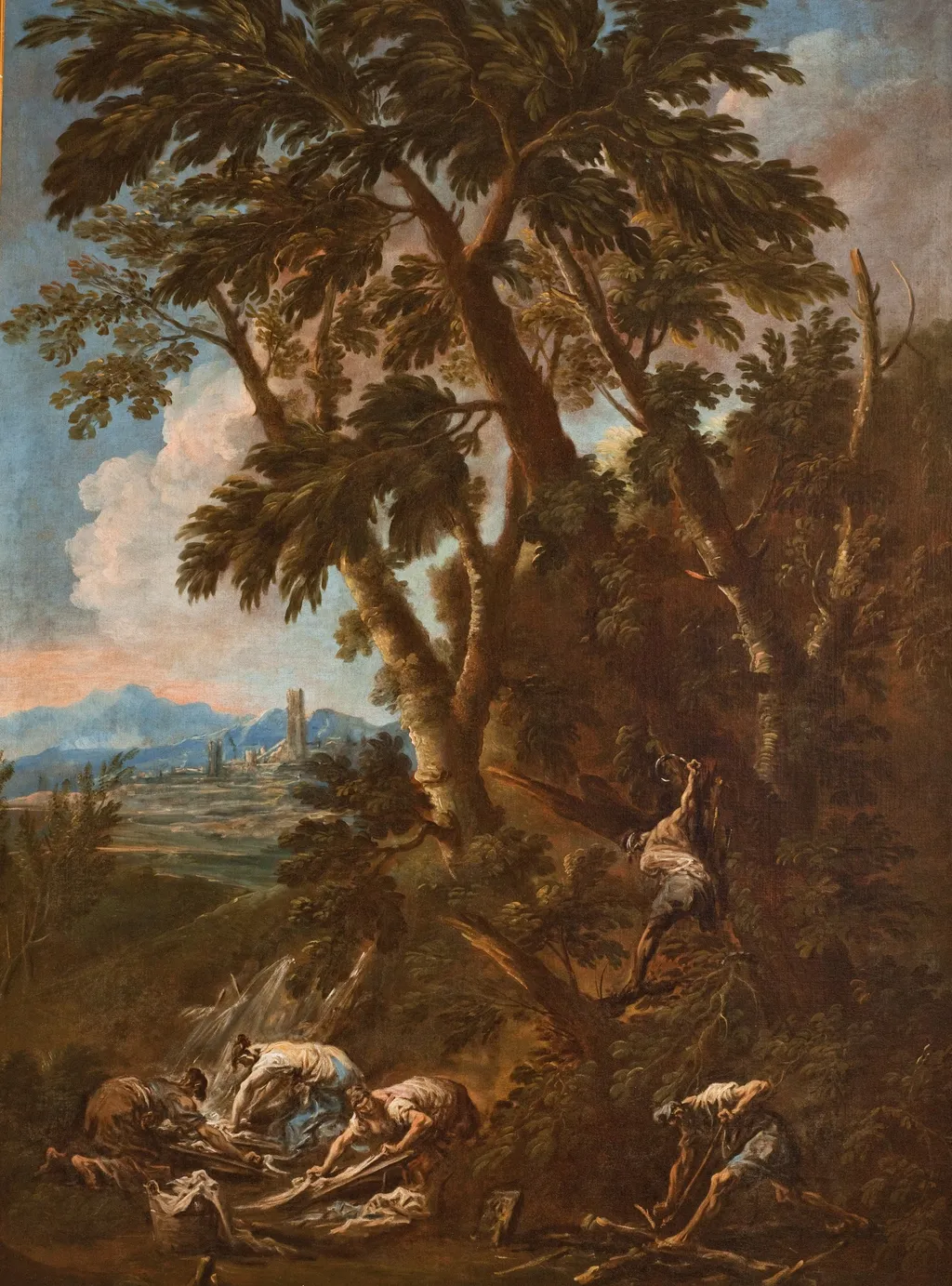
Washerwomen and Woodcutters is an oil painting by the Early Baroque Italian artist Alessandro Magnasco. It dates from 1713 and is held in the collection of the National Museum in Kraków.
About this work
Overview
Painted in 1713 by Alessandro Magnasco, known as il Lissandrino, this oil-on-canvas work captures a rural scene of laborers in a wooded landscape.
Painted in 1713 by Alessandro Magnasco, known as il Lissandrino, this oil-on-canvas work captures a rural scene of laborers in a wooded landscape. Executed during the early 18th century in northern Italy, it reflects Magnasco’s distinctive approach to genre subjects—marked by energetic brushwork and an emphasis on transient moments rather than idealized form. The painting resides today in the National Museum in Kraków.
Subject & Meaning
The scene portrays a group of laborers engaged in daily tasks: felling timber, washing linens, and collecting firewood. Rather than romanticizing their toil, Magnasco presents it as an unvarnished part of the natural world. The figures are scattered across the composition, suggesting spontaneous, unposed activity. Their isolation within the landscape implies a quiet dignity, detached from social hierarchy or narrative moralizing.
Technique & Style
Magnasco employed rapid, broken brushstrokes to convey motion and atmosphere, avoiding smooth modeling in favor of textured surfaces. Light falls unevenly, creating patches of brightness against shadowed undergrowth. His use of chiaroscuro is subtle but effective, enhancing the sense of depth without dramatic contrast. Forms are partially dissolved into the environment, blurring boundaries between figures and foliage.
History & Provenance
Created during Magnasco’s mature period, the painting likely originated in his Milanese or Genoese studio, where he frequently depicted rural life. It entered the National Museum in Kraków’s collection in the 19th century, possibly through European art acquisitions following the partitions of Poland. Its journey from northern Italy to central Europe reflects broader patterns of art circulation in the Habsburg and Polish-Lithuanian spheres.
Context
In early 18th-century Italy, academic painting favored mythological and religious themes. Magnasco stood apart by focusing on marginalized laborers and wild landscapes, aligning more with Venetian naturalism than Roman classicism. His work emerged amid growing interest in the lives of common people, though his stylized approach resisted realism, instead evoking mood through expressive distortion.
Legacy
Magnasco’s unconventional style influenced later artists drawn to expressive brushwork and atmospheric genre scenes, including 19th-century realists and even early modernists. Though not widely celebrated in his lifetime, his ability to convey movement and psychological nuance through fragmented forms has earned him recognition as a precursor to more experimental approaches in European painting.
Artist & collection
Artist
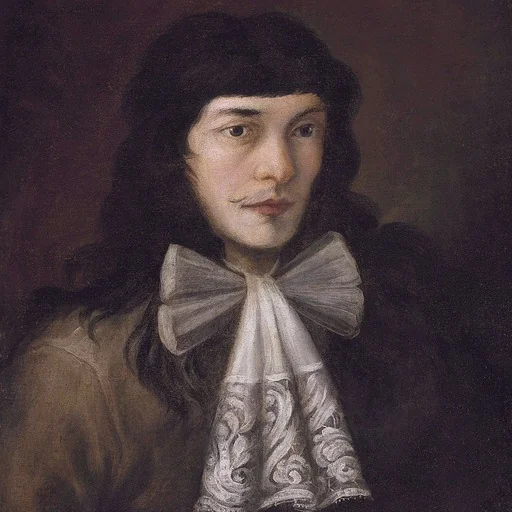
Alessandro Magnasco (February 4, 1667 – March 12, 1749), also known as il Lissandrino, was an Italian late-Baroque painter active mostly in Milan and Genoa.

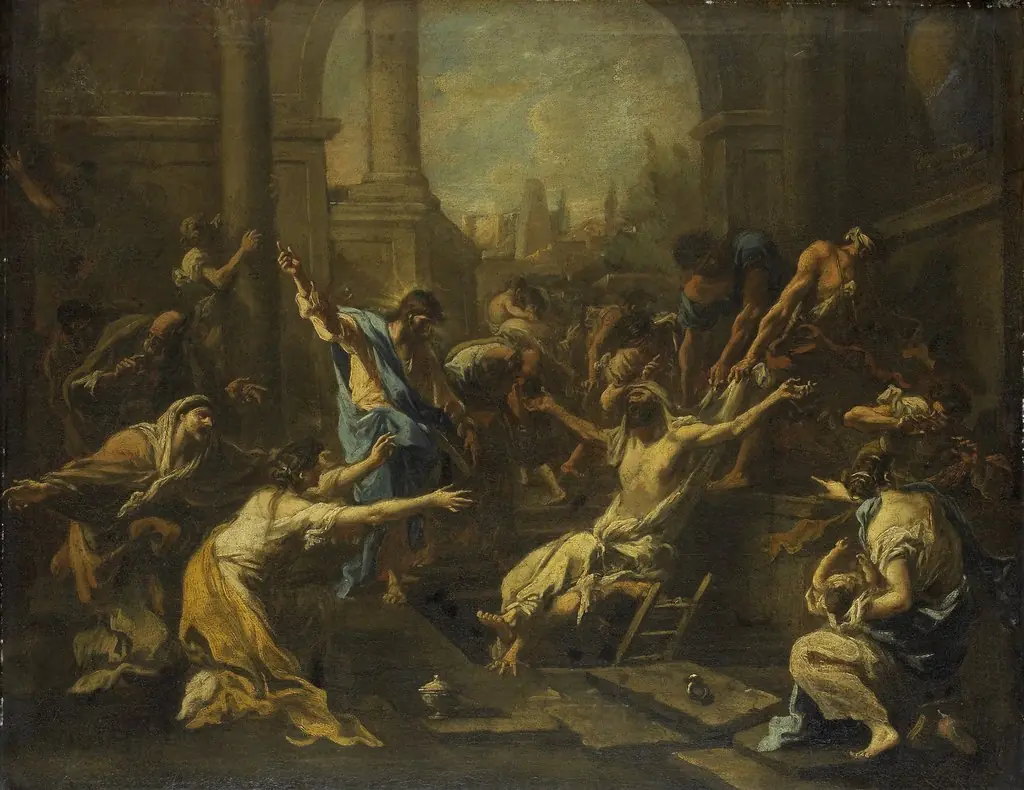
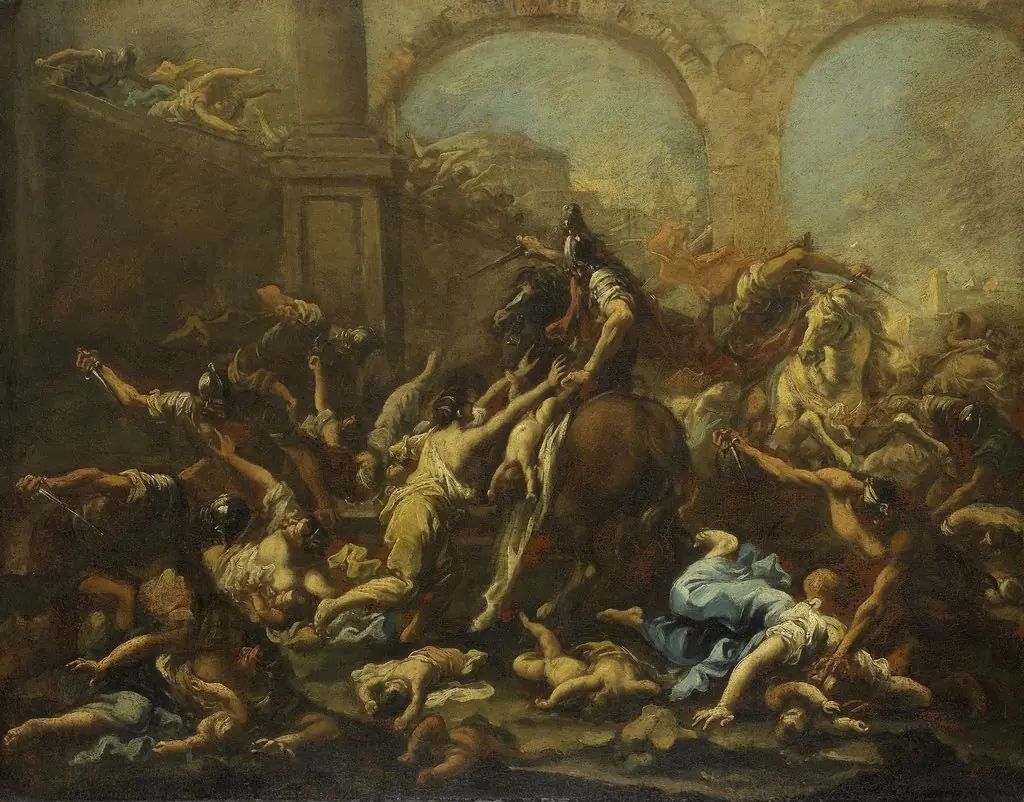
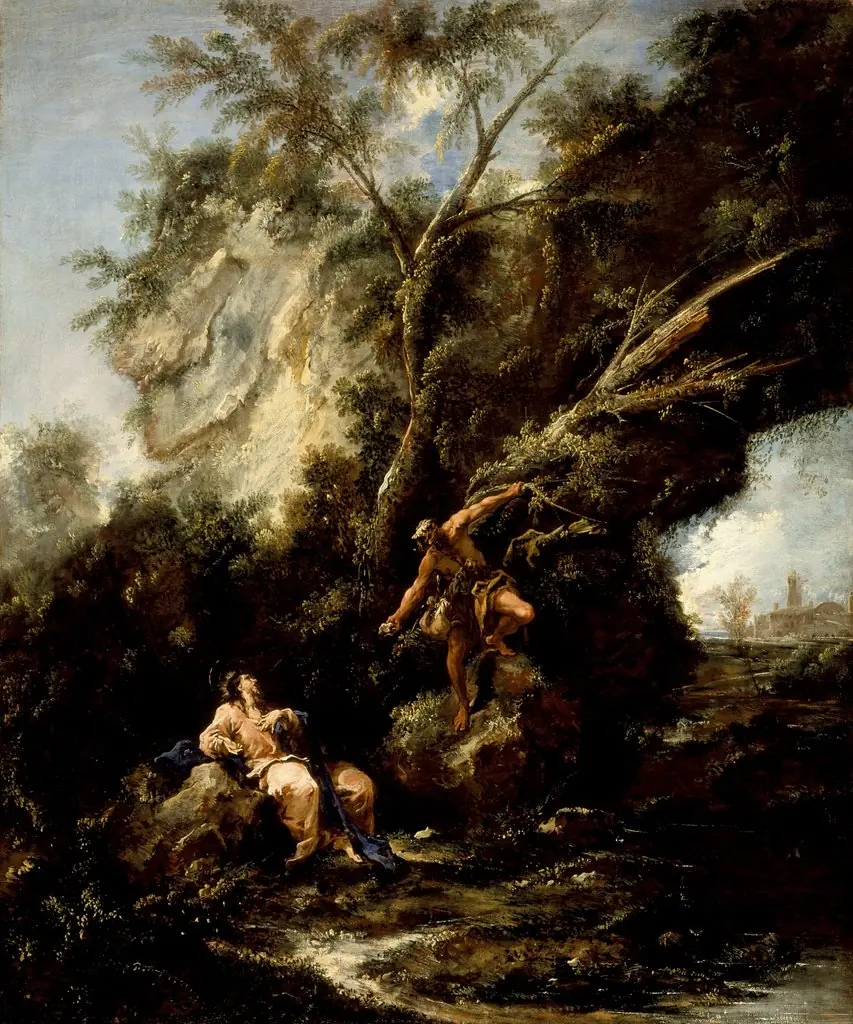 Landscape with the Temptation of Christ
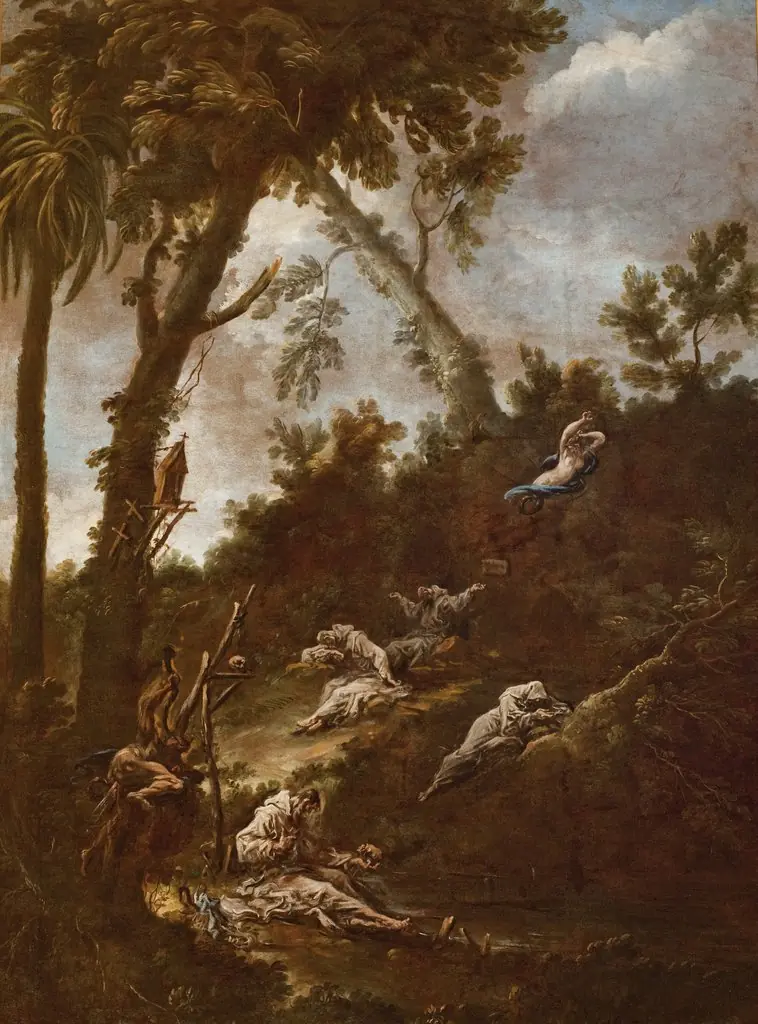 Hermits (Anachorets)
 Peisaj cu copaci și personaje
 Landscape with Figures
 Landscape
 Landscape with a Hunting Scene
 Vânătoare de căprioare
 Landscape with a Battle between Two Rams
 Landschaft mit Hirten
 The Hebrews collecting manna in the desert
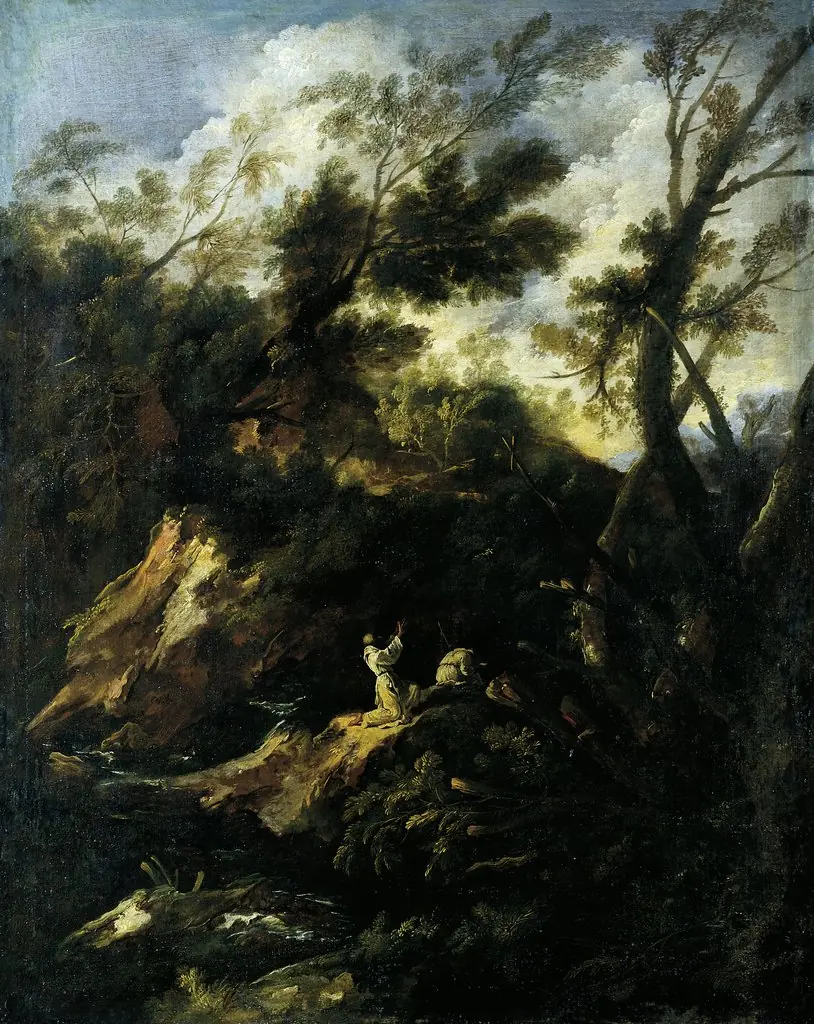 Landscape with Two Praying Monks
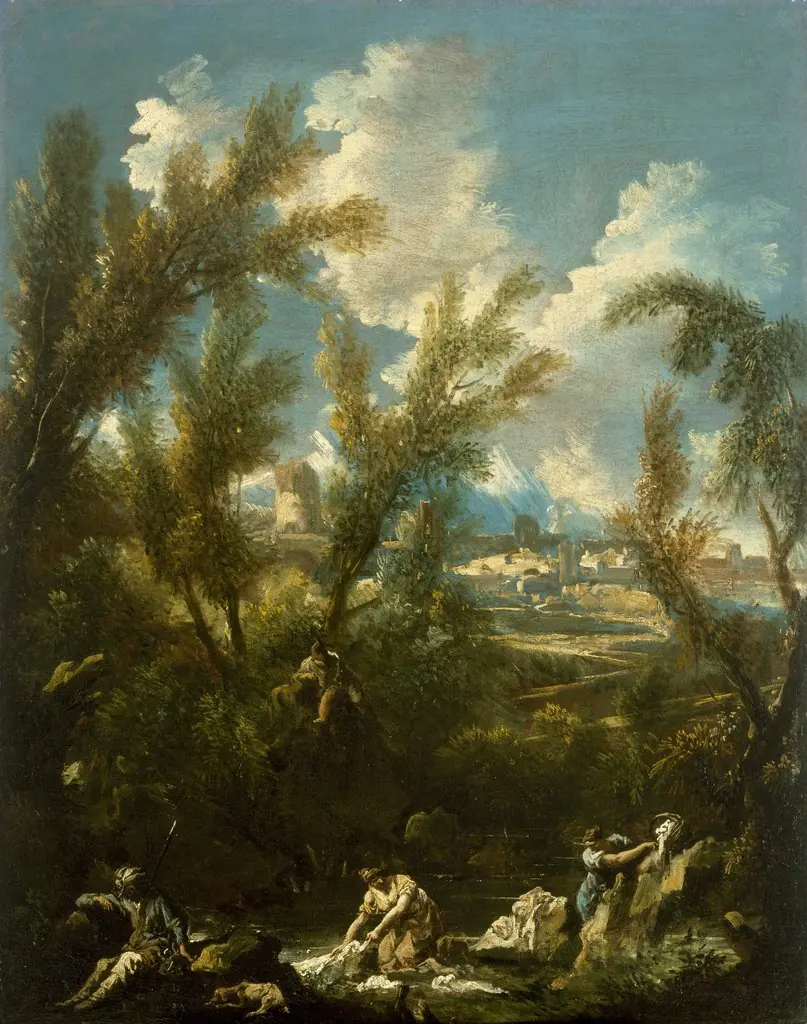 Landscape with Washerwoman