Artwork
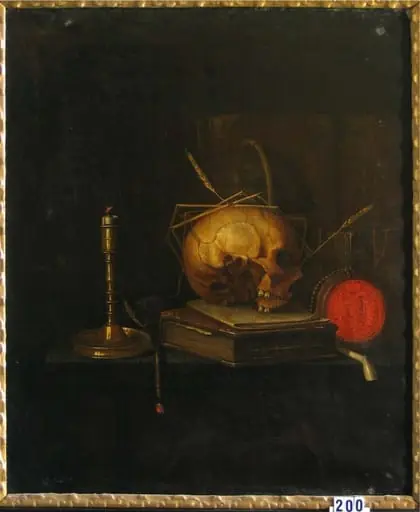
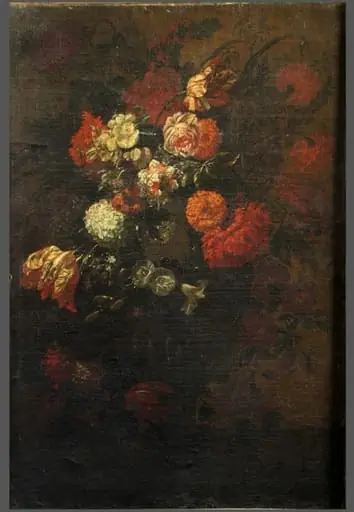
Memento mori (pandant: Deșertăciunea deșertăciunilor)
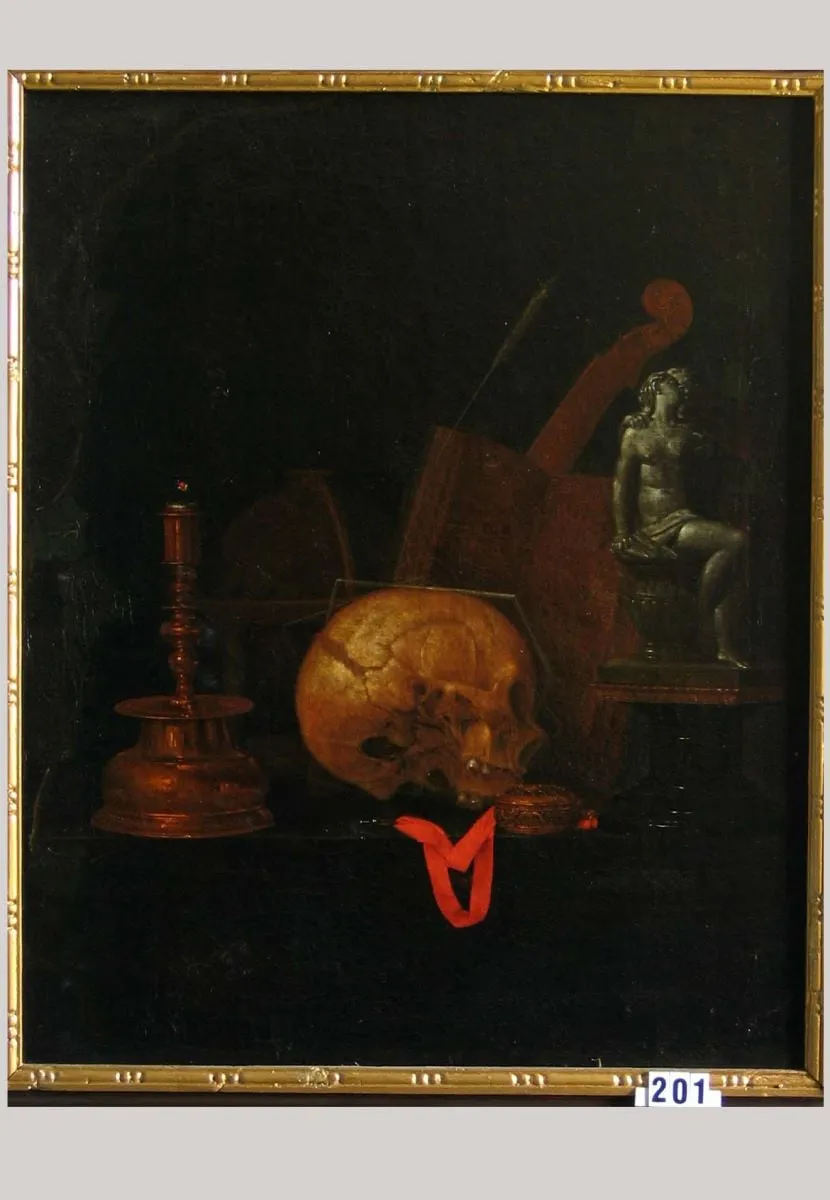
Memento mori (pandant: Deșertăciunea deșertăciunilor) is an unspecified painting by the Baroque artist anonim. It dates from 1750 and is held in the collection of the Brukenthal National Museum.
About this work
Overview
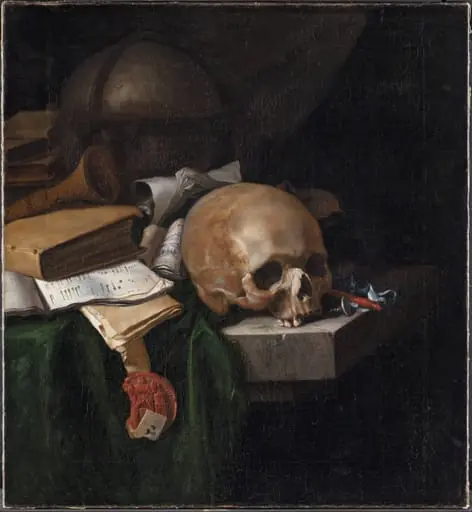
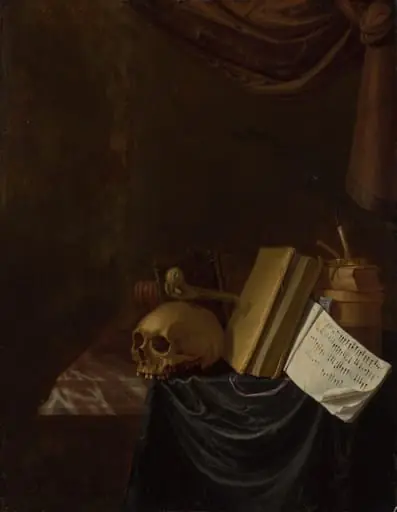
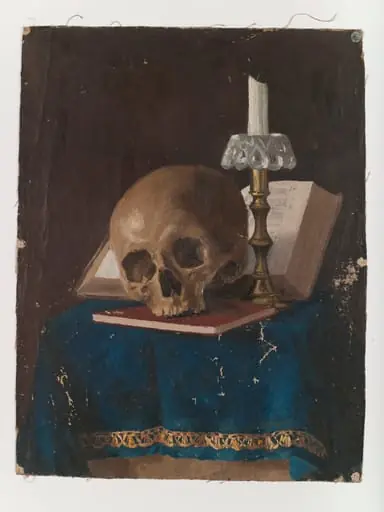
Created around 1750 by an unknown hand, this still‑life composition presents a darkened backdrop that isolates a collection of symbolic objects. Central to the arrangement is a human skull, over which a vivid red ribbon is loosely draped. Flanking the skull are a candle‑bearing holder on the left and a seated statue on a pedestal to the right, all rendered with a solemn, reflective tone.
Subject & Meaning
The juxtaposition of the skull, candle, and statue evokes the traditional memento mori theme, reminding viewers of mortality and the fleeting nature of worldly pursuits. The red ribbon adds a visual counterpoint, suggesting the persistence of memory or perhaps the vanity of earthly adornment, while the candle’s flame hints at the passage of time.
Technique & Style
The artist employs strong chiaroscuro, using stark contrasts of light and shadow to model the forms and create a dramatic spatial depth. Thick impasto layers give the painted surfaces a palpable texture, especially on the skull’s bone and the candle’s wax, enhancing the tactile impression of each object.
History & Provenance
Attributed to an anonymous creator, the work dates to the mid‑18th century, a period when vanitas motifs were common in European art. Its provenance prior to modern collection records is undocumented, and the piece has been identified only by its title, which pairs the Latin phrase “Memento mori” with the Romanian “Deșertăciunea deșertăciunilor.”
Artist & collection
Artist
These small oil paintings pair up like twins: one called *Memento mori* shows a skull and candle, the other *Deșertăciunea deșertăciunilor* flips the same scene with mirrors and smoke.