Artwork
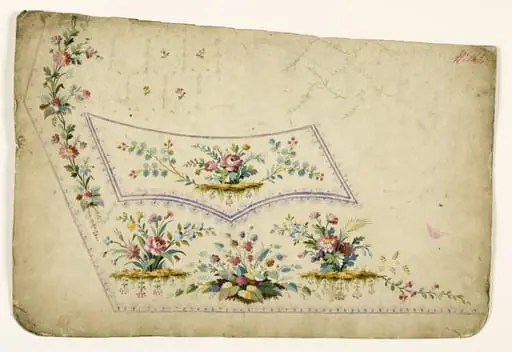
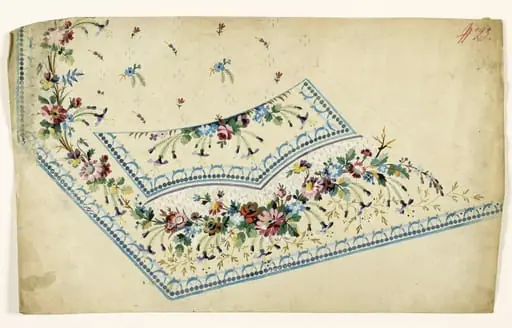
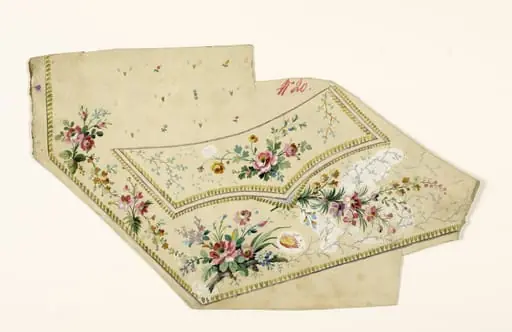
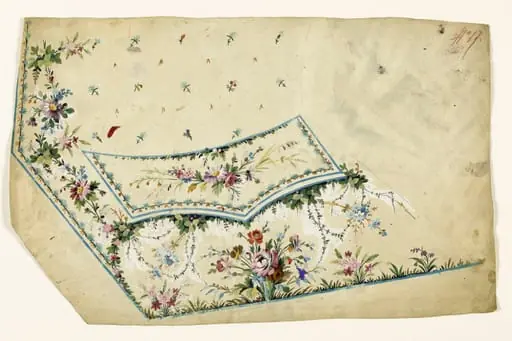
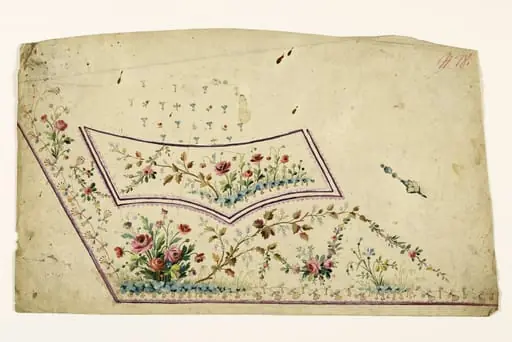
Composition de bouquets de fleurs et de baies et semis de fleurs, projets de broderies de gilet, XVIIIème siècle
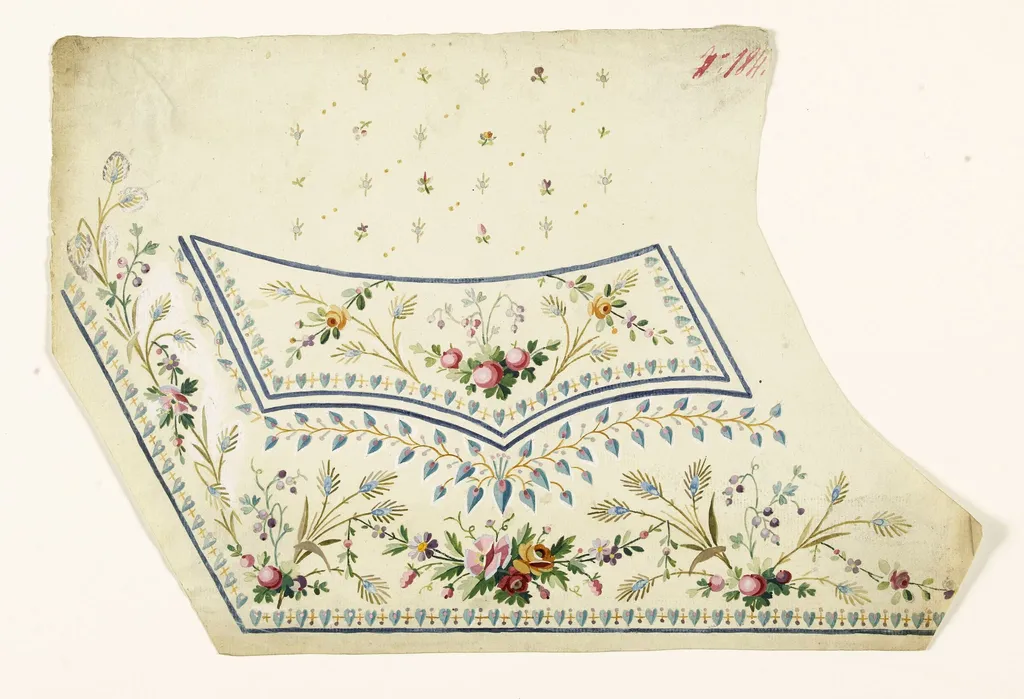
Composition de bouquets de fleurs et de baies et semis de fleurs, projets de broderies de gilet, XVIIIème siècle is a drawing by Anonyme. It dates from 1750 and is held in the collection of the Palais Galliera - Musée de la Mode de la Ville de Paris.
About this work
Overview
This eighteenth‑century paper design, attributed to an unknown artist and dated to around 1750, is part of the Museum of Ethnography’s collection.
This eighteenth‑century paper design, attributed to an unknown artist and dated to around 1750, is part of the Museum of Ethnography’s collection. Executed on a folded sheet, it presents a decorative arrangement of floral and berry motifs intended as a model for stitching onto a men’s vest. The composition balances soft pinks, blues, and yellows against a light ground, framed by a delicate border of tiny blue elements.
Subject & Meaning
The illustration depicts clustered roses, assorted berries, and interlacing green stems, organized into a harmonious bouquet. As a pattern for embroidery, the imagery serves both aesthetic and instructional purposes, guiding the artisan in reproducing naturalistic botanical elements on textile surfaces. The choice of flowers and fruit reflects contemporary tastes for pastoral and ornamental themes in garment decoration.
Technique & Style
Rendered with careful yet uncomplicated lines, the drawing functions as a template for needlework. The artist employed a limited palette of pastel hues, allowing the intended stitches to be visualized clearly. The border of minute blue shapes provides a framing device, while the overall style aligns with the Rococo penchant for lightness, asymmetry, and decorative flourish in applied arts.
History & Provenance
Created circa 1750, the piece entered the Museum of Ethnography’s holdings through a 20th‑century acquisition of decorative arts objects. Its anonymous authorship is typical of utilitarian design documents of the period, which were rarely signed. The work has been catalogued as a representative example of French‑influenced embroidery projects for men’s attire.
Context
During the mid‑1700s, embroidered detailing on clothing, especially on gilets and other outer garments, was a sign of refinement among the European bourgeoisie. Pattern books and individual sketches like this one circulated among tailors and seamstresses, providing standardized motifs that could be adapted to local tastes. The design reflects the broader cultural interest in botanical illustration and the integration of natural motifs into everyday dress.
Artist & collection
Artist
A French designer from the 1700s made delicate flower drawings meant to decorate vests.
Museum
Palais Galliera - Musée de la Mode de la Ville de Paris
Continue through works from the same source collection.
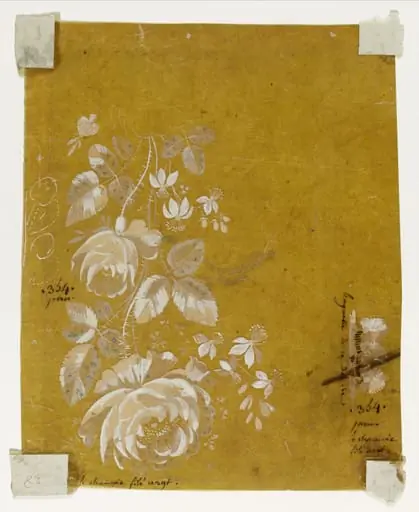 Bouquet de roses blanches pour étoffe, projets de broderies de gilet, XVIIIème siècle
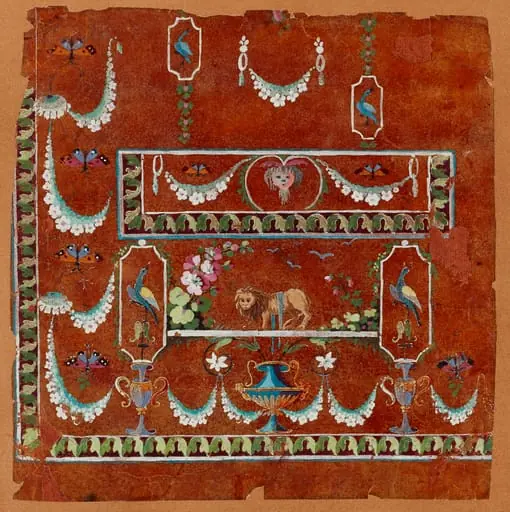 Gilet décor à grotesques, projets de broderies de gilet, XVIIIeme siècle
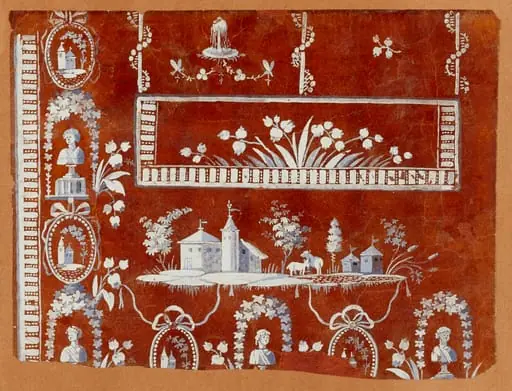 Gilet décor architectures rurales, projets de broderies de gilet, XVIIIème siècle
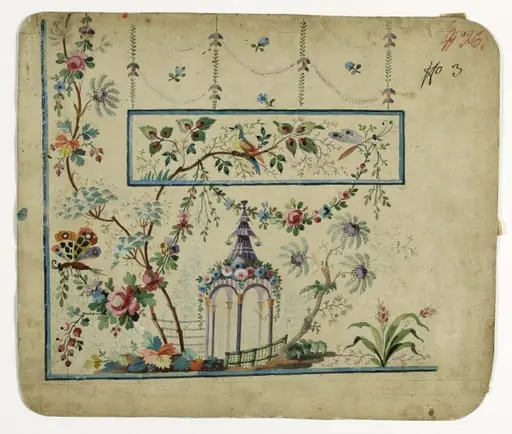 Gilet décor pagode, projets de broderies de gilet, XVIIIème siècle
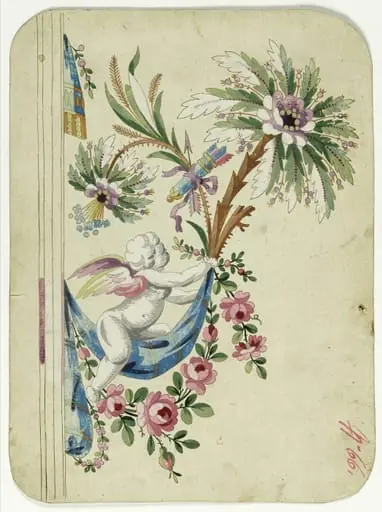 Décor de putti sur palmier, projets de broderies de gilet, XVIIIème siècle
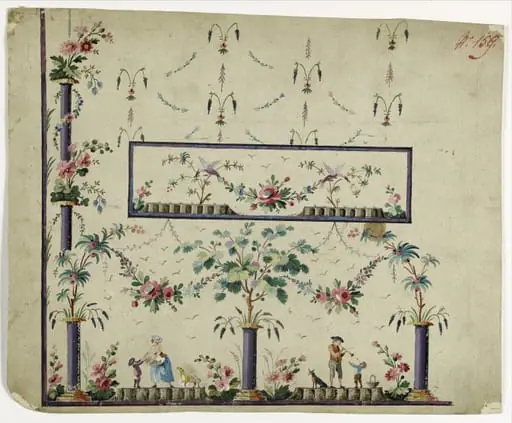 Gilet décor couple avec enfants, projets de broderies de gilet, XVIIIème siècle
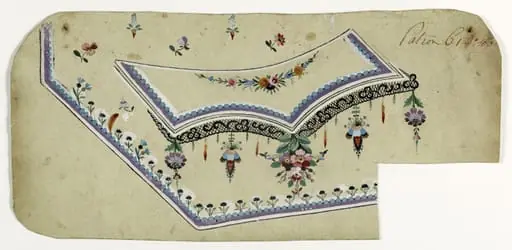 Gilet à la dentelle noire, projets de broderies de gilet, XVIIIème siècle
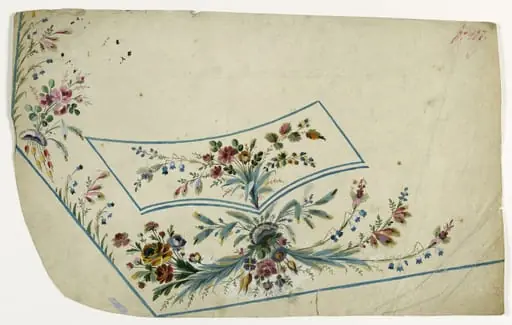 Gilet aux feuilles bleu-gris, projets de broderies de gilet, XVIIIème siècle
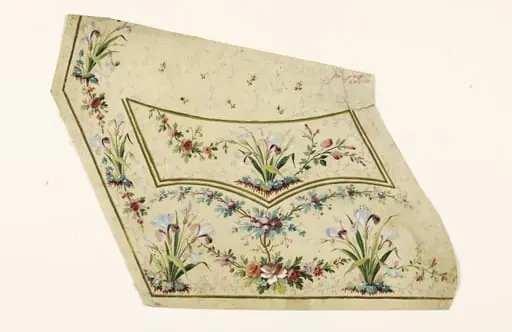 Composition de fleurs en bouquets et guirlandes de baies, projets de broderies de gilet, XVIIIème siècle
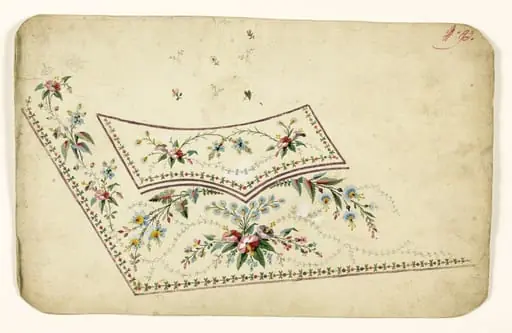 Composition de bouquets de fleurs et chardons, projets de broderies de gilet, XVIIIème siècle
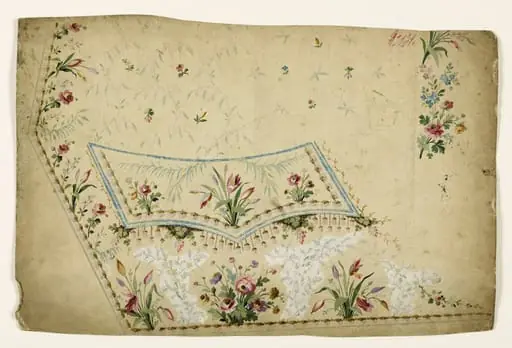 Composition avec bouquets de fleurs, frises de grappes et clochettes stylisées, projets de broderies de gilet, XVIIIème siècle
 Compositions florales sur tertre et guirlandes de fleurs, projets de broderies de gilet, XVIIIème siècle
 Composition de fleurs en guirlandes et en semis et frises de perles bleues, projets de broderies de gilet, XVIIIème siècle
 Composition de fleurs en bouquets et guirlandes de feuilles, projets de broderies de gilet, XVIIIème siècle
 Bouquets de fleurs, guirlandes de feuilles et semis de fleurs, projets de broderies de gilet, XVIIIème siècle
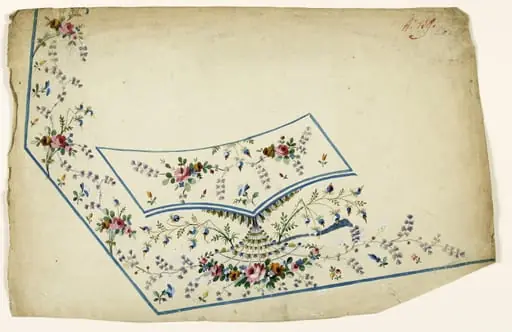 Composition à bouquet de fleurs en éventail et guirlandes de fleurs mauves, projets de broderies de gilet, XVIIIème siècle
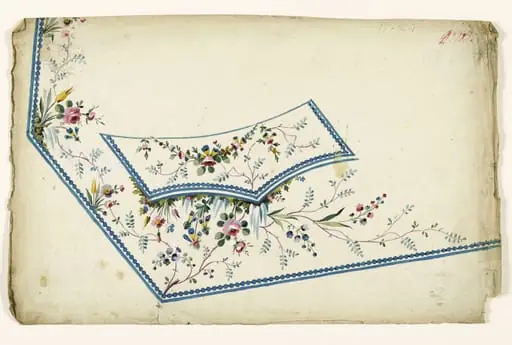 Composition de fleurs en branches et en bouquets, projets de broderies de gilet, XVIIIème siècle
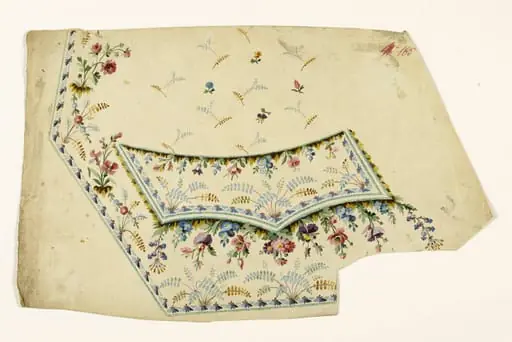 Composition de bouquets de feuilles en grappes et de fleurs multicolores, semis de fleurs et de feuilles, projets de broderies de gilet, XVIIIème siècle
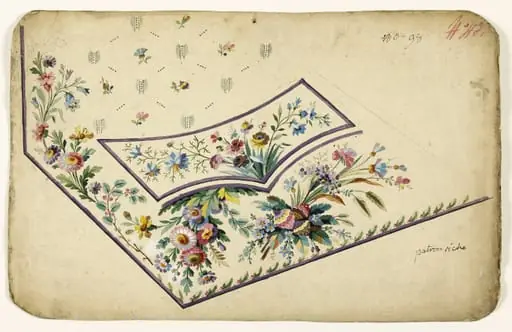 Composition de fleurs sauvages et fantaisistes en bouquets multicolores, projets de broderies de gilet, XVIIIème siècle
 Composition avec bouquet et guirlandes de fleurs et branches de feuilles et de baies bleues, projets de broderies de gilet, XVIIIème siècle