Artwork
Composition avec guirlandes de fleurs torsadées, frises de fleurs stylisées et de perles vertes, projets de broderies de gilet, XVIIIème siècle
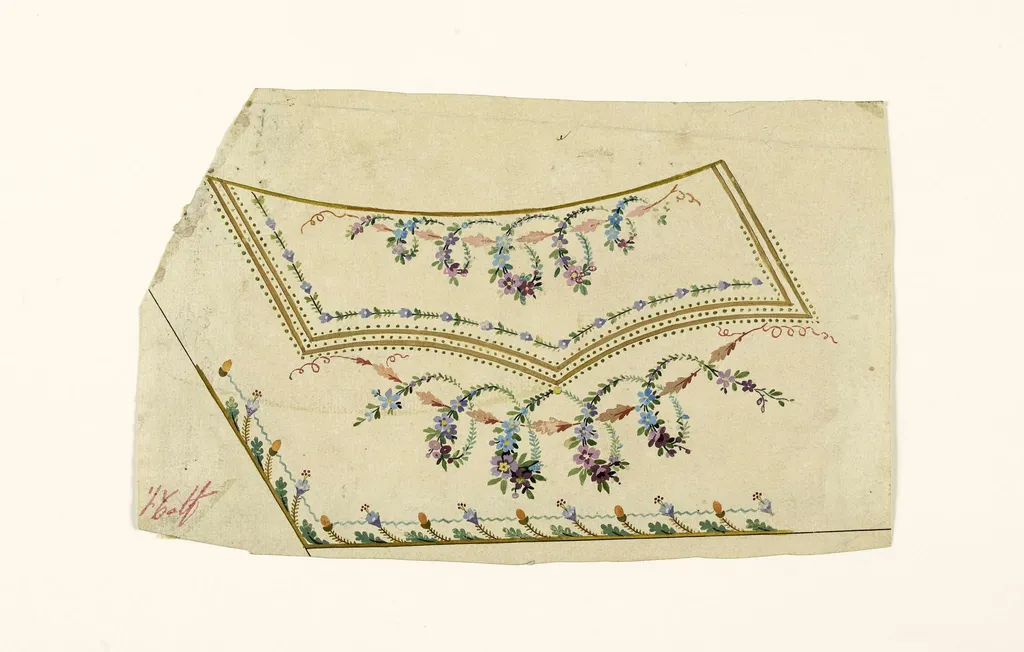
Composition avec guirlandes de fleurs torsadées, frises de fleurs stylisées et de perles vertes, projets de broderies de gilet, XVIIIème siècle is a drawing by Anonyme. It dates from 1750 and is held in the collection of the Palais Galliera - Musée de la Mode de la Ville de Paris.
About this work
Overview
Executed in soft pigments on a pale ground, it features interwoven floral motifs and beaded accents arranged in a continuous, undulating border.
This undated drawing from around 1750, attributed to an anonymous artist, presents a decorative pattern intended as a textile design template. Executed in soft pigments on a pale ground, it features interwoven floral motifs and beaded accents arranged in a continuous, undulating border. The composition lacks figural elements, focusing entirely on ornamental repetition, suggesting its function as a preparatory sketch for embroidery or fabric embellishment.
Subject & Meaning
The design centers on stylized floral garlands—twisting vines, clustered blossoms, and minute green beads—forming a rhythmic, frame-like structure. These elements draw from contemporary European decorative traditions, where natural forms were abstracted into elegant, symmetrical patterns. The absence of religious or narrative content implies a secular purpose, likely tied to fashion or domestic luxury, reflecting the era’s taste for refined, non-representational ornament.
Technique & Style
Rendered in delicate washes of muted pink, blue, and green, the drawing employs subtle tonal shifts to suggest volume without shading. Fine lines define stems and petals, while clusters of tiny dots and curling tendrils outline the border, mimicking the texture of stitched beadwork. The loose, fluid handling indicates a sketchbook origin, where speed and clarity took precedence over finish, typical of design drafts circulated among artisans.
History & Provenance
The drawing resides in the collection of the Museum of Ethnography, though its exact origin before acquisition remains undocumented. Its presence there suggests it was collected as an example of 18th-century European textile design practice rather than as fine art. Likely produced in a workshop or atelier, it may have circulated among embroiderers or tailors as a reusable pattern template.
Context
In mid-18th-century France and England, elaborate embroidery adorned aristocratic garments, and pattern books circulated widely among craftsmen. This drawing aligns with the Rococo aesthetic, favoring asymmetrical curves, naturalistic yet stylized flora, and delicate color palettes. Similar motifs appear in printed textile samples and embroidery manuals, indicating a shared visual vocabulary among designers and artisans of the period.
Legacy
Though unsigned and unattributed, the drawing preserves a snapshot of artisanal design processes before industrial printing. It reflects how ornament was conceived as modular, repeatable, and adaptable—principles that later influenced textile manufacturing. Its survival in a museum of ethnography underscores its value as a cultural artifact of craft rather than individual artistic expression.
Artist & collection
Artist
A French designer from the 1700s made delicate flower drawings meant to decorate vests.
Museum
Palais Galliera - Musée de la Mode de la Ville de Paris
Continue through works from the same source collection.
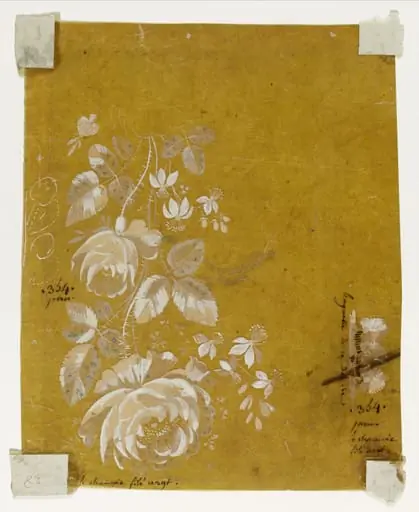 Bouquet de roses blanches pour étoffe, projets de broderies de gilet, XVIIIème siècle
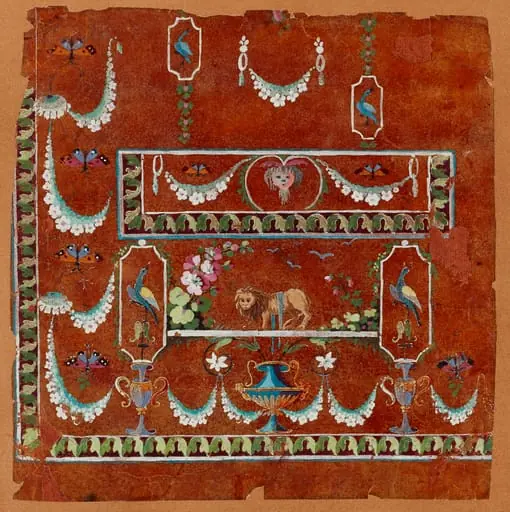 Gilet décor à grotesques, projets de broderies de gilet, XVIIIeme siècle
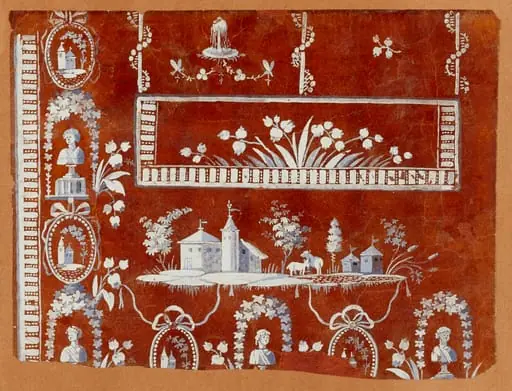 Gilet décor architectures rurales, projets de broderies de gilet, XVIIIème siècle
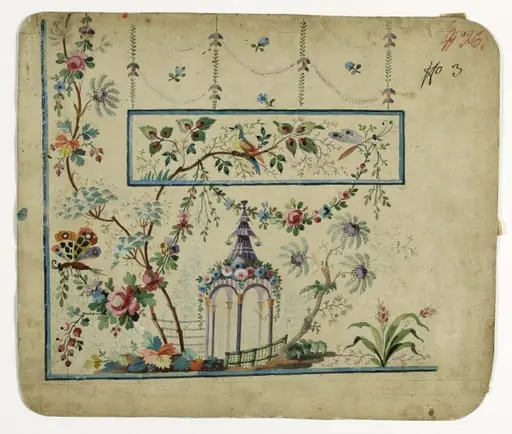 Gilet décor pagode, projets de broderies de gilet, XVIIIème siècle
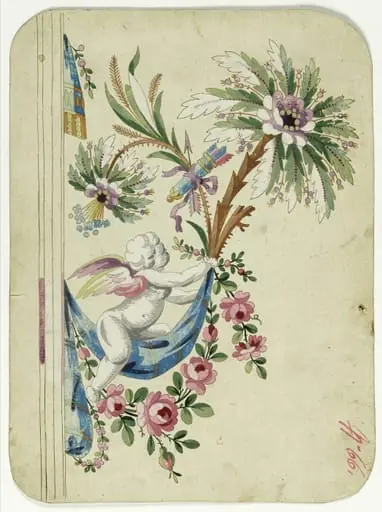 Décor de putti sur palmier, projets de broderies de gilet, XVIIIème siècle
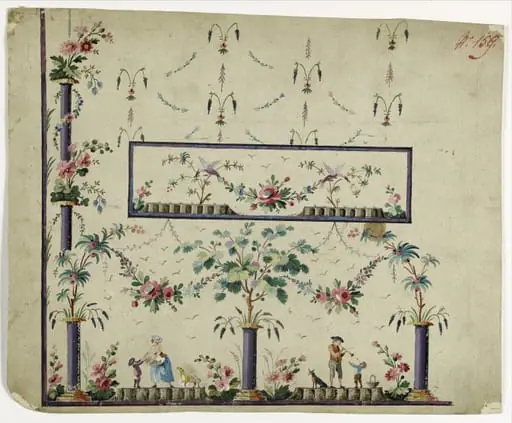 Gilet décor couple avec enfants, projets de broderies de gilet, XVIIIème siècle
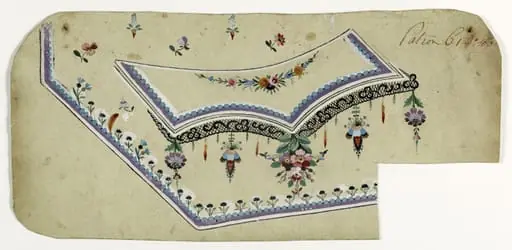 Gilet à la dentelle noire, projets de broderies de gilet, XVIIIème siècle
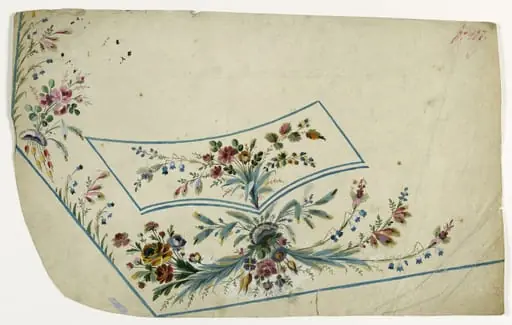 Gilet aux feuilles bleu-gris, projets de broderies de gilet, XVIIIème siècle
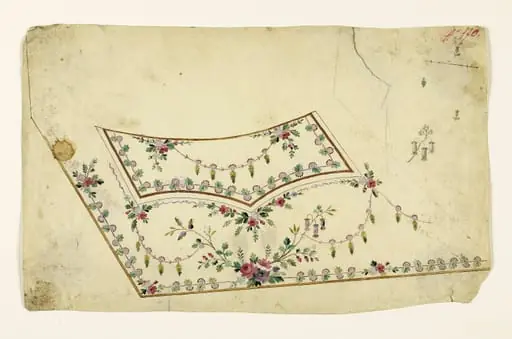 Composition avec bouquet de fleurs, guirlandes et frises de feuilles et de fleurs stylisées, projets de broderies de gilet, XVIIIème siècle
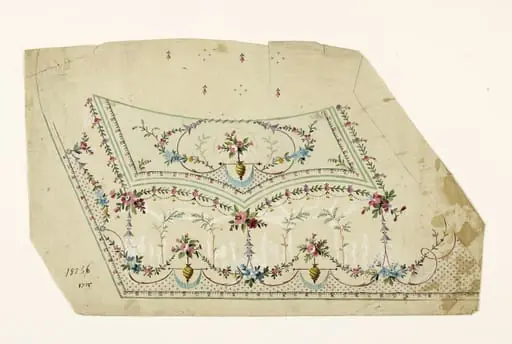 Composition de guirlandes de fleurs, de clochettes et de perles, motifs de culots torsadés et suspendus, projets de broderies de gilet, XVIIIème siècle
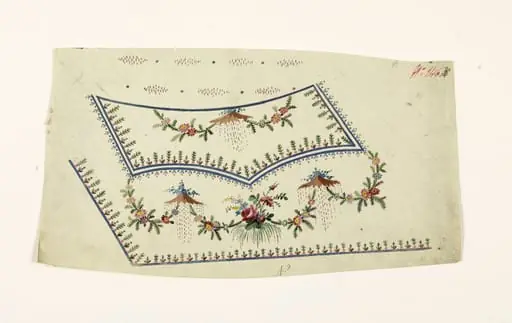 Composition avec bouquet et guirlandes de fleurs, bleuets sur tertres et frises de fleurs stylisées, projets de broderies de gilet, XVIIIème siècle
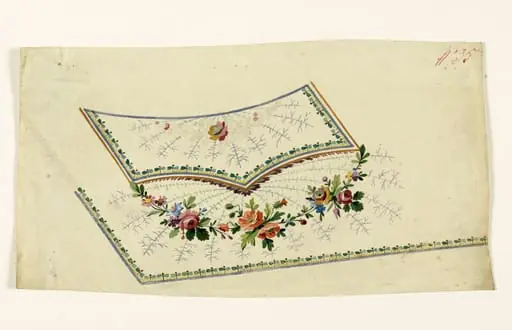 Composition avec guirlandes de fleurs multicolores, motifs rayonnants de branches et frises stylisées, projets de broderies de gilet, XVIIIème siècle
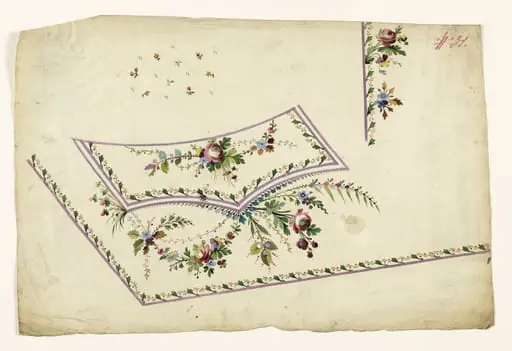 Composition de guirlandes de fleurs, frises de feuilles et de baies rouges, projets de broderies de gilet, XVIIIème siècle
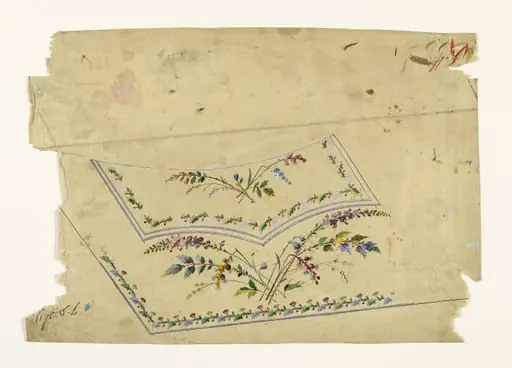 Composition avec brins de fleurs champêtres et guirlandes de feuilles et de fleurs, projets de broderies de gilet, XVIIIème siècle
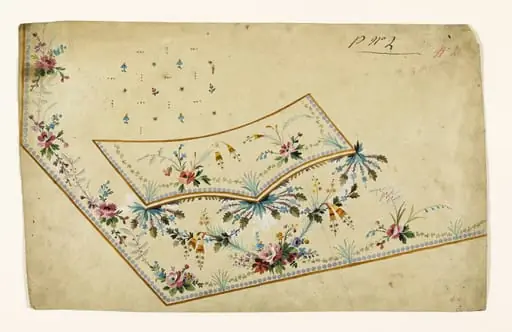 Composition avec guirlandes de fleurs, frises de perles lavande, projets de broderies de gilet, XVIIIème siècle
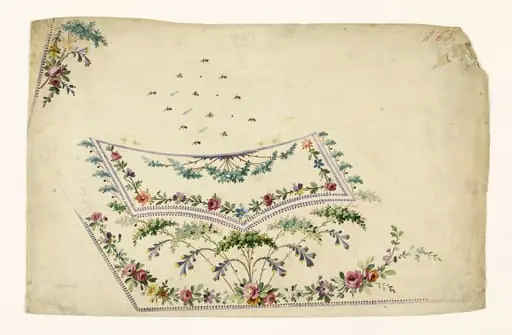 Composition avec guirlandes de fleurs et feuilles en grappes, projets de broderies de gilet, XVIIIème siècle
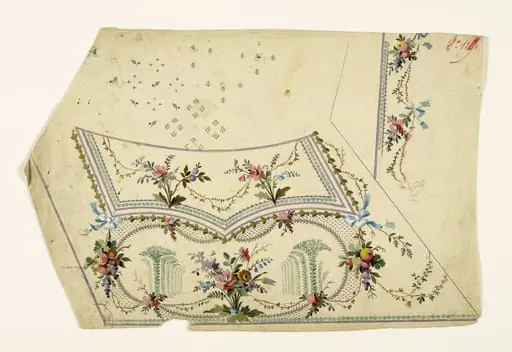 Composition avec bouquet de fleurs, guirlandes stylisées avec rubans bleus et grappes de fruits suspendues, projets de broderies de gilet, XVIIIème siècle
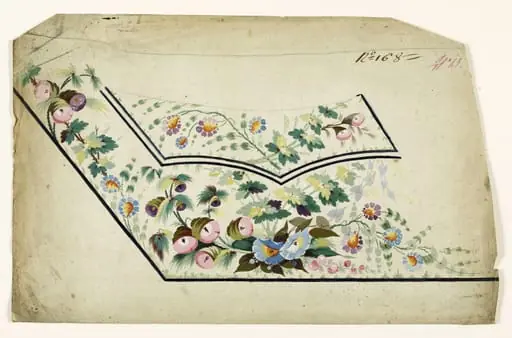 Composition de fleurs sauvages, projets de broderies de gilet, XVIIIème siècle
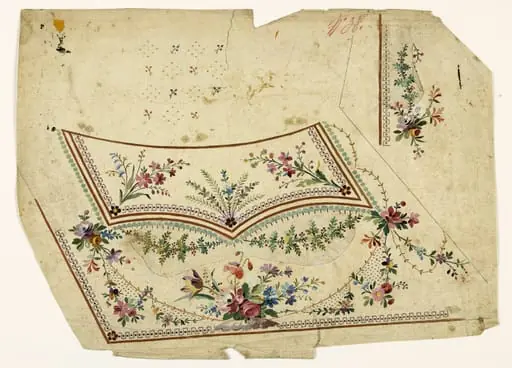 Composition avec bouquets de fleurs, frises de perles amandes et de grecques mauves, projets de broderies de gilet, XVIIIème siècle