Artwork
Composition avec brins de fleurs champêtres et guirlandes de feuilles et de fleurs, projets de broderies de gilet, XVIIIème siècle
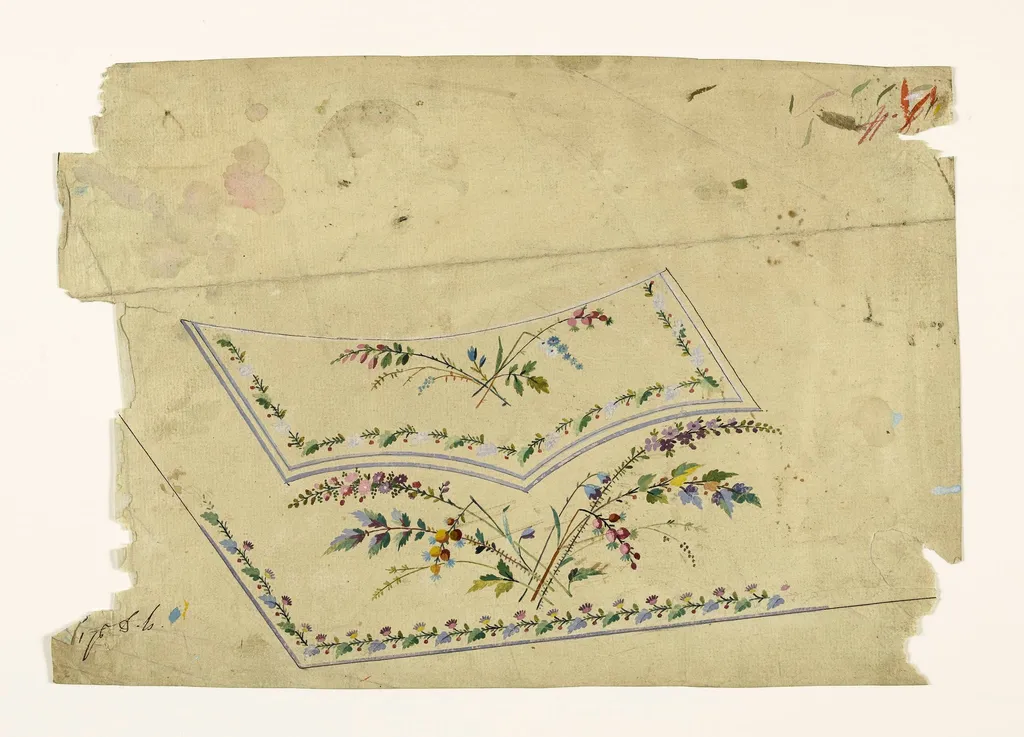
Composition avec brins de fleurs champêtres et guirlandes de feuilles et de fleurs, projets de broderies de gilet, XVIIIème siècle is a drawing by Anonyme. It dates from 1750 and is held in the collection of the Palais Galliera - Musée de la Mode de la Ville de Paris. The piece, a design for a vest embroidery, dates to around 1750 and originates from an unknown artist.
About this work
Overview
The piece, a design for a vest embroidery, dates to around 1750 and originates from an unknown artist. Executed on a yellowed sheet of paper, the drawing presents a triangular framework divided into three curved panels filled with stylised floral and foliage motifs. The work is part of the collection of the Museum of Ethnography.
Subject & Meaning
The composition features loosely arranged bouquets of pastoral flowers—pinks, blues, whites and greens—intertwined with leafy garlands. These decorative elements echo the eighteenth‑century taste for naturalistic yet idealised motifs, intended to guide the creation of embroidered garments rather than to serve as a finished artwork.
Technique & Style
Rendered with delicate washes and fine cross‑hatching, the drawing builds texture through intersecting lines that suggest the surface of embroidered stitches. The muted palette and softened outlines reflect the aging of the paper, while the overall layout follows the ornamental conventions of French and Austrian textile design of the period.
History & Provenance
Created circa 1750, the design’s anonymous authorship is typical of workshop patterns circulated among tailors and embroiderers. It entered the Museum of Ethnography’s holdings through a 20th‑century acquisition of decorative arts, where it has been preserved as an example of applied‑art documentation.
Context
During the mid‑eighteenth century, garment decoration relied heavily on paper patterns that translated pictorial motifs into needlework. Such designs were especially popular for men’s waistcoats, where floral garlands added a genteel, countryside aesthetic to formal attire, reflecting broader Enlightenment interests in nature and ornament.
Artist & collection
Artist
A French designer from the 1700s made delicate flower drawings meant to decorate vests.
Museum
Palais Galliera - Musée de la Mode de la Ville de Paris
Continue through works from the same source collection.
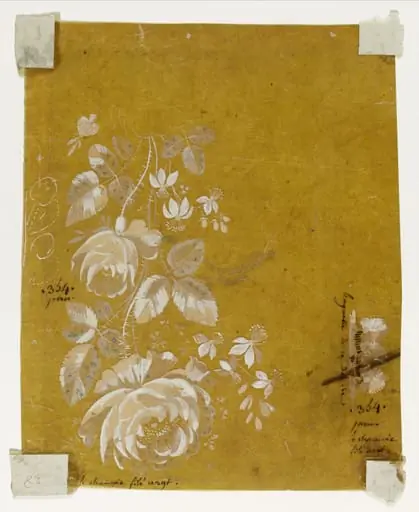 Bouquet de roses blanches pour étoffe, projets de broderies de gilet, XVIIIème siècle
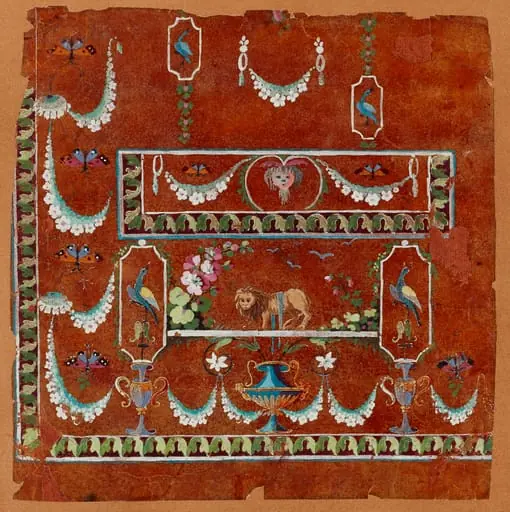 Gilet décor à grotesques, projets de broderies de gilet, XVIIIeme siècle
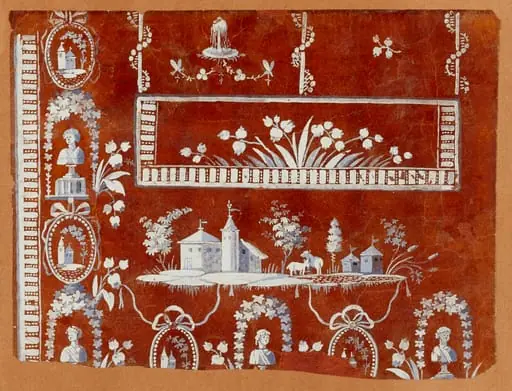 Gilet décor architectures rurales, projets de broderies de gilet, XVIIIème siècle
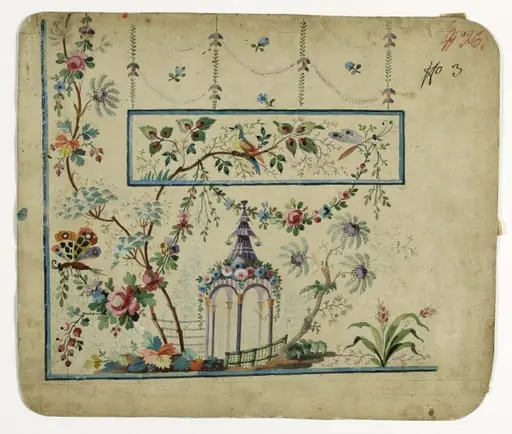 Gilet décor pagode, projets de broderies de gilet, XVIIIème siècle
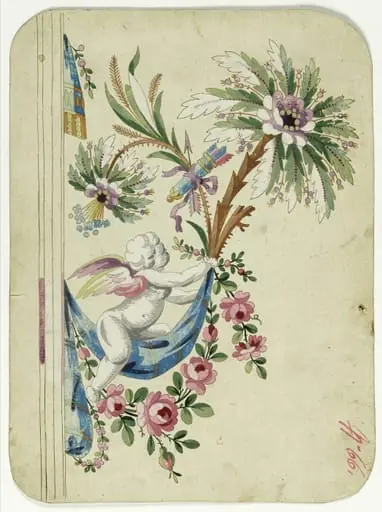 Décor de putti sur palmier, projets de broderies de gilet, XVIIIème siècle
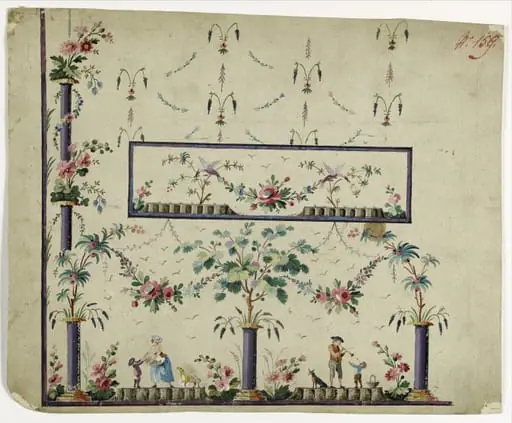 Gilet décor couple avec enfants, projets de broderies de gilet, XVIIIème siècle
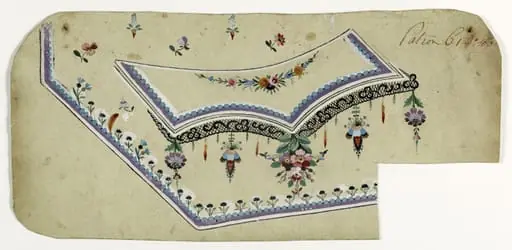 Gilet à la dentelle noire, projets de broderies de gilet, XVIIIème siècle
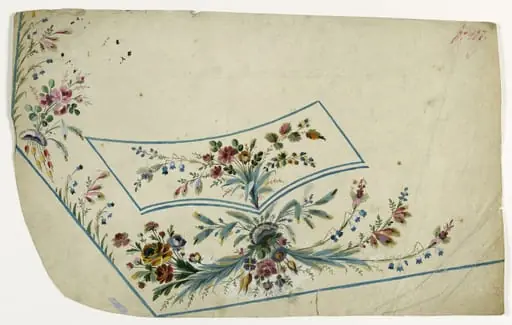 Gilet aux feuilles bleu-gris, projets de broderies de gilet, XVIIIème siècle
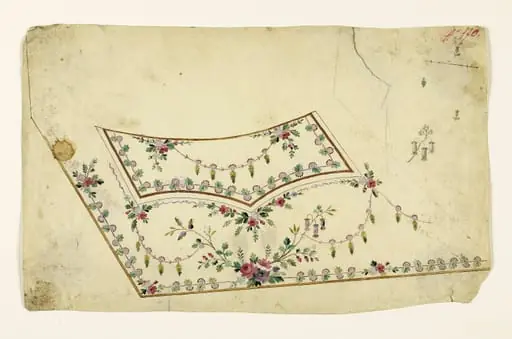 Composition avec bouquet de fleurs, guirlandes et frises de feuilles et de fleurs stylisées, projets de broderies de gilet, XVIIIème siècle
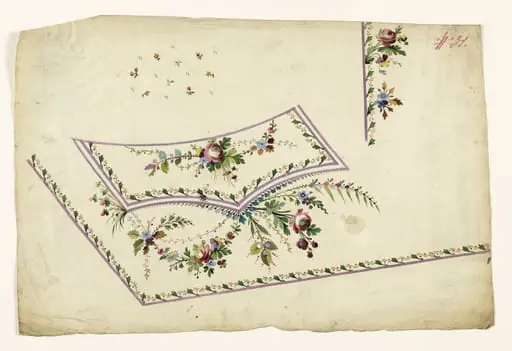 Composition de guirlandes de fleurs, frises de feuilles et de baies rouges, projets de broderies de gilet, XVIIIème siècle
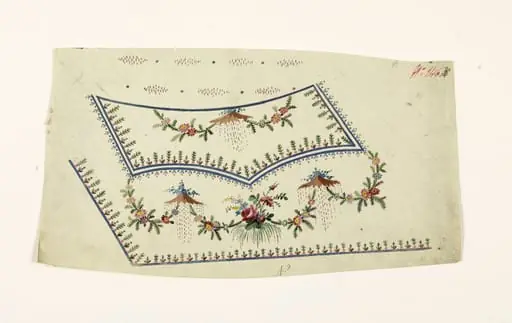 Composition avec bouquet et guirlandes de fleurs, bleuets sur tertres et frises de fleurs stylisées, projets de broderies de gilet, XVIIIème siècle
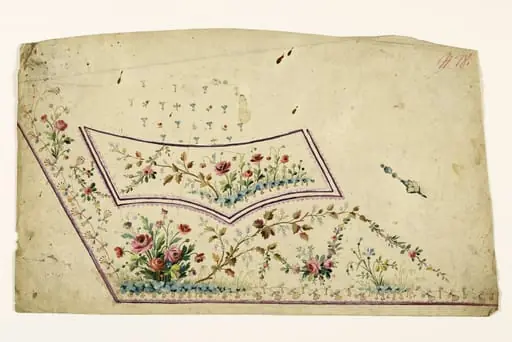 Composition avec bouquet et guirlandes de fleurs et branches de feuilles et de baies bleues, projets de broderies de gilet, XVIIIème siècle
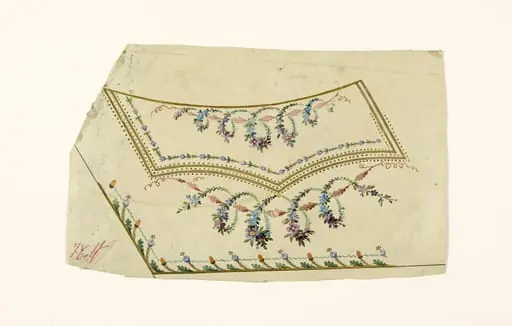 Composition avec guirlandes de fleurs torsadées, frises de fleurs stylisées et de perles vertes, projets de broderies de gilet, XVIIIème siècle
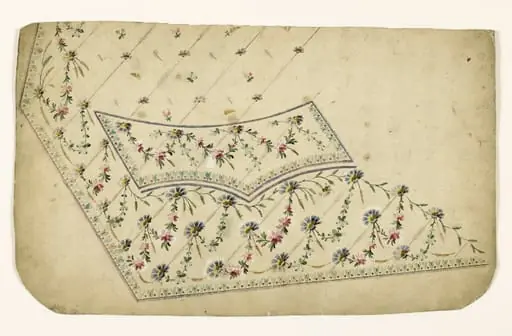 Composition de croisillons de fleurs et de feuilles, frises de feuilles et baies rouges, projets de broderies de gilet, XVIIIème siècle
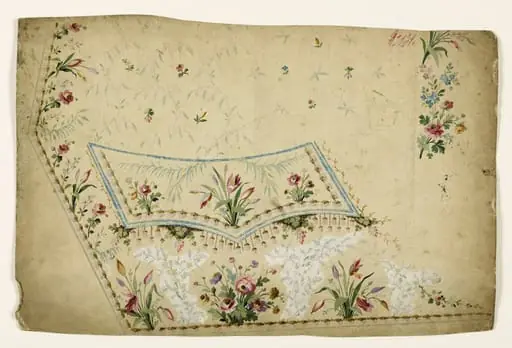 Composition avec bouquets de fleurs, frises de grappes et clochettes stylisées, projets de broderies de gilet, XVIIIème siècle
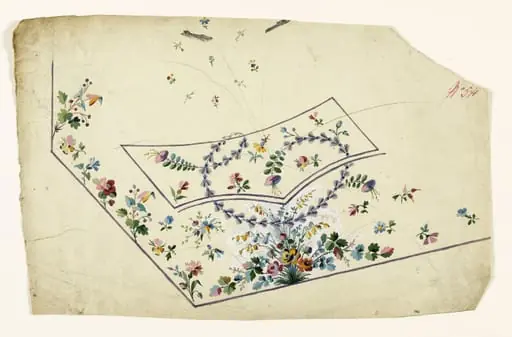 Composition de bouquets de fleurs multicolores et guirlandes de fleurs mauves, projets de broderies de gilet, XVIIIème siècle
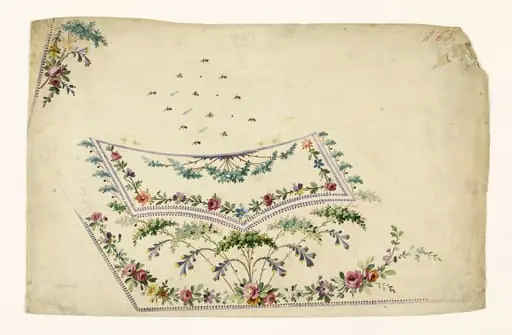 Composition avec guirlandes de fleurs et feuilles en grappes, projets de broderies de gilet, XVIIIème siècle
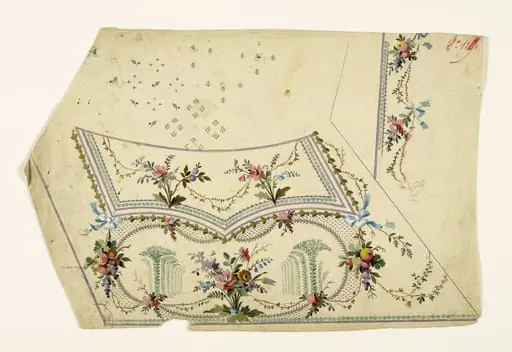 Composition avec bouquet de fleurs, guirlandes stylisées avec rubans bleus et grappes de fruits suspendues, projets de broderies de gilet, XVIIIème siècle
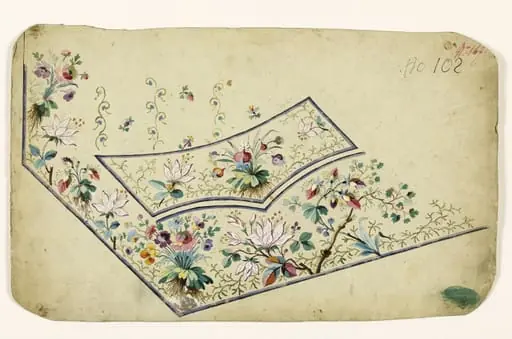 Composition de fleurs champêtres en branches et en bouquets, projets de broderies de gilet, XVIIIème siècle