Artwork
Bouquets de branches et de fleurs et frises de baies bleues, projets de broderies de gilet, XVIIIème siècle
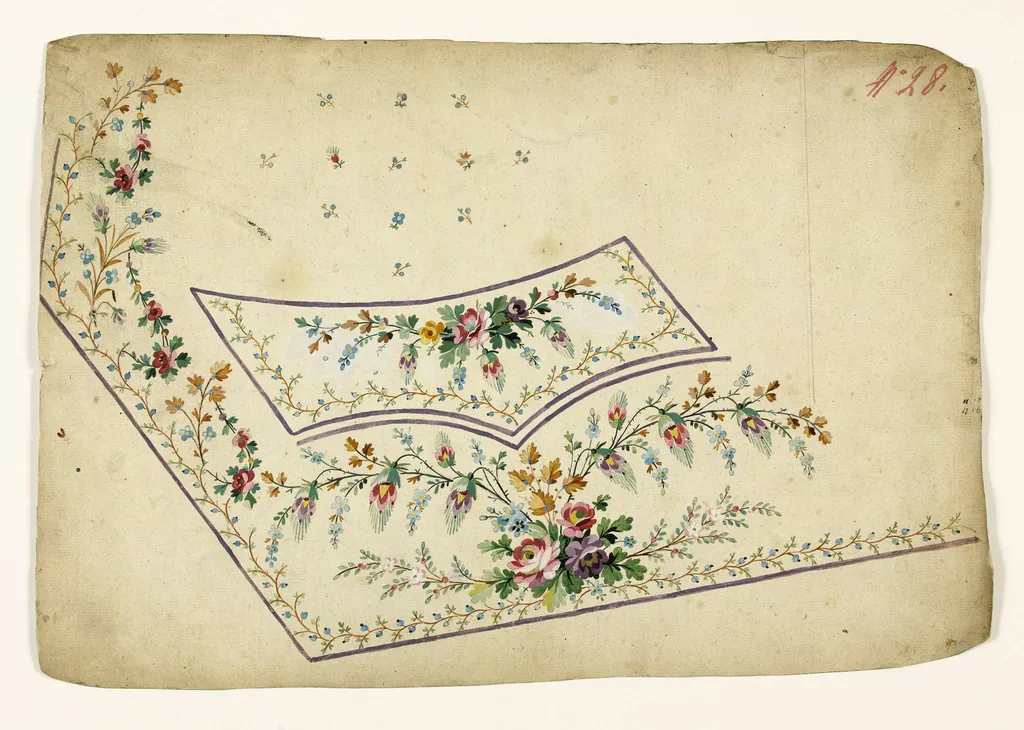
Bouquets de branches et de fleurs et frises de baies bleues, projets de broderies de gilet, XVIIIème siècle is a drawing by Anonyme. It dates from 1750 and is held in the collection of the Palais Galliera - Musée de la Mode de la Ville de Paris. This anonymous 18th-century design sheet, dated around 1750, presents two diamond-shaped embroidery patterns intended for a waistcoat.
About this work
Overview
Faint underlying sketch lines suggest iterative refinement, indicating its function as a working template rather than a finished artwork.
This anonymous 18th-century design sheet, dated around 1750, presents two diamond-shaped embroidery patterns intended for a waistcoat. Executed in pencil and light ink on aged paper, the composition features floral and berry motifs arranged with rhythmic symmetry. Faint underlying sketch lines suggest iterative refinement, indicating its function as a working template rather than a finished artwork.
Subject & Meaning
The designs center on stylized bouquets of flowers and clusters of blue berries, framed by delicate vines and buds. These natural elements reflect the period’s fascination with botanical precision in decorative arts. While not overtly symbolic, the repetition of floral forms aligns with contemporary ideals of order and cultivated beauty, common in aristocratic textile decoration of the time.
Technique & Style
The artist employed fine pencil lines to outline shapes, with subtle ink accents defining contours and details. The flowers and berries are rendered with minimal shading, relying on linear precision and spacing to suggest volume. Tiny, closely spaced dots and strokes imply texture, possibly mimicking the stitchwork intended for the final embroidered garment.
History & Provenance
The drawing resides in the collection of the Museum of Ethnography, though its prior ownership remains undocumented. Its survival suggests it was preserved not as fine art, but as a functional artifact of textile craftsmanship. Likely produced in a Parisian atelier, it reflects the transmission of design knowledge among embroiderers and tailors in pre-revolutionary France.
Context
In mid-18th-century France, embroidered waistcoats were status symbols among the elite. Design sheets like this were circulated among artisans to standardize motifs and ensure consistency across garments. The prevalence of floral patterns mirrored broader trends in Rococo decoration, where nature-inspired ornamentation adorned both fashion and interior design.
Legacy
Though unsigned and unattributed, this sheet preserves a tangible link to the skilled labor behind elite fashion. It offers insight into the preparatory stages of textile production, revealing how aesthetic ideals were translated into stitch. Today, it serves as a quiet testament to the anonymous artisans whose work shaped the material culture of their era.
Artist & collection
Artist
A French designer from the 1700s made delicate flower drawings meant to decorate vests.
Museum
Palais Galliera - Musée de la Mode de la Ville de Paris
Continue through works from the same source collection.
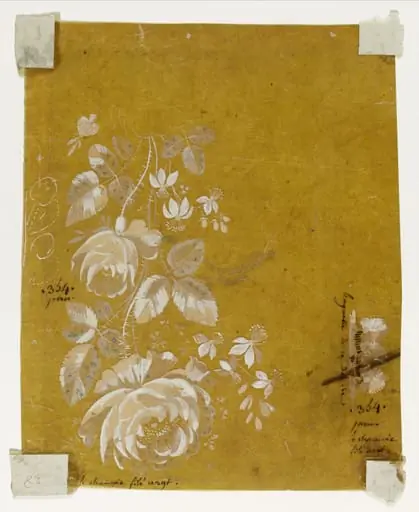 Bouquet de roses blanches pour étoffe, projets de broderies de gilet, XVIIIème siècle
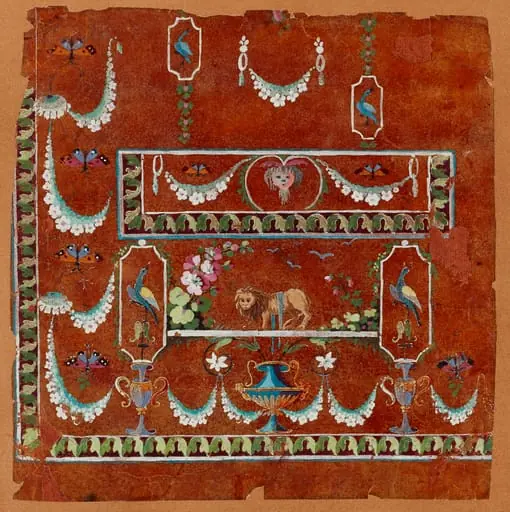 Gilet décor à grotesques, projets de broderies de gilet, XVIIIeme siècle
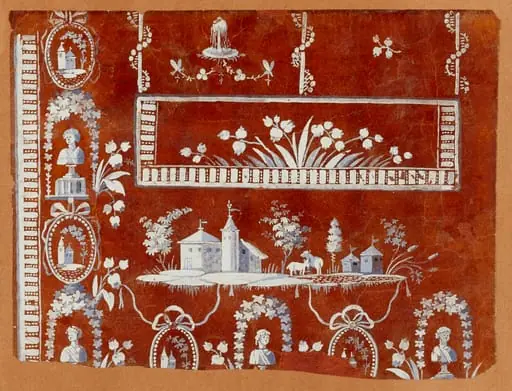 Gilet décor architectures rurales, projets de broderies de gilet, XVIIIème siècle
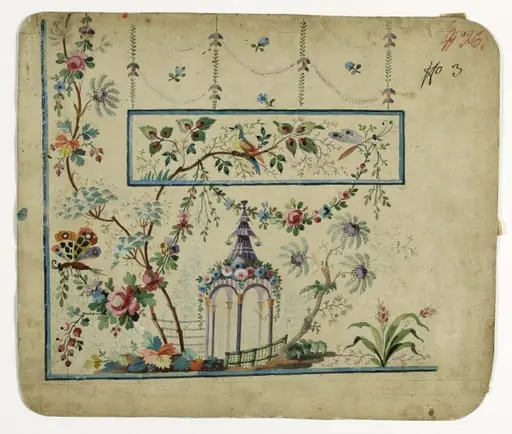 Gilet décor pagode, projets de broderies de gilet, XVIIIème siècle
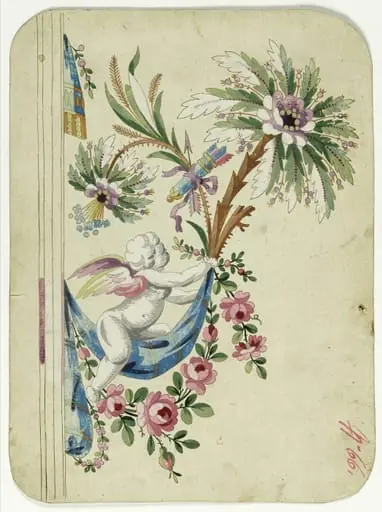 Décor de putti sur palmier, projets de broderies de gilet, XVIIIème siècle
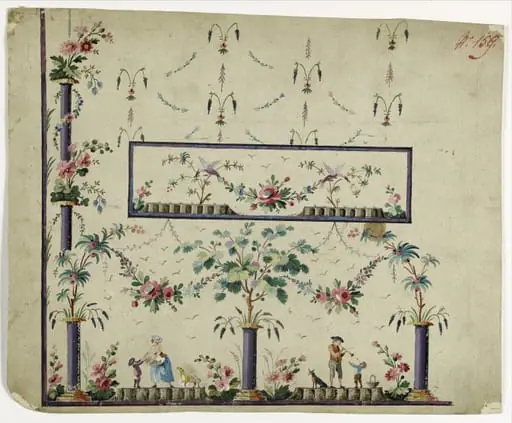 Gilet décor couple avec enfants, projets de broderies de gilet, XVIIIème siècle
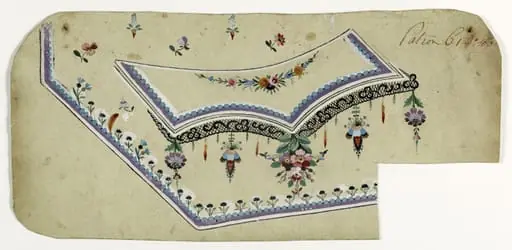 Gilet à la dentelle noire, projets de broderies de gilet, XVIIIème siècle
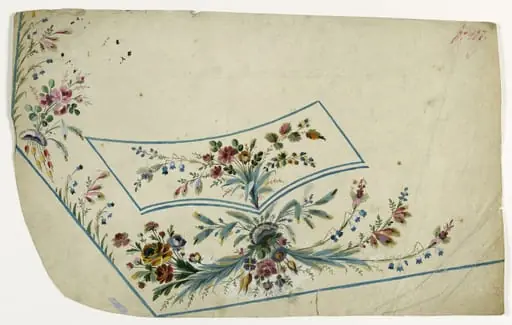 Gilet aux feuilles bleu-gris, projets de broderies de gilet, XVIIIème siècle
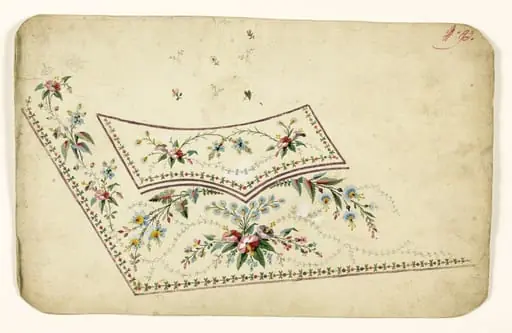 Composition de bouquets de fleurs et chardons, projets de broderies de gilet, XVIIIème siècle
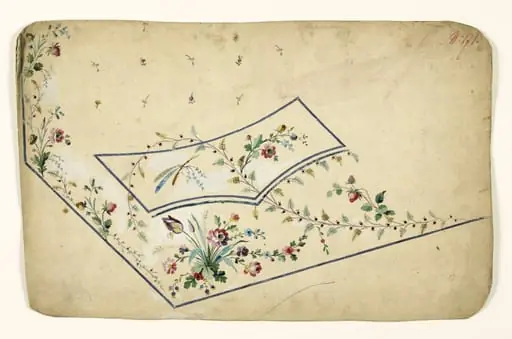 Composition avec bouquets et guirlandes de fleurs et phasme sur branche, projets de broderies de gilet, XVIIIème siècle
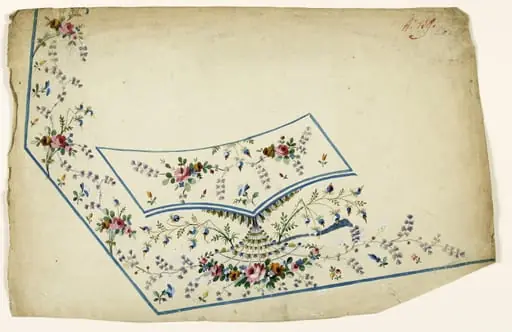 Composition à bouquet de fleurs en éventail et guirlandes de fleurs mauves, projets de broderies de gilet, XVIIIème siècle
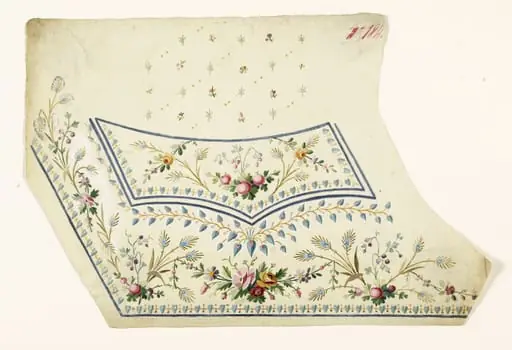 Composition de bouquets de fleurs et de baies et semis de fleurs, projets de broderies de gilet, XVIIIème siècle
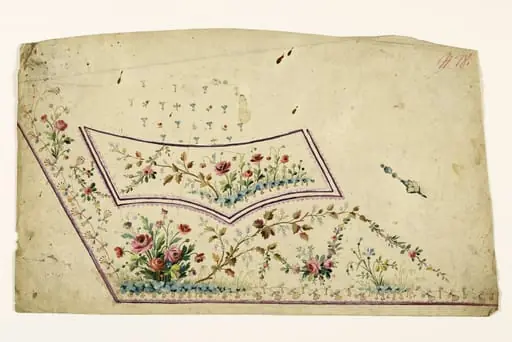 Composition avec bouquet et guirlandes de fleurs et branches de feuilles et de baies bleues, projets de broderies de gilet, XVIIIème siècle
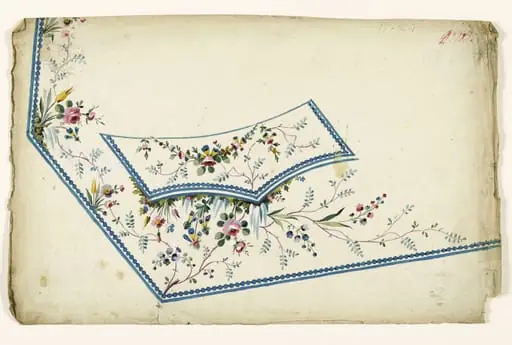 Composition de fleurs en branches et en bouquets, projets de broderies de gilet, XVIIIème siècle
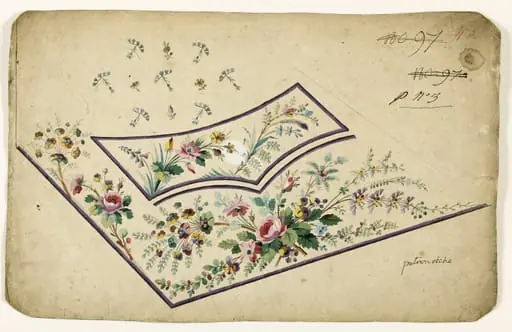 Composition florale en bouquets, projets de broderies de gilet, XVIIIème siècle
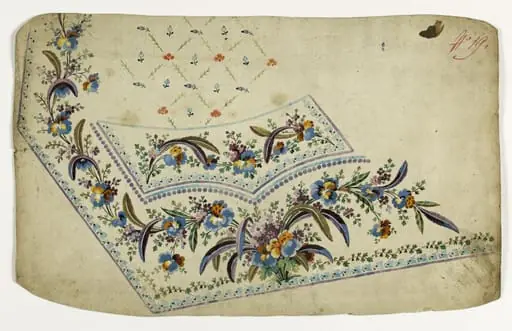 Gilet fleurs bleues et orange, projets de broderies de gilet, XVIIIème siècle
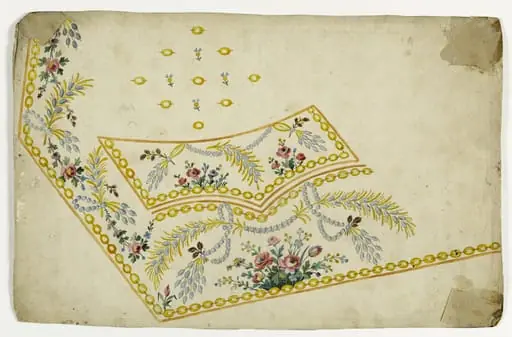 Gilet perles et fleurs, projets de broderies de gilet, XVIIIème siècle
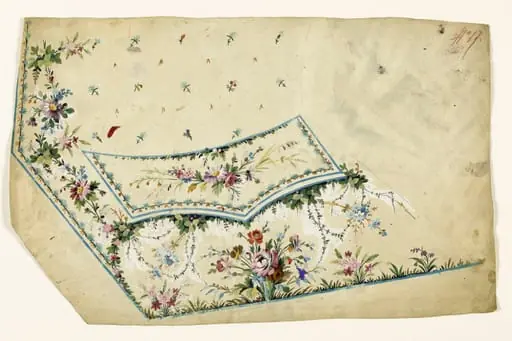 Bouquets de fleurs, guirlandes de feuilles et semis de fleurs, projets de broderies de gilet, XVIIIème siècle