Artwork
Composition de guirlandes de fleurs et branches de feuilles, projets de broderies de gilet, XVIIIème siècle
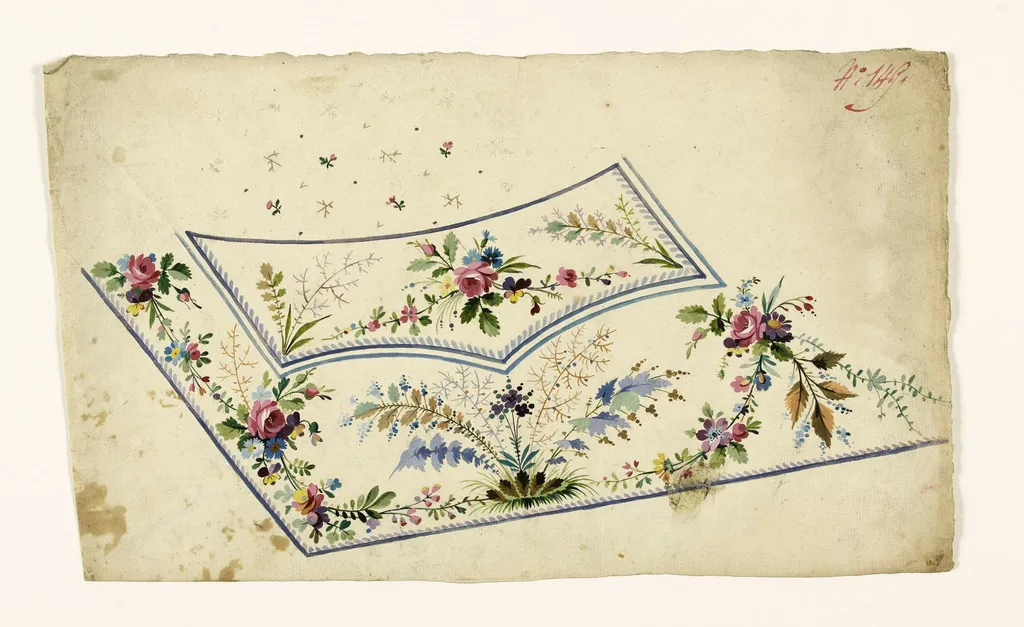
Composition de guirlandes de fleurs et branches de feuilles, projets de broderies de gilet, XVIIIème siècle is a drawing by Anonyme. It dates from 1750 and is held in the collection of the Palais Galliera - Musée de la Mode de la Ville de Paris. This eighteenth‑century drawing, attributed to an unknown artist and dated around 1750, is part of the Museum of Ethnography’s collection.
About this work
Overview
This eighteenth‑century drawing, attributed to an unknown artist and dated around 1750, is part of the Museum of Ethnography’s collection. Executed on aged, slightly yellowed paper, the work consists of two diamond‑shaped panels filled with ornamental botanical motifs intended as design templates.
Subject & Meaning
Each panel presents a dense garland of flowers, leaves, berries and buds rendered in a palette of soft pinks, blues, greens, with touches of yellow and red. The composition balances naturalistic detail with stylised arrangement, reflecting the decorative tastes of the period’s textile design.
Technique & Style
The drawing is executed in fine pencil lines, highlighted by a thin blue outline that defines the frame edges. Delicate shading suggests texture, while the overall layout follows the symmetrical, ornamental conventions typical of French and European embroidery sketches of the mid‑1700s.
History & Provenance
Created circa 1750, the piece entered the Museum of Ethnography’s holdings as part of its collection of historical costume and textile design materials. Its anonymous authorship is common for workshop‑produced pattern books used by tailors and embroiderers.
Context
During the eighteenth century, embroidered vests (gilets) were fashionable garments for both men and women. Designers produced paper sketches like this one to guide needleworkers in translating intricate floral motifs onto fabric, a practice that linked visual arts with applied craft.
Artist & collection
Artist
A French designer from the 1700s made delicate flower drawings meant to decorate vests.
Museum
Palais Galliera - Musée de la Mode de la Ville de Paris
Continue through works from the same source collection.
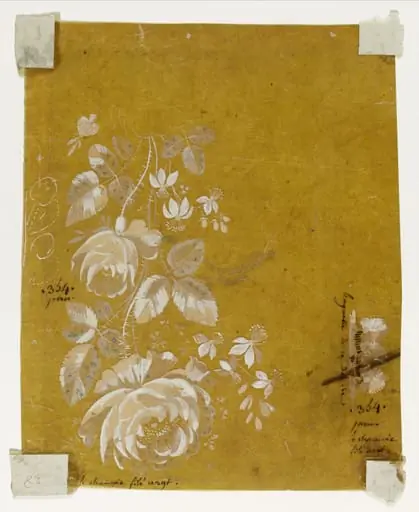 Bouquet de roses blanches pour étoffe, projets de broderies de gilet, XVIIIème siècle
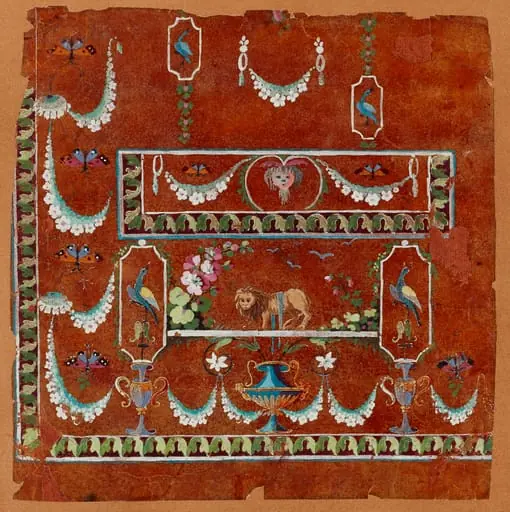 Gilet décor à grotesques, projets de broderies de gilet, XVIIIeme siècle
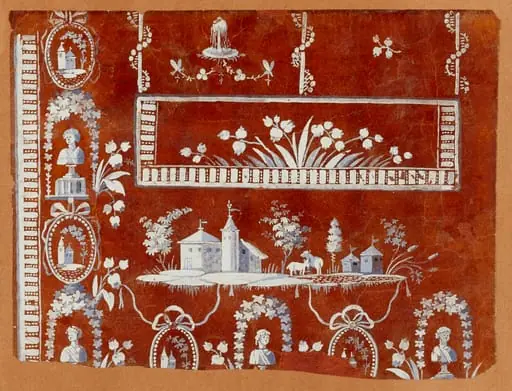 Gilet décor architectures rurales, projets de broderies de gilet, XVIIIème siècle
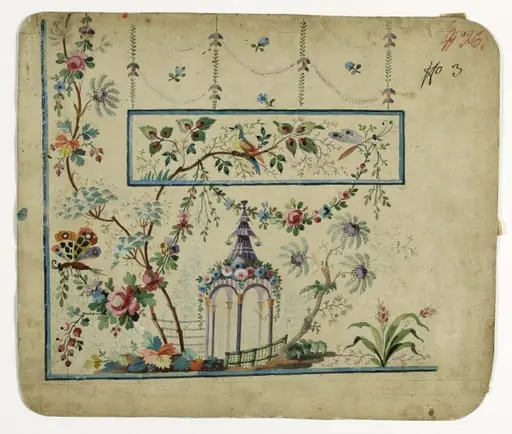 Gilet décor pagode, projets de broderies de gilet, XVIIIème siècle
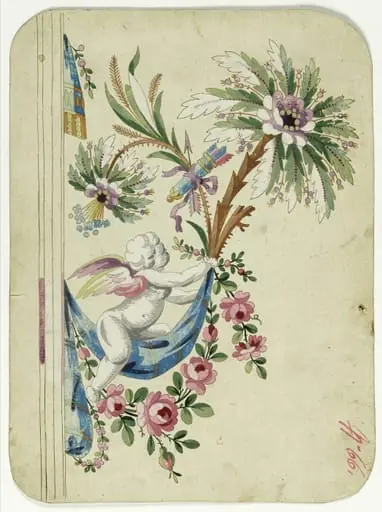 Décor de putti sur palmier, projets de broderies de gilet, XVIIIème siècle
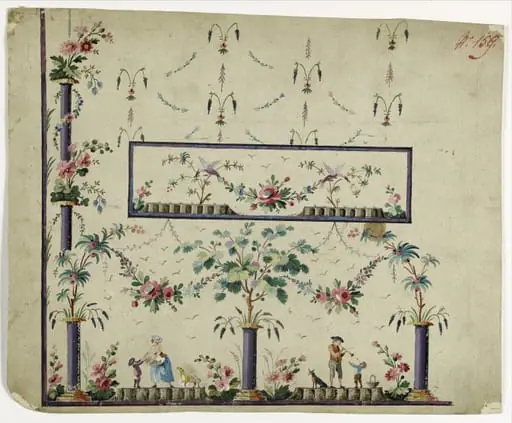 Gilet décor couple avec enfants, projets de broderies de gilet, XVIIIème siècle
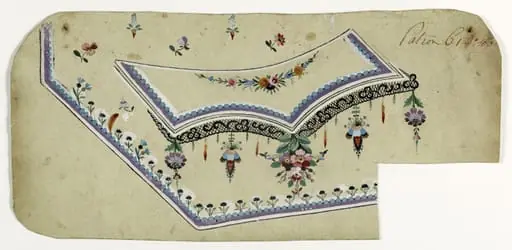 Gilet à la dentelle noire, projets de broderies de gilet, XVIIIème siècle
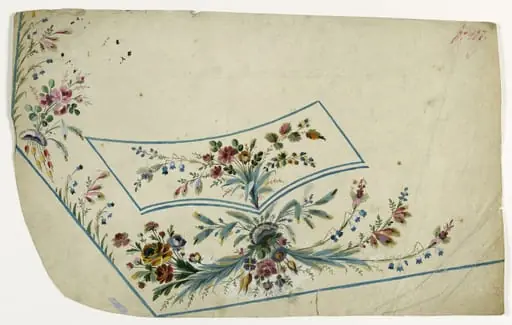 Gilet aux feuilles bleu-gris, projets de broderies de gilet, XVIIIème siècle
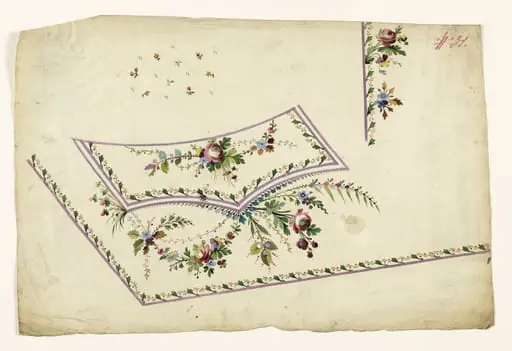 Composition de guirlandes de fleurs, frises de feuilles et de baies rouges, projets de broderies de gilet, XVIIIème siècle
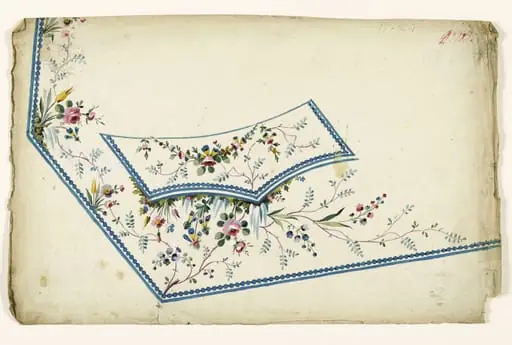 Composition de fleurs en branches et en bouquets, projets de broderies de gilet, XVIIIème siècle
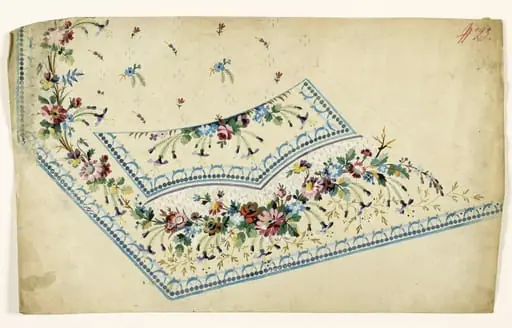 Composition de fleurs en guirlandes et en semis et frises de perles bleues, projets de broderies de gilet, XVIIIème siècle
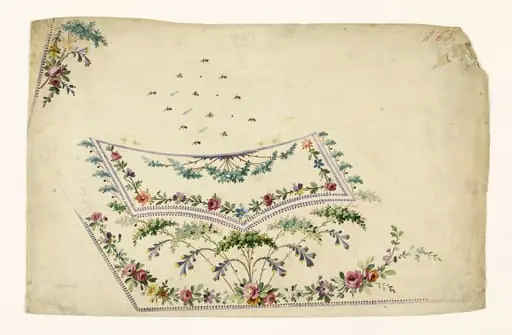 Composition avec guirlandes de fleurs et feuilles en grappes, projets de broderies de gilet, XVIIIème siècle
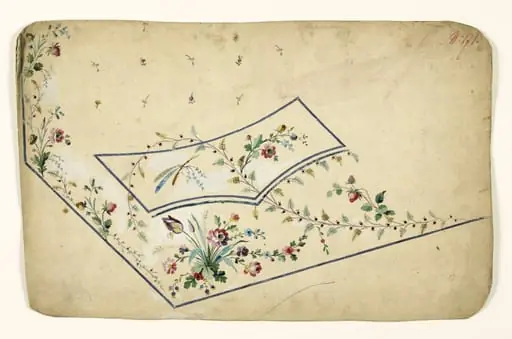 Composition avec bouquets et guirlandes de fleurs et phasme sur branche, projets de broderies de gilet, XVIIIème siècle
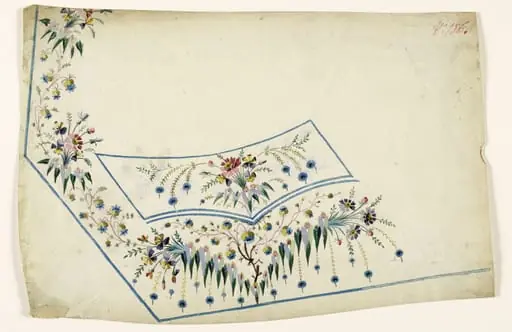 Composition florale en guirlandes, projets de broderies de gilet, XVIIIème siècle
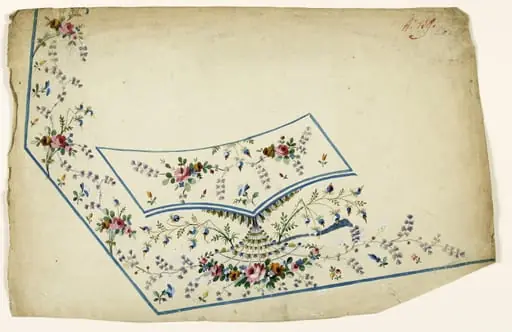 Composition à bouquet de fleurs en éventail et guirlandes de fleurs mauves, projets de broderies de gilet, XVIIIème siècle
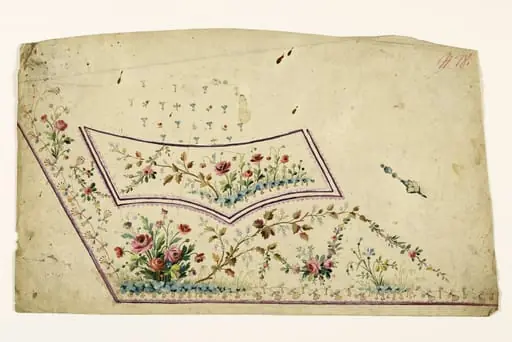 Composition avec bouquet et guirlandes de fleurs et branches de feuilles et de baies bleues, projets de broderies de gilet, XVIIIème siècle
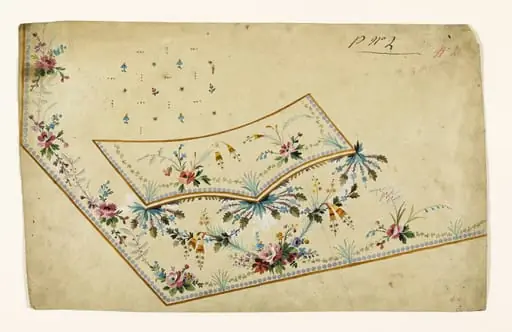 Composition avec guirlandes de fleurs, frises de perles lavande, projets de broderies de gilet, XVIIIème siècle
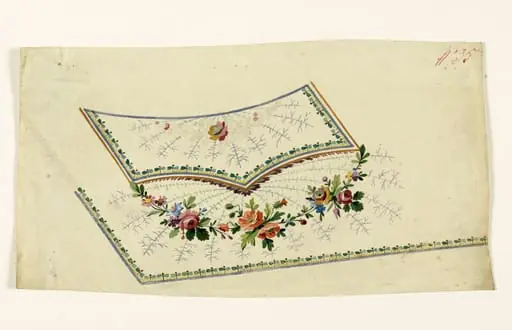 Composition avec guirlandes de fleurs multicolores, motifs rayonnants de branches et frises stylisées, projets de broderies de gilet, XVIIIème siècle
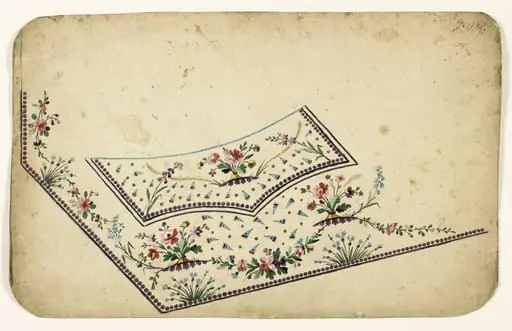 Composition de bouquets et guirlandes de fleurs, frises de perles pourpres et semis de motifs coniques bleus