Artwork
Composition de guirlandes de fleurs et de feuilles, projets de broderies de gilet, XVIIIème siècle
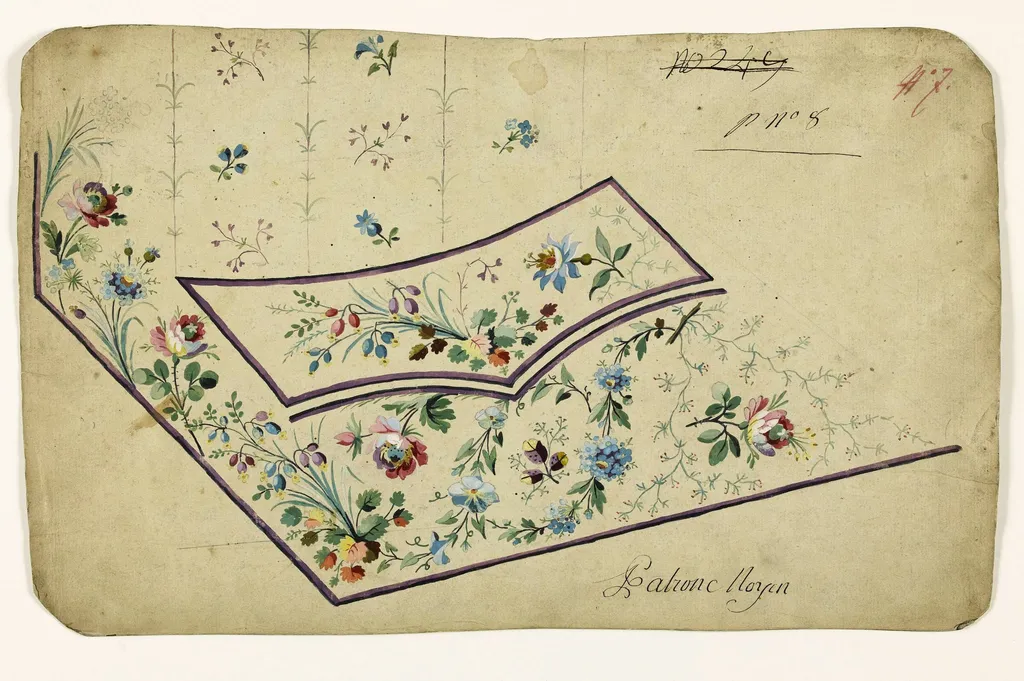
Composition de guirlandes de fleurs et de feuilles, projets de broderies de gilet, XVIIIème siècle is a drawing by Anonyme. It dates from 1750 and is held in the collection of the Palais Galliera - Musée de la Mode de la Ville de Paris. This eighteenth‑century drawing, dated around 1750, presents a design for embroidered waistcoats.
About this work
Overview
This eighteenth‑century drawing, dated around 1750, presents a design for embroidered waistcoats. Executed on a single sheet of aged paper, the composition consists of three diamond‑shaped panels densely populated with stylised flowers and foliage, rendered in a palette of soft pinks, blues, whites and verdant greens.
Subject & Meaning
The motif features a decorative garland of blossoms and leaves, intended as a template for textile ornamentation. The careful rendering of stems, buds and leaf veins suggests an emphasis on naturalistic detail, while the overall arrangement reflects the period’s taste for elegant, symmetrical surface decoration on clothing.
Technique & Style
The drawing employs fine cross‑hatching and delicate line work to suggest colour and texture, with dark purple outlines defining each floral element. The use of muted tones and a plain, weathered background highlights the design itself, typical of French ornamental drawing practices in the mid‑1700s.
History & Provenance
Attributed to an anonymous hand, the sheet bears the inscription “Salune Lloren” at its base, possibly indicating the creator or a patron. The work is part of the collection of the Museum of Ethnography, where it is preserved as an example of historical garment design.
Context
During the eighteenth century, embroidered waistcoats were fashionable garments among the European elite, and designers often produced detailed paper sketches to guide artisans. This piece exemplifies the collaborative process between designers and embroiderers, reflecting broader trends in decorative arts and textile production of the era.
Artist & collection
Artist
A French designer from the 1700s made delicate flower drawings meant to decorate vests.
Museum
Palais Galliera - Musée de la Mode de la Ville de Paris
Continue through works from the same source collection.
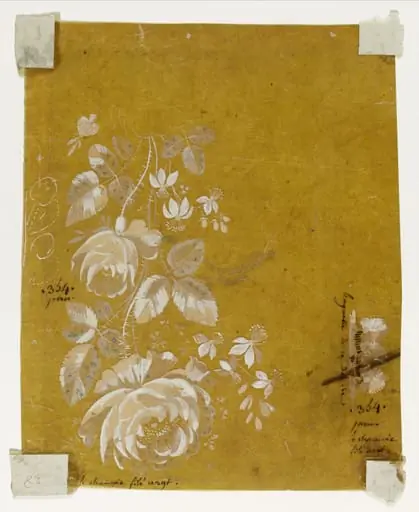 Bouquet de roses blanches pour étoffe, projets de broderies de gilet, XVIIIème siècle
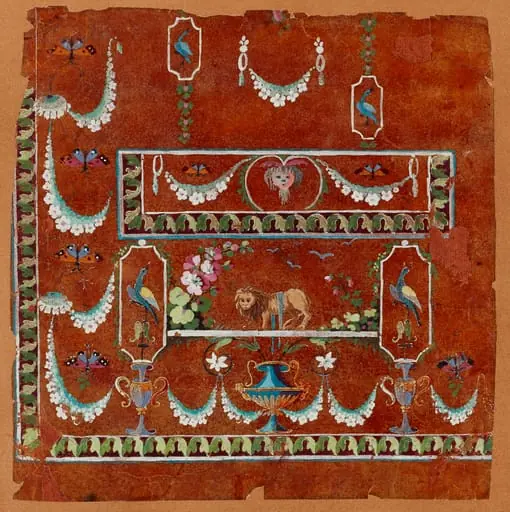 Gilet décor à grotesques, projets de broderies de gilet, XVIIIeme siècle
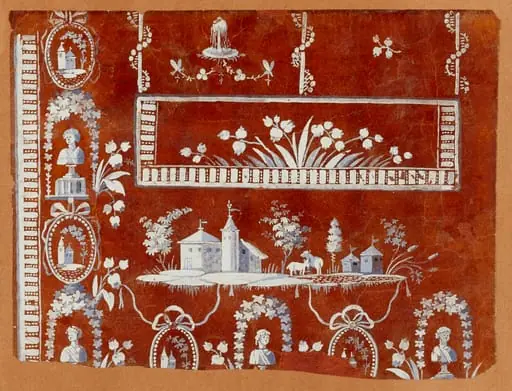 Gilet décor architectures rurales, projets de broderies de gilet, XVIIIème siècle
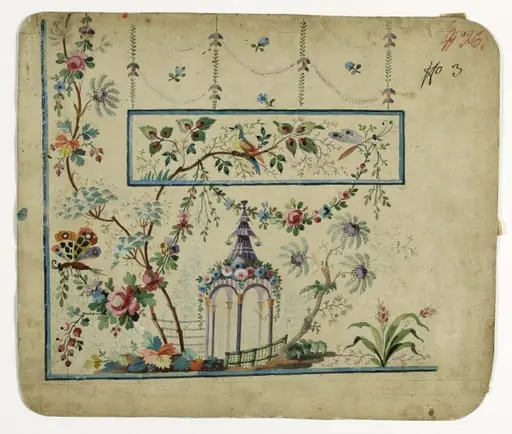 Gilet décor pagode, projets de broderies de gilet, XVIIIème siècle
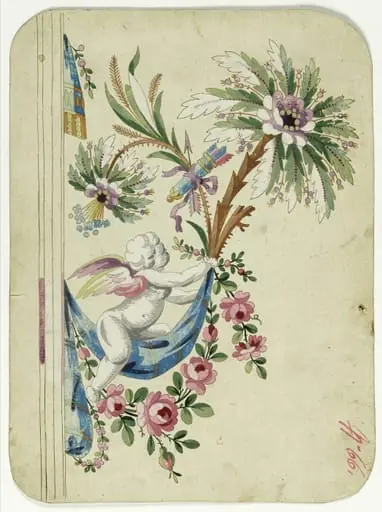 Décor de putti sur palmier, projets de broderies de gilet, XVIIIème siècle
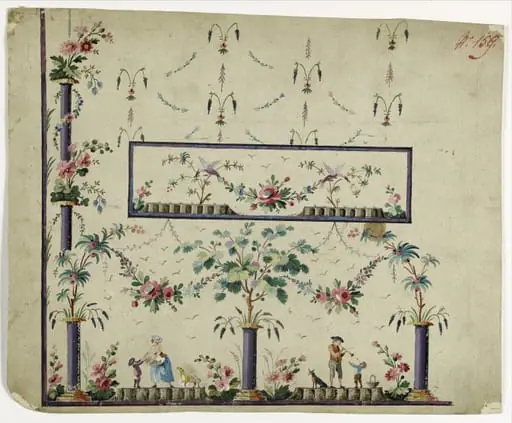 Gilet décor couple avec enfants, projets de broderies de gilet, XVIIIème siècle
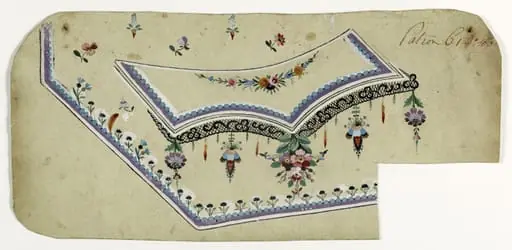 Gilet à la dentelle noire, projets de broderies de gilet, XVIIIème siècle
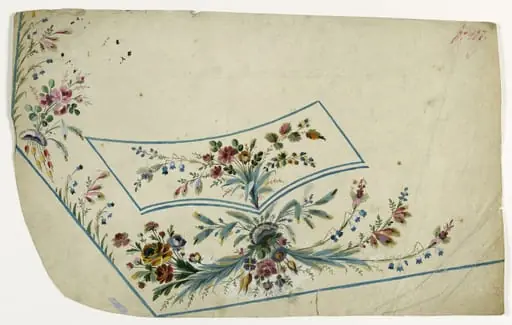 Gilet aux feuilles bleu-gris, projets de broderies de gilet, XVIIIème siècle
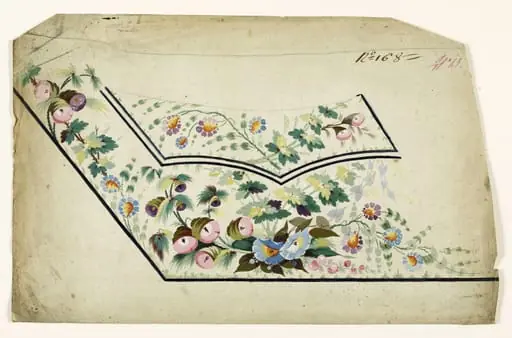 Composition de fleurs sauvages, projets de broderies de gilet, XVIIIème siècle
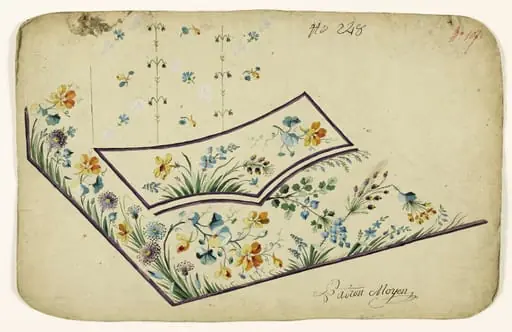 Composition de fleurs champêtres et bandes violettes, projets de broderies de gilet, XVIIIème siècle
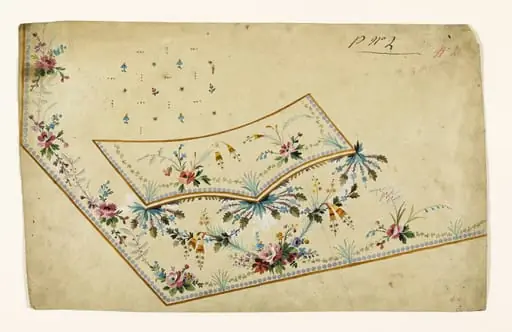 Composition avec guirlandes de fleurs, frises de perles lavande, projets de broderies de gilet, XVIIIème siècle
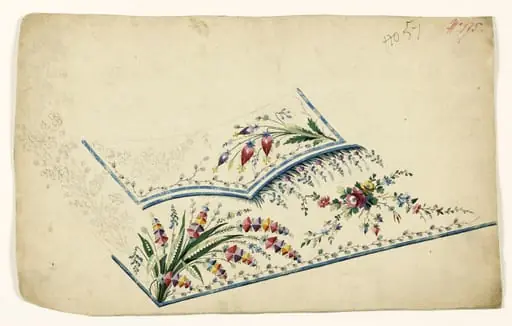 Composition en bouquets de fleurs et guirlandes de feuilles, projets de broderies de gilet, XVIIIème siècle
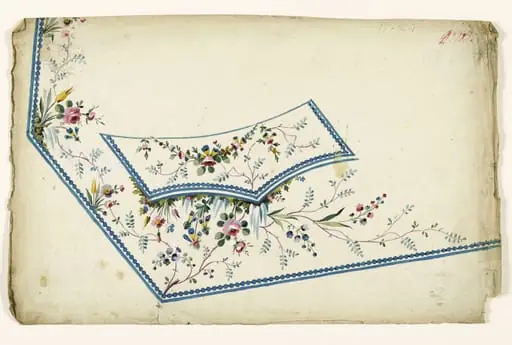 Composition de fleurs en branches et en bouquets, projets de broderies de gilet, XVIIIème siècle
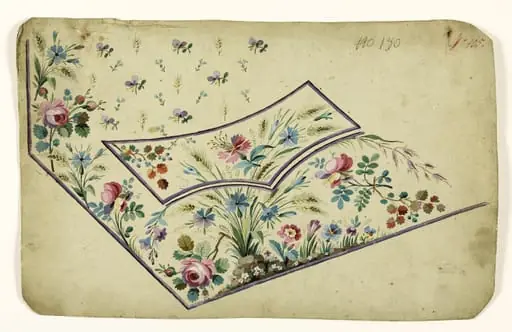 Composition de fleurs sauvages, d'épis et d'amoncellement de galets, projets de broderies de gilet, XVIIIème siècle
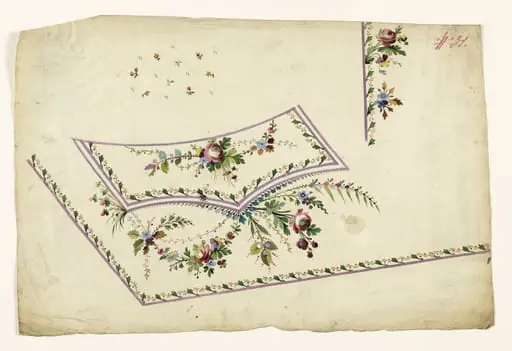 Composition de guirlandes de fleurs, frises de feuilles et de baies rouges, projets de broderies de gilet, XVIIIème siècle
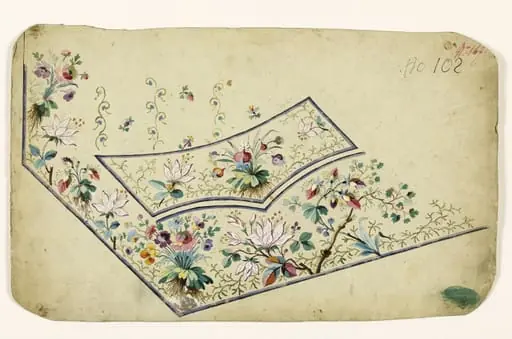 Composition de fleurs champêtres en branches et en bouquets, projets de broderies de gilet, XVIIIème siècle
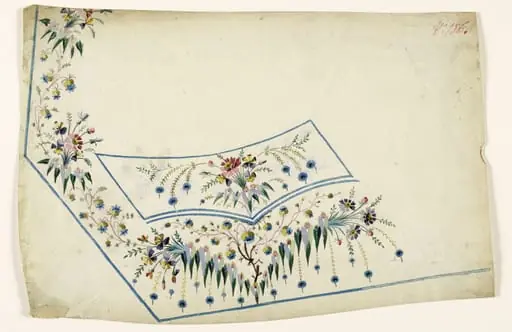 Composition florale en guirlandes, projets de broderies de gilet, XVIIIème siècle
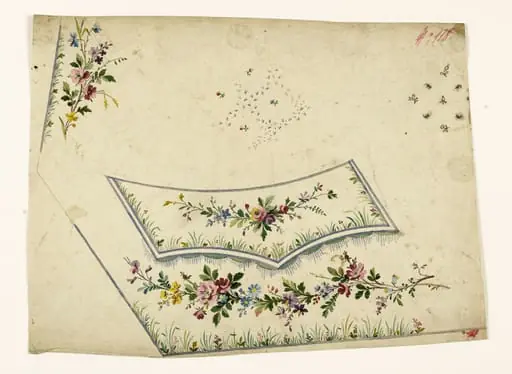 Guirlandes de fleurs et frise de franges perlées mauves, projets de broderies de gilet, XVIIIème siècle
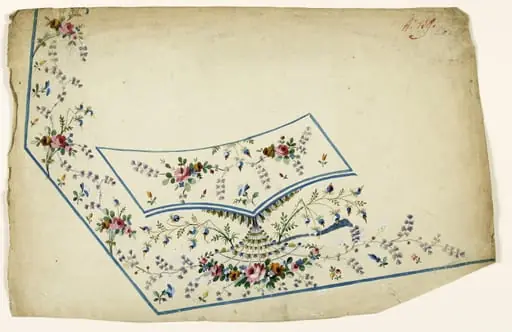 Composition à bouquet de fleurs en éventail et guirlandes de fleurs mauves, projets de broderies de gilet, XVIIIème siècle