Artwork
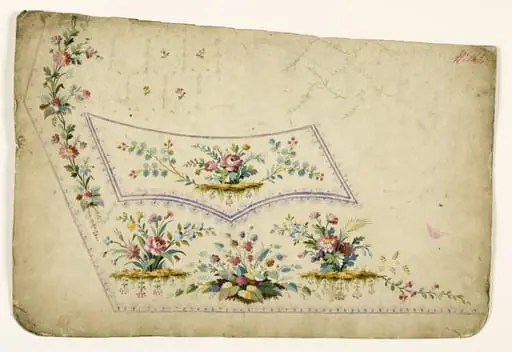
Composition florale en guirlandes, projets de broderies de gilet, XVIIIème siècle
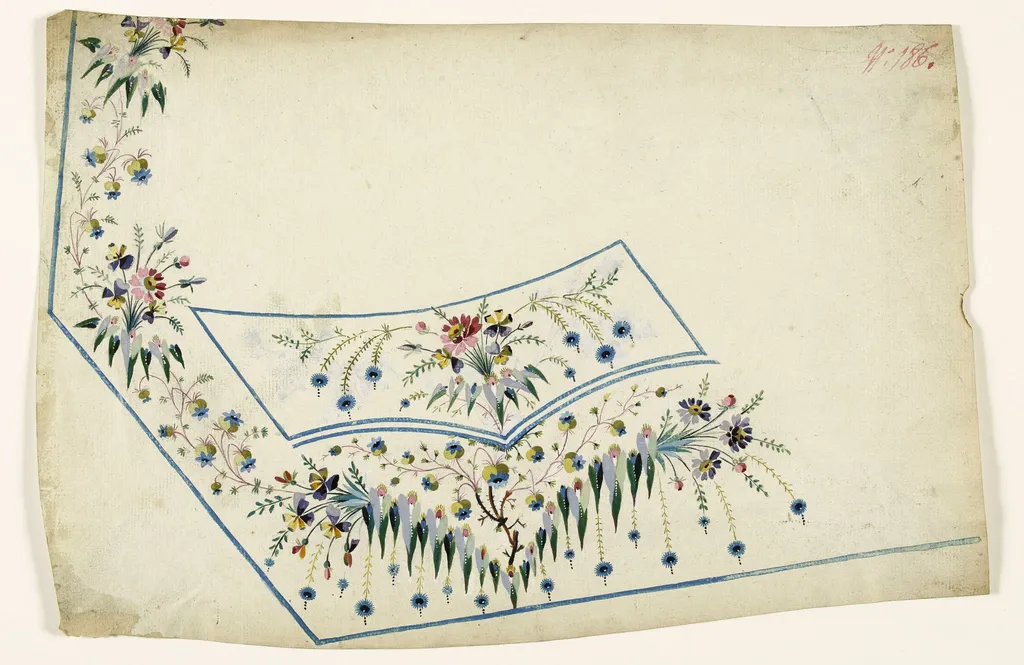
Composition florale en guirlandes, projets de broderies de gilet, XVIIIème siècle is a drawing by Anonyme. It dates from 1750 and is held in the collection of the Palais Galliera - Musée de la Mode de la Ville de Paris.
About this work
Overview
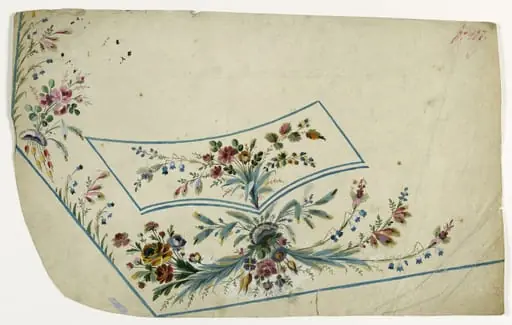
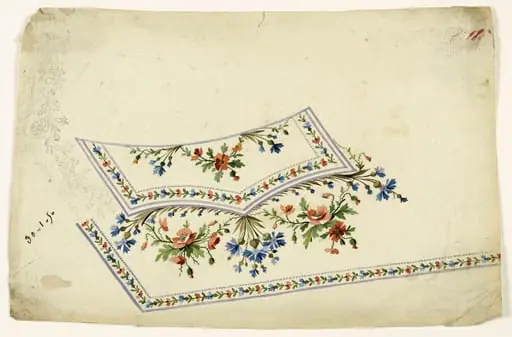
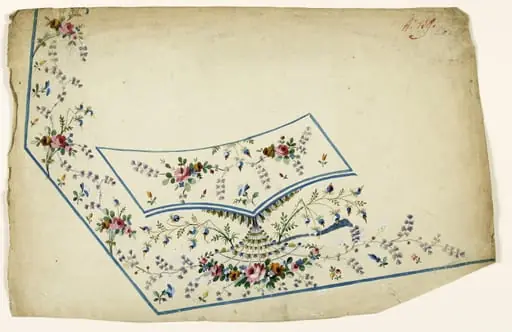
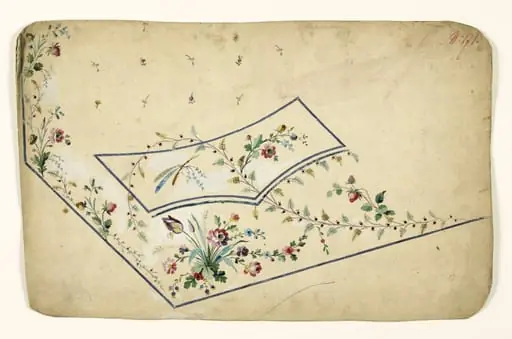
Executed in ink and watercolor on aged paper with a soft yellow hue, the composition features repeating floral elements bound by delicate blue borders.
This anonymous 18th-century drawing, dated around 1750, presents a sequence of floral motifs designed as embroidery patterns for a waistcoat. Executed in ink and watercolor on aged paper with a soft yellow hue, the composition features repeating floral elements bound by delicate blue borders. A small numeral in the corner suggests it was part of a larger collection, likely used as a reference for textile artisans.
Subject & Meaning
The design centers on naturalistic floral forms—cornflowers, roses, and unopened buds—arranged in undulating, rhythmic lines. These patterns reflect an aesthetic preference for organic, flowing forms common in decorative arts of the period. The absence of figural or symbolic elements suggests the work served a utilitarian purpose: guiding needlework rather than conveying narrative or allegory.
Technique & Style
The drawing employs precise, controlled lines to define each petal and stem, with subtle color gradations to suggest depth and texture. Flowers are spaced to allow for seamless repetition, indicating the artist anticipated their translation into stitched fabric. The use of blue outlines frames the composition, helping embroiderers distinguish motifs from background, a practical consideration in textile design.
History & Provenance
Held by the Museum of Ethnography, the drawing likely originated in a French or Flemish atelier where textile patterns were systematically recorded. Its survival suggests it was valued as a working document, not merely decorative. The handwritten number implies it was cataloged early in its history, possibly within a workshop or royal wardrobe archive.
Context
In mid-18th-century Europe, elaborate embroidery on men’s waistcoats signaled status and refinement. Designers produced pattern books to standardize motifs across workshops. This sheet aligns with such practices, reflecting the intersection of fine art and craft, where aesthetic ideals were adapted for mass production through skilled handwork.
Legacy
Though unsigned and anonymous, the drawing preserves a moment in the evolution of textile design, where artistic sensibility met industrial need. It stands as evidence of the quiet labor behind ornamental fashion, offering insight into how floral language was codified and transmitted through generations of artisans before the advent of printed pattern catalogs.
Artist & collection
Artist
A French designer from the 1700s made delicate flower drawings meant to decorate vests.
Museum
Palais Galliera - Musée de la Mode de la Ville de Paris
Continue through works from the same source collection.
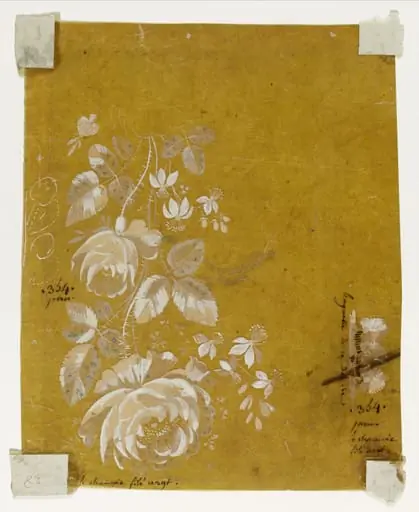 Bouquet de roses blanches pour étoffe, projets de broderies de gilet, XVIIIème siècle
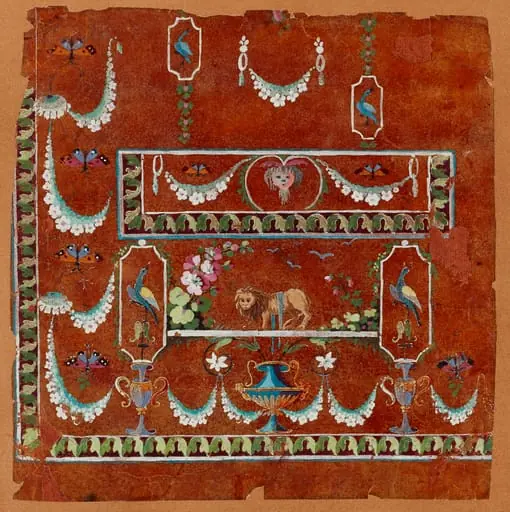 Gilet décor à grotesques, projets de broderies de gilet, XVIIIeme siècle
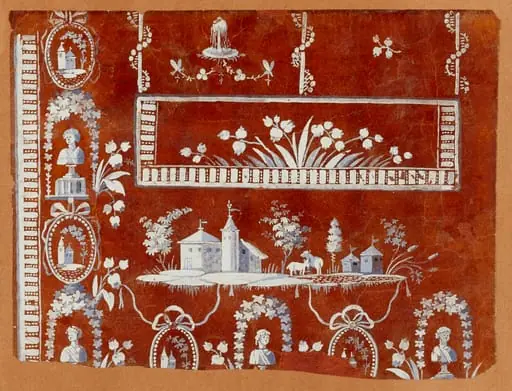 Gilet décor architectures rurales, projets de broderies de gilet, XVIIIème siècle
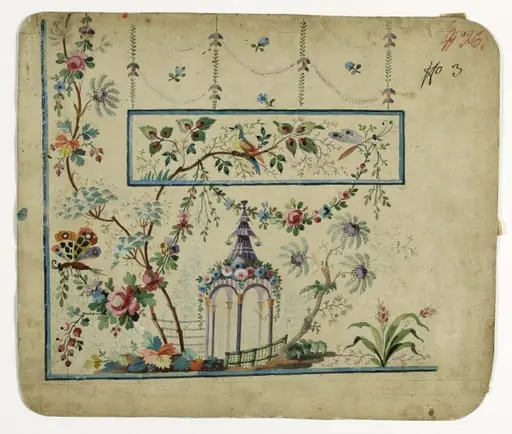 Gilet décor pagode, projets de broderies de gilet, XVIIIème siècle
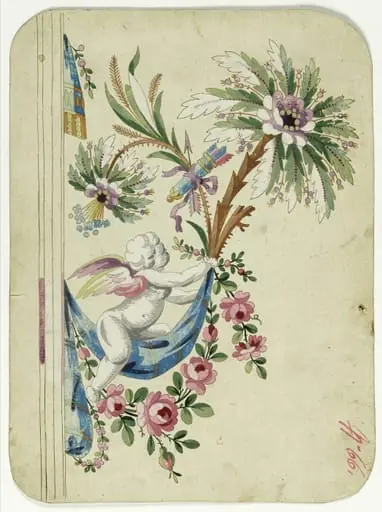 Décor de putti sur palmier, projets de broderies de gilet, XVIIIème siècle
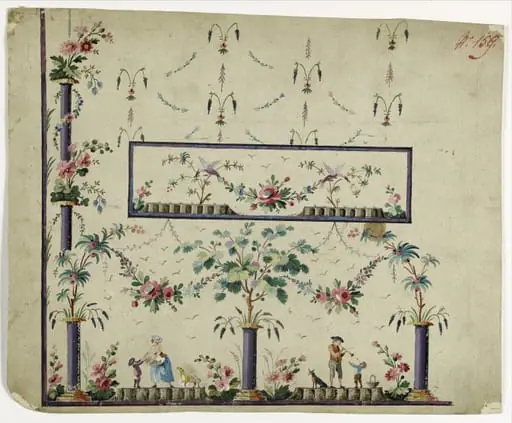 Gilet décor couple avec enfants, projets de broderies de gilet, XVIIIème siècle
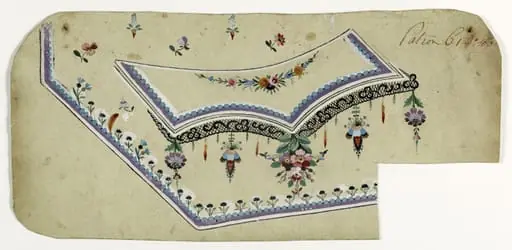 Gilet à la dentelle noire, projets de broderies de gilet, XVIIIème siècle
 Gilet aux feuilles bleu-gris, projets de broderies de gilet, XVIIIème siècle
 Composition florale de coquelicots et fleurs sauvages bleues, guirlandes de fleurs et frises de perles mauves, projets de broderies de gilet, XVIIIème siècle
 Composition à bouquet de fleurs en éventail et guirlandes de fleurs mauves, projets de broderies de gilet, XVIIIème siècle
 Composition avec bouquets et guirlandes de fleurs et phasme sur branche, projets de broderies de gilet, XVIIIème siècle
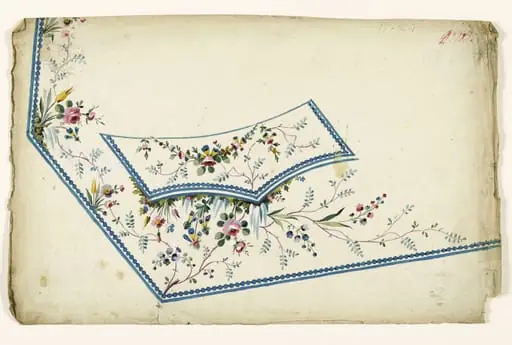 Composition de fleurs en branches et en bouquets, projets de broderies de gilet, XVIIIème siècle
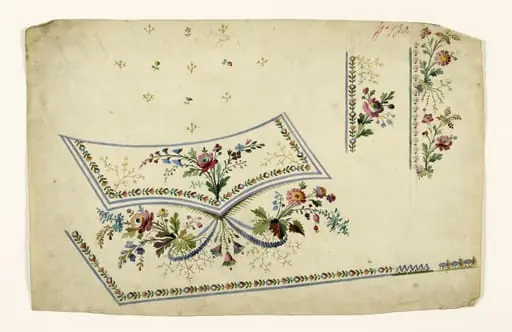 Composition florale avec bouquets et frises de fleurs stylisées, projets de broderies de gilet, XVIIIème siècle
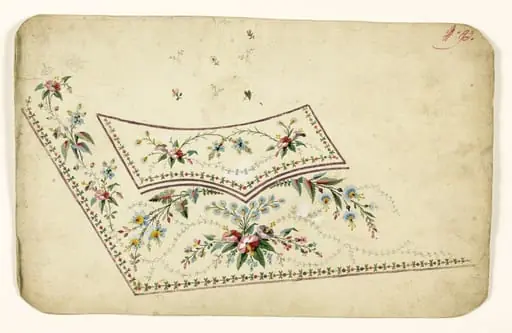 Composition de bouquets de fleurs et chardons, projets de broderies de gilet, XVIIIème siècle
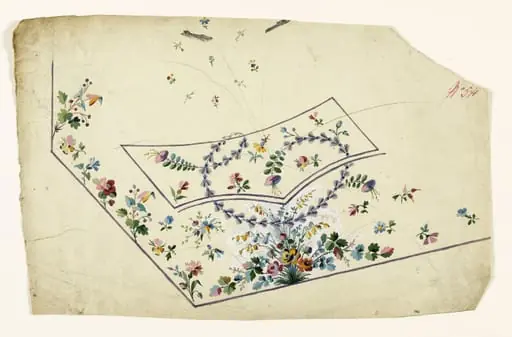 Composition de bouquets de fleurs multicolores et guirlandes de fleurs mauves, projets de broderies de gilet, XVIIIème siècle
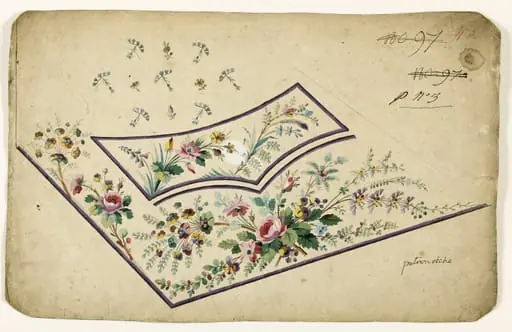 Composition florale en bouquets, projets de broderies de gilet, XVIIIème siècle
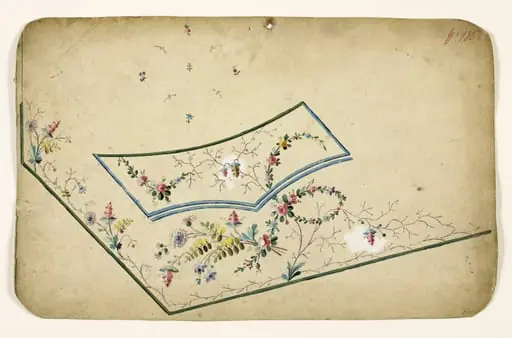 Composition florale avec guirlandes de branches et bandes bleues et vertes, projets de broderies de gilet, XVIIIème siècle
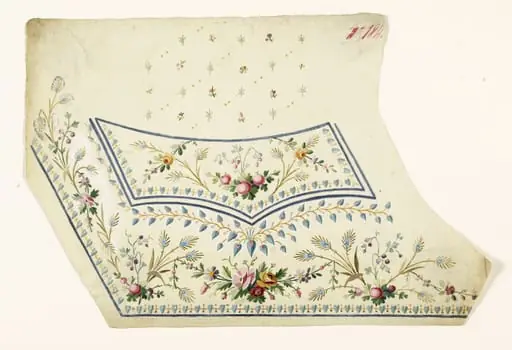 Composition de bouquets de fleurs et de baies et semis de fleurs, projets de broderies de gilet, XVIIIème siècle
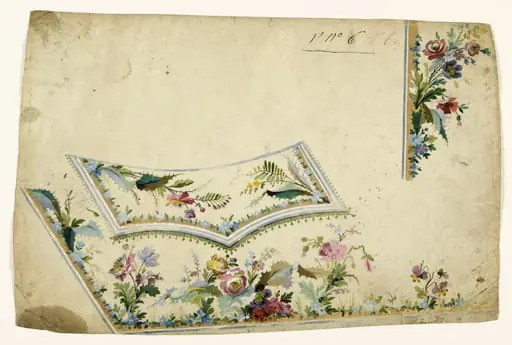 Composition florale aux bleuets, projets de broderies de gilet, XVIIIème siècle
 Compositions florales sur tertre et guirlandes de fleurs, projets de broderies de gilet, XVIIIème siècle