Artwork
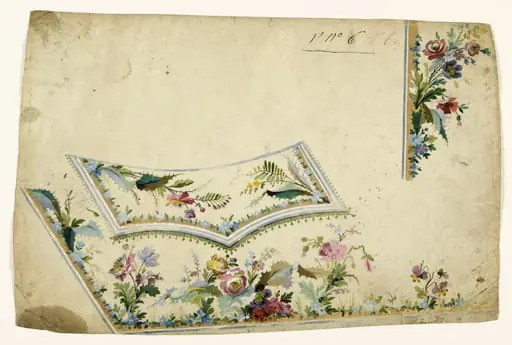
Composition florale avec guirlandes de branches et bandes bleues et vertes, projets de broderies de gilet, XVIIIème siècle
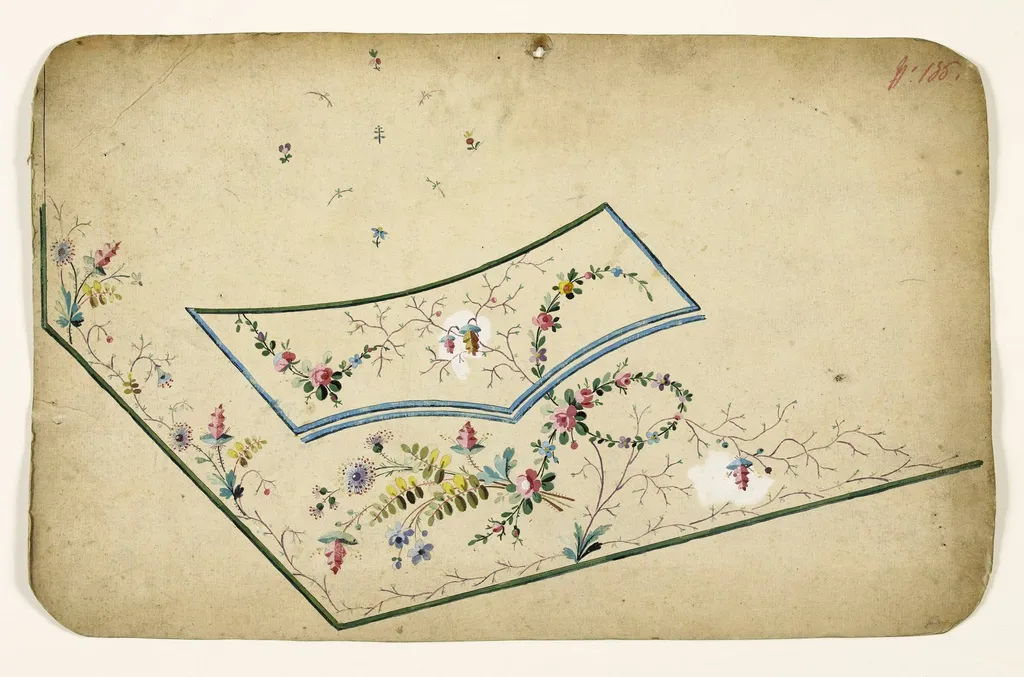
Composition florale avec guirlandes de branches et bandes bleues et vertes, projets de broderies de gilet, XVIIIème siècle is a drawing by Anonyme. It dates from 1750 and is held in the collection of the Palais Galliera - Musée de la Mode de la Ville de Paris. This eighteenth‑century paper sketch presents a decorative floral motif intended for embroidery on a men’s vest.
About this work
Overview
This eighteenth‑century paper sketch presents a decorative floral motif intended for embroidery on a men’s vest.
This eighteenth‑century paper sketch presents a decorative floral motif intended for embroidery on a men’s vest. Rendered in muted ink and watercolor, the composition combines a central bouquet of stylised blossoms and sprigs with two contrasting ribbons of blue and green that frame the design. The sheet shows signs of age, its edges yellowed and the surface slightly worn, indicating long‑term storage.
Subject & Meaning
The drawing illustrates a pattern of intertwined branches and flowers, typical of the ornamental vocabulary used in aristocratic clothing of the period. The inclusion of the blue‑green bands suggests a planned integration of colour‑blocking within the garment, enhancing the visual rhythm of the embroidered surface while reflecting contemporary tastes for naturalistic yet stylised decoration.
Technique & Style
Executed with fine pen work and delicate washes, the sketch balances line and colour to convey texture and depth. The botanical elements are rendered with exaggerated curvature, a hallmark of Rococo ornamental design, while the linear ribbons provide a geometric counterpoint. The medium—paper with watercolor and ink—served as a practical template for textile artisans.
History & Provenance
Attributed to an unknown artist, the piece is dated circa 1750 based on stylistic analysis and material composition. It entered the collection of the Museum of Ethnography, where it is preserved as an example of eighteenth‑century fashion illustration, offering insight into the design process behind period clothing embellishment.
Artist & collection
Artist
A French designer from the 1700s made delicate flower drawings meant to decorate vests.
Museum
Palais Galliera - Musée de la Mode de la Ville de Paris
Continue through works from the same source collection.
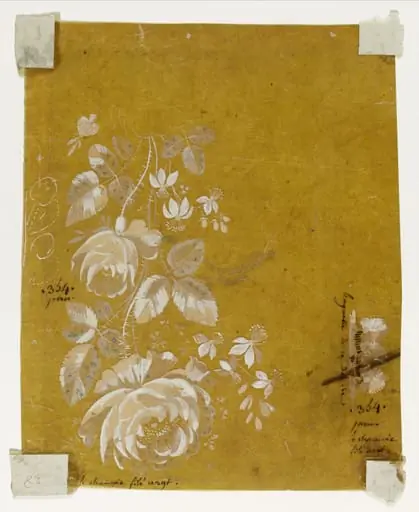 Bouquet de roses blanches pour étoffe, projets de broderies de gilet, XVIIIème siècle
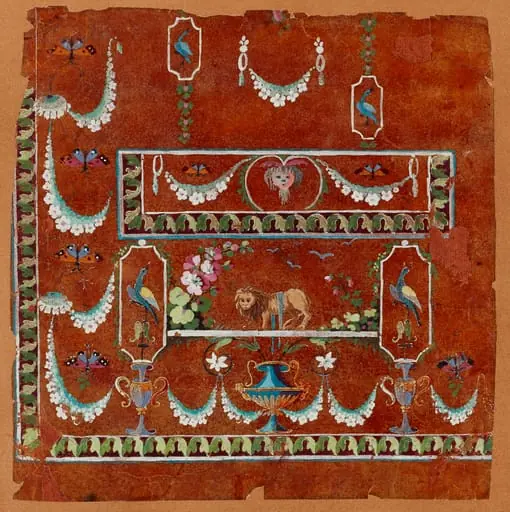 Gilet décor à grotesques, projets de broderies de gilet, XVIIIeme siècle
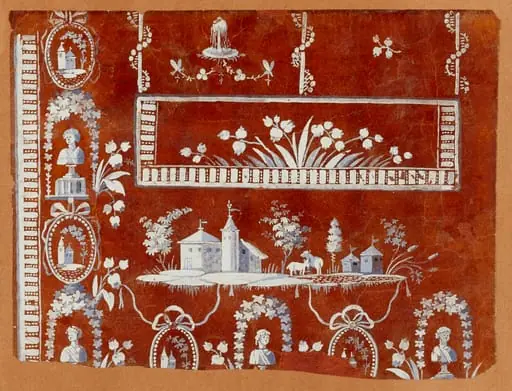 Gilet décor architectures rurales, projets de broderies de gilet, XVIIIème siècle
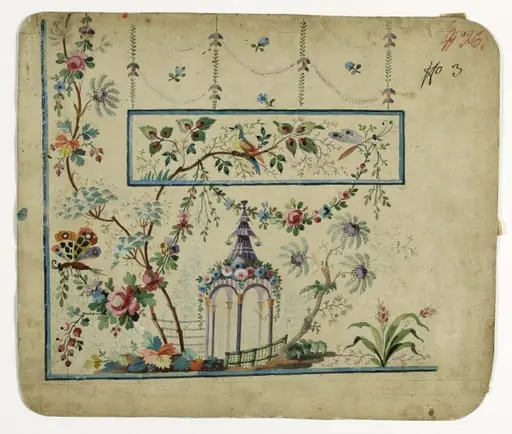 Gilet décor pagode, projets de broderies de gilet, XVIIIème siècle
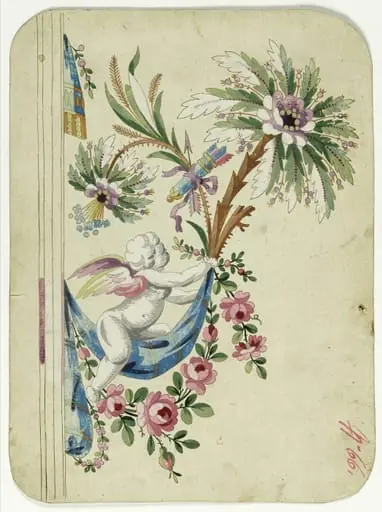 Décor de putti sur palmier, projets de broderies de gilet, XVIIIème siècle
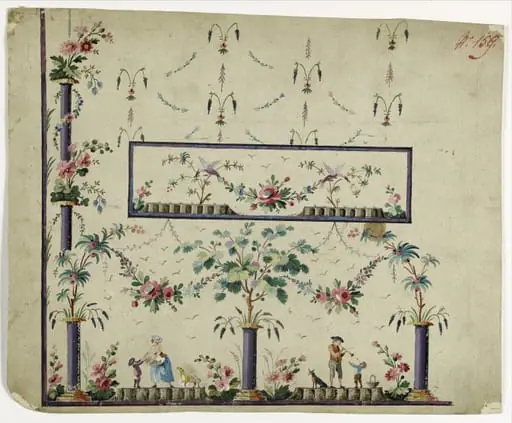 Gilet décor couple avec enfants, projets de broderies de gilet, XVIIIème siècle
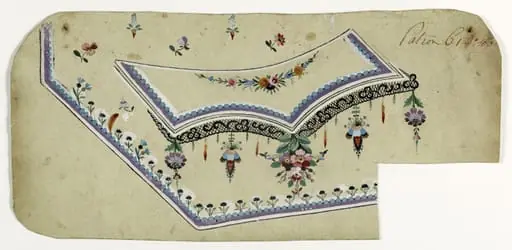 Gilet à la dentelle noire, projets de broderies de gilet, XVIIIème siècle
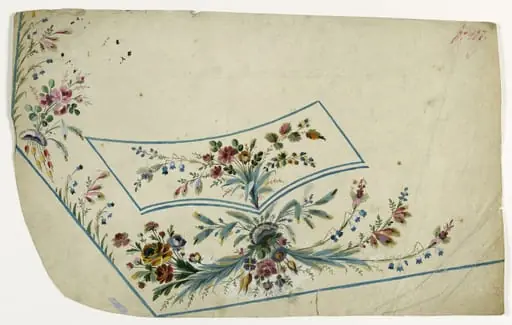 Gilet aux feuilles bleu-gris, projets de broderies de gilet, XVIIIème siècle
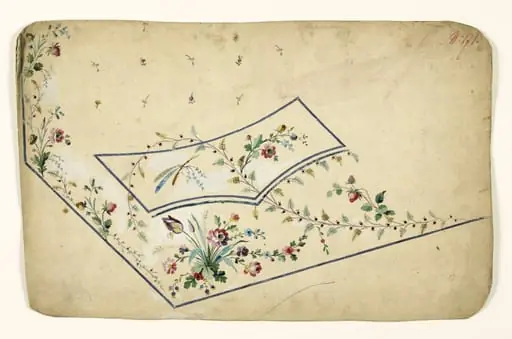 Composition avec bouquets et guirlandes de fleurs et phasme sur branche, projets de broderies de gilet, XVIIIème siècle
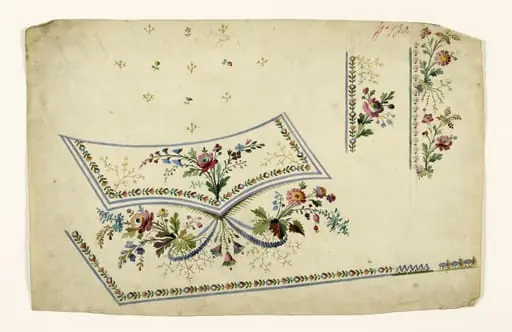 Composition florale avec bouquets et frises de fleurs stylisées, projets de broderies de gilet, XVIIIème siècle
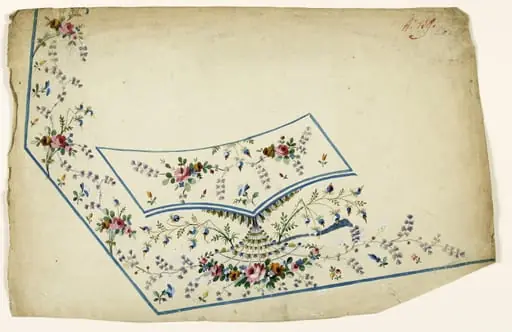 Composition à bouquet de fleurs en éventail et guirlandes de fleurs mauves, projets de broderies de gilet, XVIIIème siècle
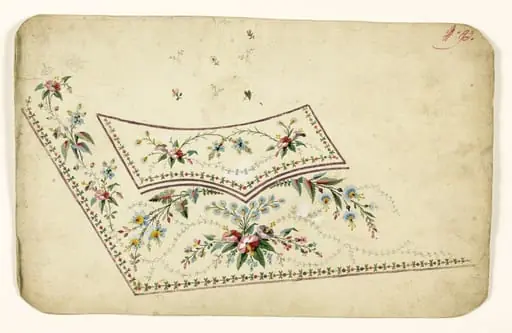 Composition de bouquets de fleurs et chardons, projets de broderies de gilet, XVIIIème siècle
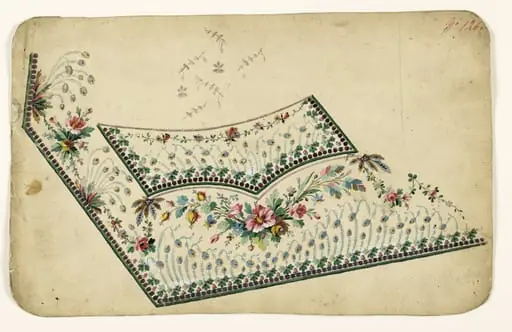 Composition florale de chardons bleus, frises de perles violettes, guirlandes de fleurs et d'insectes volants, projets de broderies de gilet, XVIIIème siècle
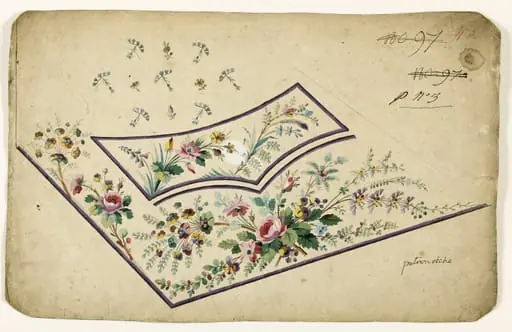 Composition florale en bouquets, projets de broderies de gilet, XVIIIème siècle
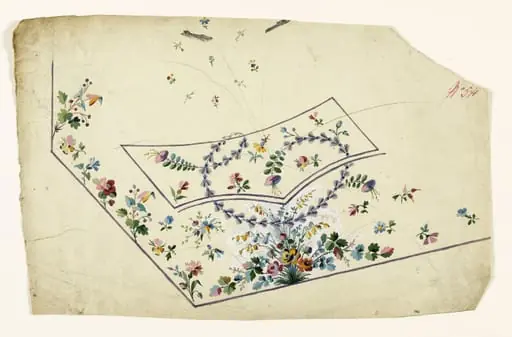 Composition de bouquets de fleurs multicolores et guirlandes de fleurs mauves, projets de broderies de gilet, XVIIIème siècle
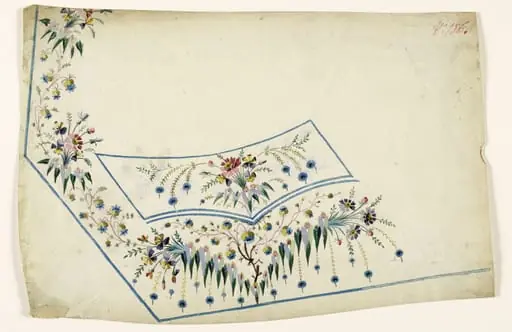 Composition florale en guirlandes, projets de broderies de gilet, XVIIIème siècle
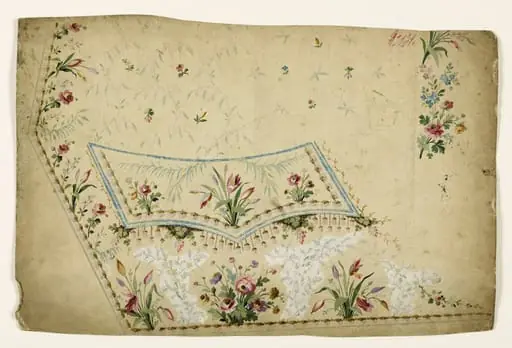 Composition avec bouquets de fleurs, frises de grappes et clochettes stylisées, projets de broderies de gilet, XVIIIème siècle
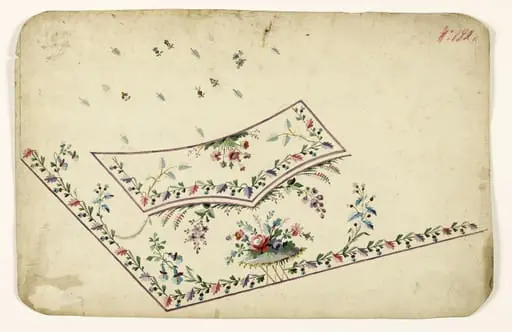 Composition florale sur tertre rocheux, frises de fleurs et de feuilles, projets de broderies de gilet, XVIIIème siècle
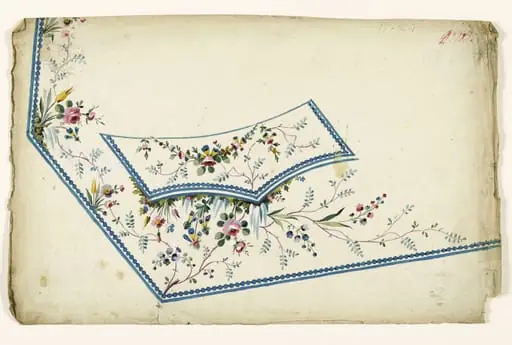 Composition de fleurs en branches et en bouquets, projets de broderies de gilet, XVIIIème siècle
 Composition florale aux bleuets, projets de broderies de gilet, XVIIIème siècle