Artwork
Judas Leaving the High Priest
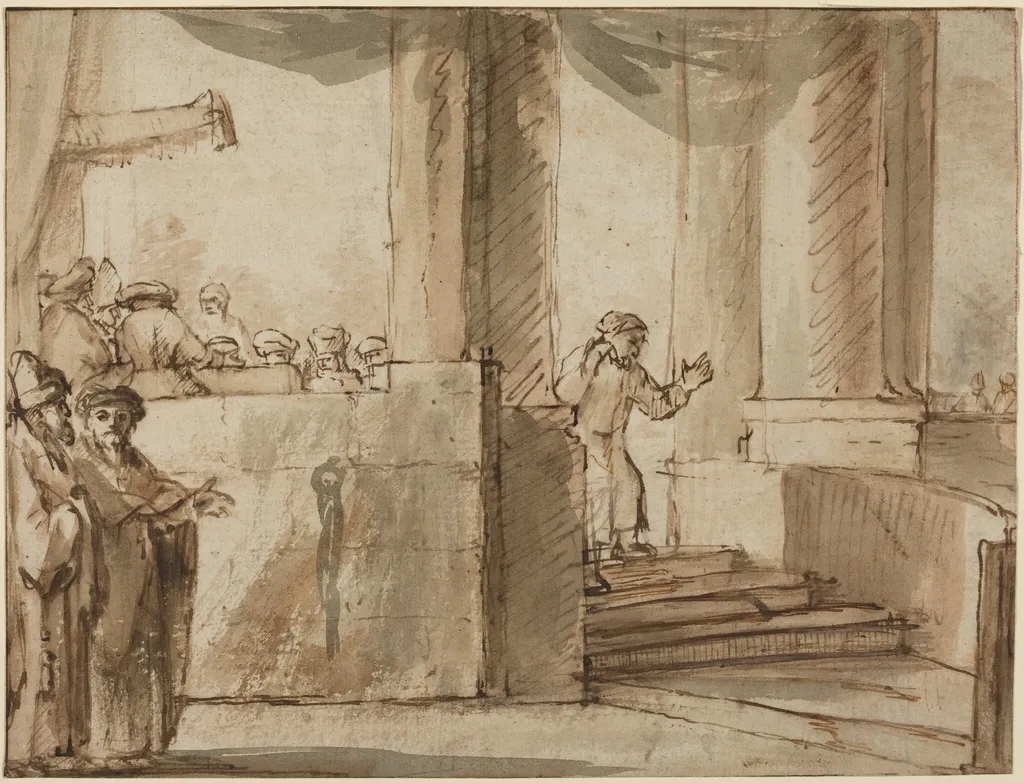
Judas Leaving the High Priest is an ink drawing by the Baroque artist Unknown. It dates from 1638 and is held in the collection of the National Gallery of Art. This ink drawing captures a moment of quiet intensity in a dim interior, rendered with swift, expressive brushwork and layered washes.
About this work
Overview
This ink drawing captures a moment of quiet intensity in a dim interior, rendered with swift, expressive brushwork and layered washes.
This ink drawing captures a moment of quiet intensity in a dim interior, rendered with swift, expressive brushwork and layered washes. The composition centers on a figure on a raised platform, gesturing as others observe. The rough, unpolished handling suggests a preparatory study, emphasizing immediacy over finish. Light and shadow are used to direct attention and heighten emotional tension without elaborate detail.
Subject & Meaning
The scene depicts Judas departing from the high priest, likely after agreeing to betray Jesus. The central figure, possibly the priest, holds a staff and speaks authoritatively, while Judas leans forward, absorbed in the exchange. Figures in the background watch silently, reinforcing the gravity of the moment. The focus on gesture and posture conveys unspoken tension rather than narrative clarity.
Technique & Style
The artist employs pen and brown ink with gray and brown washes to model form and suggest atmosphere. Quick, sketchy lines define figures and drapery, while cross-hatching builds depth in shadows. The uneven lighting enhances drama, and the lack of fine detail gives the work a spontaneous, almost urgent quality. The paper’s texture subtly interacts with the ink, adding to the rawness of the effect.
History & Provenance
The drawing’s origins are undocumented, but its style aligns with early 17th-century Italian draftsmanship, possibly from a circle influenced by Caravaggio or his followers. It was likely made as a study for a larger composition, though no finished painting is known to correspond. Its survival suggests it was valued for its expressive power, even as a fragment.
Context
During this period, religious subjects were frequently explored in preparatory drawings, especially by artists refining dramatic lighting and psychological nuance. This sketch reflects a broader trend toward capturing fleeting emotion in biblical scenes, moving away from idealized forms toward more human, intimate portrayals grounded in observed reality.
Legacy
Though not widely exhibited, the drawing exemplifies how artists used rapid ink studies to explore narrative tension and emotional weight. Its unpolished quality influenced later generations who valued spontaneity in drawing, demonstrating that expressive power need not depend on finish or detail.
Artist & collection

 Domestic Scene
 Giacomo and Cardinal Marco, investing Andrea, Abbot of San Zeno, with his Benefice
 The Nymph of Fontainebleau
 Portrait of a Woman
 Madonna and Child with Saints in the Enclosed Garden
 Venus and Minerva
 Family Group of Four on Sofa
 Wall painting from Room H of the Villa of P. Fannius Synistor at Boscoreale
 The Healing of the Possessed Boy in a Procession of the Volto Santo
 The Sacrifice of Iphigenia (recto) / Study of a Male Nude (verso)
 The Parable of the Publican and the Pharisee
![Wall Monument with an Armillary Sphere [verso], by German 16th Century](https://artifactworldgallery.com/img/german-16th-century--wall-monument-with-an-armillary-sphere-verso--431354c66321680d-w320.webp) Wall Monument with an Armillary Sphere [verso]
Wall Monument with an Armillary Sphere [verso]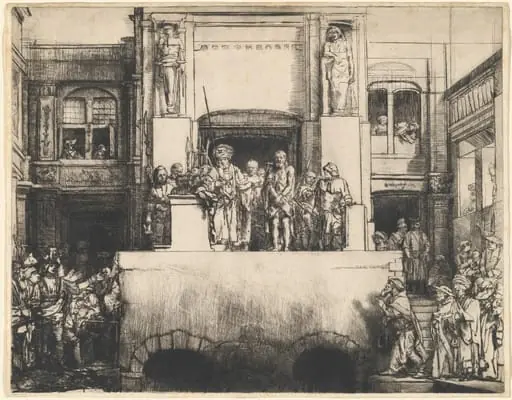 Christ Presented to the People: Oblong Plate
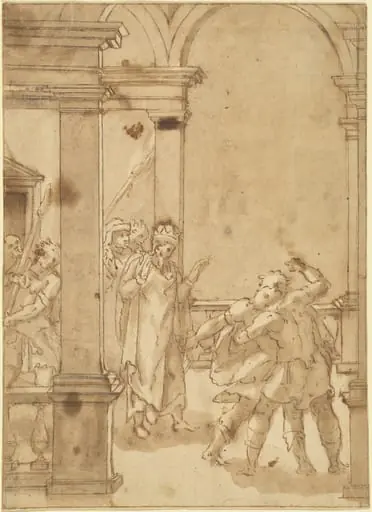 Two Figures Struggling before a King
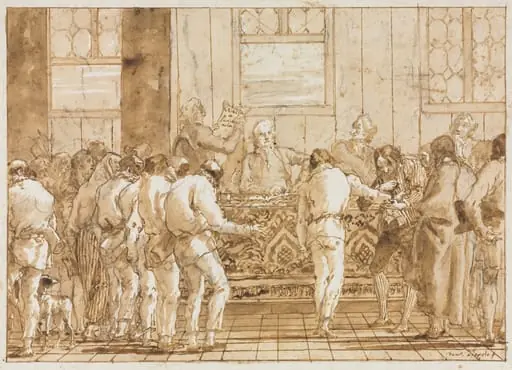 The Trial
![Presentation of the Virgin in the Temple [verso], by Antonio Zanchi](https://artifactworldgallery.com/img/antonio-zanchi--presentation-of-the-virgin-in-the-temple-verso--450080eaf8685583-w320.webp) Presentation of the Virgin in the Temple [verso]
Presentation of the Virgin in the Temple [verso]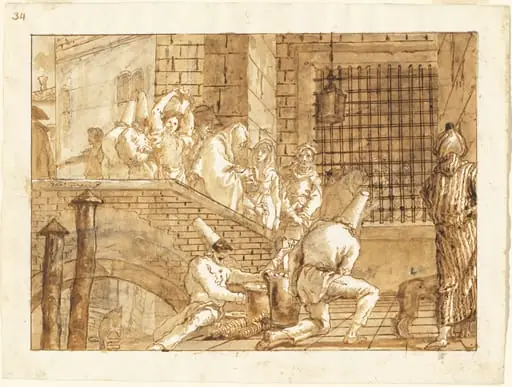 The Prison Visit
 Untitled
 Study after Domenichino
 The Slave Market