Artwork
The Parable of the Publican and the Pharisee
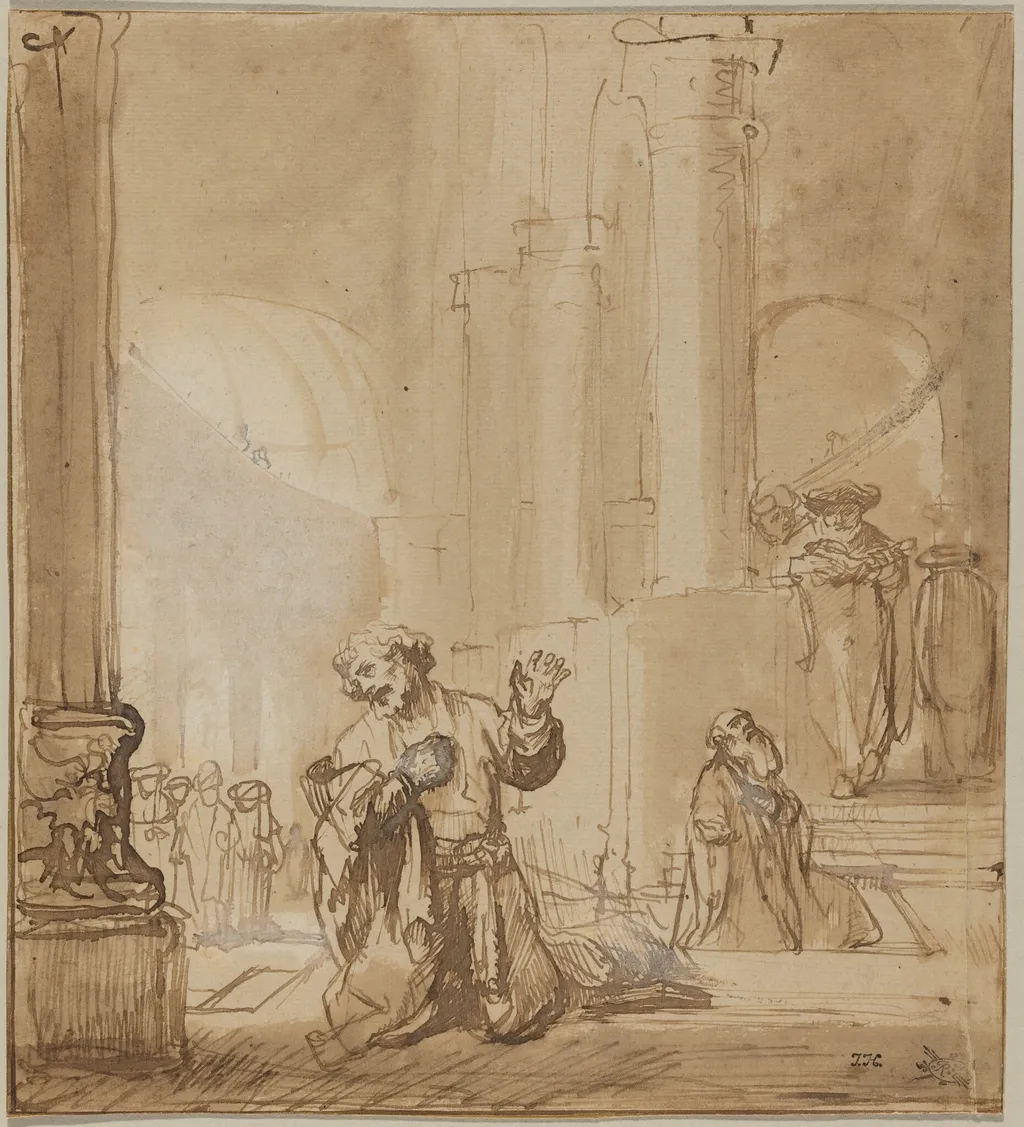
The Parable of the Publican and the Pharisee is an ink drawing by the Baroque artist Rembrandt. It dates from 1652 and is held in the collection of the National Gallery of Art.
About this work
Overview
Executed in reed pen and brown ink with wash and white highlights on laid paper, it captures a quiet religious scene with minimal means.
Created around 1652, this drawing by Rembrandt van Rijn depicts a moment from the Gospel parable of the Publican and the Pharisee. Executed in reed pen and brown ink with wash and white highlights on laid paper, it captures a quiet religious scene with minimal means. The work was later mounted on a support, preserving its fragile surface while emphasizing its intimate scale and expressive economy.
Subject & Meaning
The drawing illustrates two figures from Luke 18:10–14: a humble tax collector kneeling in prayer, and a standing Pharisee who gazes downward with detached superiority. The kneeling man’s clasped hands and bowed posture convey contrition, while the standing figure’s rigid stance and averted gaze suggest self-righteousness. The scene underscores the parable’s moral: humility before God outweighs outward piety.
Technique & Style
Rembrandt employed reed pen for sharp, fluid contours and layered brown wash to model form and shadow. White heightening accentuates the kneeling man’s face and hands, drawing focus to his quiet devotion. The background is reduced to faint, suggestive lines—hinting at an architectural space without detail. Chiaroscuro is used not for drama but to isolate emotional presence, reinforcing introspection over narrative spectacle.
History & Provenance
The drawing entered the collection of the Rijksmuseum in Amsterdam in the 19th century, having passed through several private hands since the 17th century. Its attribution to Rembrandt has been consistently supported by stylistic analysis and technical study. The paper’s watermark and ink composition align with materials used in his late period, confirming its dating to the early 1650s.
Context
Created during Rembrandt’s later years, this work reflects his deepening interest in spiritual themes and psychological realism. As his personal fortunes declined, his art turned inward, favoring intimate biblical moments over grand compositions. This drawing aligns with other late works that prioritize inner state over external spectacle, resonating with Dutch Reformed values of personal faith and humility.
Legacy
Though not widely exhibited, this drawing exemplifies Rembrandt’s mastery of emotional nuance through minimal means. It influenced later artists seeking to convey spiritual depth without theatricality. Its preservation in a major public collection ensures continued study of how a few lines and washes can articulate profound moral contrast.
Artist & collection
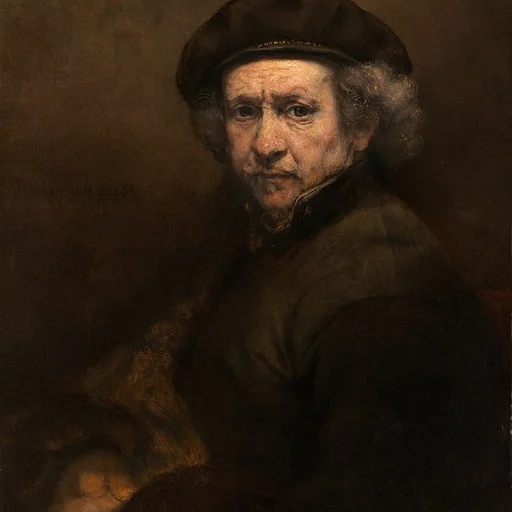
Artist
Rembrandt Harmenszoon van Rijn (15 July 1606 – 4 October 1669), known mononymously as Rembrandt, was a Dutch Golden Age painter, printmaker, and draughtsman.

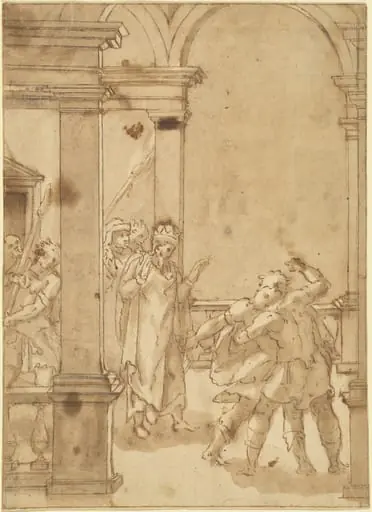 Two Figures Struggling before a King
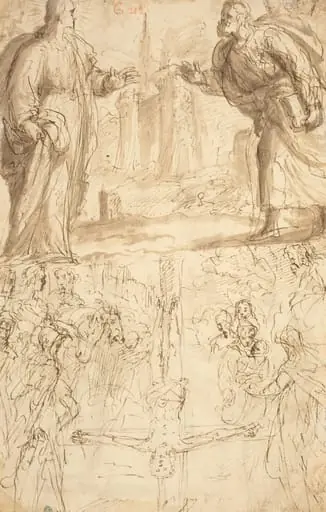 Crucifixion of Saint Peter
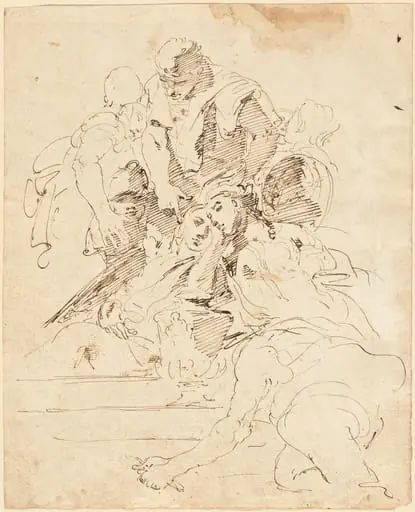 Classical Figures Gathered around an Urn
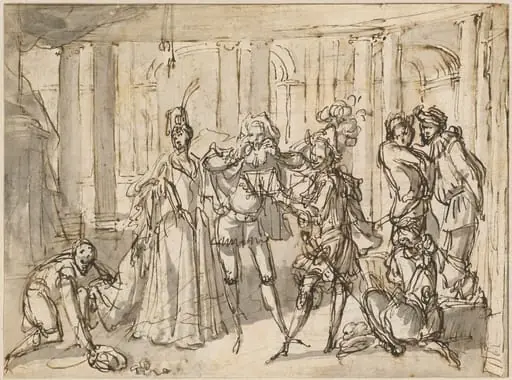 A Performance by the Commedia dell'Arte
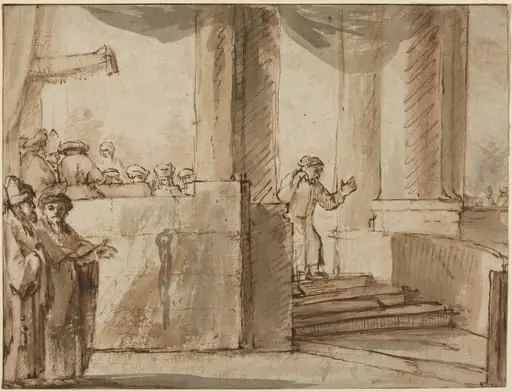 Judas Leaving the High Priest
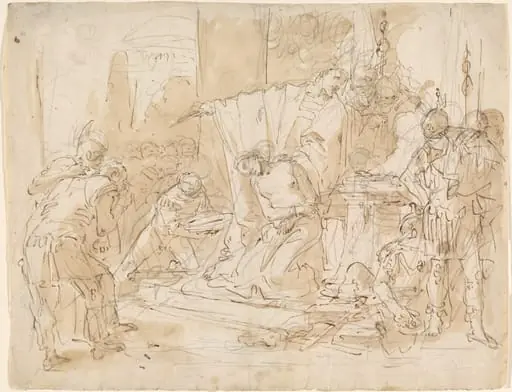 The Sacrifice of Iphigenia (recto) / Study of a Male Nude (verso)
 Peter and John Healing the Cripple at the Gate of the Temple
 Saint Homobono
 The Angel Appearing to the Centurion Cornelius