Artwork
Philomela, Procne, and the Thracian King Tereus
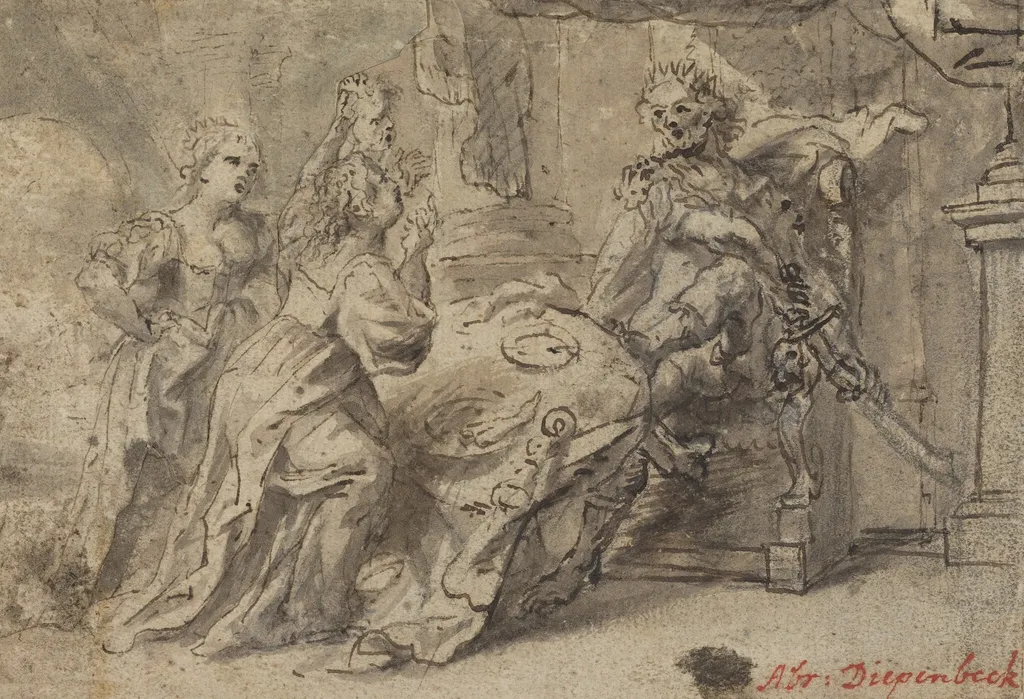
Philomela, Procne, and the Thracian King Tereus is an ink drawing by the Renaissance artist Unknown. It dates from 1636 and is held in the collection of the National Gallery of Art.
About this work
Overview
The work, titled *Philomela, Procne, and the Thracian King Tereus*, is a pen drawing enhanced with brown ink and a gray wash on laid paper. Executed as a single sheet, the composition presents three figures in a moment of heightened tension, rendered with precise line work and subtle tonal variation that convey depth within the limited medium.
Subject & Meaning
The scene draws on the myth of Philomela, Procne, and King Tereus, a narrative of betrayal and revenge from classical antiquity. The standing woman in a long dress, the seated figure clutching a cloth, and the crowned male with a sword suggest the moment of confrontation or revelation, reflecting the tragic themes that Renaissance artists often revisited.
Technique & Style
The artist employs fine pen strokes to delineate form, while brown ink provides the primary outlines. A gray wash applied over the laid paper creates atmospheric shading, enhancing the illusion of volume and space. The careful modulation of line and wash demonstrates a mastery of drawing techniques typical of Renaissance studies of classical subjects.
History & Provenance
The drawing is catalogued as a work from the Renaissance period, though specific details about its creator, date of execution, or ownership lineage are not recorded in the available documentation. Its preservation on laid paper indicates it was likely intended as a study or illustrative piece rather than a finished, framed artwork.
Context
Renaissance artists frequently revisited mythological narratives to explore human emotion and moral complexity. By selecting the tale of Philomela and Procne, the drawing aligns with contemporary interests in antiquity, serving both as a visual exegesis of the story and as a vehicle for practicing compositional and anatomical skills.
Artist & collection

 Domestic Scene
 Giacomo and Cardinal Marco, investing Andrea, Abbot of San Zeno, with his Benefice
 The Nymph of Fontainebleau
 Portrait of a Woman
 Madonna and Child with Saints in the Enclosed Garden
 Venus and Minerva
 Family Group of Four on Sofa
 Wall painting from Room H of the Villa of P. Fannius Synistor at Boscoreale
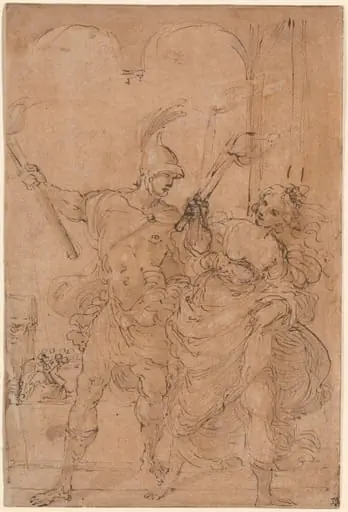 Alexander and Thaïs Setting Fire to Persepolis
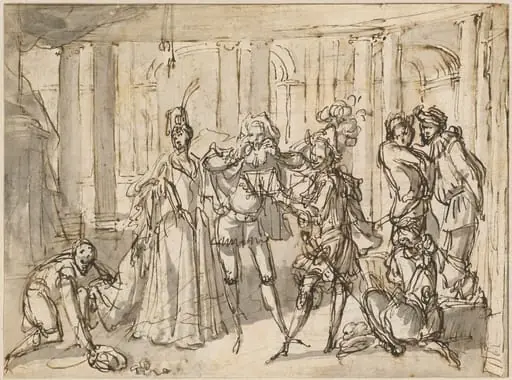 A Performance by the Commedia dell'Arte
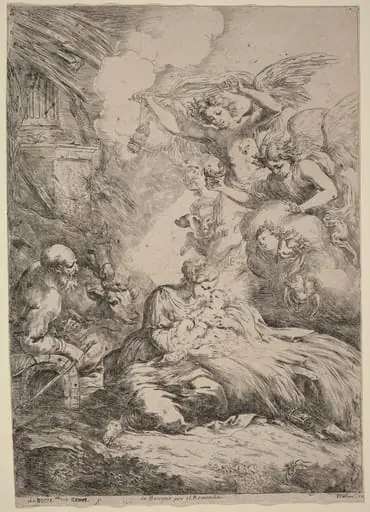 The Holy Family Adored by Angels (The Large Nativity)
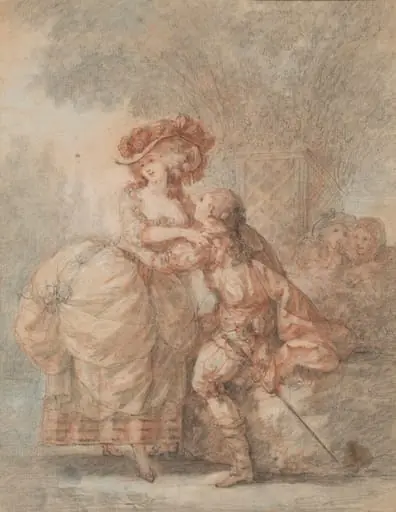 The Declaration of Love
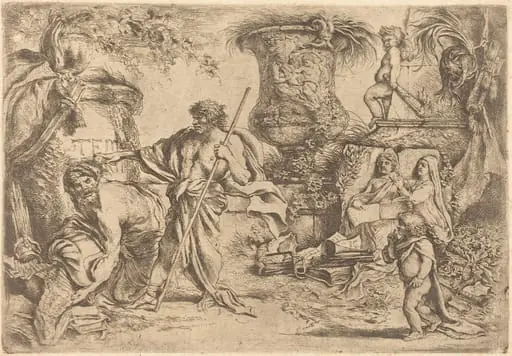 Temporalitas Aeternitas
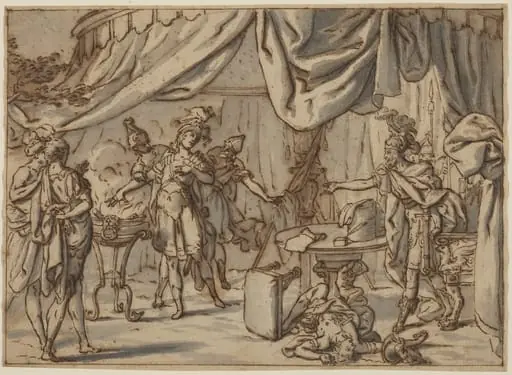 Mucius Scaevola
![Temporalis Aeternitas [Second Version], by Giovanni Benedetto Castiglione](https://artifactworldgallery.com/img/giovanni-benedetto-castiglione--temporalis-aeternitas-second-version--d9ecb26010022a5a-w320.webp) Temporalis Aeternitas [Second Version]
Temporalis Aeternitas [Second Version]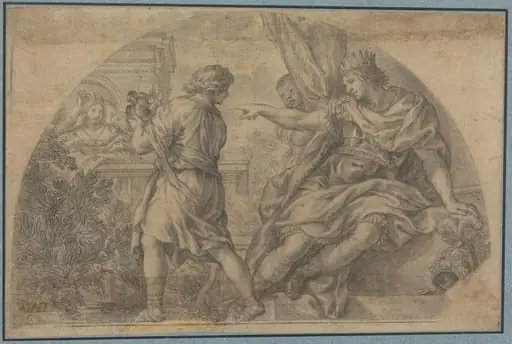 Masinissa and Sophonisba
 Saint Homobono
 The Contest between Apollo and Pan before King Midas
 Untitled
 Aeneas Saving Anchises at the Fall of Troy