Artwork
Mucius Scaevola
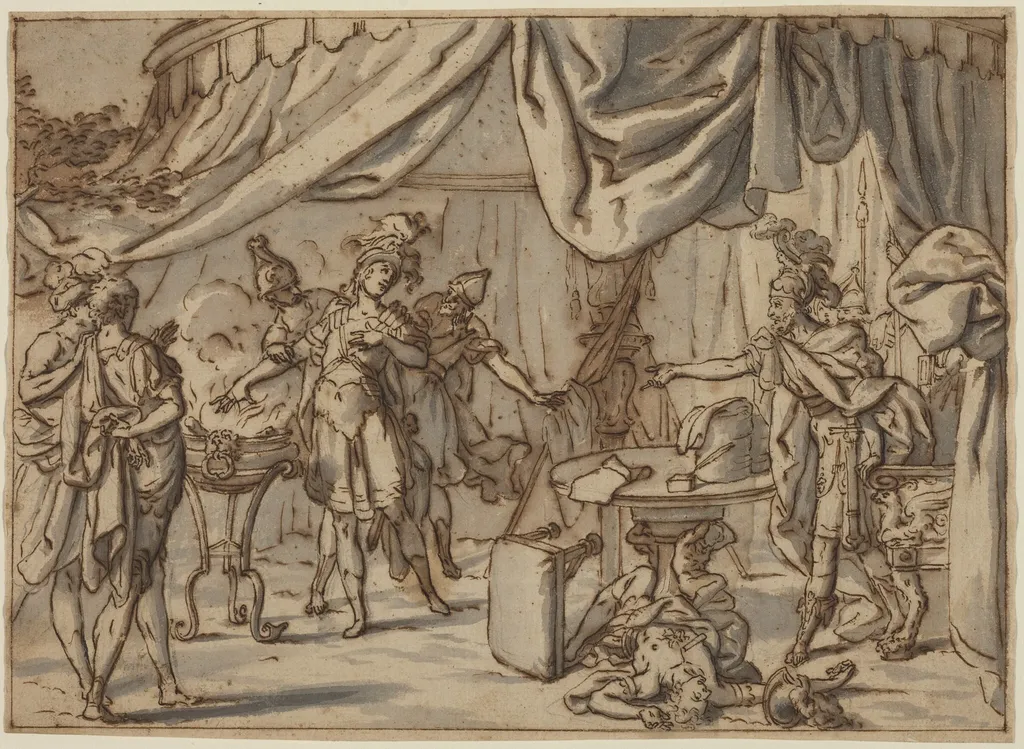
Mucius Scaevola is an ink drawing by the Renaissance artist Bernardo Castello. It dates from 1601 and is held in the collection of the National Gallery of Art.
About this work
Overview
The work is a refined study in narrative expression, capturing a moment of extreme endurance through controlled ink application and subtle tonal gradations.
Created in 1601 by Bernardo Castello, this drawing depicts the Roman legend of Mucius Scaevola using sepia ink and gray wash on laid paper. Castello, active in Genoa during the late Mannerist period, specialized in historical and portrait subjects. The work is a refined study in narrative expression, capturing a moment of extreme endurance through controlled ink application and subtle tonal gradations.
Subject & Meaning
The scene illustrates the story of Gaius Mucius Scaevola, who, according to Roman tradition, thrust his right hand into a fire to prove his resolve before the Etruscan king Porsena. His act of self-sacrifice was meant to deter invasion. In the drawing, the central figure’s burning hand is met with varied reactions from onlookers, emphasizing courage amid chaos, while the surrounding banquet and musicians suggest the setting of a foreign court.
Technique & Style
Castello employed fine sepia ink lines and layered gray washes to model form and depth, creating a sense of volume without heavy outline. Cross-hatching defines texture in clothing and ground, while loose, expressive strokes convey movement in figures and fabric. The sketchlike quality enhances immediacy, aligning with Mannerist tendencies toward emotional intensity and controlled elegance rather than naturalistic detail.
History & Provenance
The drawing is dated 1601 and originates from Castello’s time in Liguria, where he produced numerous preparatory studies for larger commissions. Its survival as a standalone work suggests it may have been kept as a model for patrons or fellow artists. No definitive early ownership records exist, but its condition and medium indicate it was preserved as a finished drawing rather than a mere sketch.
Context
In early 17th-century Genoa, historical narratives drawn from Roman antiquity were favored by civic and ecclesiastical patrons seeking moral exemplars. Castello’s work reflects this trend, aligning with a broader regional interest in classical themes rendered with refined draftsmanship. The emphasis on individual heroism resonated with contemporary ideals of stoicism and public virtue.
Legacy
Though Castello is less widely known than his contemporaries, this drawing exemplifies the transitional phase between late Mannerism and early Baroque in Ligurian art. Its focus on psychological tension and technical precision influenced regional draftsmen. As a preserved study of a classical moral tale, it remains a tangible link to how historical narratives were visually interpreted in early modern Italy.
Artist & collection

Artist
Bernardo Castello (1557–1629) was an Italian painter of the late Mannerist style, active mainly in Genoa and Liguria. He is mainly known as a portrait and historical painter.

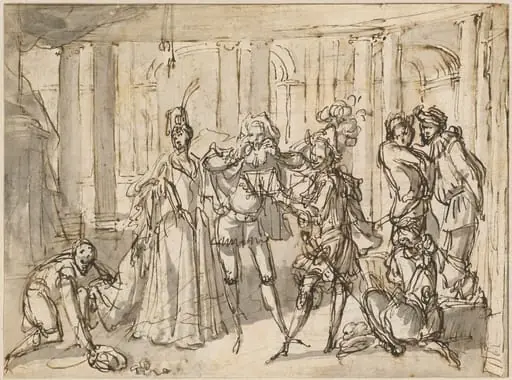 A Performance by the Commedia dell'Arte
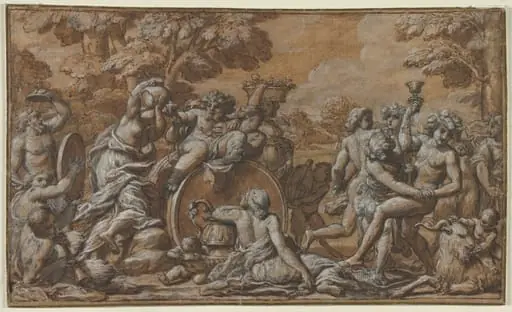 Bacchanal
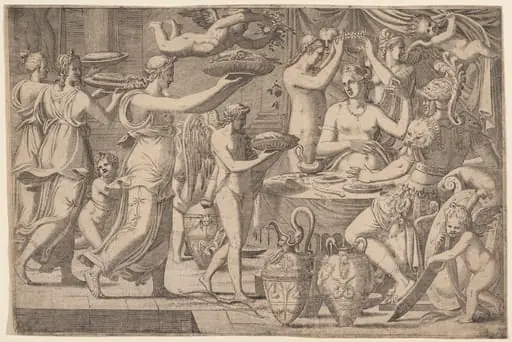 Venus and Mars Served by Cupid and the Three Graces
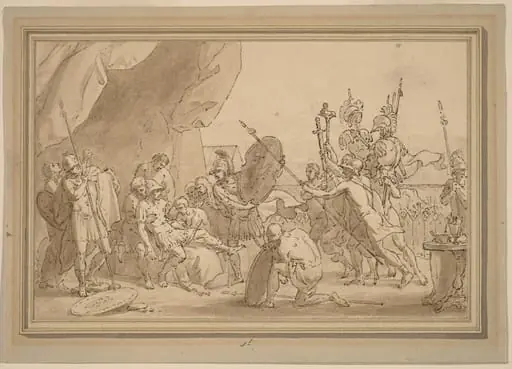 Death of a General
![Temporalis Aeternitas [Second Version], by Giovanni Benedetto Castiglione](https://artifactworldgallery.com/img/giovanni-benedetto-castiglione--temporalis-aeternitas-second-version--d9ecb26010022a5a-w320.webp) Temporalis Aeternitas [Second Version]
Temporalis Aeternitas [Second Version]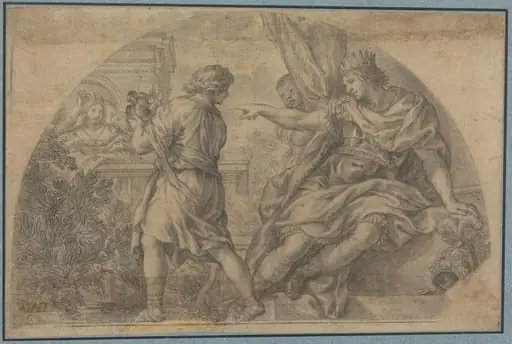 Masinissa and Sophonisba
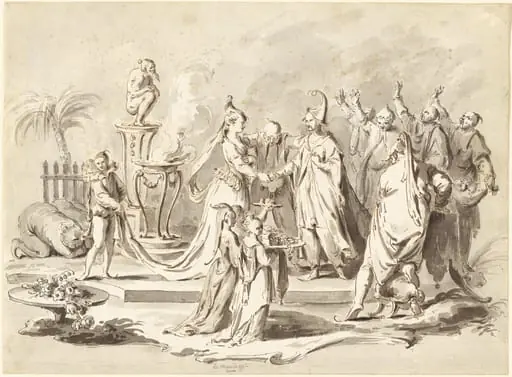 The Marriage of Europe and China
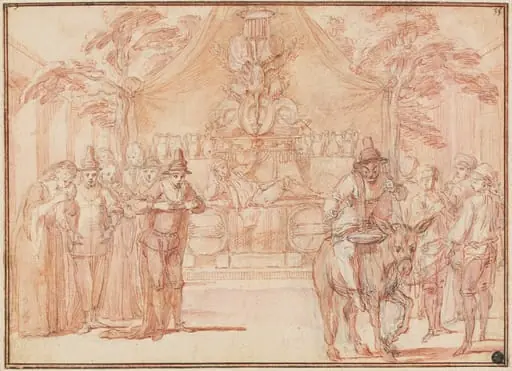 Scene from "The Tomb of Master André"
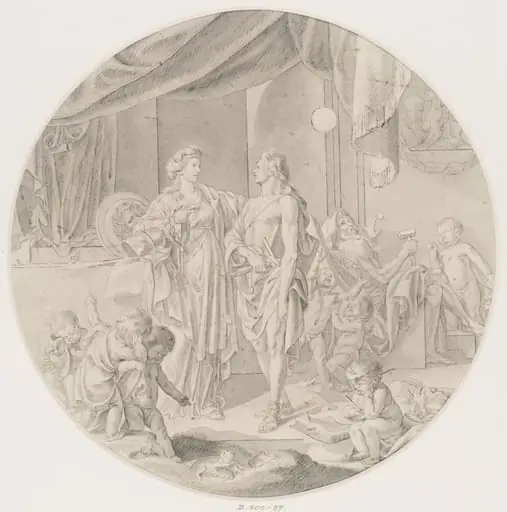 Minerva encouraging the Arts
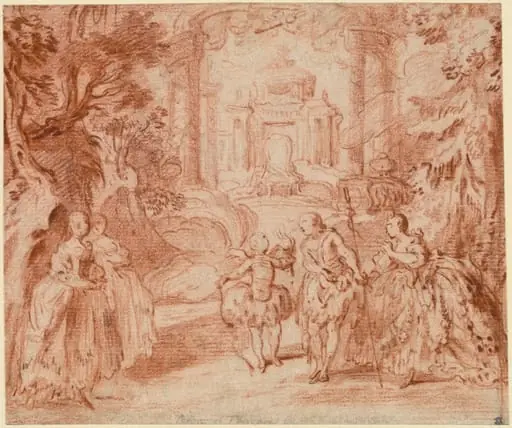 The Divertissement from Voltaire's "La princesse de Navarre"
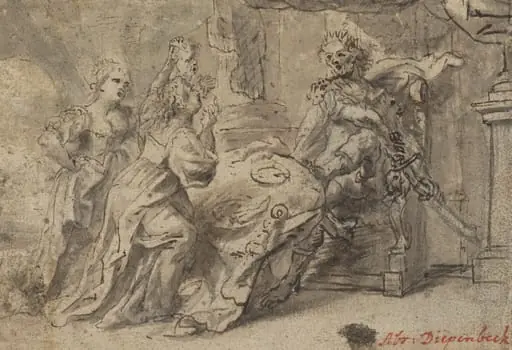 Philomela, Procne, and the Thracian King Tereus