Artwork
Alexander and Thaïs Setting Fire to Persepolis
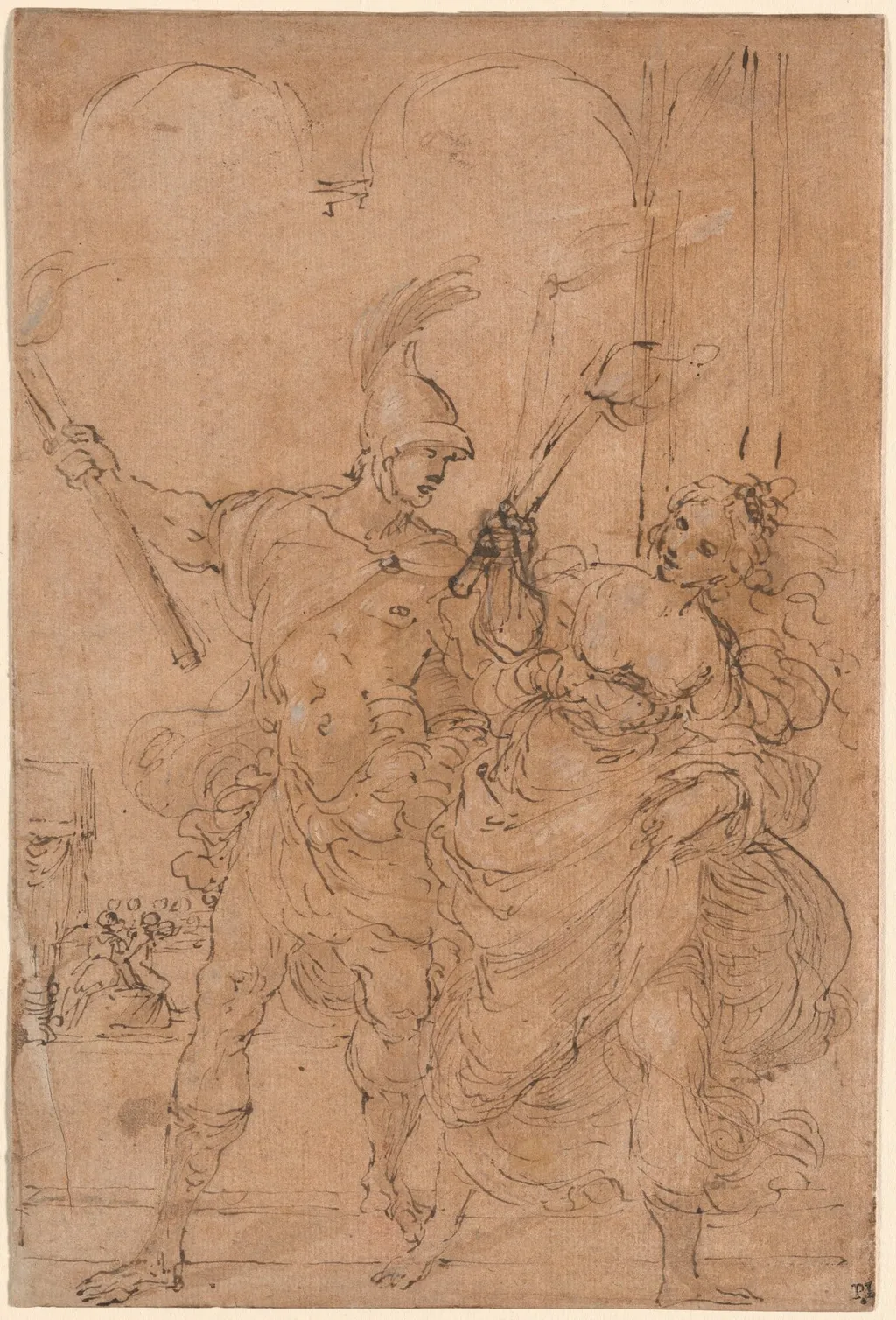
Alexander and Thaïs Setting Fire to Persepolis is an ink drawing by the Renaissance artist Lodovico Carracci. It dates from 1592 and is held in the collection of the National Gallery of Art.
About this work
Lodovico Carracci was active during the Renaissance, a time of great artistic change.
This painting is called Alexander and Thaïs Setting Fire to Persepolis.
It was made by Lodovico Carracci around 1592.
The artist used pen and brown ink to create the work, which is an allegory.
Lodovico Carracci was active during the Renaissance, a time of great artistic change.
He was part of a family of artists, and his brothers were also known for their art.
You can learn more about this style by looking at the movement: Renaissance.
Overview
This drawing by Lodovico Carracci, dated around 1592, depicts an episode from classical history rendered in pen and brown ink with brown wash and white heightening. The sheet was prepared with an orange-brown wash, a technique that unifies the composition while allowing contrasts of light and shadow to emerge. Executed during the late Renaissance, the work reflects the period’s renewed interest in narrative clarity and expressive figuration.
Subject & Meaning
The scene illustrates the moment when Thaïs, an Athenian courtesan, persuades Alexander the Great to burn the Persian capital of Persepolis in 330 BCE. This act, recounted in ancient sources, symbolized both retribution for Persian aggression and the destructive consequences of unchecked impulse. Carracci’s interpretation emphasizes the psychological tension between the figures, inviting reflection on power, desire, and the fragility of human achievement.
Technique & Style
Carracci employs a fluid, confident line to define forms, combining delicate hatching with broad washes to model volume and depth. White heightening applied to select areas—such as drapery folds and architectural details—enhances the illusion of light, a method characteristic of Bolognese draftsmanship. The composition’s dynamic diagonals and rhythmic groupings reveal the artist’s engagement with High Renaissance principles, tempered by an emerging Baroque sensibility.
History & Provenance
Created as a preparatory study or autonomous work, the drawing’s early history remains undocumented. Its survival suggests it was preserved within private collections, likely circulating among connoisseurs of Italian Renaissance and Baroque art. The medium and technique align with works attributed to Lodovico Carracci, though its precise path to institutional holdings is unrecorded. Scholars associate it with his mature period, when narrative and technical refinement coalesced.
Context
Lodovico Carracci operated in Bologna during a transformative phase in European art, bridging the idealized harmony of the Renaissance and the emotional intensity of the Baroque. As a founder of the Carracci academy, he advocated for the study of nature and classical models, influencing a generation of artists. This drawing reflects those pedagogical ideals, merging historical subject matter with observational precision and inventive composition.
Artist & collection


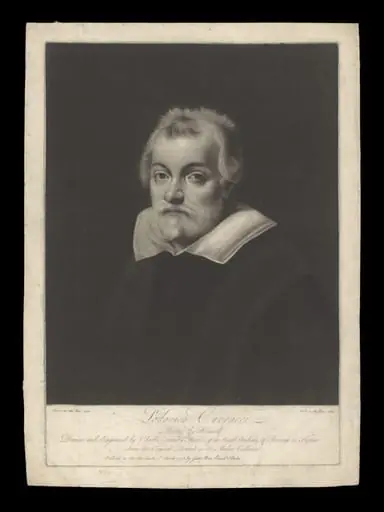
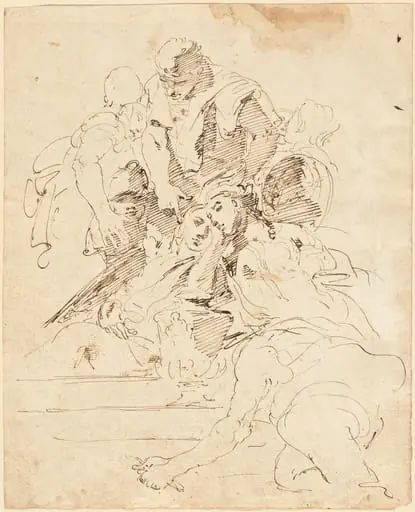 Classical Figures Gathered around an Urn
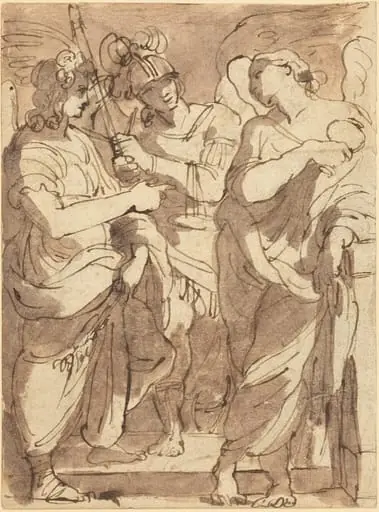 Allegory of Justice
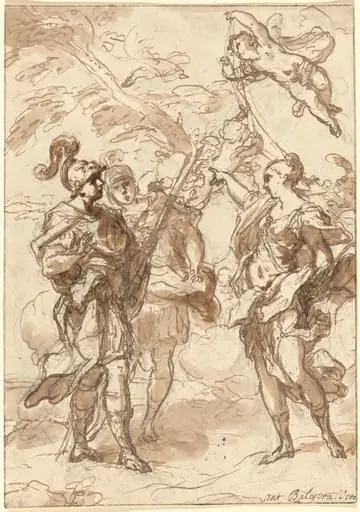 Venus as a Huntress Appearing to Aeneas and Achates
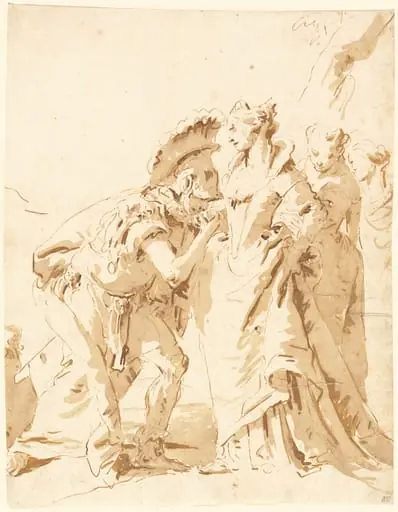 The Meeting of Antony and Cleopatra
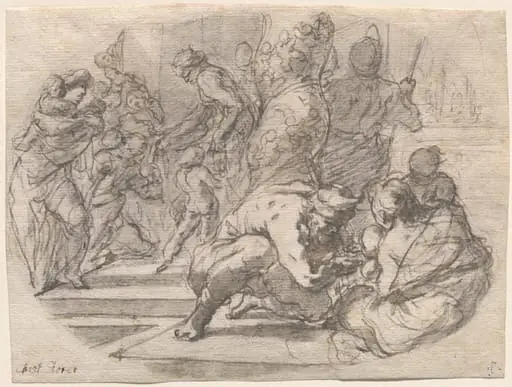 The Generosity of Empress Pulcheria
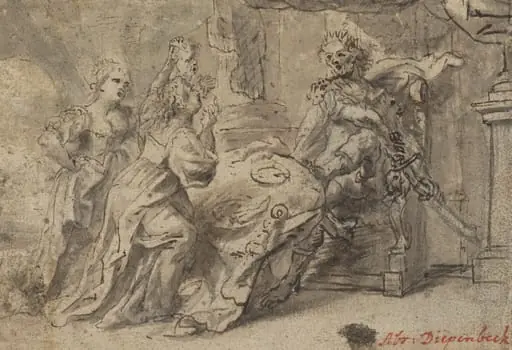 Philomela, Procne, and the Thracian King Tereus
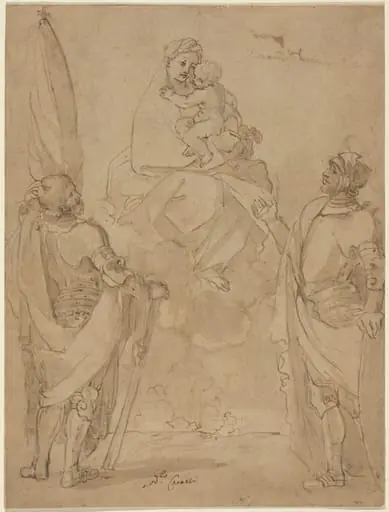
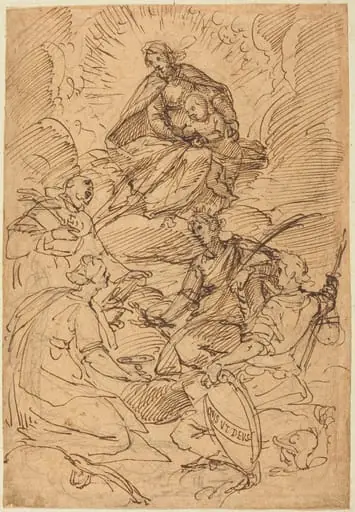 The Madonna and Child in Glory Adored by Saints
 Mercury and Aglauros
 A Sheet of Studies for the Martyrdom of Saint Catherine of Alexandria
 Perseus and Andromeda
![Female Saint Carrying a Banner [recto], by Baldassare Franceschini](https://artifactworldgallery.com/img/baldassare-franceschini--female-saint-carrying-a-banner-recto--7b0a38585a5ad76d-w320.webp) Female Saint Carrying a Banner [recto]
Female Saint Carrying a Banner [recto] Madonna and Child with Saints Gimignano, John the Baptist, George and Peter Martyr