Artwork
Queen Elizabeth
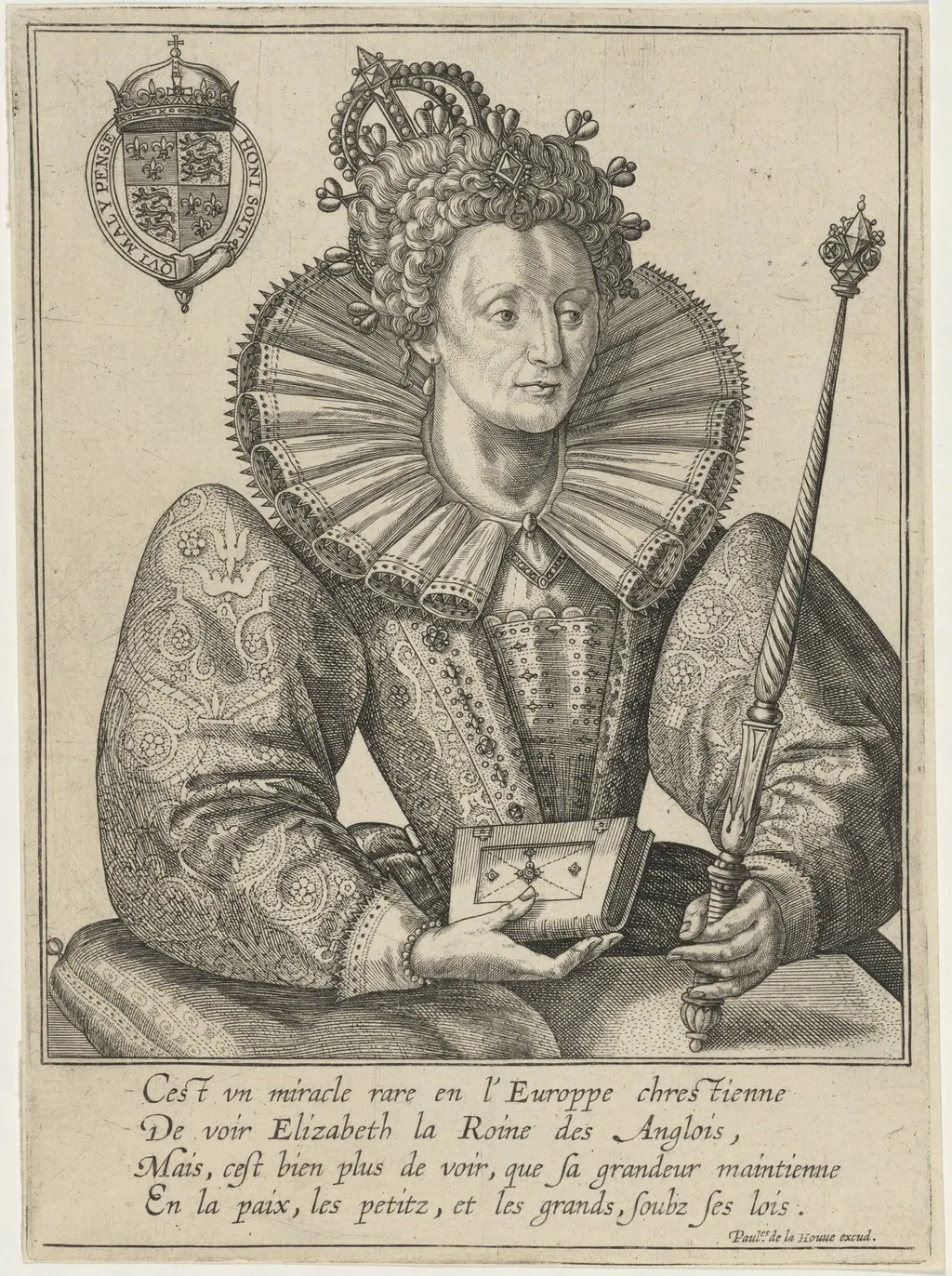
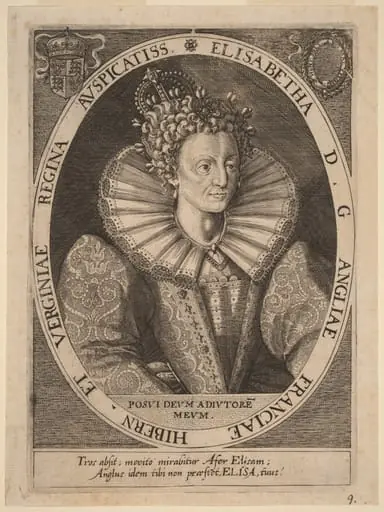
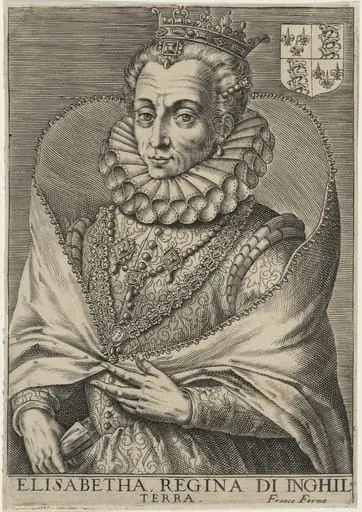
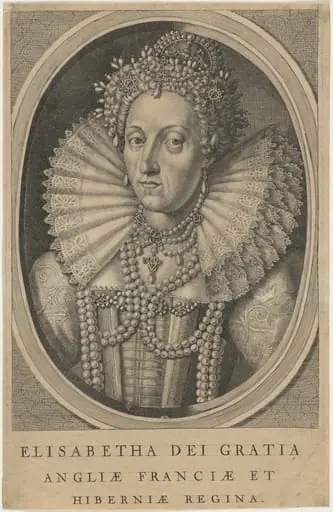
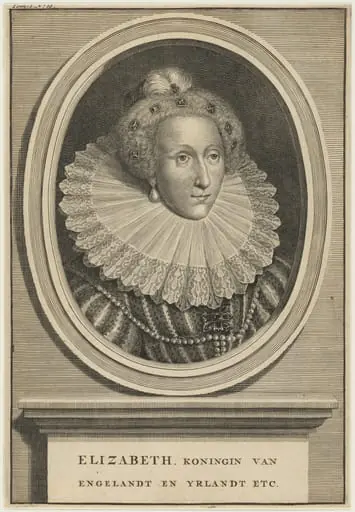
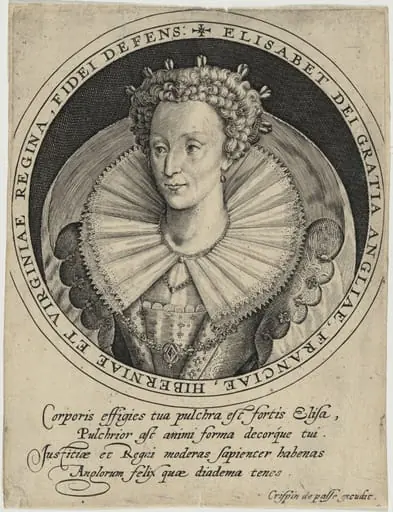
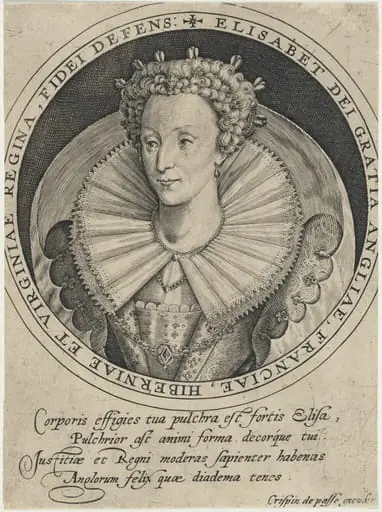
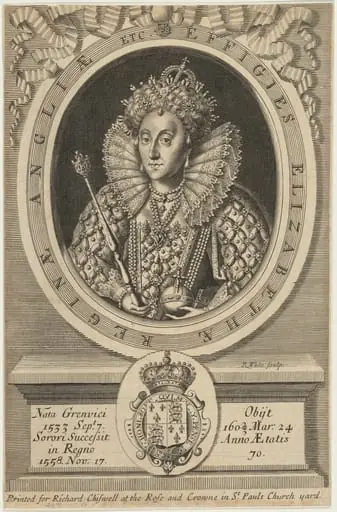
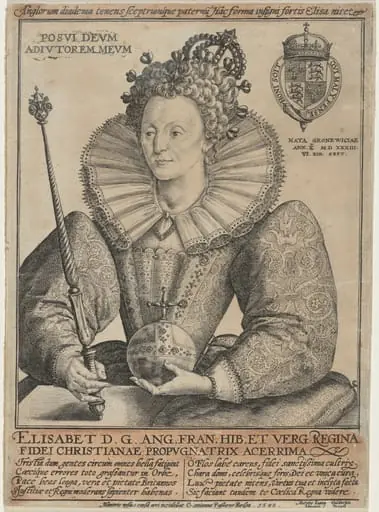
Queen Elizabeth is an ink print by the Renaissance artist Unknown. It dates from 1601 and is held in the collection of the National Gallery of Art.
About this work
Overview
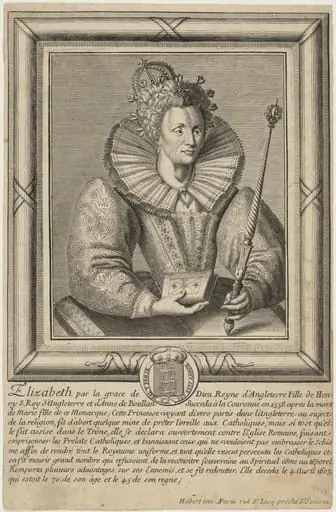
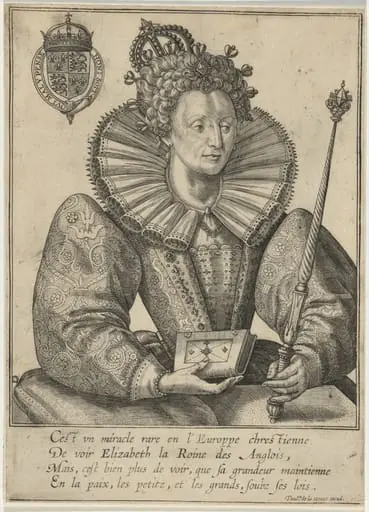
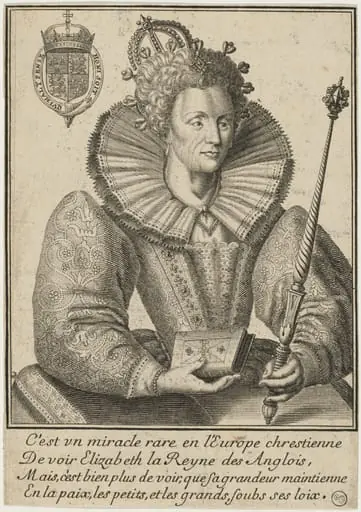
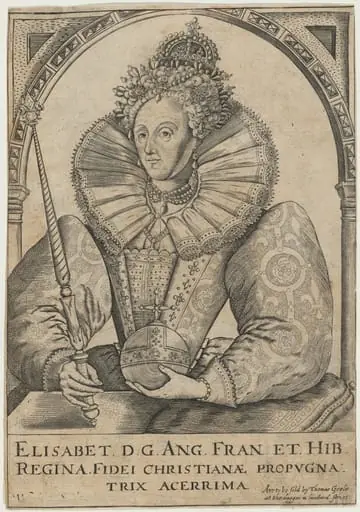
This engraving depicts a female monarch, widely interpreted as Queen Elizabeth I, rendered in the detailed linear style typical of late Renaissance printmaking.
This engraving depicts a female monarch, widely interpreted as Queen Elizabeth I, rendered in the detailed linear style typical of late Renaissance printmaking. The composition emphasizes regal authority through posture and attire, with fine cross-hatching defining texture and volume. As a printed image, it was likely produced for dissemination among elite audiences, serving both as portraiture and political statement.
Subject & Meaning
The figure is portrayed with a crown, scepter, and book—symbols of divine right, sovereign power, and learned rule. The ruffled collar and elaborate dress reflect Tudor court fashion, while the book may allude to her patronage of learning or Protestant scripture. The calm, frontal gaze reinforces an image of composed authority, aligning with the propaganda of Elizabeth’s reign as the Virgin Queen and protector of the realm.
Technique & Style
The work employs fine, controlled engraving lines and dense cross-hatching to model fabric, jewelry, and facial features with precision. The technique allows for subtle gradations of light and shadow, enhancing the three-dimensionality of the figure. Such meticulous craftsmanship was characteristic of skilled Northern European engravers, who often worked from painted portraits to produce reproducible images for wider circulation.
History & Provenance
Though the exact origin and engraver remain unidentified, the style and iconography suggest production in England or the Low Countries during the late 16th century. Such engravings were often commissioned by courtiers or publishers to circulate the monarch’s image. Copies of similar portraits survive in institutional collections, indicating the print’s role in shaping public perception of the queen across Europe.
Context
During Elizabeth’s reign, portraiture became a tool of statecraft, with images carefully controlled to project stability and legitimacy. Engravings like this one allowed the queen’s likeness to reach audiences beyond the court, reinforcing her authority in an era of religious upheaval and political uncertainty. The medium’s reproducibility made it ideal for disseminating a standardized, idealized image of monarchy.
Legacy
This engraving contributes to a broader visual tradition of Elizabethan portraiture that influenced later depictions of British royalty. Its technical refinement set a standard for engraved portraiture in the early modern period. Though not widely known today, such prints were instrumental in constructing the enduring iconography of Elizabeth I as a symbol of national identity and sovereign dignity.
Artist & collection

 Domestic Scene
 Giacomo and Cardinal Marco, investing Andrea, Abbot of San Zeno, with his Benefice
 The Nymph of Fontainebleau
 Portrait of a Woman
 Madonna and Child with Saints in the Enclosed Garden
 Venus and Minerva
 Family Group of Four on Sofa
 Wall painting from Room H of the Villa of P. Fannius Synistor at Boscoreale