Artwork
Queen Elizabeth
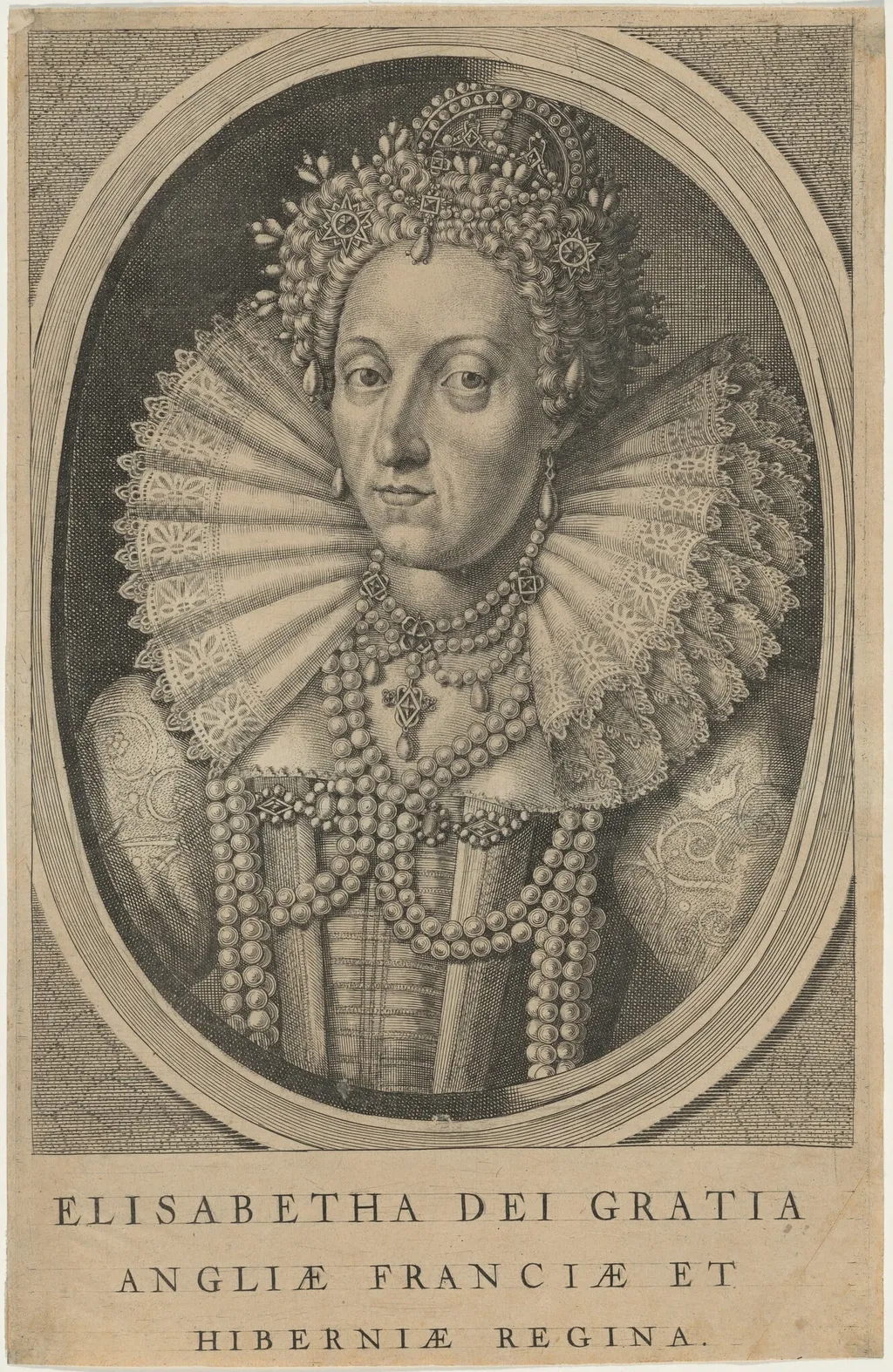
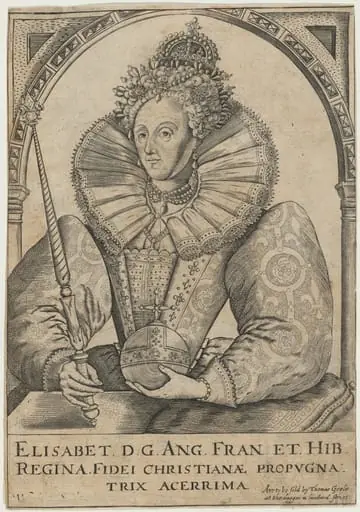
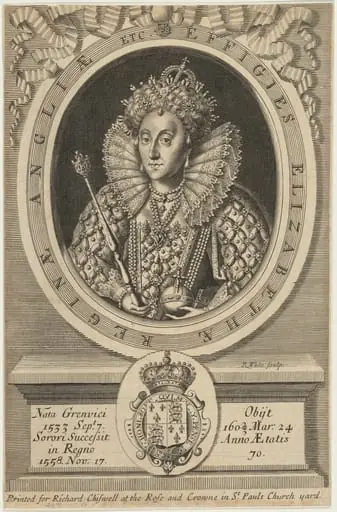
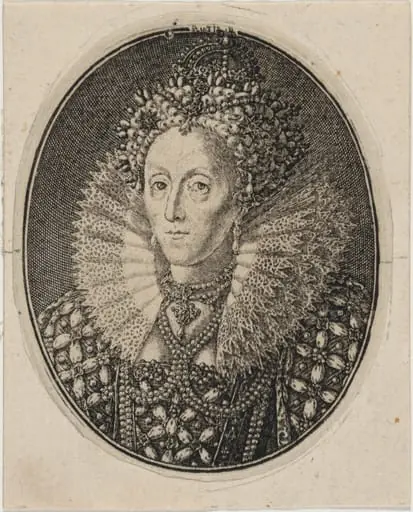
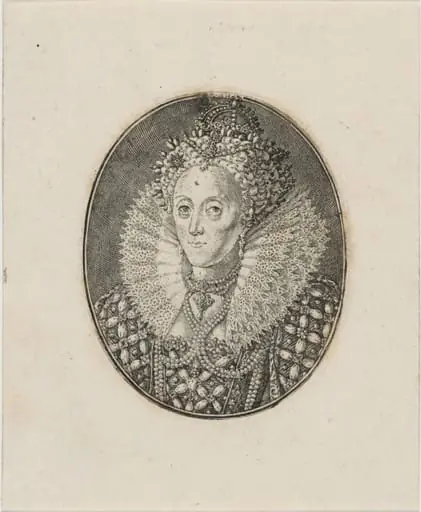
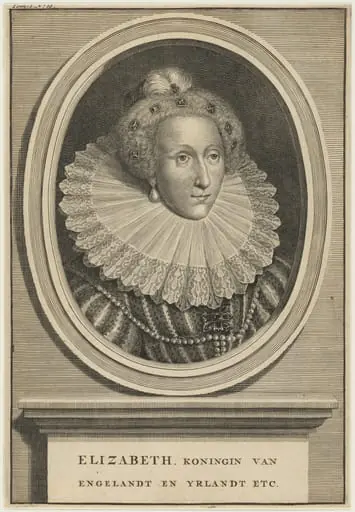
Queen Elizabeth is an ink print by the Renaissance artist Unknown. It dates from 1601 and is held in the collection of the National Gallery of Art. The work is a black‑and‑white engraving depicting a female portrait.
About this work
Overview
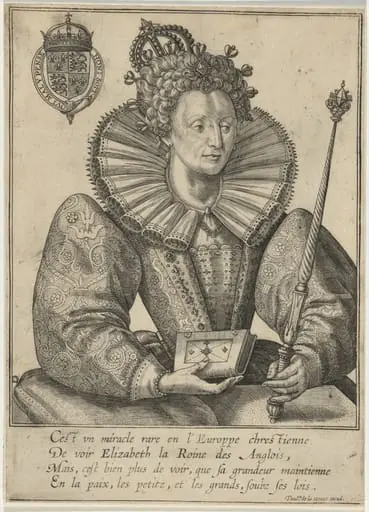
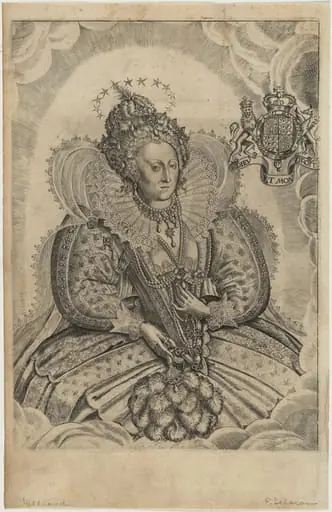
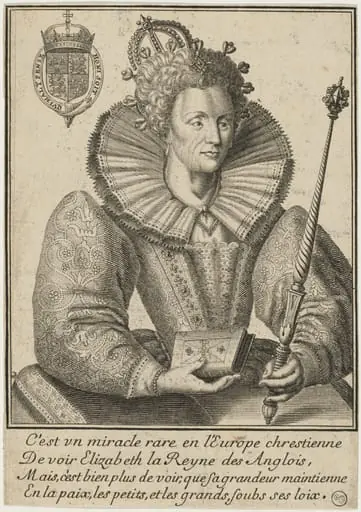
The work is a black‑and‑white engraving depicting a female portrait. The sitter is shown from the shoulders up, wearing an elaborate lace‑patterned collar, a substantial pearl necklace, and a high coiffure adorned with curls and jewels. In her hands she holds a small cross, and an inscription beneath identifies her as "Queen of England, France, and Ireland."
Subject & Meaning
The portrait presents a monarch, emphasizing regal authority through luxurious attire and religious symbolism. The inclusion of the cross underscores the queen's piety, while the title asserts her claim to multiple thrones, reflecting the political reach and self‑presentation of the sovereign.
Technique & Style
Executed as an engraving, the image relies on incised lines and varying densities of shading to render texture and depth. Fine hatching creates the intricate lace collar and pearl detailing, while broader strokes suggest the volume of hair and the softness of the shoulders. The monochrome palette focuses attention on line work rather than color.
History & Provenance
The print is identified simply as an engraving of a queen, with no further data on its creator, date, or original ownership provided in the source material. Consequently, its provenance remains undocumented within the available information.
Context
Portrait engravings of royalty were common in early modern Europe, serving both as disseminated images of sovereigns and as affirmations of dynastic legitimacy. The inscription naming England, France, and Ireland aligns with the historical claims of English monarchs to those crowns.
Artist & collection

 Domestic Scene
 Giacomo and Cardinal Marco, investing Andrea, Abbot of San Zeno, with his Benefice
 The Nymph of Fontainebleau
 Portrait of a Woman
 Madonna and Child with Saints in the Enclosed Garden
 Venus and Minerva
 Family Group of Four on Sofa
 Wall painting from Room H of the Villa of P. Fannius Synistor at Boscoreale