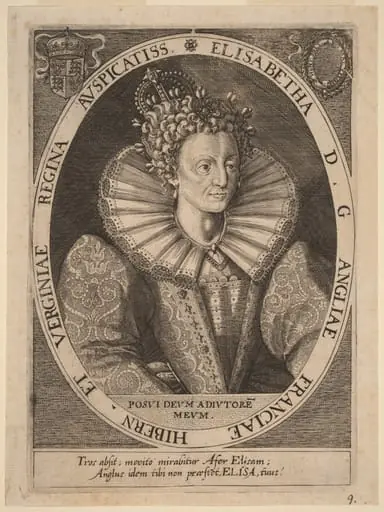
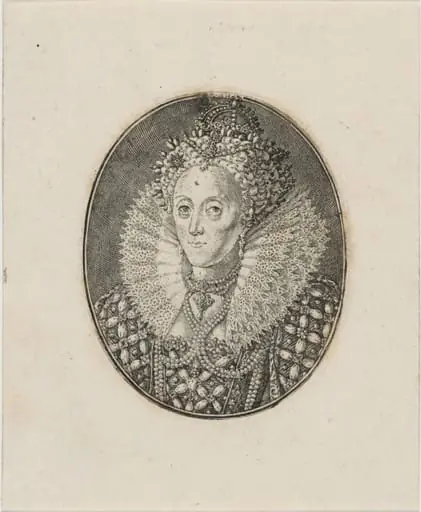
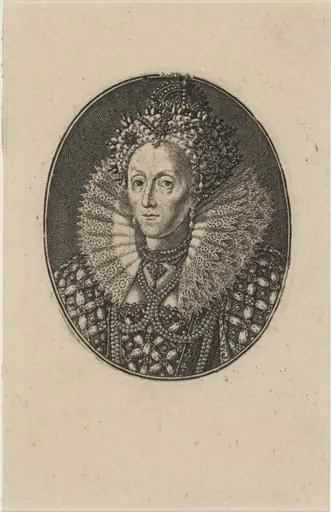
Artwork
Elizabeth, Queen of England
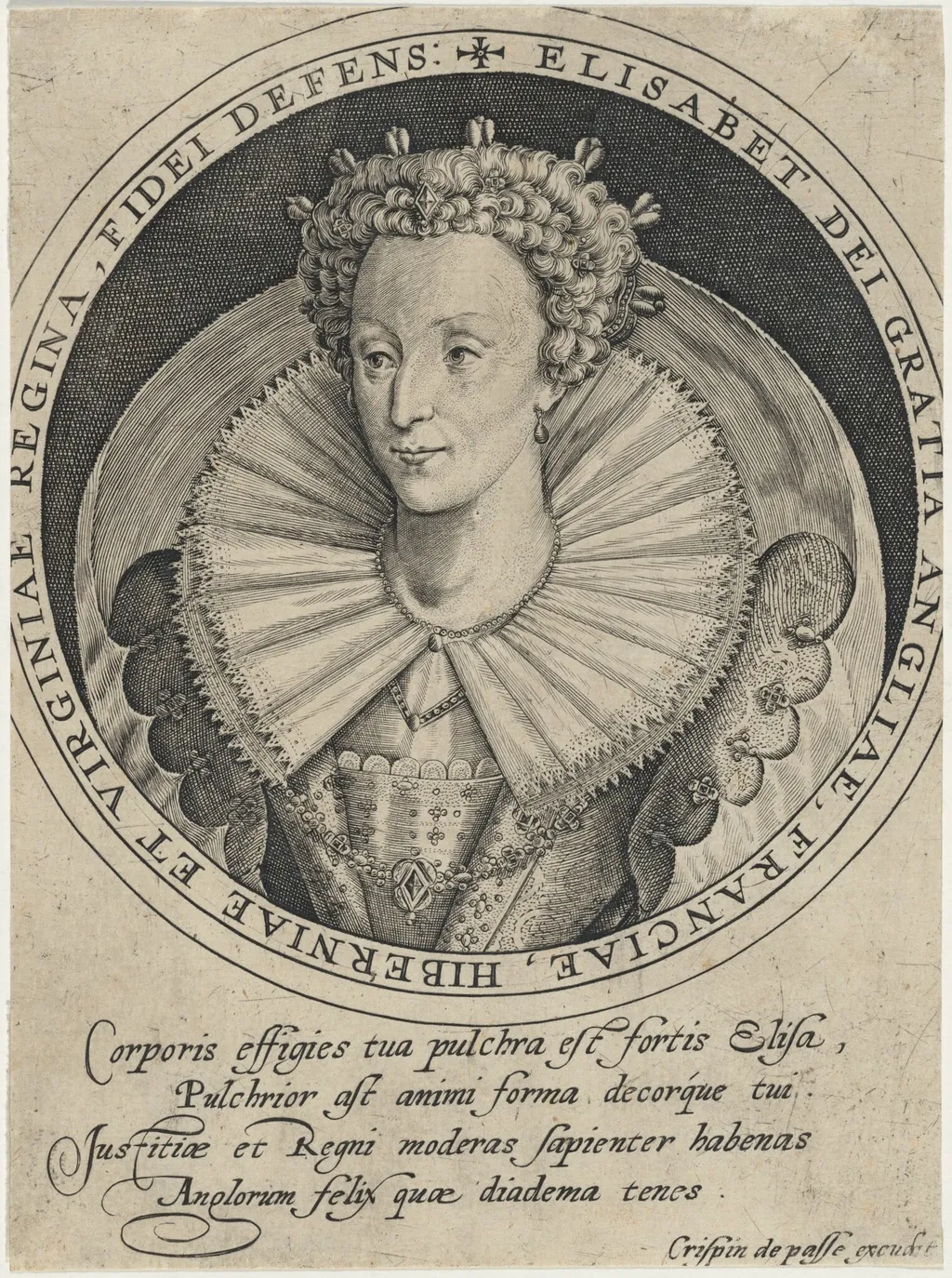
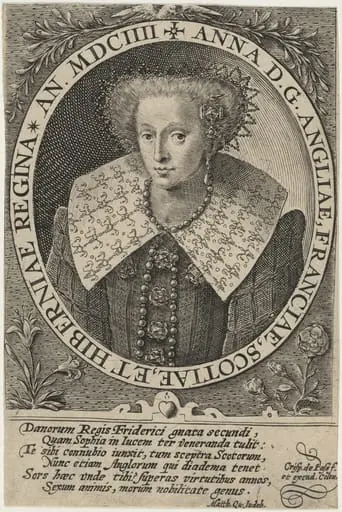
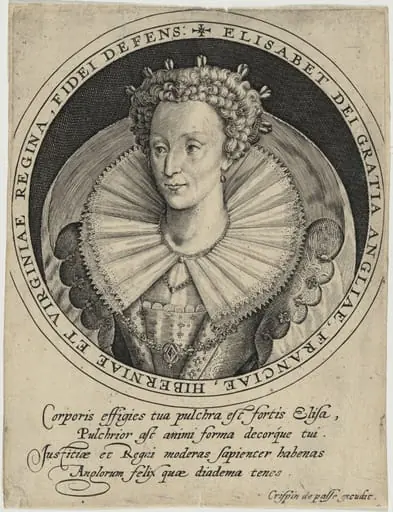
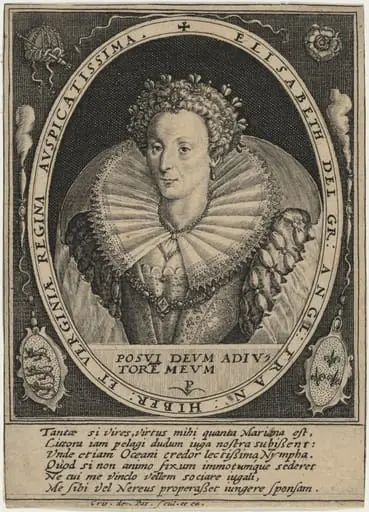
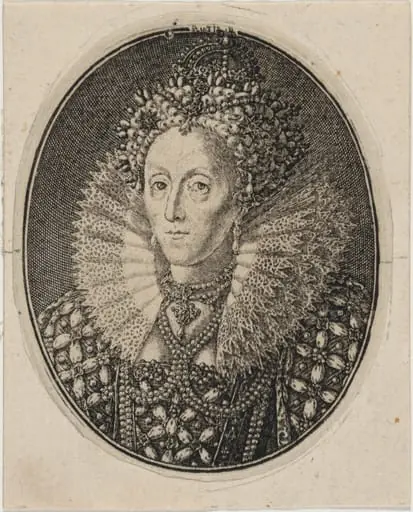
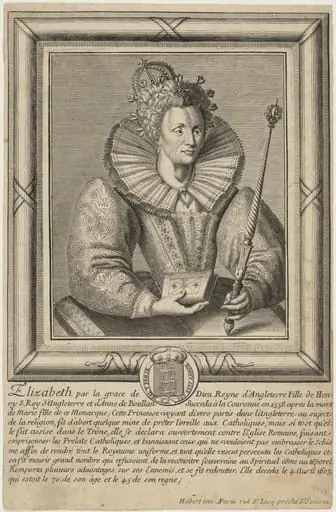
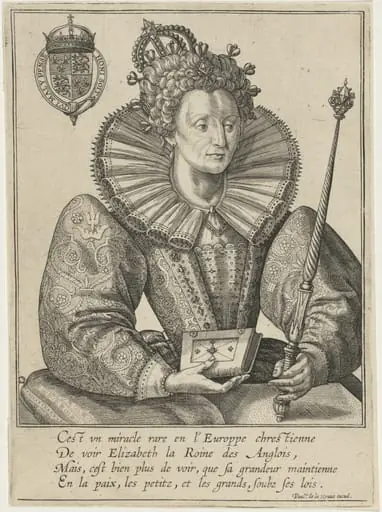
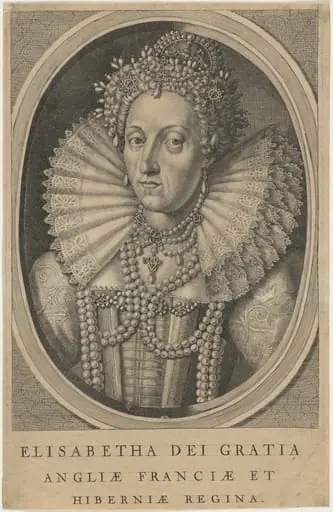
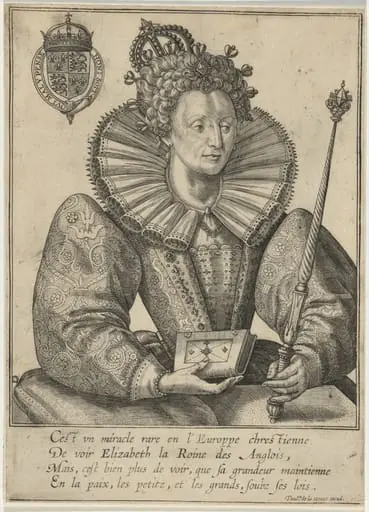
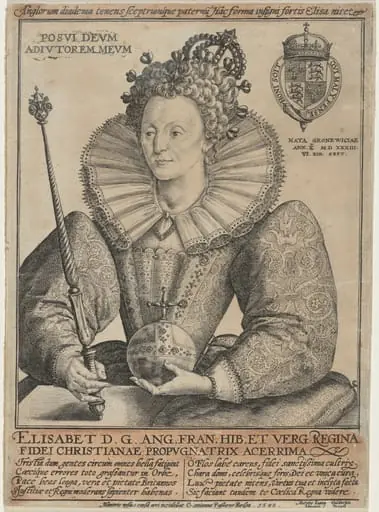
Elizabeth, Queen of England is an ink print by the Renaissance artist Crispijn van de Passe I. It dates from 1601 and is held in the collection of the National Gallery of Art.
About this work
Overview
Executed with fine linear precision, the portrait presents the queen in formal attire against a dark, unadorned background.
This black-and-white engraving, produced in 1601 by Crispijn van de Passe I, depicts Elizabeth I of England. Executed with fine linear precision, the portrait presents the queen in formal attire against a dark, unadorned background. Her name and title, 'Elizabeth Regina,' are inscribed above her head, reinforcing her royal status. The artist’s signature appears at the base, a common practice in printmaking to assert authorship and craftsmanship.
Subject & Meaning
The portrait captures Elizabeth I in her mature years, emphasizing regal composure over individual likeness. The high ruffled collar and ornate necklace reflect courtly fashion and symbolic wealth, while the absence of elaborate scenery directs focus to her authority. The Latin term 'Regina' underscores her sovereign role, aligning the image with official representations used to project stability and divine right during a period of political tension.
Technique & Style
Van de Passe employed the engraving technique, incising fine lines into a copper plate to create tonal contrasts and intricate detail. The rendering of lace, hair, and fabric relies on controlled hatching and cross-hatching, showcasing the precision possible in intaglio printmaking. The stark contrast between the illuminated figure and the dark background enhances the portrait’s formal gravity, typical of Northern European portraiture of the era.
History & Provenance
Created in 1601, the engraving was likely made for distribution among European elites and court circles, serving as a tool of political representation. Van de Passe, a Dutch artist active in England, produced numerous royal portraits during his time at the Tudor court. This print survives in multiple institutional collections, indicating its circulation and enduring use as a standardized image of the queen in the early 17th century.
Context
In the final years of Elizabeth’s reign, visual propaganda was vital to reinforce her legitimacy amid succession uncertainty. Engravings like this one offered a controlled, reproducible image of the monarch, countering the variability of painted portraits. Van de Passe’s work contributed to a broader network of printed imagery that shaped public perception of royalty across Protestant Europe.
Legacy
The engraving became one of the most widely disseminated images of Elizabeth I, influencing later depictions and serving as a reference for historical iconography. Its clarity and formal restraint helped define the visual language of English queenship in print. Though not original to the court, it endured as a standard representation, preserved in archives and used in scholarly and educational contexts well into the modern era.
Artist & collection

Artist
Crispijn van de Passe I (1564–1637) was an artist, born in Arnemuiden.