Artwork
The Trinity
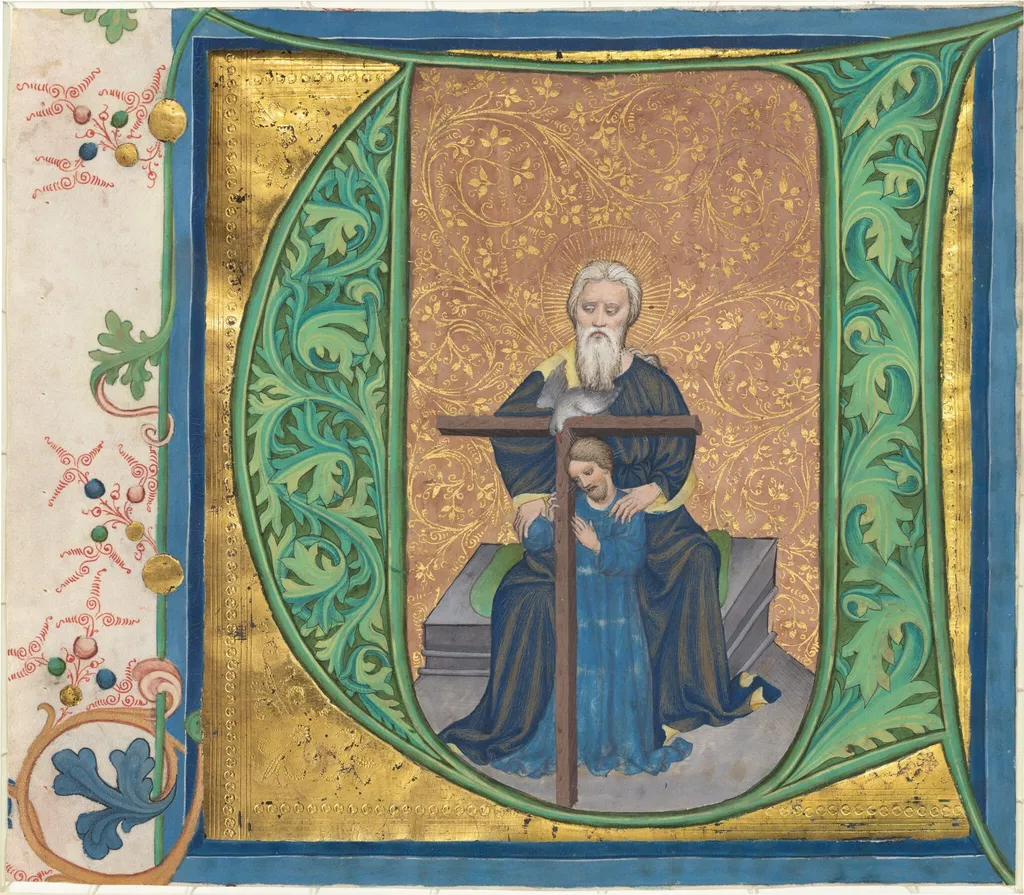
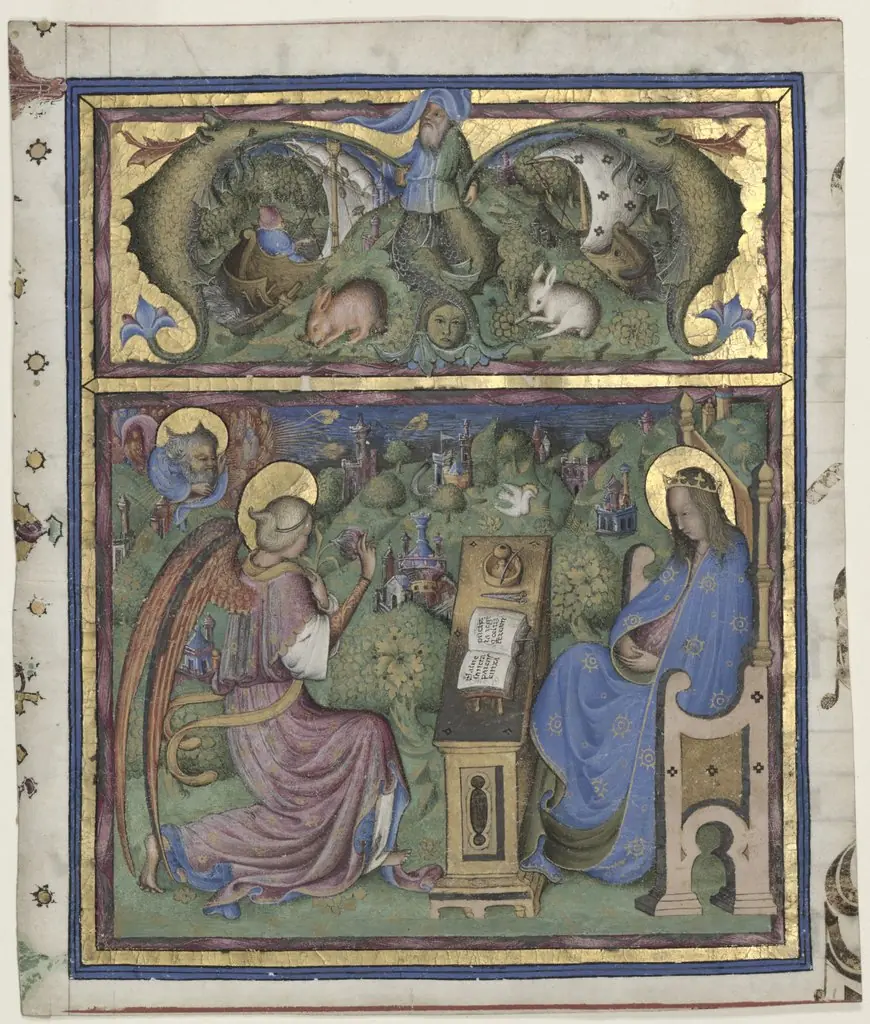
The Trinity is a drawing by the Renaissance artist Unknown. It dates from 1414 and is held in the collection of the National Gallery of Art.
About this work
Overview
The work titled The Trinity is a small-scale drawing executed on vellum, a fine parchment traditionally prepared from calfskin. As a miniature, it reflects the intimate scale typical of manuscript illumination, yet it stands as an independent piece of art rather than a component of a larger codex. Its compact dimensions invite close examination, emphasizing the delicacy of both material and hand.
Subject & Meaning
Depicting the Christian doctrine of the Trinity, the image presents the three persons of the divine in a unified composition. While the precise iconography is not detailed here, such representations often arrange the Father, Son, and Holy Spirit in a harmonious grouping, underscoring theological concepts of unity and distinction within the Godhead.
Technique & Style
Rendered as a miniature on vellum, the drawing employs fine lines and subtle shading suited to the smooth, translucent surface of the parchment. The artist would have used pigments or ink that adhere well to the vellum, allowing for precise detailing. This medium, favored in medieval and early modern manuscript work, supports a high level of craftsmanship in a compact format.
Artist & collection

 Domestic Scene
 Giacomo and Cardinal Marco, investing Andrea, Abbot of San Zeno, with his Benefice
 The Nymph of Fontainebleau
 Portrait of a Woman
 Madonna and Child with Saints in the Enclosed Garden
 Venus and Minerva
 Family Group of Four on Sofa
 Wall painting from Room H of the Villa of P. Fannius Synistor at Boscoreale