Artwork
Saint Mark
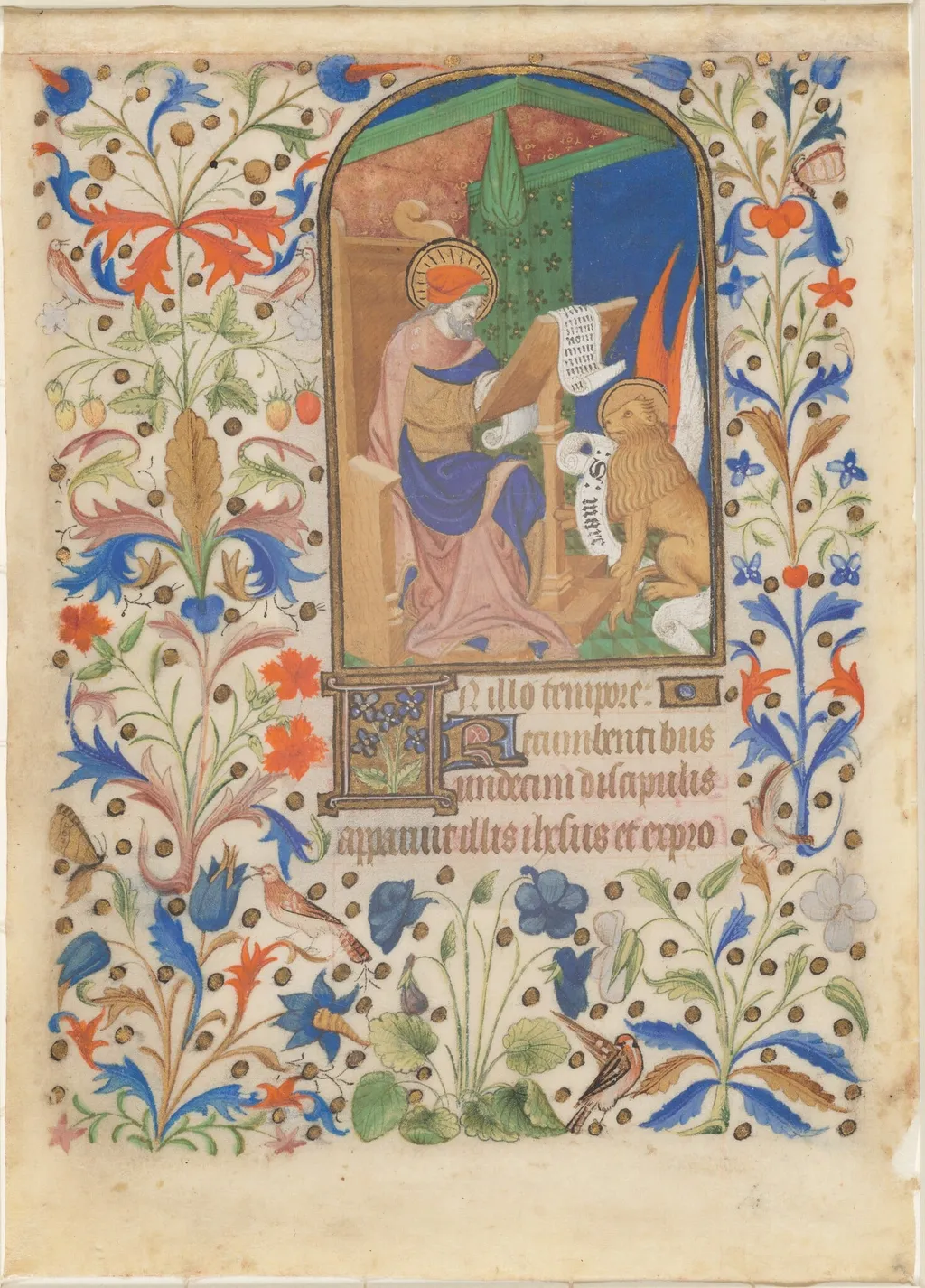
Saint Mark is a tempera drawing by the Renaissance artist French 15th Century. It dates from 1430 and is held in the collection of the National Gallery of Art.
About this work
Overview
His posture and attributes—holding an open book and gesturing with one hand—convey authority and divine inspiration, typical of medieval saintly portraiture.
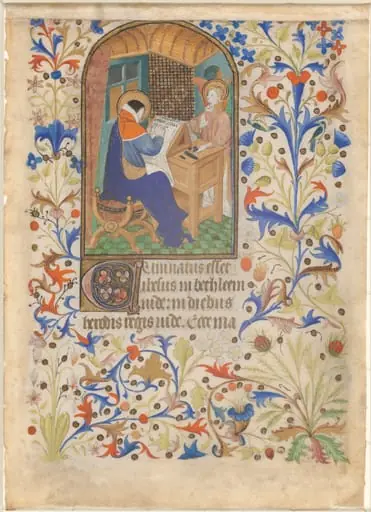
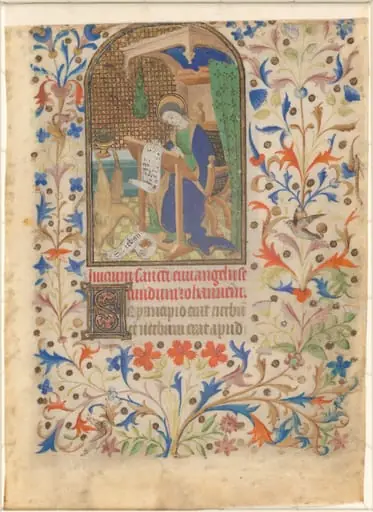
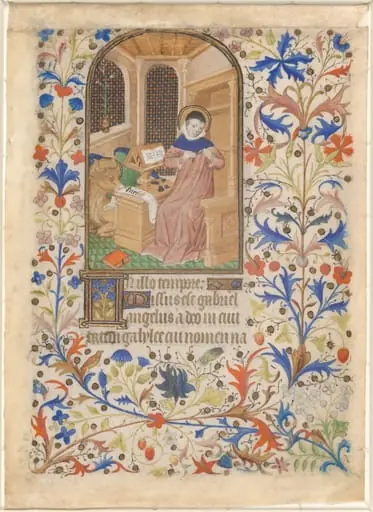
This small devotional drawing depicts Saint Mark in a richly decorated setting, rendered in tempera and gold leaf on vellum. The figure is framed by an arched structure in red and green, surrounded by intricate floral and avian motifs outlined in gold. His posture and attributes—holding an open book and gesturing with one hand—convey authority and divine inspiration, typical of medieval saintly portraiture.
Subject & Meaning
Saint Mark, one of the four Evangelists, is identified by the lion at his side, a traditional symbol derived from the vision in the Book of Ezekiel. The lion holds a scroll, referencing Mark’s Gospel. The open book in the saint’s hand signifies his role as a transmitter of sacred text. Together, these elements affirm his spiritual authority and connection to divine revelation.
Technique & Style
The image employs tempera paint, known for its luminous, opaque quality, enhanced by extensive use of gold leaf to highlight contours and decorative elements. Fine brushwork defines the delicate patterns of flowers and feathers, while the gold outlines elevate the scene’s sacred character. The meticulous detail suggests production in a monastic or elite workshop, where time and materials were devoted to devotional precision.
History & Provenance
Though specific origins are unrecorded, the materials and style align with late medieval illuminated manuscripts produced in Western Europe, likely between the 13th and 15th centuries. Such works were often created for private prayer or liturgical use, commissioned by wealthy patrons or religious institutions seeking to honor saints through visually sumptuous imagery.
Context
In medieval Christian art, saints were frequently depicted with symbolic animals and ornate backgrounds to convey theological ideas visually. Gold leaf and vibrant colors were not merely decorative but signaled holiness and celestial light. This image reflects a broader tradition where text and image worked in tandem to instruct and inspire devotion among the faithful.
Legacy
This work exemplifies the enduring influence of medieval iconography on later religious art. The symbolic pairing of Saint Mark with the lion remained consistent across centuries, and the use of gold and tempera influenced manuscript illumination well into the Renaissance. Its preservation offers insight into how spiritual narratives were encoded in visual form during a time when literacy was limited.
Artist & collection

Artist
This artist hid their best work inside old travel trunks. They glued vivid woodcuts into the lids of wooden boxes meant to be carried on horseback, like secret postcards from God. If you’ve ever pried open a cracked lid…