Artwork
Saint John
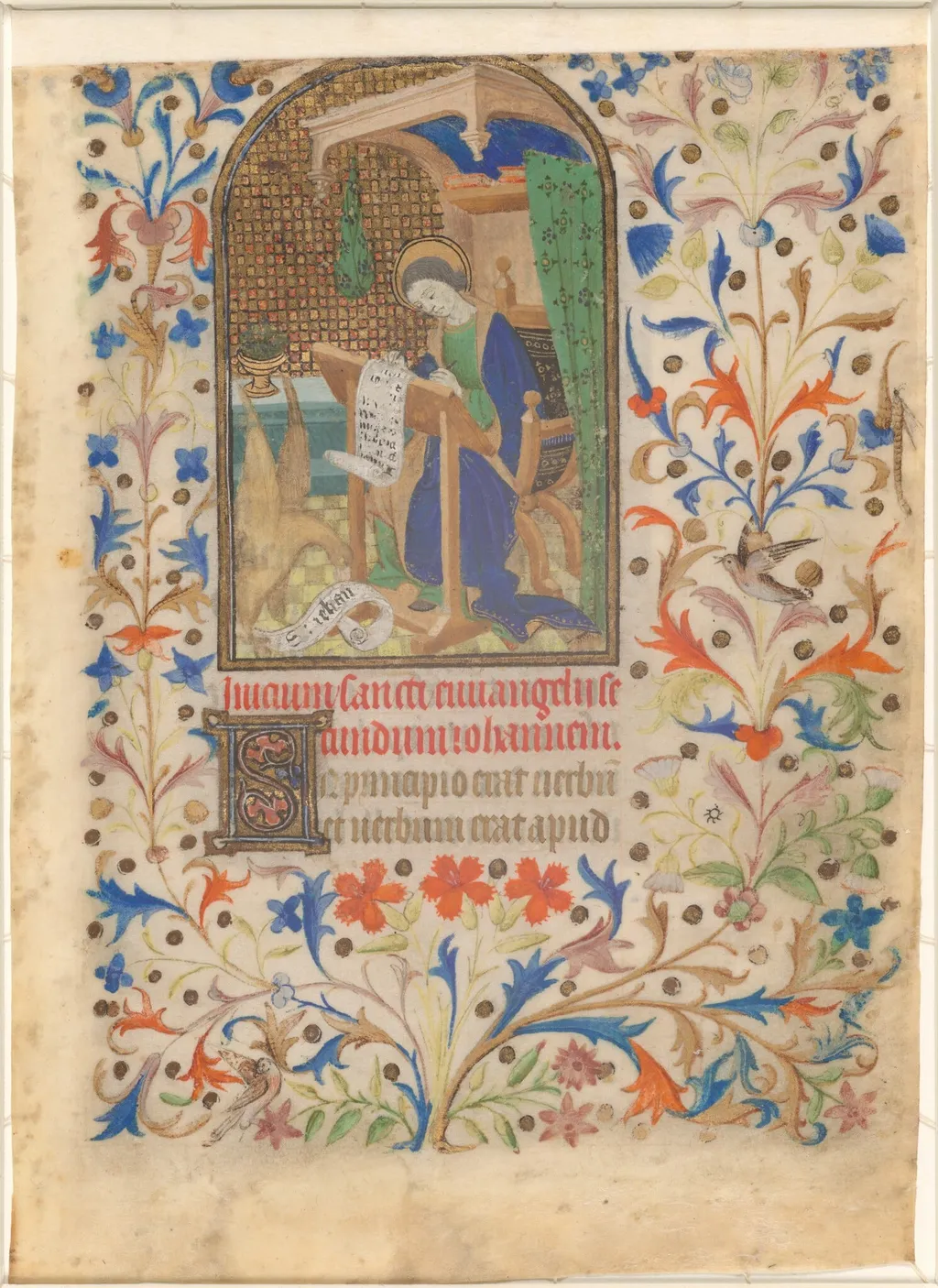
Saint John is a tempera drawing by the Renaissance artist French 15th Century. It dates from 1430 and is held in the collection of the National Gallery of Art.
About this work
Overview
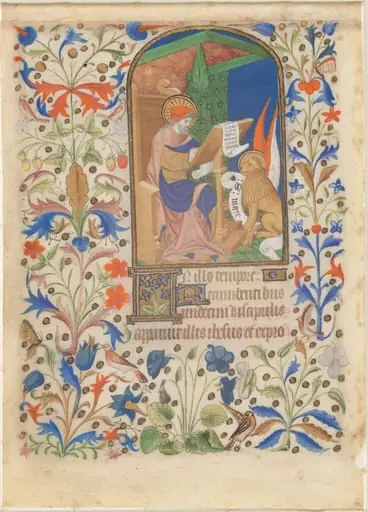
Decorative elements such as red and blue flowers and birds border the image, and a Latin inscription runs beneath the central tableau.
The work titled Saint John is a small, framed drawing executed in tempera and gold leaf on vellum. Its composition presents a brightly colored interior scene framed by a stone arch, where a haloed figure holds an open book while a kneeling attendant points to the text. Decorative elements such as red and blue flowers and birds border the image, and a Latin inscription runs beneath the central tableau.
Subject & Meaning
At the center, the haloed man is identified as Saint John, likely the Evangelist, indicated by his holding of a book, a traditional symbol of his gospel. The kneeling figure appears to be a disciple or devotee, gesturing toward the text, suggesting instruction or reverence for the saint’s teachings. The surrounding simple room, window, and plant provide a modest setting that focuses attention on the act of reading and transmission of sacred knowledge.
Technique & Style
The image was created with tempera, a medium in which pigments are bound to egg yolk, yielding flat, luminous colors without the gradations of chiaroscuro. Gold leaf outlines the halo and the decorative border, catching light and emphasizing the sanctity of the central figure. The composition relies on clear outlines and uniform color fields, characteristic of medieval manuscript illumination, rather than the modeling seen in later Renaissance painting.
Context
Works of this type were commonly produced for private devotion or as portable illustrations of saints’ lives in the late medieval period. The use of vellum as a support and the integration of gold leaf align the piece with illuminated manuscripts, while its framing suggests it was intended for display in a personal chapel or study. The Latin caption reinforces its function as a didactic object for a literate audience.
Artist & collection

Artist
This artist hid their best work inside old travel trunks. They glued vivid woodcuts into the lids of wooden boxes meant to be carried on horseback, like secret postcards from God. If you’ve ever pried open a cracked lid…



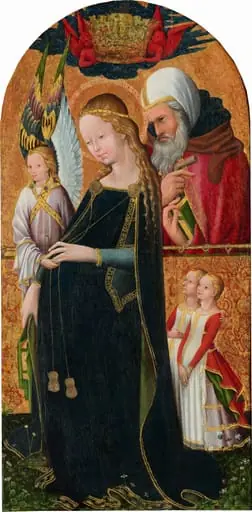
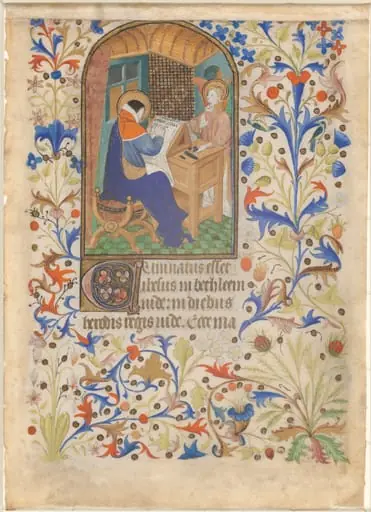
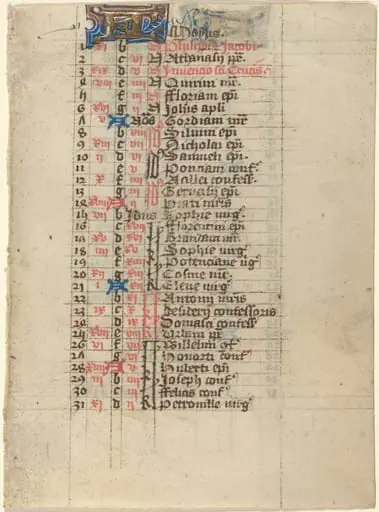
 Annunciation
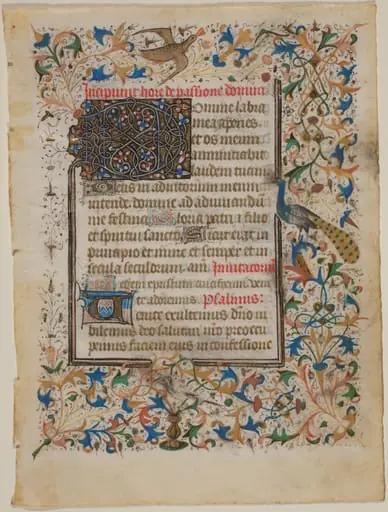 Manuscript Leaf from a Book of Hours (incip. Passionis)
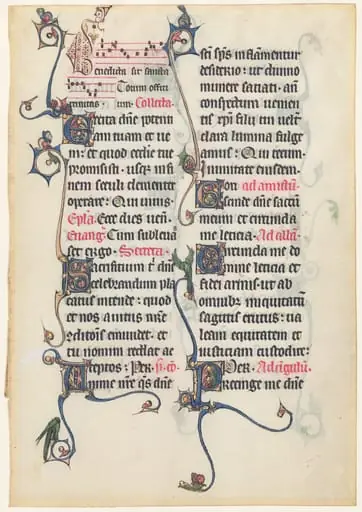 Manuscript Leaf from the Beauvais Missal
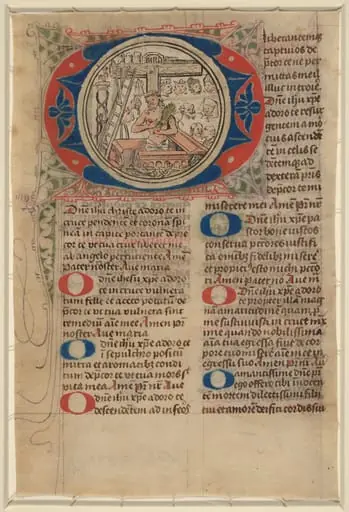 Christ as the Man of Sorrows
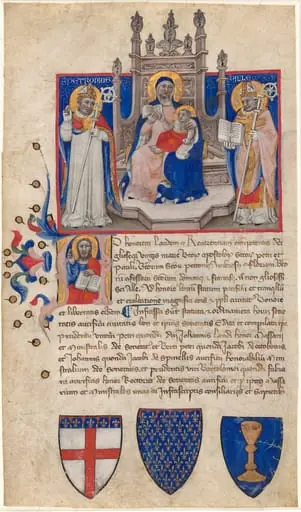 Madonna and Child Enthroned between Saints Petronius and Alle (Eligius); Christ in the Initial A
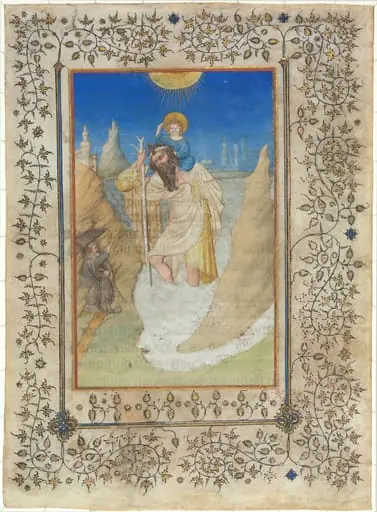 Saint Christopher Carrying the Christ Child
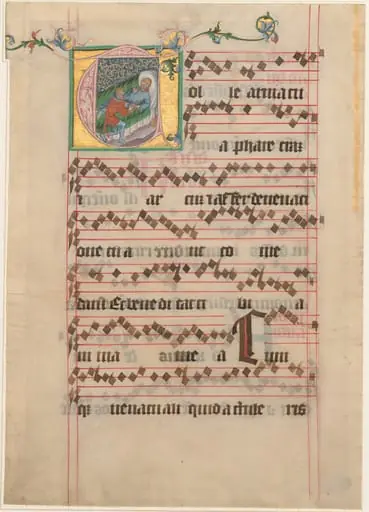 Isaac Blessing Jacob
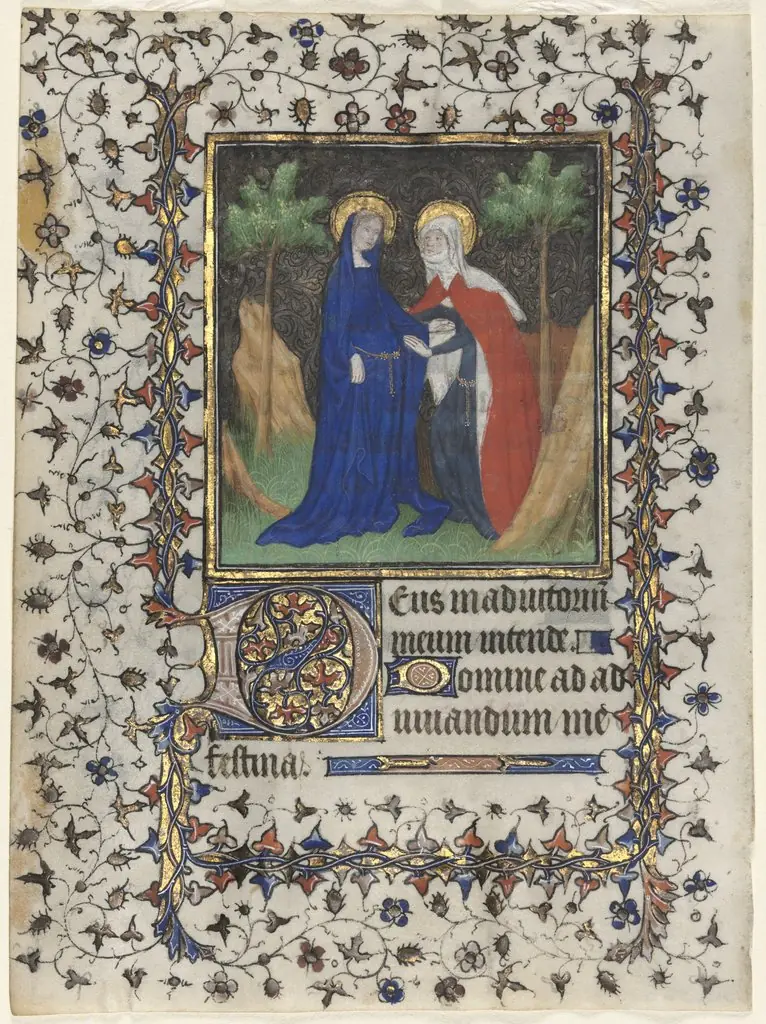 Leaf from a Book of Hours: The Visitation
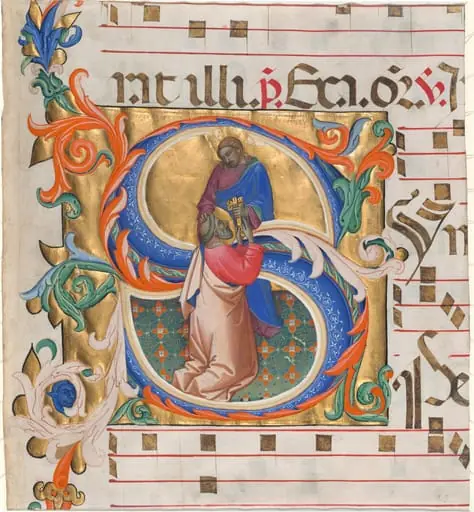 Christ Giving the Keys to Saint Peter