Artwork
Execution of the Duke d'Enghien, 21 March 1804
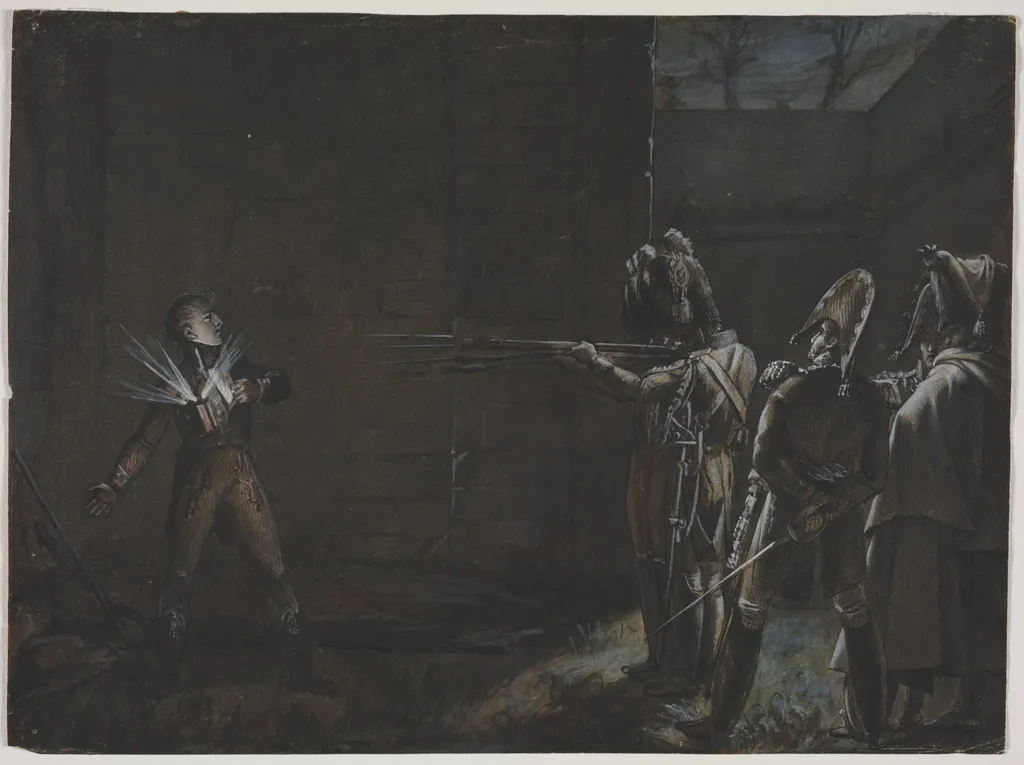
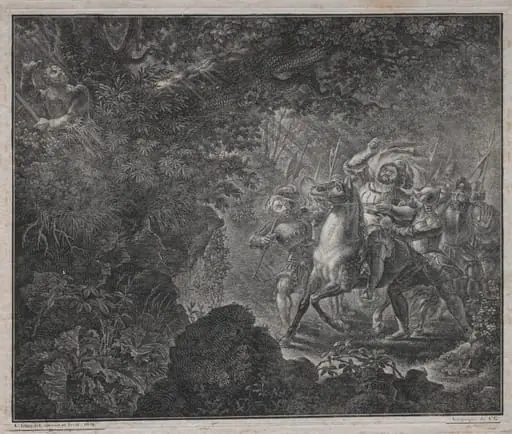
Execution of the Duke d'Enghien, 21 March 1804 is a drawing by the Impressionist artist Unknown. It dates from 1870 and is held in the collection of the Cleveland Museum of Art. This drawing depicts the execution of Louis Antoine de Bourbon, Duke d'Enghien, on the night of March 21, 1804.
About this work
Overview
This drawing depicts the execution of Louis Antoine de Bourbon, Duke d'Enghien, on the night of March 21, 1804.
This drawing depicts the execution of Louis Antoine de Bourbon, Duke d'Enghien, on the night of March 21, 1804. It captures the immediate moment before the firing squad acts, set within a confined, dimly lit stone chamber. The composition emphasizes tension through stark contrasts of light and shadow, focusing attention on the sword held by one figure, which illuminates the scene with unnatural intensity.
Subject & Meaning
The Duke d'Enghien, a royalist exile, was captured and executed on Napoleon Bonaparte’s orders, accused of conspiring against the French state. The drawing does not show the act itself but the charged stillness before it, suggesting inevitability and moral ambiguity. The sword’s glow may symbolize the arbitrary power of the state, while the armored figures represent institutional force.
Technique & Style
The artist uses chiaroscuro to heighten emotional tension, with deep blacks and a single, sharp light source emanating from the sword. Lines are controlled yet urgent, defining armor and facial expressions with minimal detail. The rough stone floor and walls are rendered with textured strokes, reinforcing the cold, unadorned reality of the setting without embellishment.
History & Provenance
Created shortly after the execution, the drawing likely served as a contemporary response to a politically charged event. Its origin is tied to French artists or observers who documented the incident, though the exact maker remains unconfirmed. It circulated privately among those critical of Napoleon’s authoritarian measures, preserving the moment as a record of political violence.
Context
The execution occurred amid Napoleon’s consolidation of power, following the failed Cadoudal plot. Though the Duke had no proven involvement, his royal lineage made him a symbolic target. The act alarmed European nobility and fueled opposition to the Consulate, revealing the regime’s willingness to bypass legal norms to eliminate perceived threats.
Legacy
The drawing stands as a quiet testament to the personal cost of political repression. Unlike grand historical paintings, it avoids heroism or spectacle, instead focusing on the anonymity and brutality of state-sanctioned killing. Its restrained style influenced later realist depictions of violence, emphasizing truth over theatricality.
Artist & collection

 Domestic Scene
 Giacomo and Cardinal Marco, investing Andrea, Abbot of San Zeno, with his Benefice
 The Nymph of Fontainebleau
 Portrait of a Woman
 Madonna and Child with Saints in the Enclosed Garden
 Venus and Minerva
 Family Group of Four on Sofa
 Wall painting from Room H of the Villa of P. Fannius Synistor at Boscoreale
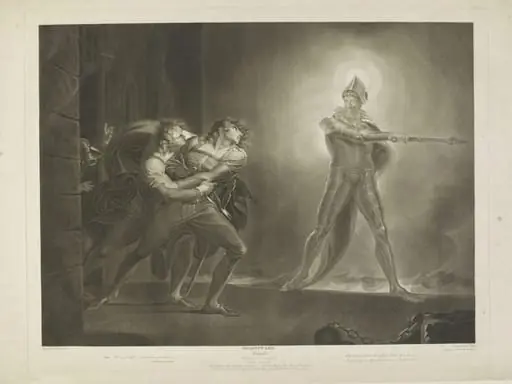 Scene from Hamlet, Act I., Scene IV.
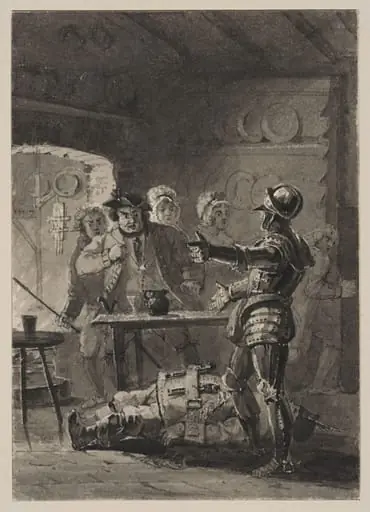 Tristram Shandy
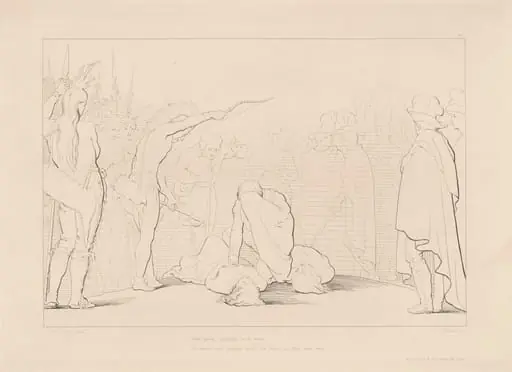 Mute, Gazing, Agonizing...
 "Study for Undine"
 Figures of Armoured Guards. Study to the Painting "Catherine Jagiellon in Gripsholm Prison"
 Essay on Stone with Brush and Scraper: Chase on the Winding Staircase
 The Triumph of Death: Battle (Le triomphe de la mort: Le combat)
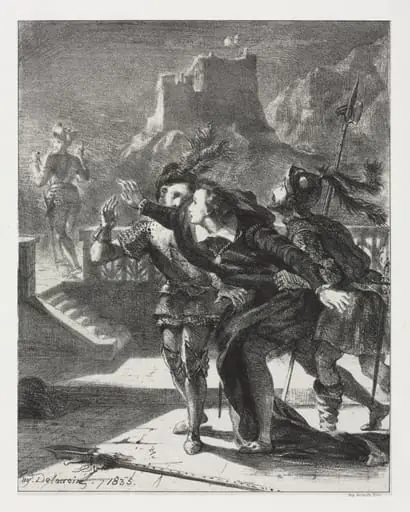 Hamlet: Hamlet Rushes to Follow the Ghost of His Father
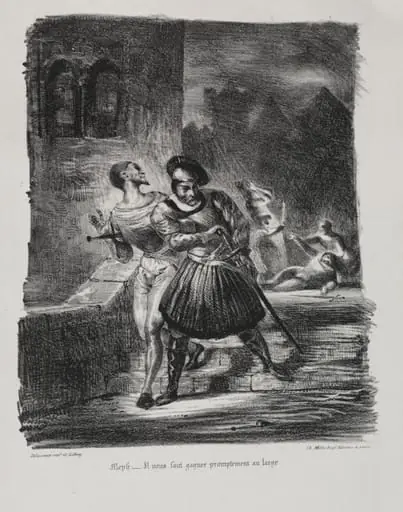 Illustrations for Faust: Méphistophélés and Faust flee after the duel
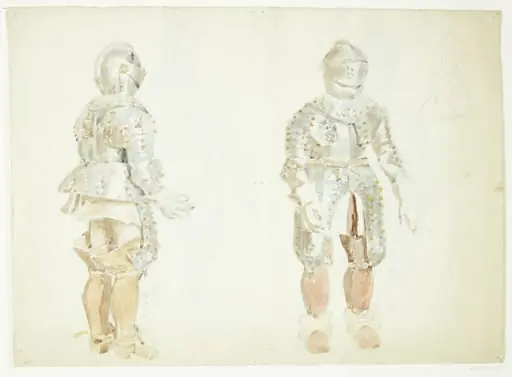 Studier af rustninger
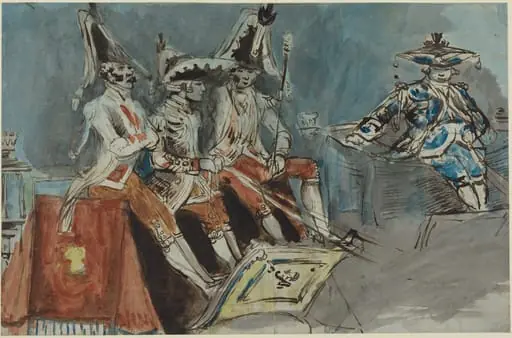 Coachmen
 William Tell at Küssnacht