Artwork
Illustrations for Faust: Méphistophélés and Faust flee after the duel
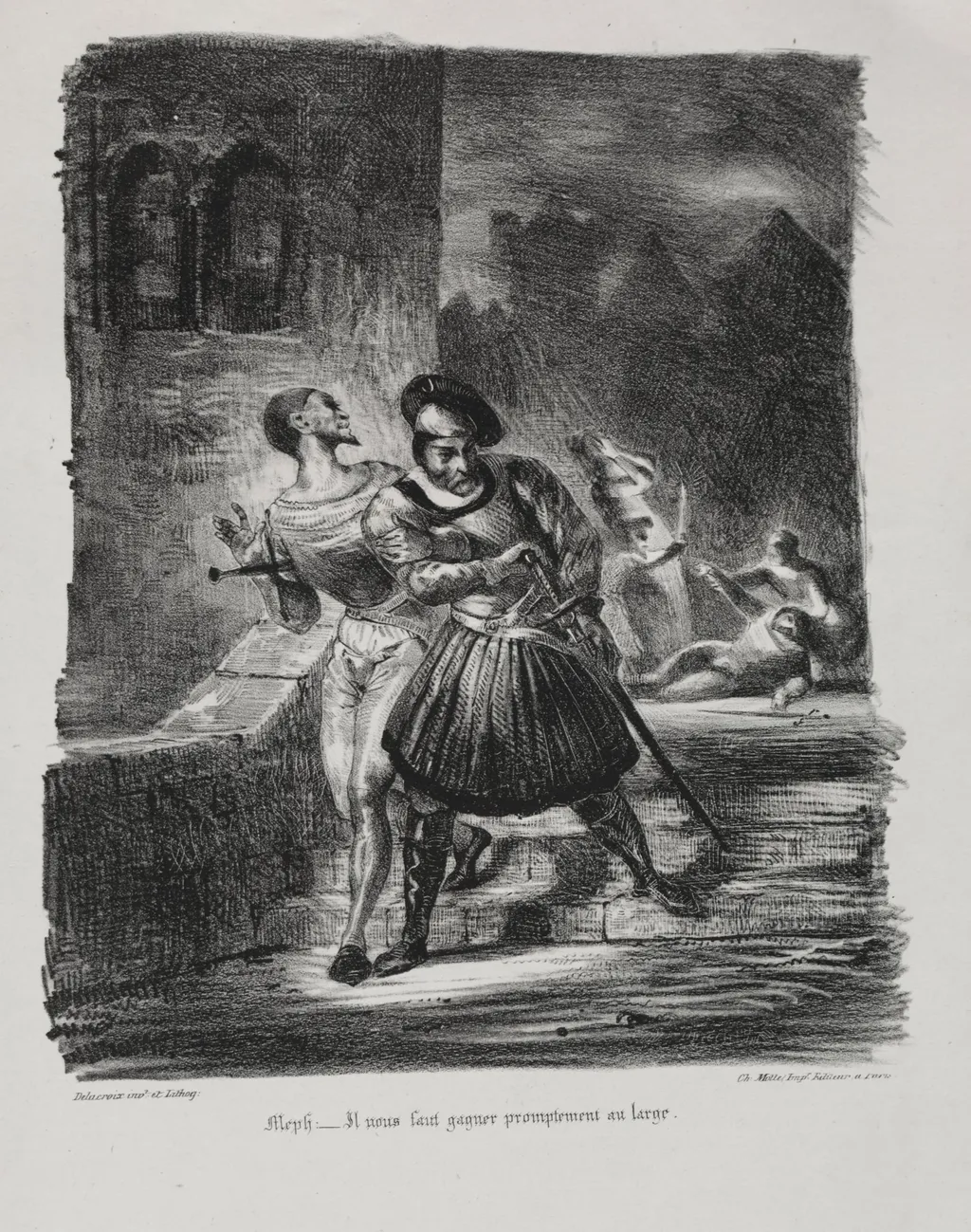
Illustrations for Faust: Méphistophélés and Faust flee after the duel is a print by the Romanticist artist Eugène Delacroix. It dates from 1828 and is held in the collection of the Cleveland Museum of Art.
About this work
Overview
Illustrations for Faust: Méphistophélés and Faust flee after the duel is an 1828 print by Eugène Delacroix, exemplifying the French Romantic style through its depiction of a dramatic, emotionally charged scene from Goethe's Faust.
Subject & Meaning
The print captures the escape of Méphistophélés and Faust after a duel, emphasizing intense narrative drama, a hallmark of Delacroix's work, which often prioritized expressive, dynamic storytelling over classical restraint.
Technique & Style
Delacroix employed quick, sketchy lines to convey movement and urgency, reflecting his preference for vibrant, expressive techniques inspired by Rubens and the Venetian Renaissance, diverging from Neoclassical norms.
History & Provenance
Created in 1828, this work is part of Delacroix's illustrations for Faust, showcasing his engagement with literary themes and his development within the French Romantic movement.
Context
This piece reflects Delacroix's broader artistic influences and the prevailing Romantic aesthetic of the time, which valued emotional depth and dynamic movement over the formalism of Neoclassicism.
Artist & collection
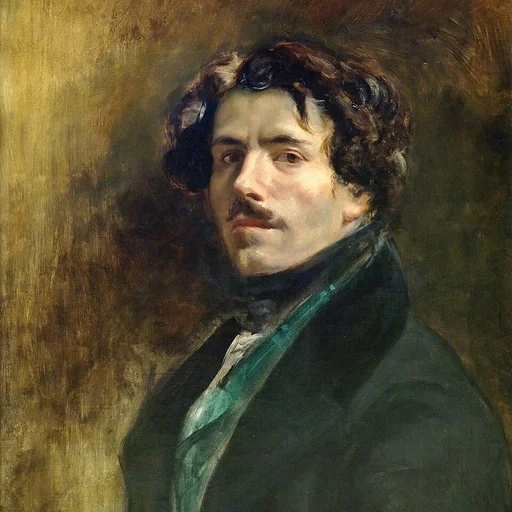
Artist
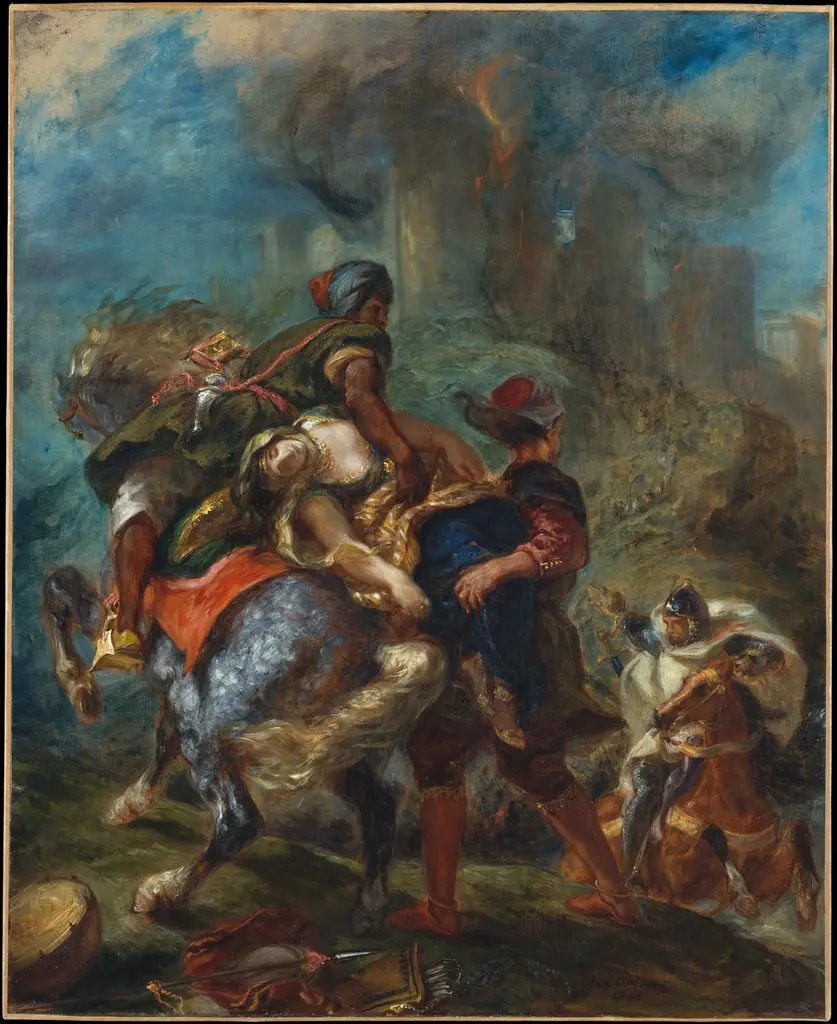
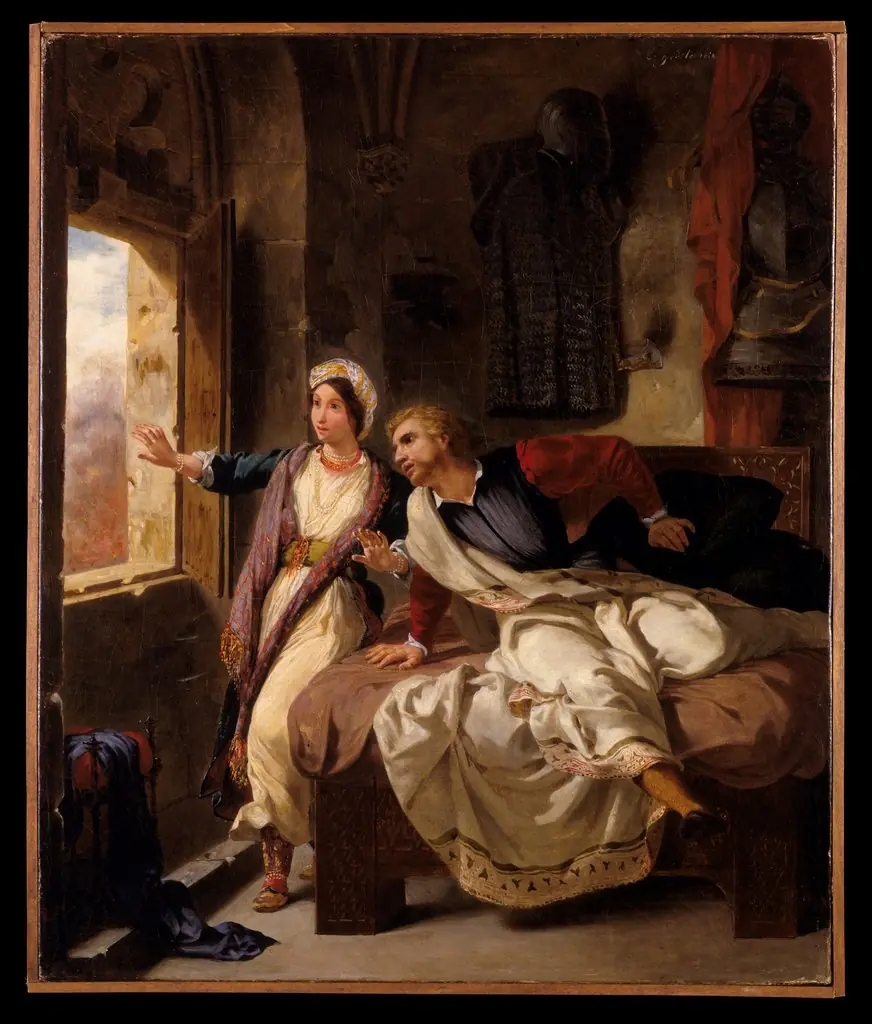
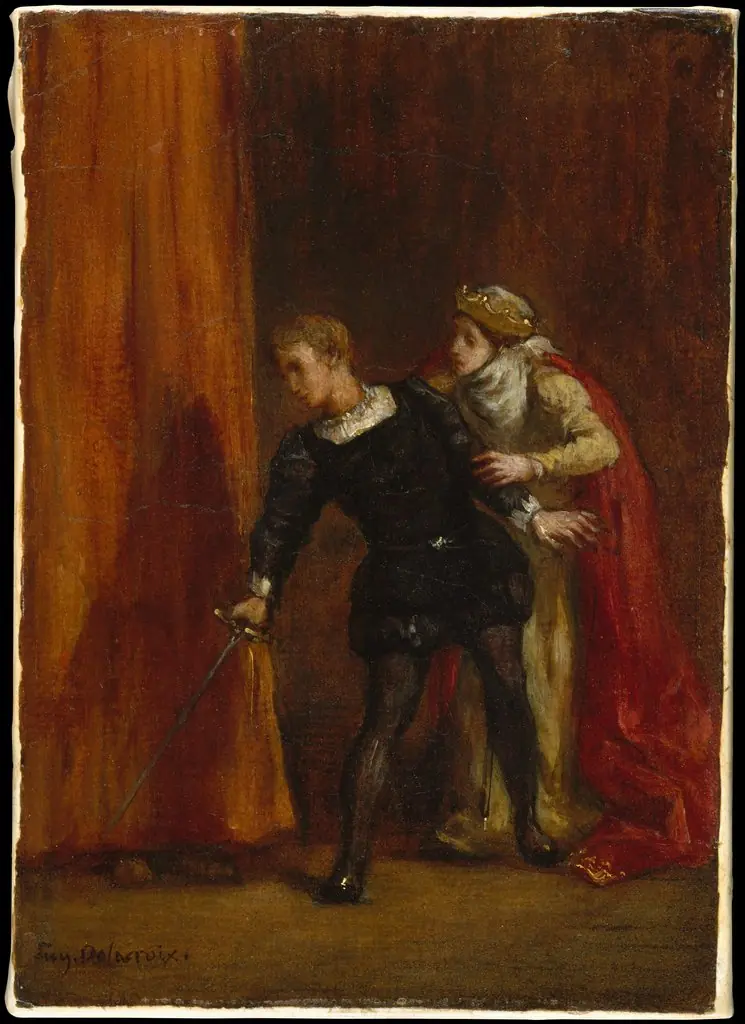
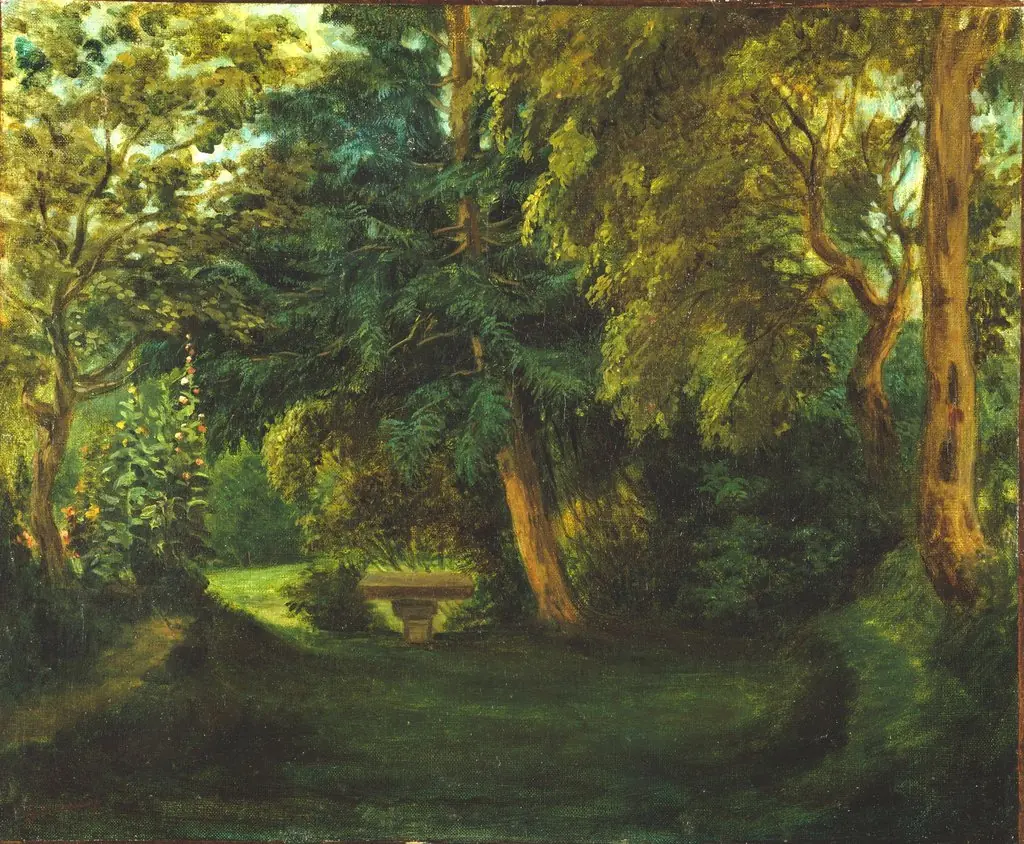
Ferdinand Victor Eugène Delacroix ( DEL-ə-krwah, -KRWAH; French: ; 26 April 1798 – 13 August 1863) was a French Romantic artist who was regarded as the leader of the French Romantic school.

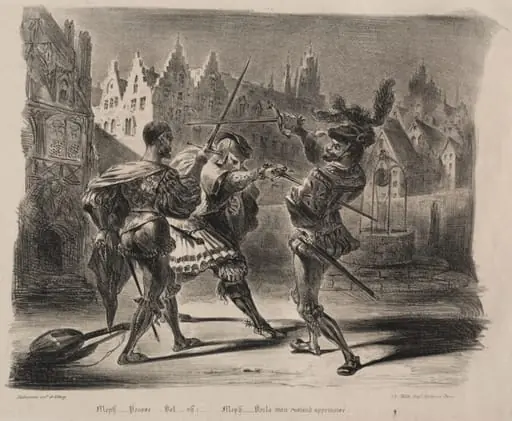 Illustrations for Faust: Duel of Faust and of Valentin
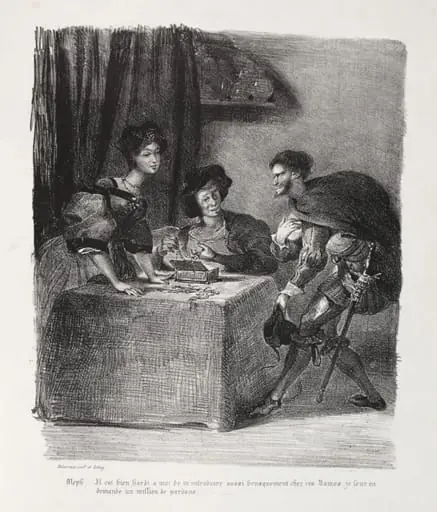 Illustrations for Faust: Méphistophelés is at Marthe
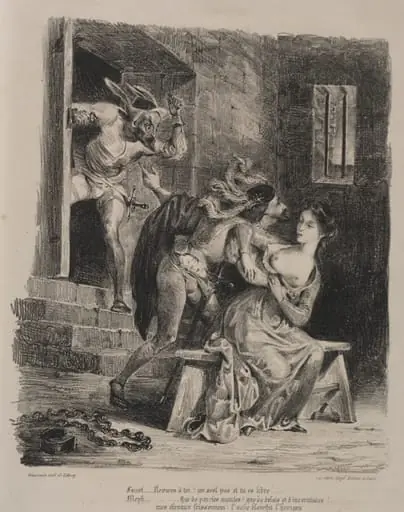 Illustrations for Faust: Faust in the prison of Marguerite
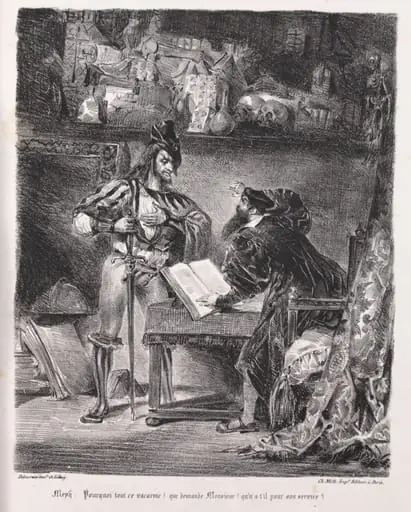 Illustrations for Faust: Méphistophélés visits Faust
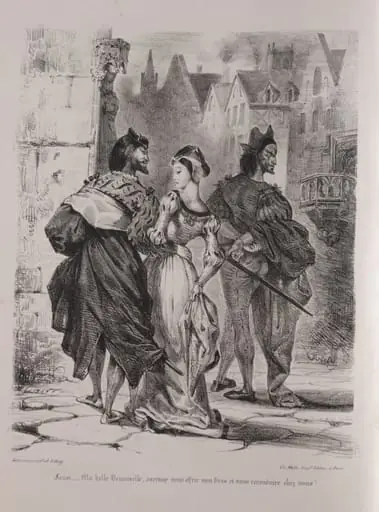 Illustrations for Faust: Faust seeks to allure Marguerite
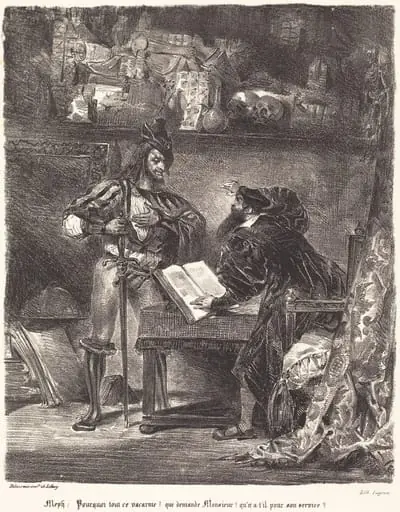 Mephisto Appears to Faust
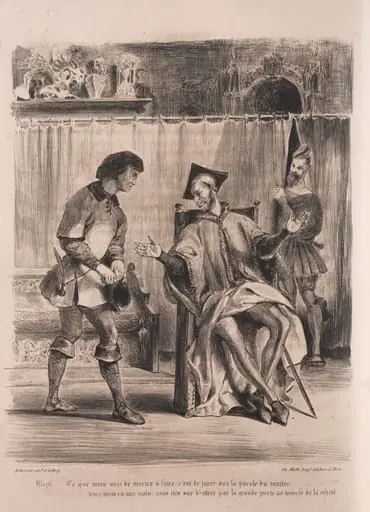 Illustrations for Faust: Méphistophélé receives the schoolboy
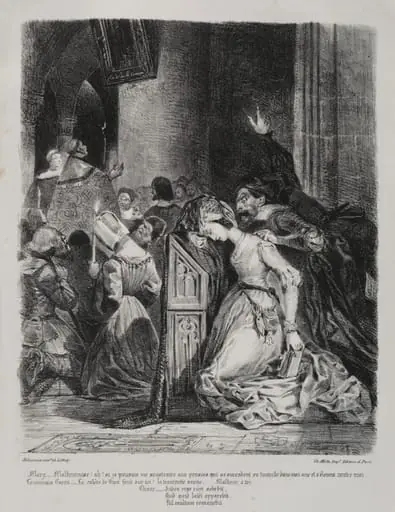 Illustrations for Faust: Marguerite at church
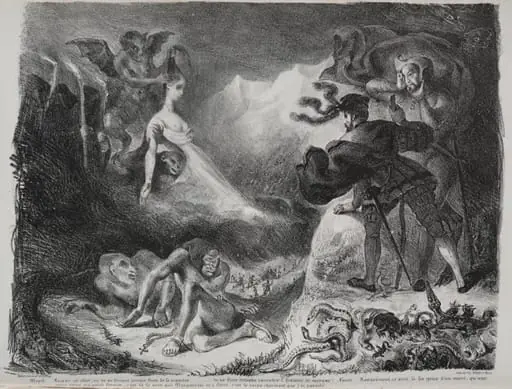 Illustrations for Faust: Marguerite's shadow appears to Faust
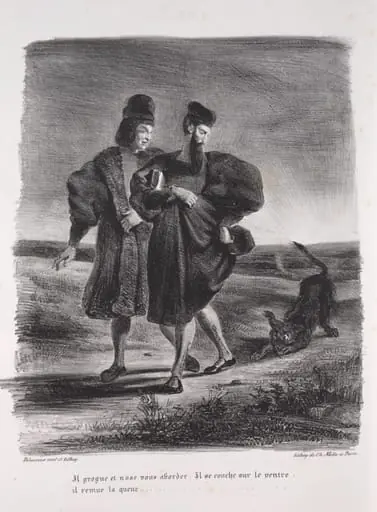 Illustrations for Faust: Faust, Méphistophélé and the barbet