Artwork
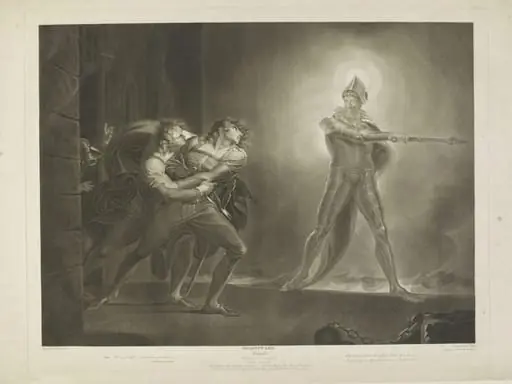
Hamlet: Hamlet Rushes to Follow the Ghost of His Father
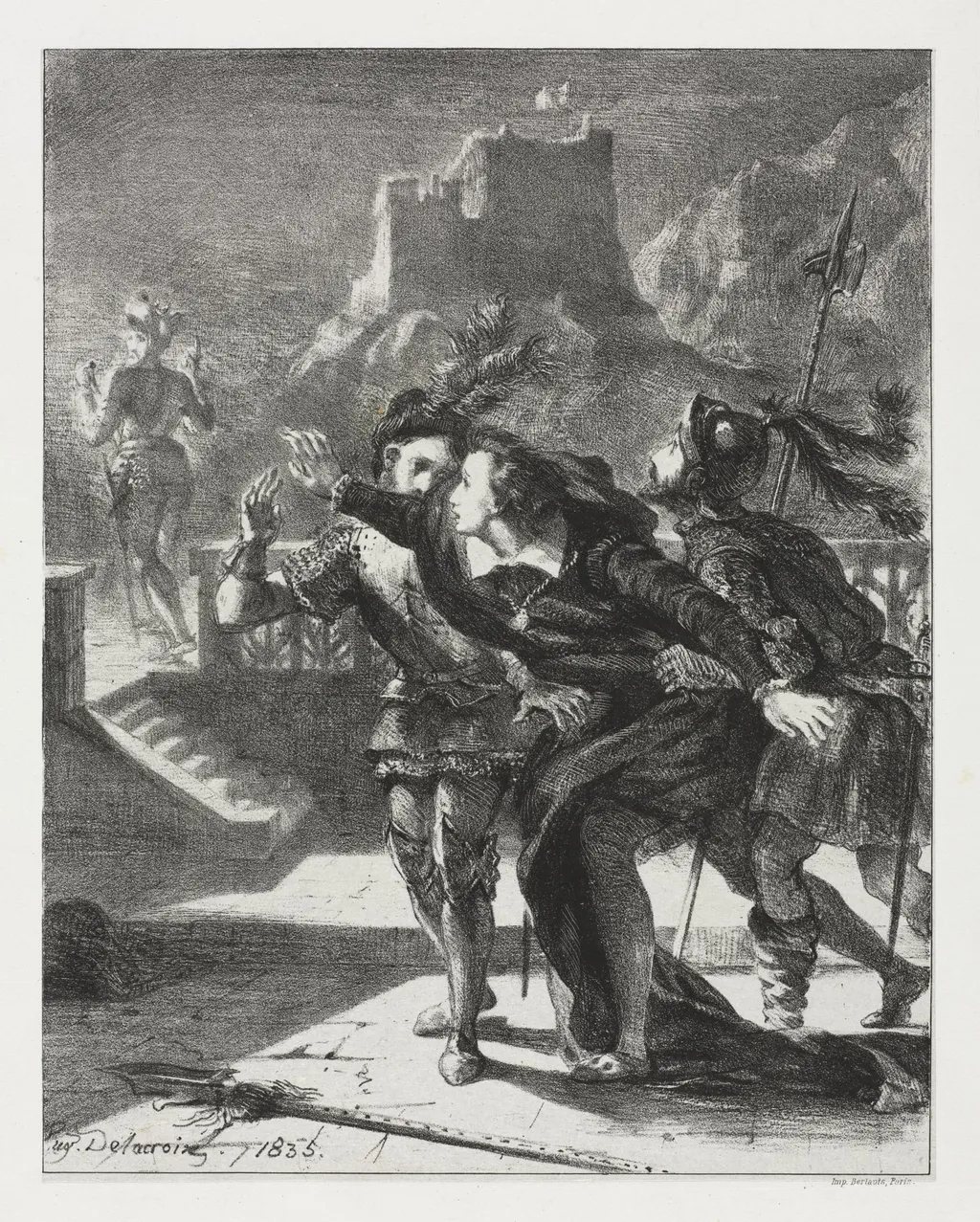
Hamlet: Hamlet Rushes to Follow the Ghost of His Father is a print by the Romanticist artist Eugène Delacroix. It dates from 1835 and is held in the collection of the Cleveland Museum of Art.
About this work
Overview
Created in 1835 by Eugène Delacroix, this work is a preparatory sketch for a larger painting inspired by Shakespeare’s Hamlet.
Created in 1835 by Eugène Delacroix, this work is a preparatory sketch for a larger painting inspired by Shakespeare’s Hamlet. Executed in oil on paper, it captures a fleeting moment of psychological tension rather than a polished narrative scene. Delacroix’s approach prioritizes emotional immediacy over formal finish, reflecting his interest in capturing motion and inner turmoil through loose brushwork and atmospheric lighting.
Subject & Meaning
The scene illustrates Hamlet’s confrontation with his father’s spectral apparition, a pivotal moment in which he is compelled to follow the ghost into the unknown. The central figure’s outstretched hand and forward lurch convey involuntary urgency, while surrounding figures react with alarm or confusion, amplifying the supernatural disruption. The ghost remains unseen, heightening the psychological weight of the moment through implication rather than depiction.
Technique & Style
Delacroix employed rapid, expressive brushstrokes and a restricted palette dominated by deep browns, blacks, and muted reds to evoke a sense of urgency and shadowed mystery. The rough handling of paint and lack of defined contours emphasize movement over detail, aligning with Romantic ideals that valued emotional resonance over academic precision. Light is used dramatically to isolate figures and suggest unseen forces at work within the dim interior.
History & Provenance
This sketch was made as part of Delacroix’s broader engagement with Shakespearean themes during the 1830s, a period when literary subjects were gaining traction among French artists. It remained in the artist’s possession until his death and later entered a private collection before being acquired by a public institution. Its status as a study underscores Delacroix’s iterative process and his commitment to capturing emotional truth over final polish.
Context
Emerging during the height of French Romanticism, the work reflects a cultural shift away from Neoclassical restraint toward subjects that explored passion, the supernatural, and individual psychological depth. Delacroix’s fascination with Shakespeare, alongside his admiration for Rubens and Venetian colorists, positioned him as a bridge between historical narrative and modern emotional expression in painting.
Legacy
Though not a finished painting, this sketch exemplifies Delacroix’s influence on later generations who valued expressive gesture and psychological intensity in art. Its raw energy and emphasis on inner drama prefigured developments in Symbolism and Expressionism. As a document of artistic process, it reveals how Romantic artists translated literary emotion into visual form through improvisation and instinct.
Artist & collection
Artist
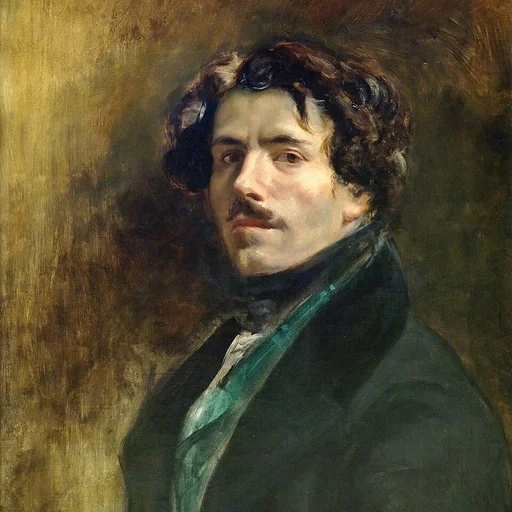
Ferdinand Victor Eugène Delacroix ( DEL-ə-krwah, -KRWAH; French: ; 26 April 1798 – 13 August 1863) was a French Romantic artist who was regarded as the leader of the French Romantic school.

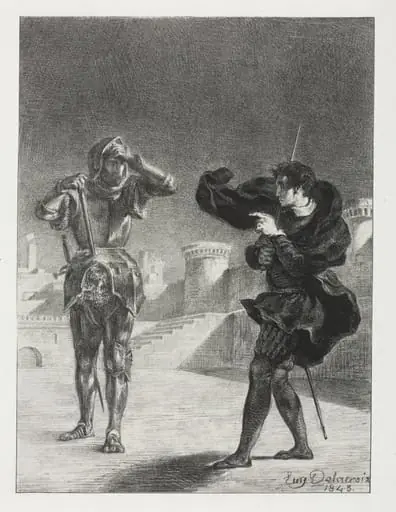 Hamlet: The Phantom on the Terrace
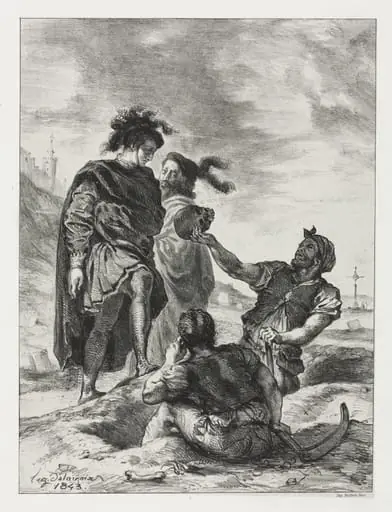 Hamlet: Hamlet and Horatio with the Grave Diggers
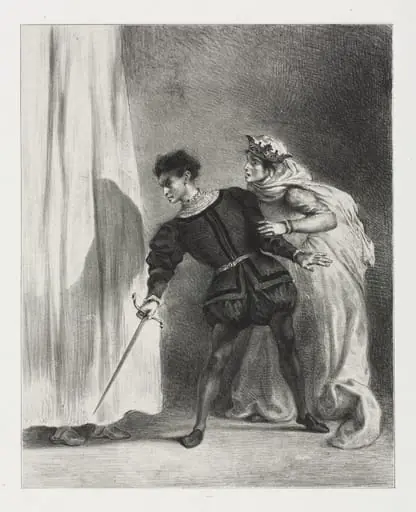 Hamlet: The Murder of Polonius
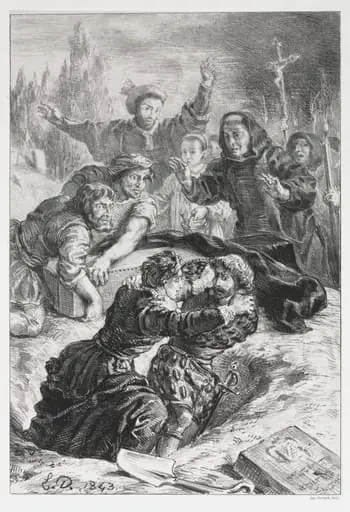 Hamlet: Hamlet and Laertes in the Grave of Ophelia
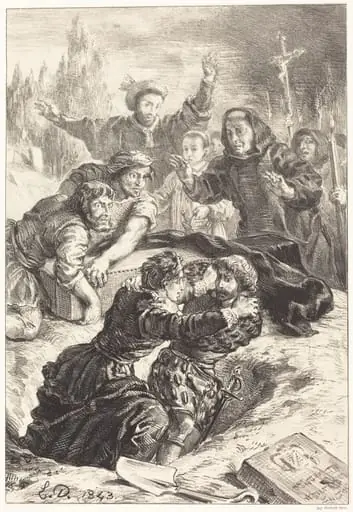 Hamlet and Laertes in the Grave of Ophelia (Act V, Scene I)
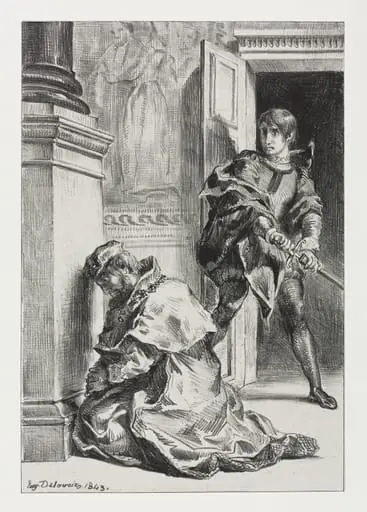 Hamlet: Hamlet Attempts to Kill the King
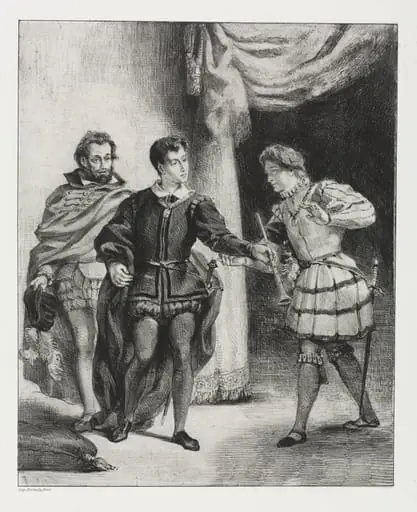 Hamlet: Hamlet and Guildenstern
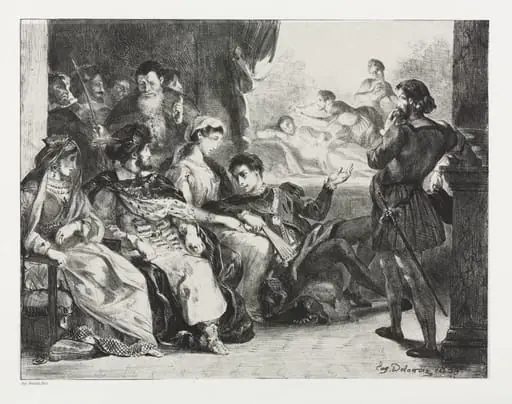 Hamlet: Hamlet Commands the Actors to do a Scene from the Poisoning of his Father
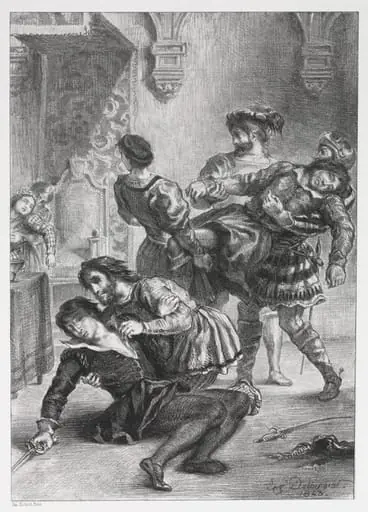 Hamlet: The Death of Hamlet
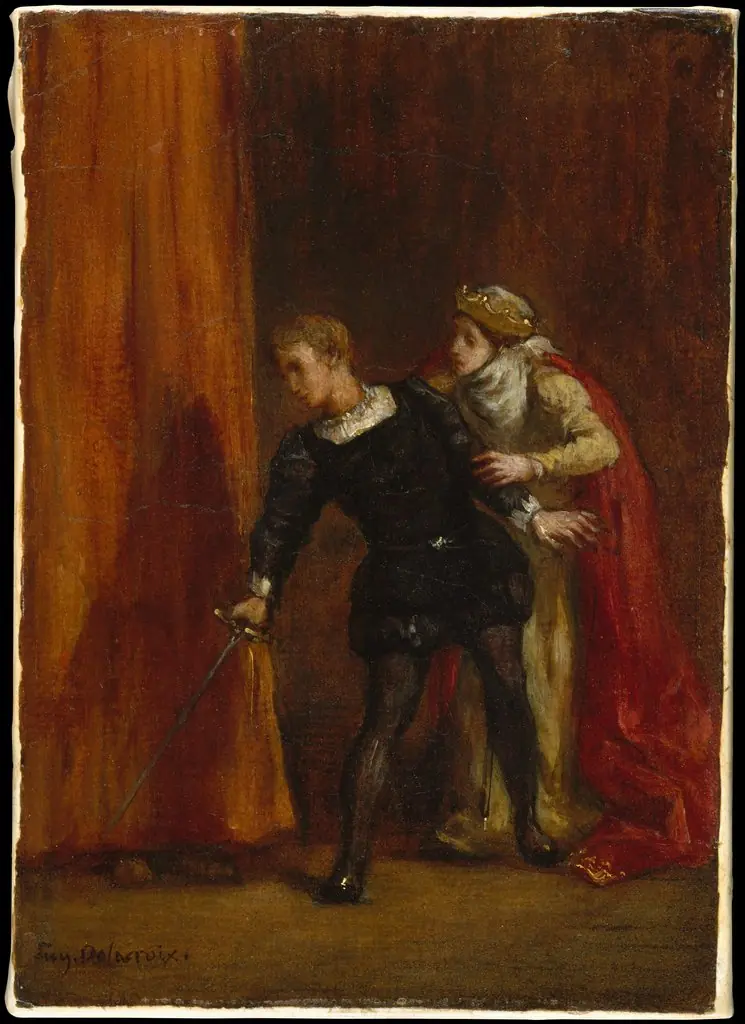
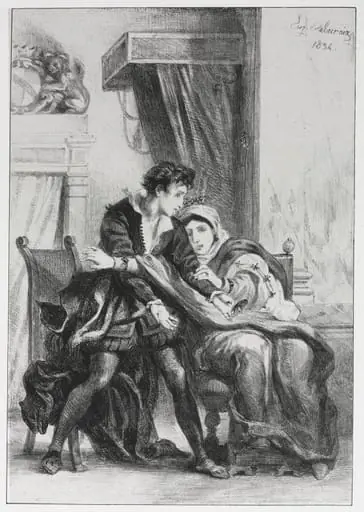 Hamlet: Hamlet and the Queen
 Scene from Hamlet, Act I., Scene IV.