Artwork
Jan Snellinx
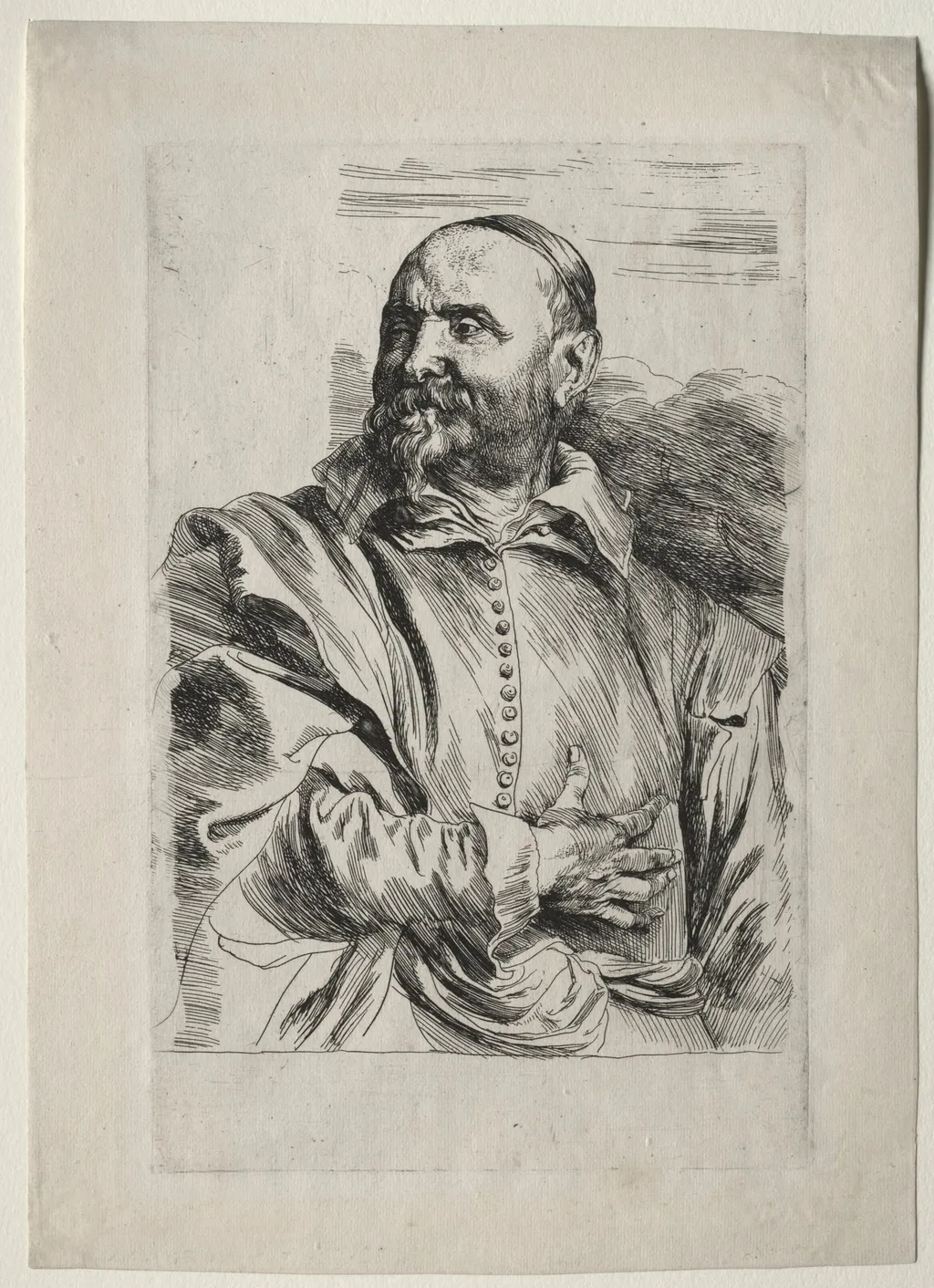
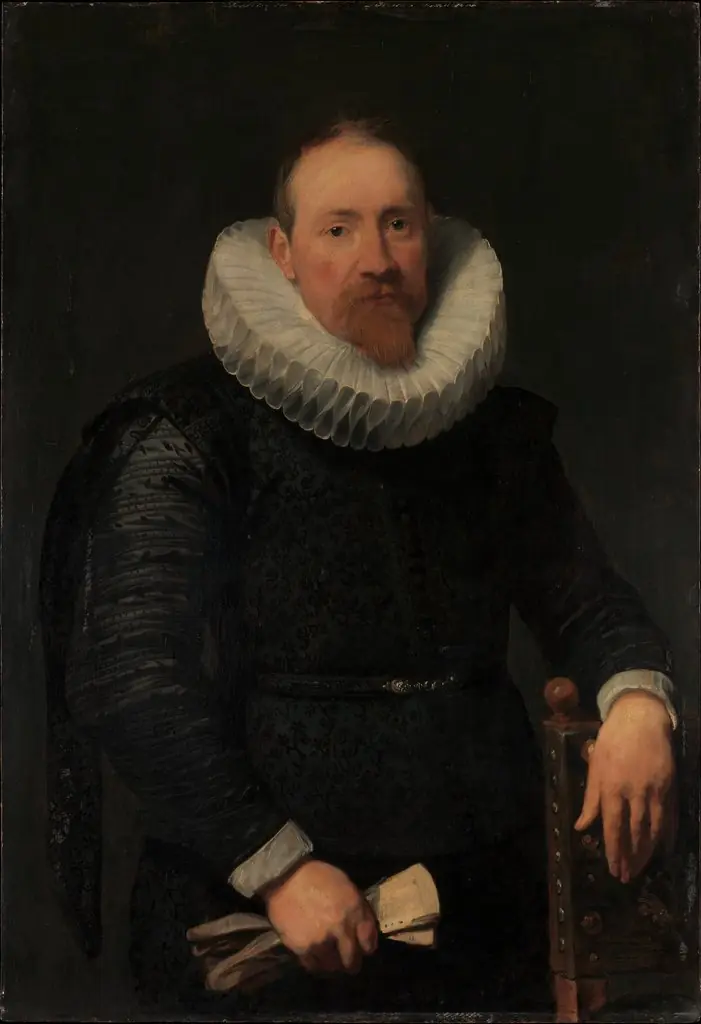
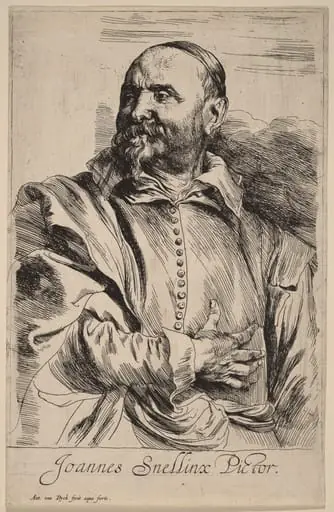
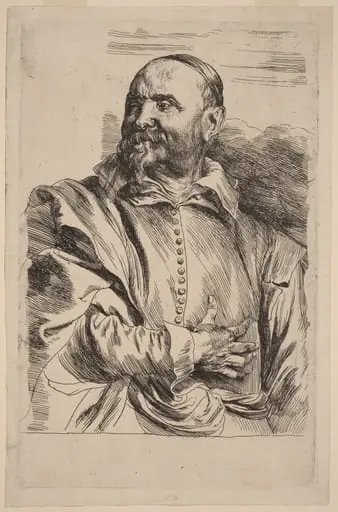
Jan Snellinx is a print by the Baroque artist Anthony van Dyck. It dates from 1632 and is held in the collection of the Cleveland Museum of Art.
About this work
Overview
Executed in monochrome, the work belongs to van Dyck’s mature phase, when he was refining his approach to portraiture across European courts.
This 1632 drawing by Anthony van Dyck portrays Jan Snellinx, a Flemish silk merchant from Antwerp. Executed in monochrome, the work belongs to van Dyck’s mature phase, when he was refining his approach to portraiture across European courts. Though not a finished painting, it functions as a preparatory study, capturing the sitter’s presence with immediacy and psychological depth through minimal means.
Subject & Meaning
Jan Snellinx is depicted with quiet dignity, his bald head and full beard suggesting age and experience. His clasped hands convey stillness and introspection, while the high-collared shirt reflects contemporary middle-class attire. The absence of symbols or elaborate setting shifts focus to the individual’s character, aligning with van Dyck’s interest in conveying inner life rather than social status.
Technique & Style
Van Dyck employed rapid, expressive strokes in chalk or ink to model form through contrast. The rough texture of the lines suggests movement and spontaneity, while deliberate shifts in pressure create chiaroscuro effects that define the face and fabric. This sketchlike quality was typical of studies intended to capture likeness efficiently, prioritizing observation over polish.
History & Provenance
Created during van Dyck’s years in the Spanish Netherlands, the drawing predates his move to the English court. It likely served as a reference for a later portrait or as a personal record. The work remained in private collections until entering a public collection, where its status as a study rather than a commissioned piece has shaped its scholarly reception.
Context
In early 17th-century Antwerp, artists often produced quick studies of sitters as part of professional practice. Van Dyck, trained under Rubens, adapted this tradition to emphasize psychological nuance. Such drawings circulated among artists and patrons, functioning as both technical exercises and intimate records of individuals outside formal portraiture.
Legacy
This drawing exemplifies van Dyck’s influence on the evolution of portrait studies, bridging the detailed traditions of Flemish art with the expressive freedom of Baroque draftsmanship. Its unpolished quality has since been valued for its honesty and directness, offering insight into the artist’s process and the cultural shift toward individualized representation.
Artist & collection
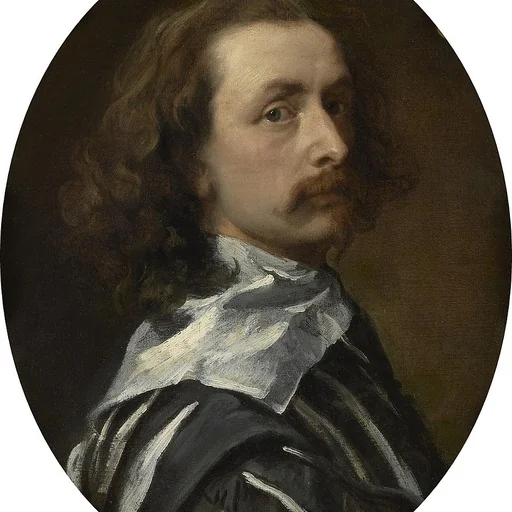
Artist
Sir Anthony van Dyck (; Dutch: Antoon van Dijck ; 22 March 1599 – 9 December 1641) was a Flemish Baroque artist, who became the leading court painter in England after success in the Spanish Netherlands and Italy.