Artwork
Jan Snellinx
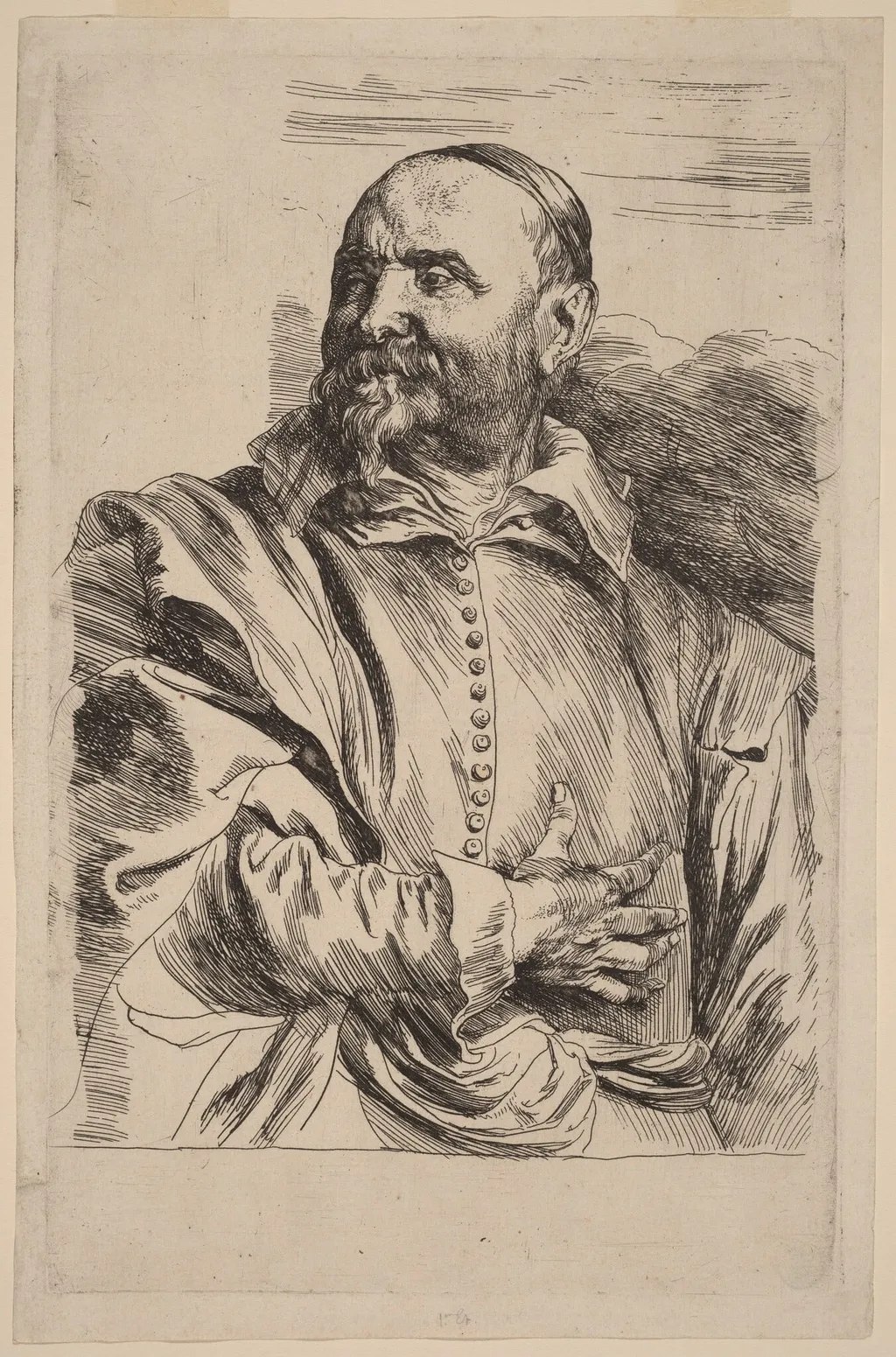
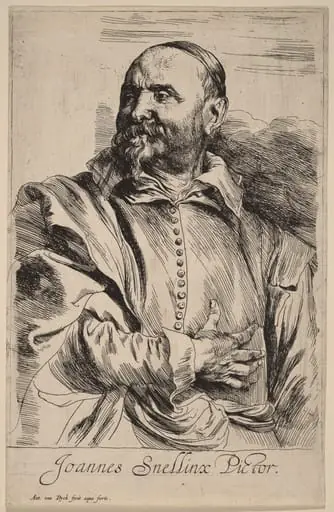
Jan Snellinx is an ink print by the Baroque artist Anthony van Dyck. It dates from 1634 and is held in the collection of the National Gallery of Art.
About this work
Overview
The work belongs to van Dyck’s series of portrait prints, intended to circulate the likenesses of contemporary cultural figures.
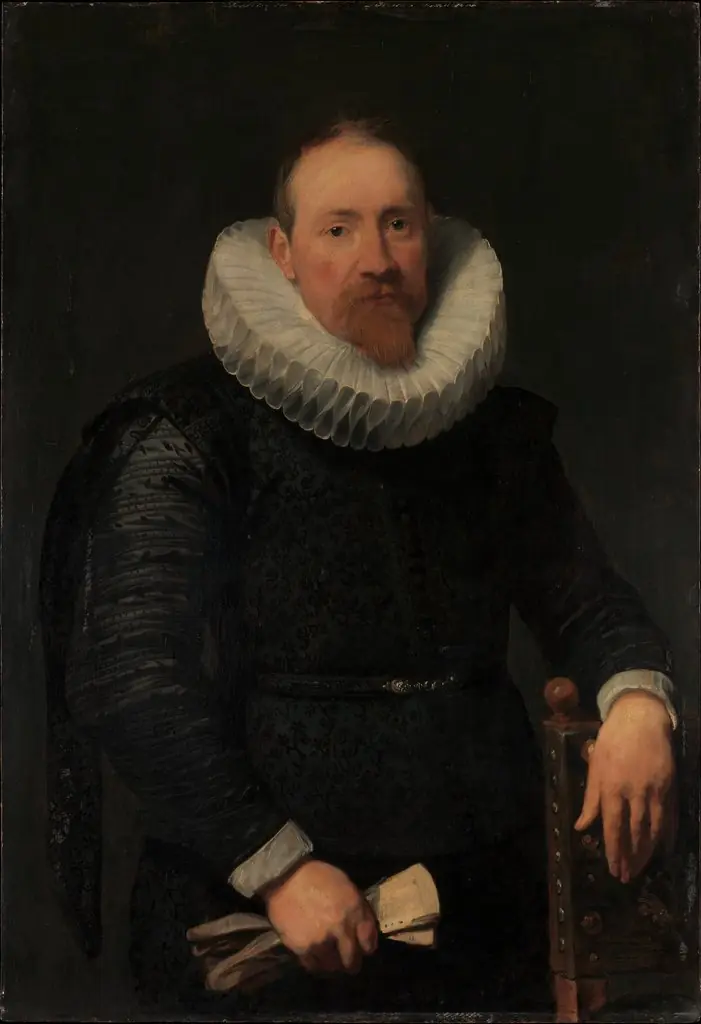
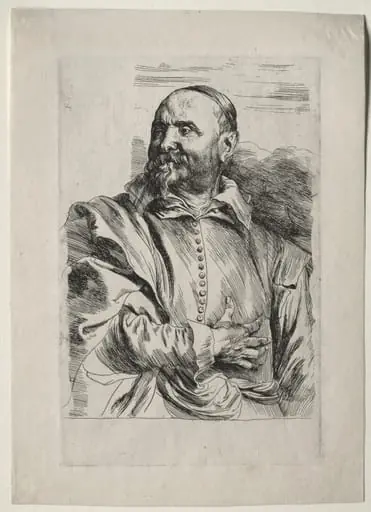
This black-and-white print is an etching by Anthony van Dyck, dated around 1634. It depicts Jan Snellinx, a Flemish artist and engraver, portrayed in a half-length composition. The image is rendered in fine linear strokes, capturing the subject’s facial features and clothing with precision. The work belongs to van Dyck’s series of portrait prints, intended to circulate the likenesses of contemporary cultural figures.
Subject & Meaning
Jan Snellinx was a respected engraver active in Antwerp, known for his reproductive prints after Old Master paintings. Van Dyck’s portrayal emphasizes his quiet dignity and professional demeanor. The subject’s direct gaze and clasped hands suggest introspection and authority, aligning with the era’s ideal of the thoughtful artisan. The portrait serves as both a personal likeness and a tribute to his craft.
Technique & Style
Van Dyck employed etching to achieve subtle tonal variation and texture. Fine, incised lines define the folds of Snellinx’s high collar and loose jacket, while cross-hatching models the contours of his face and beard. The deliberate roughness of the lines enhances the tactile quality of fabric and skin, avoiding smoothness to convey realism. The composition is tightly framed, focusing attention on the subject’s expression and posture.
History & Provenance
Created during van Dyck’s time in Antwerp, the print was likely made for distribution among collectors and fellow artists. It was part of a broader effort to document prominent figures in the Southern Netherlands’ artistic community. Early impressions survive in major print collections, including those of the British Museum and the Rijksmuseum, indicating its early circulation and enduring interest.
Context
In the early 1630s, van Dyck was refining his approach to portraiture beyond oil painting, exploring the potential of printmaking to extend his influence. Etching allowed him to reach a wider audience and document the intellectual and artistic elite of his circle. Snellinx, as a fellow printmaker, represented the artisan class whose work supported the visual culture of the time.
Legacy
The portrait of Jan Snellinx remains a significant example of van Dyck’s printmaking, illustrating his ability to convey psychological depth through line alone. It influenced later portrait etchers and contributed to the recognition of printmaking as a legitimate medium for serious portraiture. The work continues to be studied for its technical finesse and its role in documenting 17th-century artistic networks.
Artist & collection
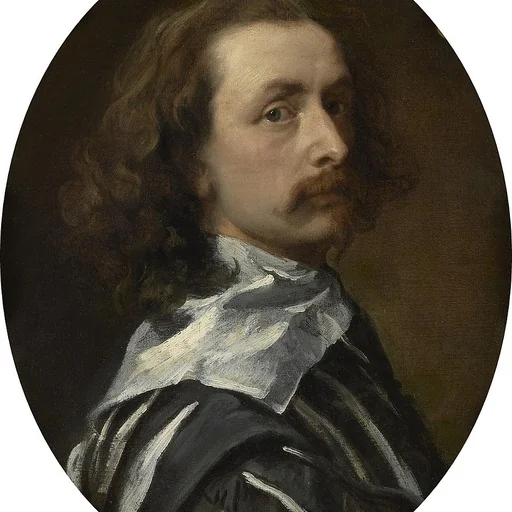
Artist
Sir Anthony van Dyck (; Dutch: Antoon van Dijck ; 22 March 1599 – 9 December 1641) was a Flemish Baroque artist, who became the leading court painter in England after success in the Spanish Netherlands and Italy.