Artwork
Jan Snellinx
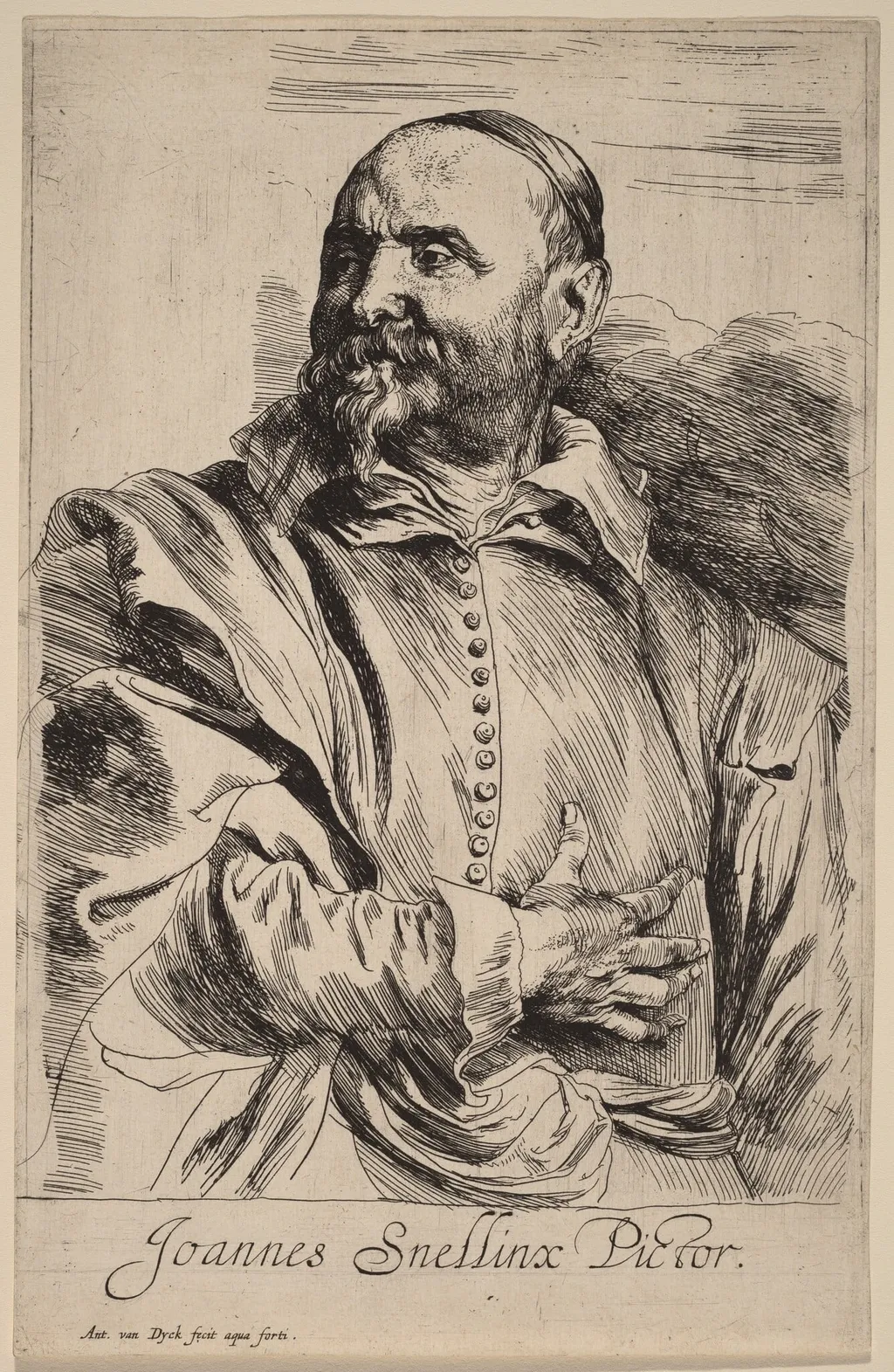
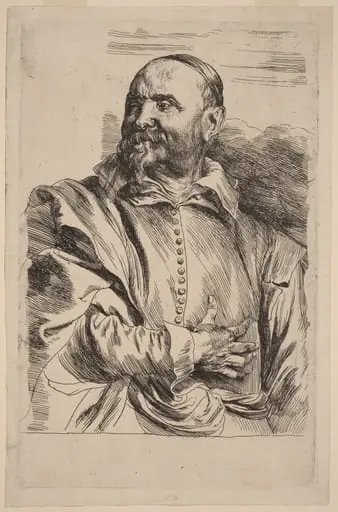
Jan Snellinx is an ink print by the Baroque artist Anthony van Dyck. It dates from 1634 and is held in the collection of the National Gallery of Art.
About this work
Overview
The image bears an inscription identifying the subject as 'Joannes Snellinx Pictor,' while van Dyck’s authorship is confirmed by his signature.
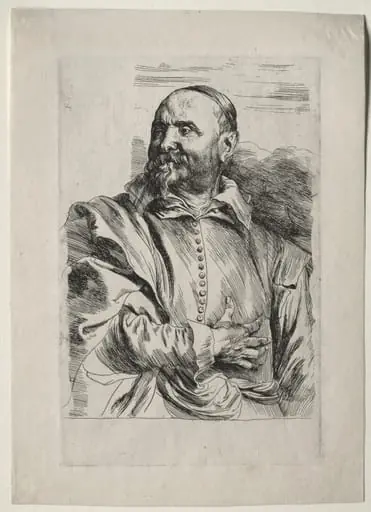
This black-and-white print is an etching by Anthony van Dyck, dated around 1634. It depicts Jan Snellinx, a Flemish painter, portrayed in profile with a full beard and balding head. His hands are folded over his chest, and his clothing features a high collar with small buttons. The image bears an inscription identifying the subject as 'Joannes Snellinx Pictor,' while van Dyck’s authorship is confirmed by his signature.
Subject & Meaning
The sitter, Jan Snellinx, was a respected painter active in Antwerp. Van Dyck’s portrayal emphasizes dignity and quiet introspection, aligning with the tradition of artist portraiture in the early 17th century. The restrained composition and direct gaze suggest a focus on professional identity rather than personal grandeur, reflecting the esteem accorded to skilled craftsmen of the time.
Technique & Style
Van Dyck employed etching to capture fine detail with linear precision. The texture of the paper and the sharp, incised lines suggest a methodical approach to defining form through tone and contour. The absence of shading relies on the contrast of inked lines against the paper, characteristic of etching’s capacity for clarity and subtle gradation without wash or color.
History & Provenance
Created during van Dyck’s tenure in Antwerp, this portrait was likely made as part of his series documenting prominent local artists. The print circulated among collectors and artists, contributing to the documentation of Flemish artistic circles. Its survival in multiple institutional collections indicates early recognition of its documentary and artistic value.
Context
In the 1630s, van Dyck was developing a new genre of artist portraiture that elevated craftsmen to the status of intellectuals. This etching reflects broader cultural shifts in the Southern Netherlands, where painters were increasingly seen as learned figures. The format—simple, direct, and unadorned—mirrors the humanist ideals of the period.
Legacy
The etching remains a key example of van Dyck’s contribution to printmaking and artist portraiture. It influenced later generations in how painters were visually represented—not as idealized figures, but as individuals with distinct presence. Its inclusion in major print collections underscores its role in preserving the visual record of 17th-century artistic communities.
Artist & collection
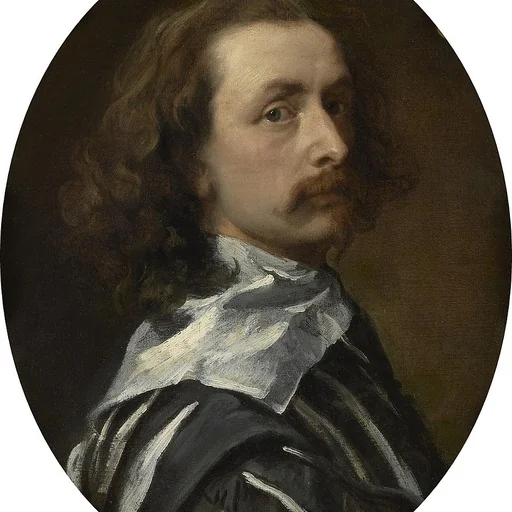
Artist
Sir Anthony van Dyck (; Dutch: Antoon van Dijck ; 22 March 1599 – 9 December 1641) was a Flemish Baroque artist, who became the leading court painter in England after success in the Spanish Netherlands and Italy.