Artwork
Saint Jerome
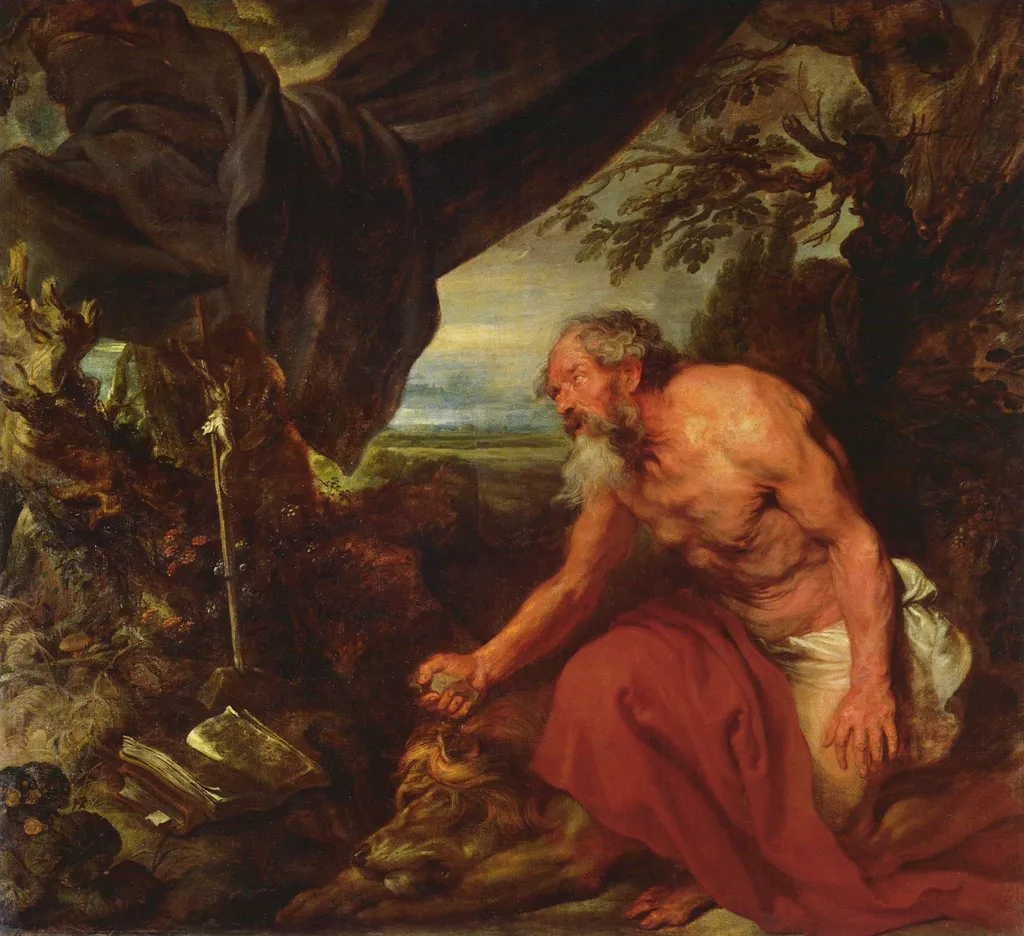
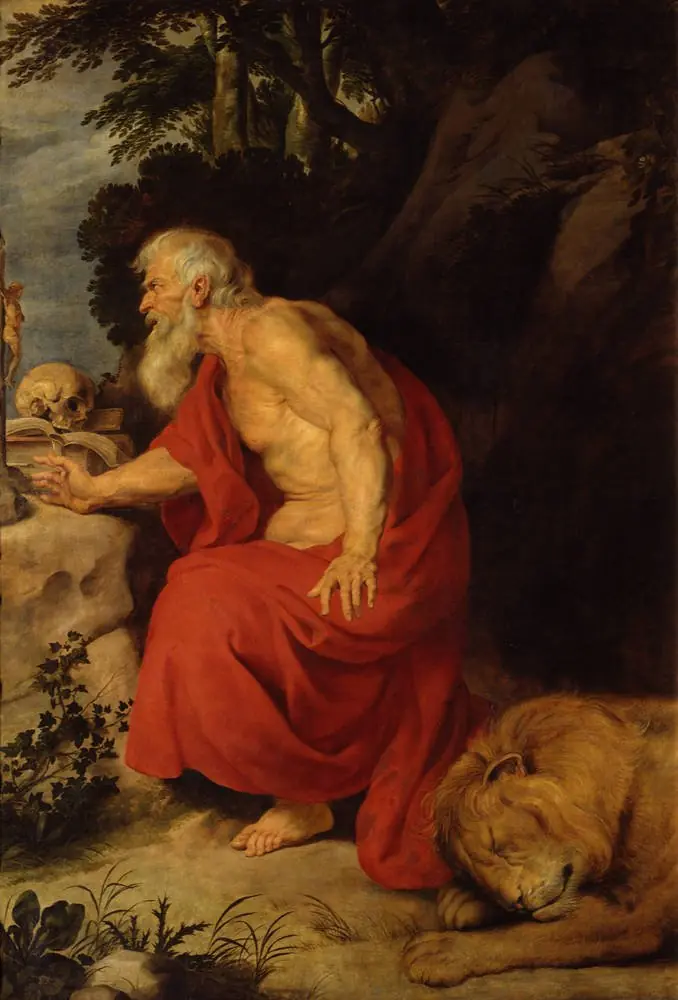
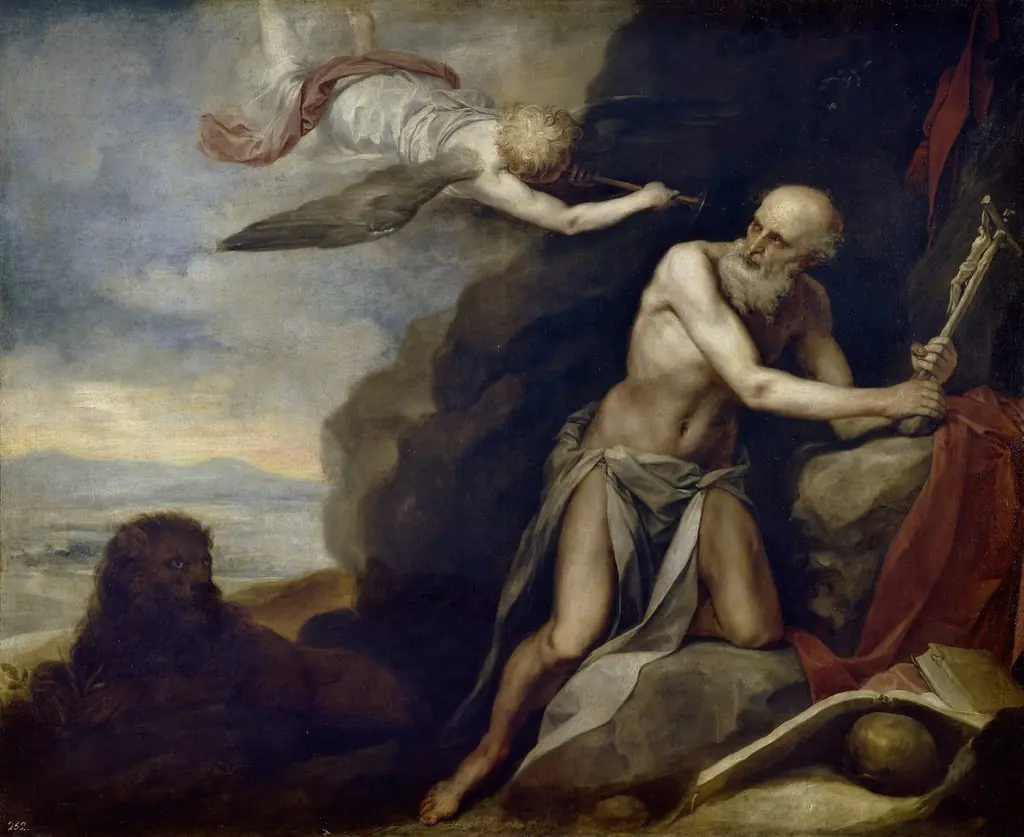
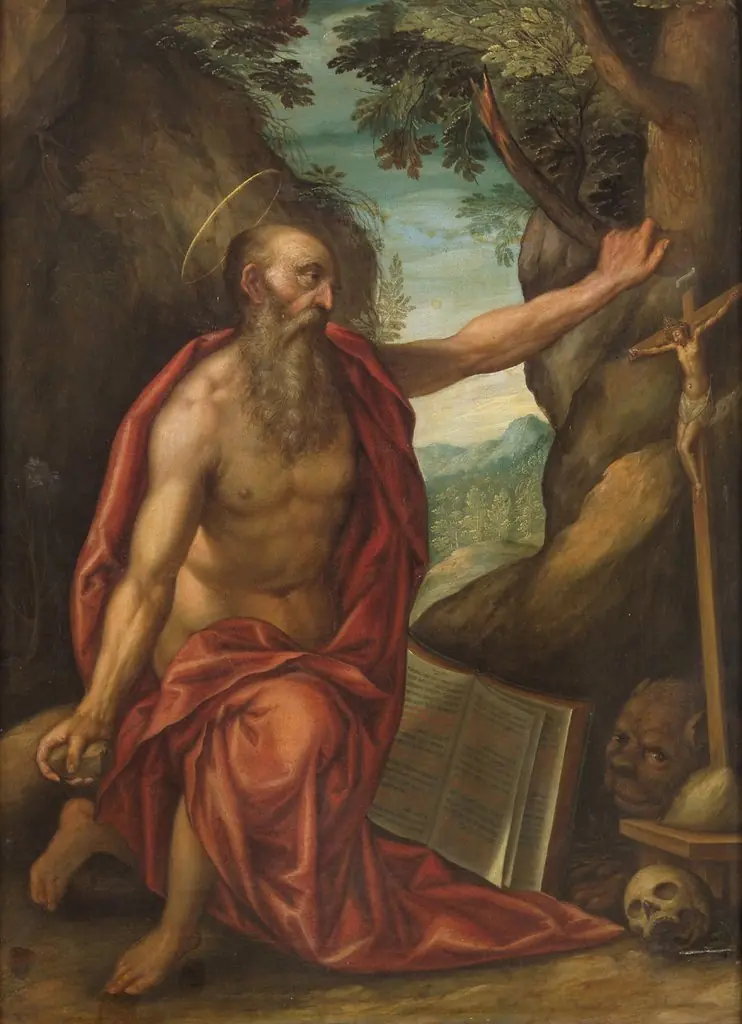
Saint Jerome is an oil painting by the Flemish Baroque painting artist Anthony van Dyck. It dates from 1620 and is held in the collection of the Staatliche Kunstsammlungen Dresden.
About this work
Overview
Painted in 1620, this oil on panel work by Anthony van Dyck portrays Saint Jerome in a moment of quiet contemplation. Created early in the artist’s career, shortly after his training under Rubens, the piece reflects van Dyck’s developing command of portraiture and religious subject matter. It is now part of the Gemäldegalerie Alte Meister’s collection in Dresden.
Subject & Meaning
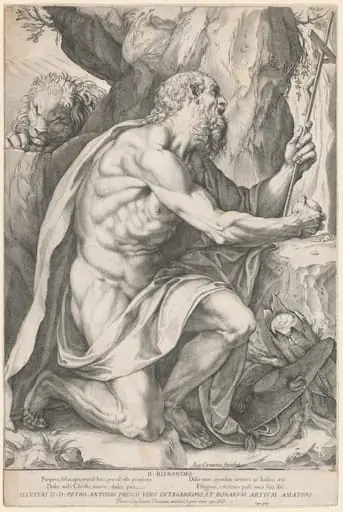
The figure of Saint Jerome, a Church Father known for translating the Bible into Latin, is shown in solitude, kneeling on rugged terrain. He holds a stone, a reference to his traditional depiction as a penitent scholar who beat his breast in devotion. A wooden cross leans nearby, reinforcing themes of faith and sacrifice. His aged face and rough attire convey humility and inner struggle.
Technique & Style
Van Dyck employs subtle chiaroscuro to model the saint’s form, with soft transitions between light and shadow that define his draped robe and weathered hands. The background merges dark forest and hazy sky, creating depth without distraction. Brushwork is controlled yet expressive, balancing naturalism with a restrained emotional tone characteristic of early Baroque Flemish painting.
History & Provenance
Executed during van Dyck’s formative years in Antwerp, the painting predates his move to England and his role as court painter to Charles I. It remained in private collections in the Low Countries before entering the Gemäldegalerie Alte Meister’s holdings, where it has been preserved as an example of his early religious works.
Context
In early 17th-century Flanders, depictions of saints in solitary prayer were common, responding to Counter-Reformation ideals that emphasized personal devotion. Van Dyck’s approach diverges from dramatic spectacle, favoring introspection. This quiet intensity aligns with broader trends in Flemish art that valued psychological depth over theatricality.
Legacy
Though less known than van Dyck’s later royal portraits, this early work demonstrates his ability to convey spiritual gravity through understated realism. It influenced subsequent generations of painters in the Northern tradition who sought to capture inner life through restrained composition and nuanced lighting.
Own this work as a print
Artist & collection
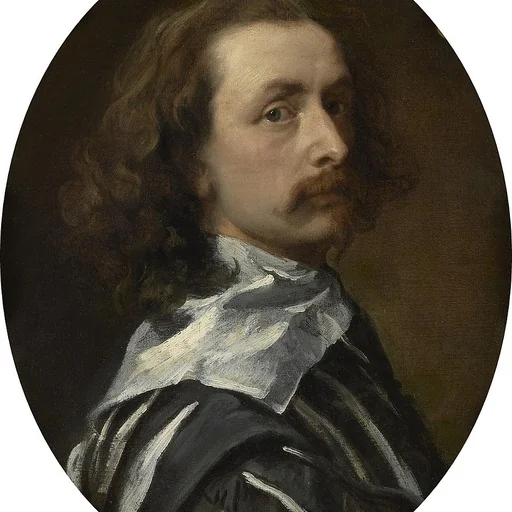
Artist
Sir Anthony van Dyck (; Dutch: Antoon van Dijck ; 22 March 1599 – 9 December 1641) was a Flemish Baroque artist, who became the leading court painter in England after success in the Spanish Netherlands and Italy.