Artwork
Allegory with Skull
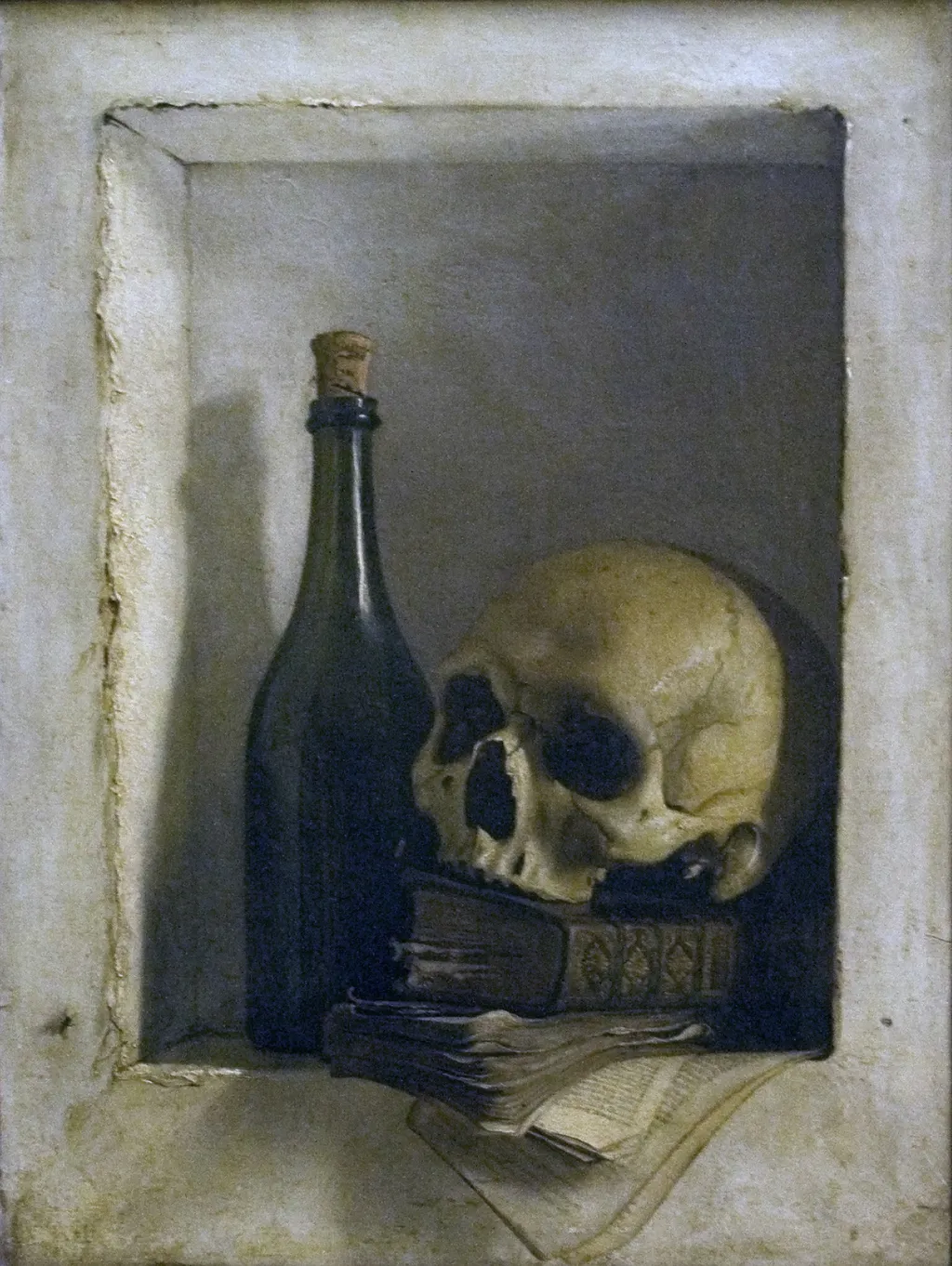
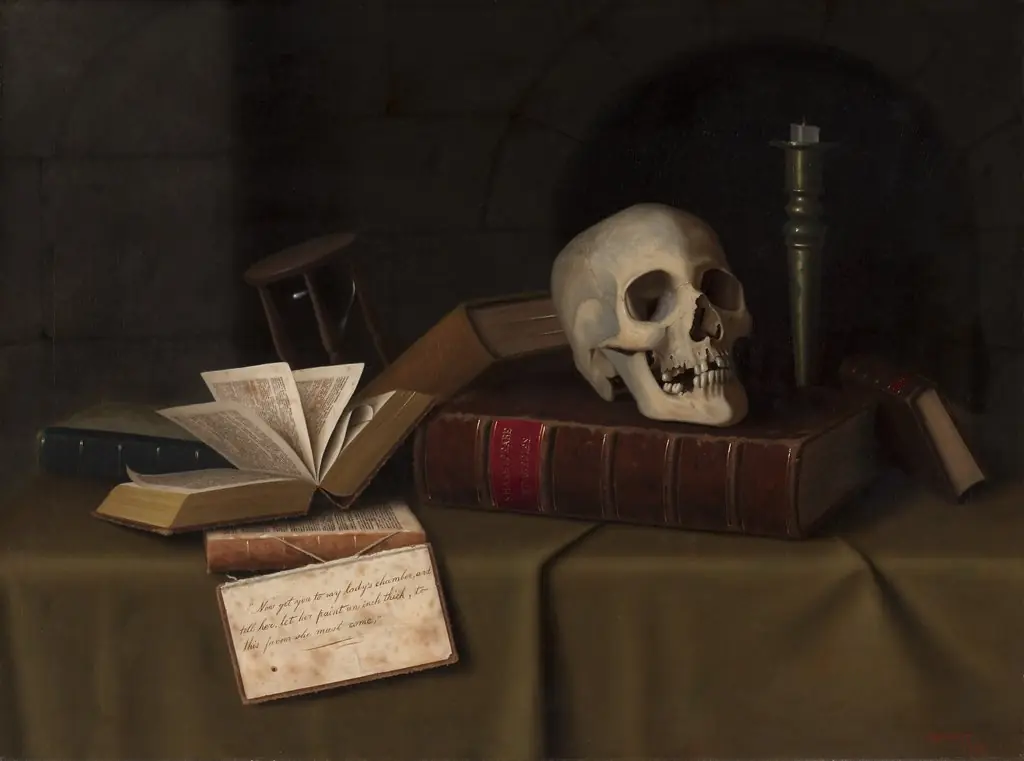
Allegory with Skull is an oil painting by the French Romanticist artist Antoine Wiertz. It dates from 1824 and is held in the collection of the Royal Museums of Fine Arts of Belgium.
About this work
Overview
Painted in 1824 by Belgian artist Antoine Joseph Wiertz, *Allegory with Skull* is an early work that reflects his engagement with moral and existential themes.
Painted in 1824 by Belgian artist Antoine Joseph Wiertz, *Allegory with Skull* is an early work that reflects his engagement with moral and existential themes. Executed in oil on canvas, the piece belongs to the French Romantic tradition and is held in the Royal Museums of Fine Arts of Belgium. Wiertz’s approach combines dramatic lighting with symbolic objects, signaling his interest in the transience of life and the weight of knowledge.
Subject & Meaning
The composition centers on a human skull, flanked by a book and a bottle, arranged within a shallow, stone-like niche. These objects suggest a meditation on mortality, intellectual pursuit, and earthly indulgence. The skull, rendered as the focal point, serves as a memento mori, while the book implies the limits of human wisdom and the bottle hints at fleeting pleasures. Together, they form a quiet, somber reflection on the impermanence of human endeavors.
Technique & Style
Wiertz employs chiaroscuro to model the skull with strong contrasts between light and shadow, drawing from Rembrandt’s tradition of sculptural illumination. The light falls from the left, carving volume from the bone’s surface and casting deep recesses around it. The background is muted, isolating the objects in a stark, almost theatrical space. The white border framing the niche enhances the illusion of a carved alcove, reinforcing the painting’s contemplative, reliquary-like quality.
History & Provenance
Created early in Wiertz’s career, the painting predates his later large-scale commissions. It entered the collection of the Royal Museums of Fine Arts of Belgium, where it remains today. The Belgian state later provided Wiertz with financial support, including funding for a studio in Brussels, which now operates as the Wiertz Museum. This early work foreshadows the thematic preoccupations that would define his later output.
Context
In the 1820s, Belgian art was influenced by both Flemish Baroque traditions and emerging Romantic sensibilities. Wiertz, trained in Paris, absorbed the dramatic intensity of Rubens and Michelangelo while responding to the era’s fascination with death and the sublime. *Allegory with Skull* aligns with broader European trends in vanitas imagery but distinguishes itself through its restrained composition and psychological gravity, anticipating Symbolist tendencies in Belgian art.
Legacy
Though less known than his monumental works, *Allegory with Skull* exemplifies Wiertz’s early mastery of symbolic economy and emotional restraint. Its quiet intensity and technical precision mark it as a significant precursor to later Belgian Symbolism. The painting’s enduring presence in a national collection underscores its role in documenting the transition from Romanticism to more introspective, allegorical modes in 19th-century Belgian painting.
Artist & collection
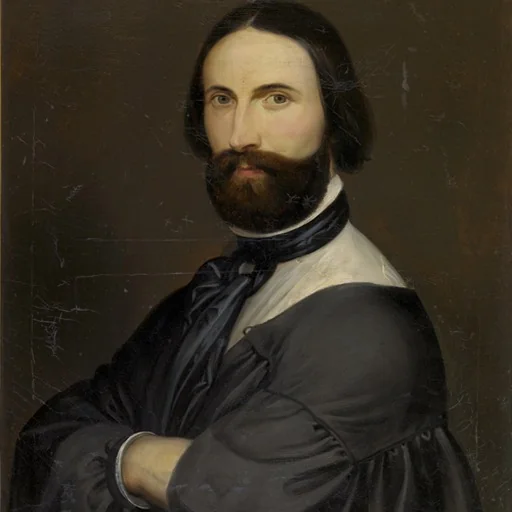
Artist
Antoine Joseph Wiertz (22 February 1806 – 18 June 1865) was a Belgian painter, sculptor, lithographer and art writer.

Museum
Royal Museums of Fine Arts of Belgium
Continue through works from the same source collection.