Artwork
Vanitas
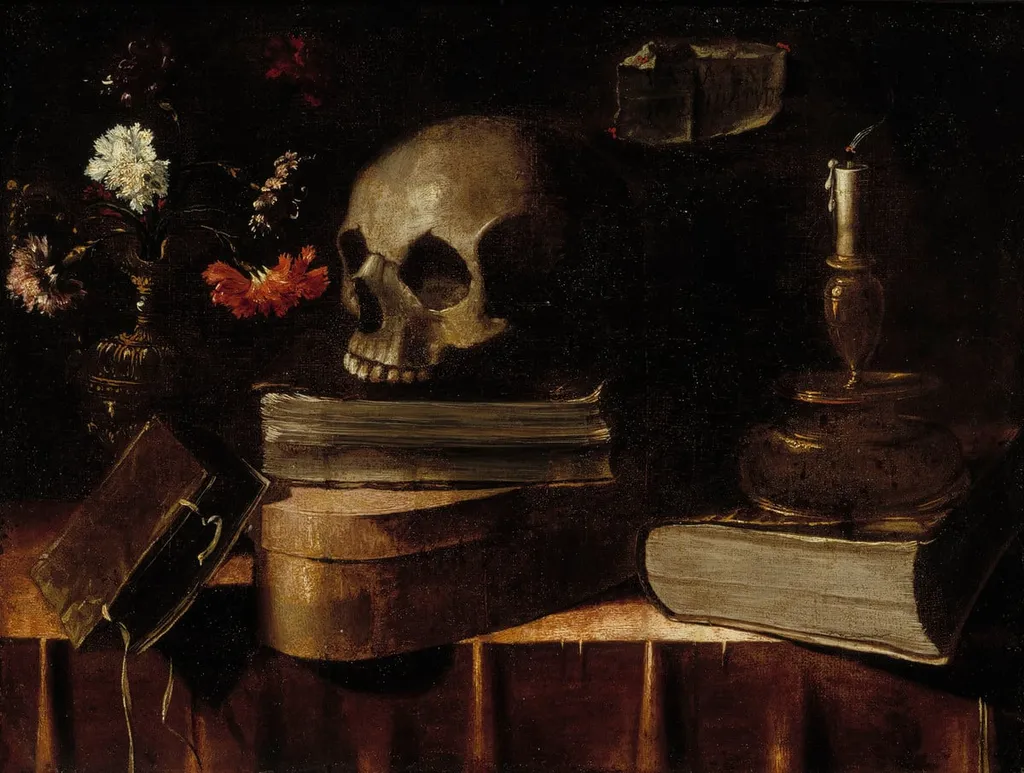
Vanitas is an unspecified painting by Master of the Vanitas Texts. It is held in the collection of the Finnish National Gallery.
About this work
Overview
The objects are arranged to evoke reflection on transience, with no figures or narrative beyond the symbolic stillness of the scene.
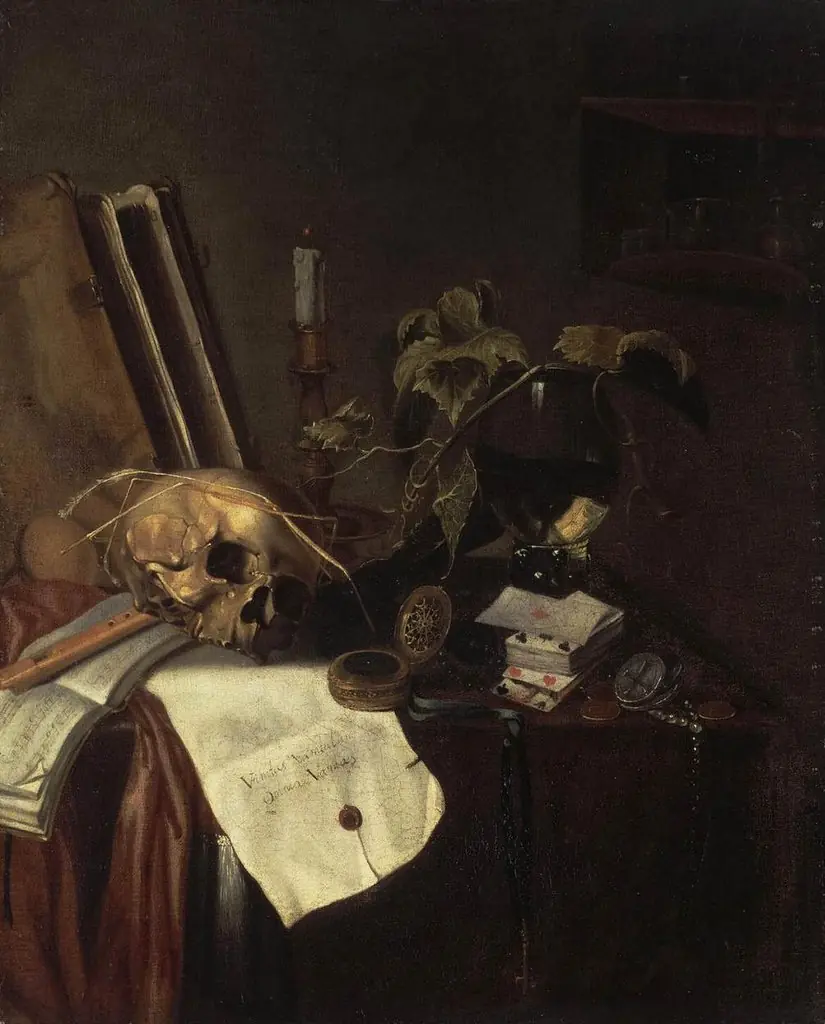
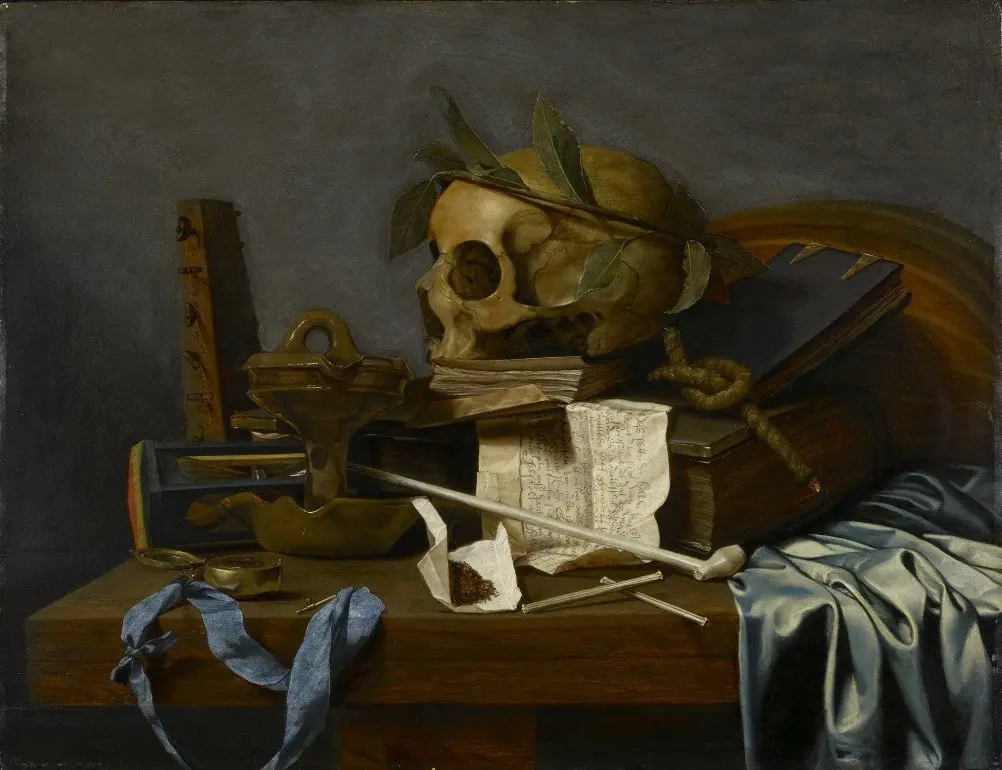
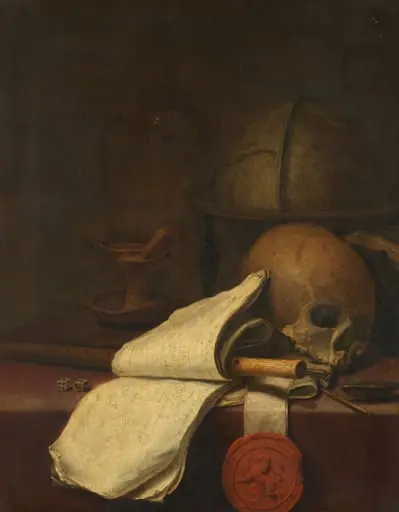
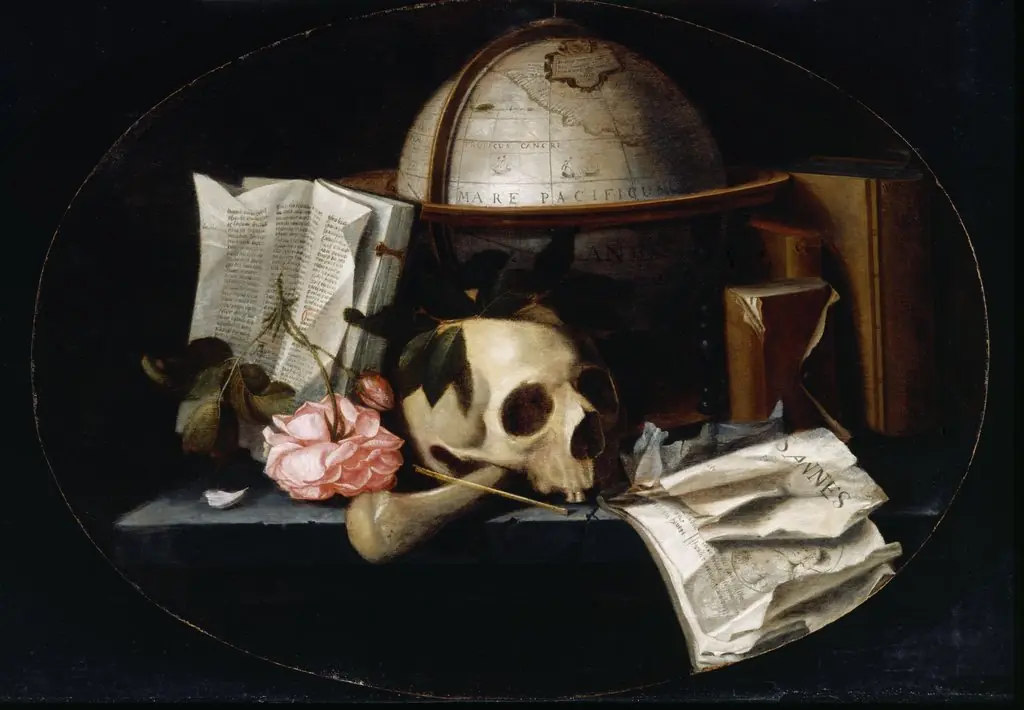
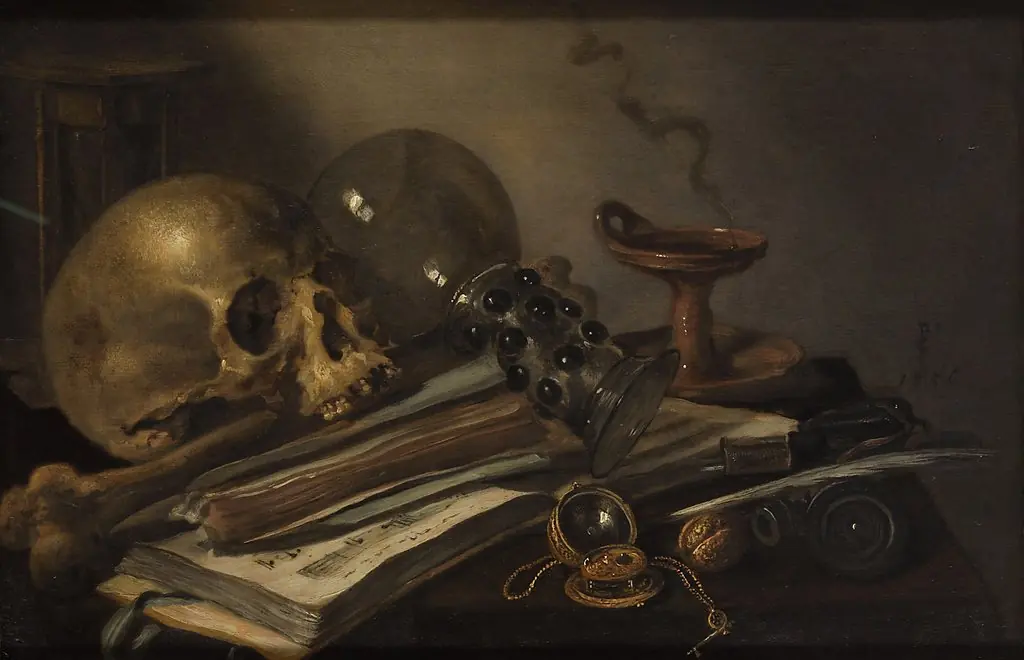
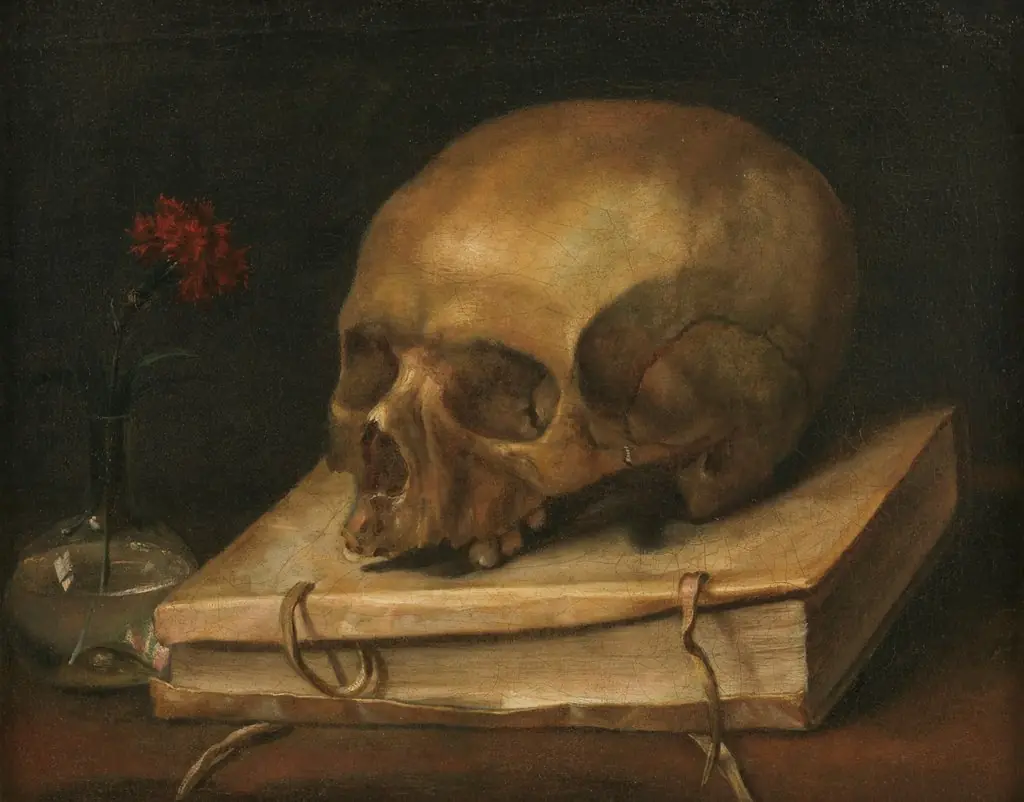
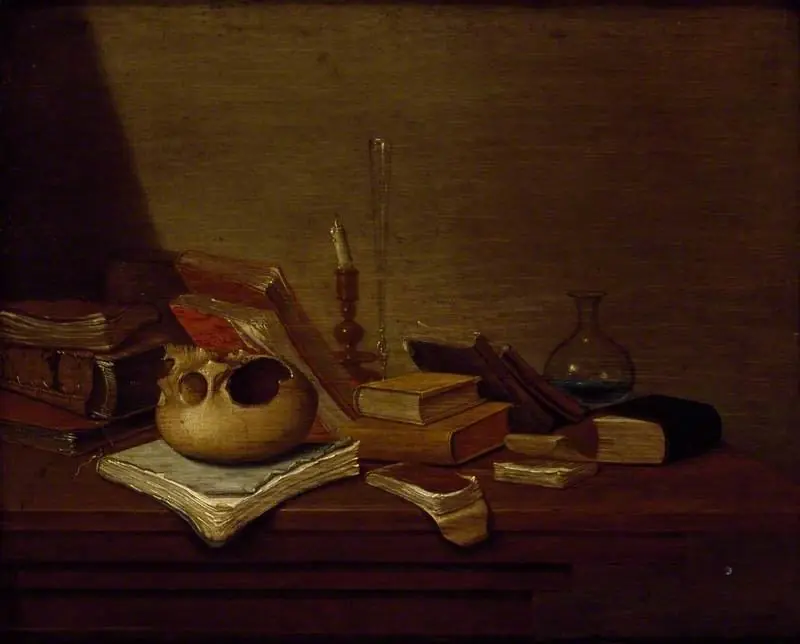
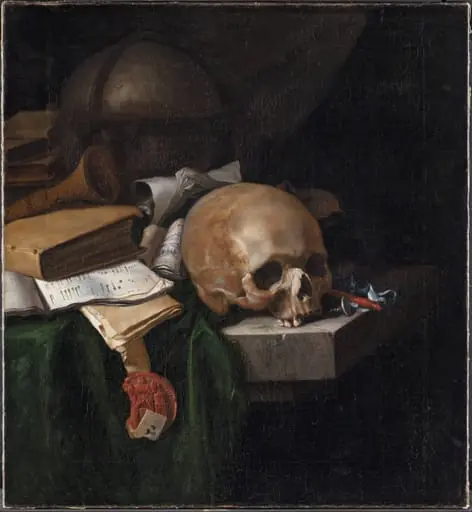
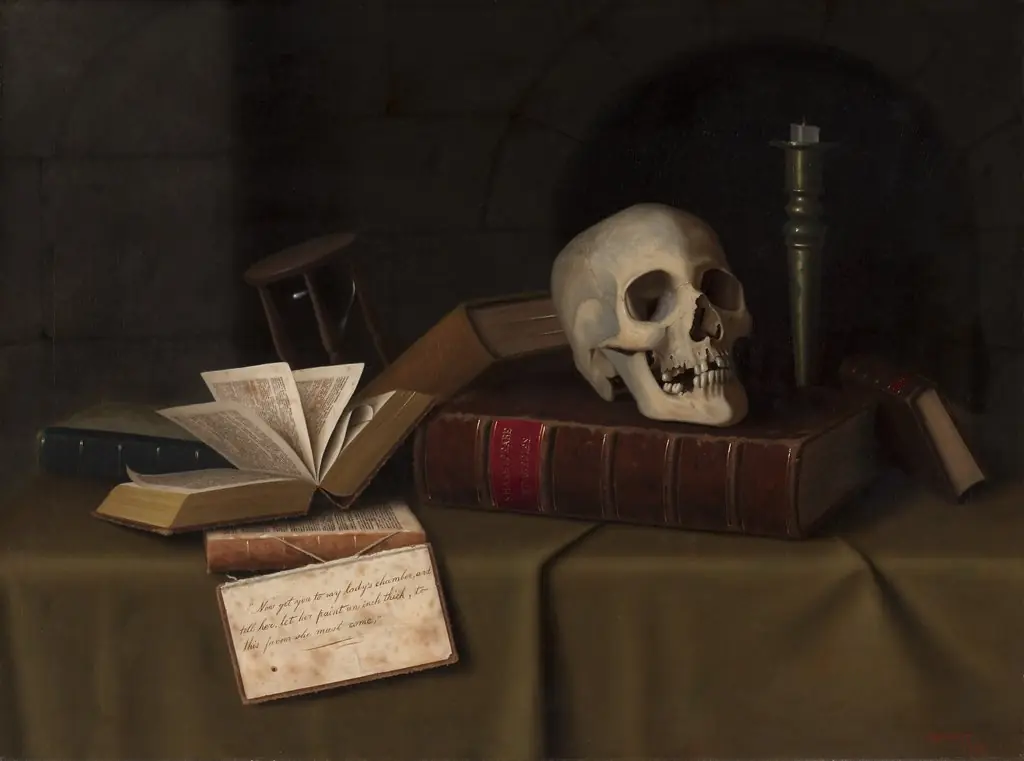
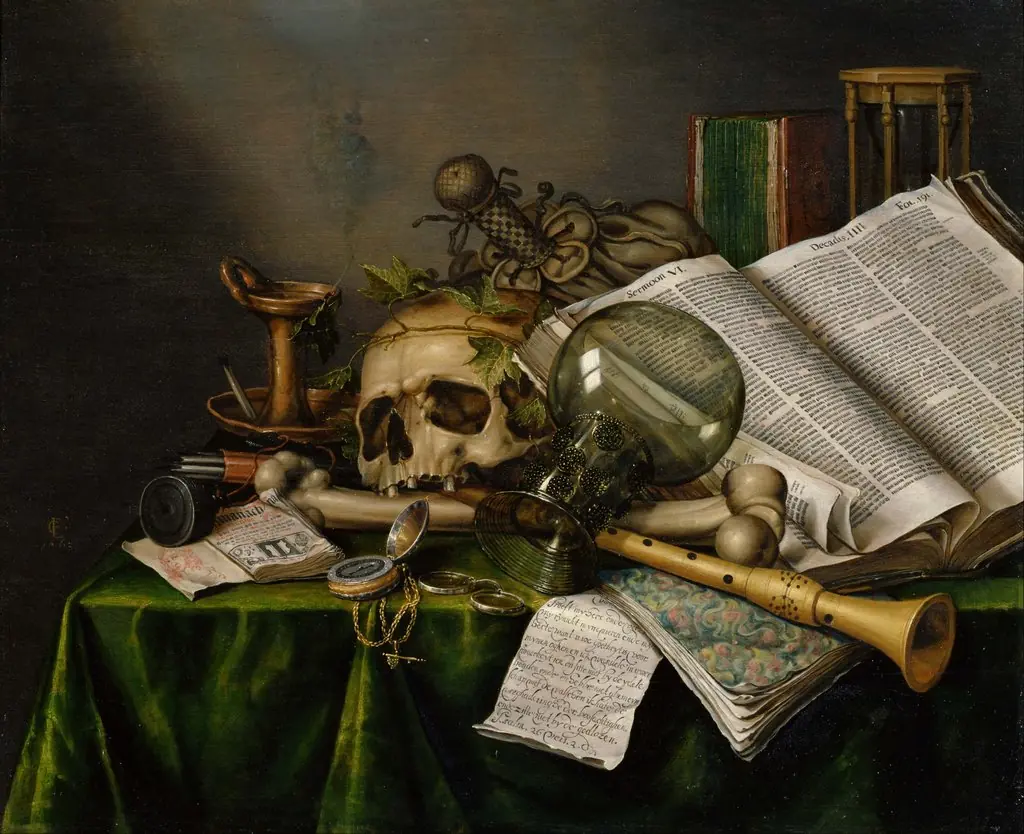
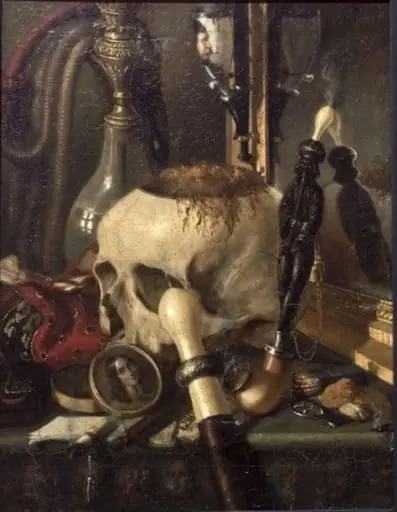
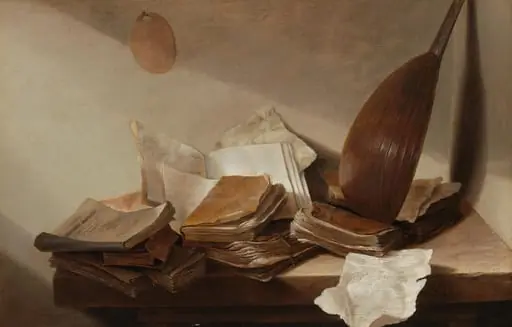
This still life painting centers on a human skull, positioned atop a pile of books, flanked by a lit candle on one side and a vase of wilting flowers on the other. The composition is rendered with sharp contrasts between light and shadow, creating a somber, meditative mood. The objects are arranged to evoke reflection on transience, with no figures or narrative beyond the symbolic stillness of the scene.
Subject & Meaning
The skull serves as a memento mori, a direct reminder of death’s inevitability. The books suggest the limits of human knowledge, the candle implies the fragility of life, and the flowers signify beauty’s decay. Together, these elements form a visual meditation on impermanence, common in 17th-century Northern European art, where material wealth and intellectual pursuit are shown as fleeting.
Technique & Style
The artist employs chiaroscuro to model forms with dramatic lighting, enhancing the three-dimensionality of the skull and other objects. Shadows deepen around the edges, isolating the central motif and heightening its emotional weight. Brushwork is precise yet restrained, favoring texture over flourish—skin of the skull, wax of the candle, and petals of the flowers are rendered with quiet attention to material reality.
History & Provenance
The painting is held in the collection of the Museum of Ethnography, though its origins and creator remain undocumented in available records. It entered the museum’s holdings in the early 20th century, likely as part of a broader acquisition of Northern European symbolic still lifes. No significant provenance trail or documented ownership prior to this is publicly known.
Context
Produced during a period when Dutch and Flemish artists frequently explored vanitas themes, this work aligns with a tradition that questioned the value of earthly pursuits in light of spiritual mortality. While not attributed to a major named painter, its composition reflects widespread visual conventions of the time, used by both professional artists and lesser-known regional practitioners.
Legacy
As a representative example of vanitas imagery, the painting contributes to ongoing scholarly interest in how visual symbols conveyed philosophical ideas in early modern Europe. Its presence in an ethnographic museum underscores its role as a cultural artifact, illustrating how mortality was visually negotiated in everyday artistic practice beyond the canon of famous masters.
Artist & collection
Artist
This Spanish artist painted Vanitas scenes, a tradition that reminds us life is short and we should think about what really matters.