Artwork
A herd of swine
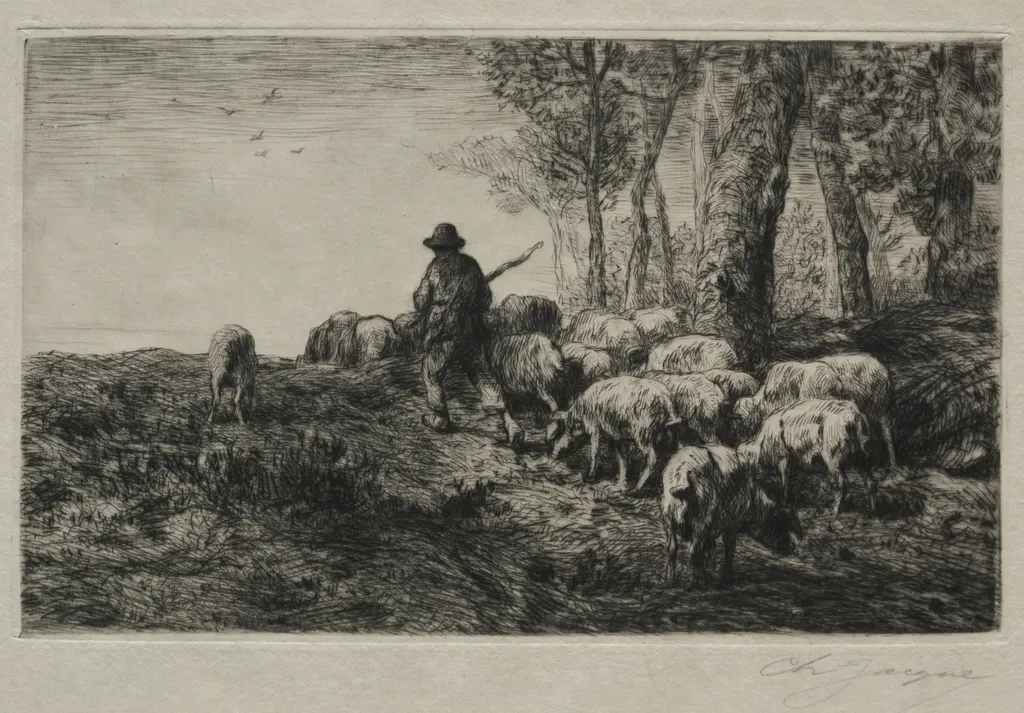
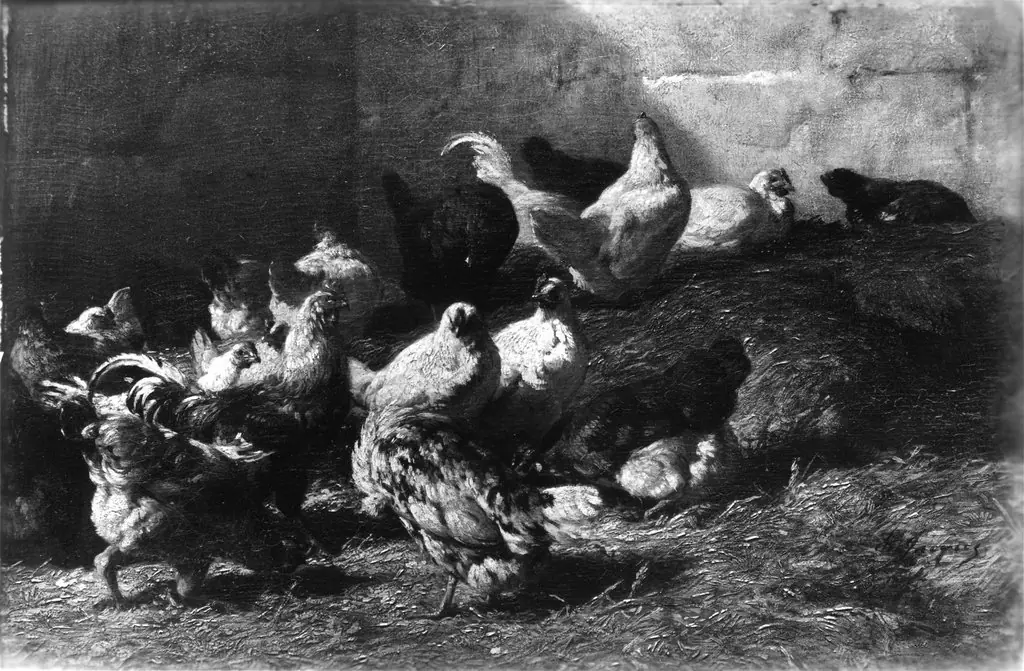
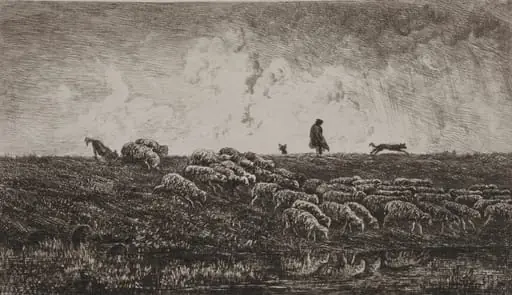
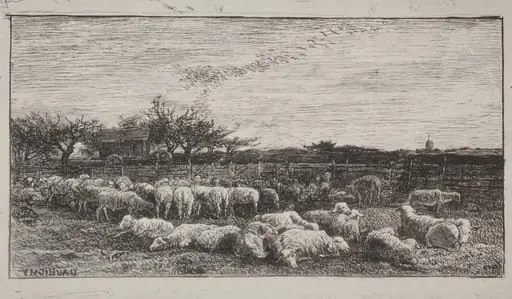
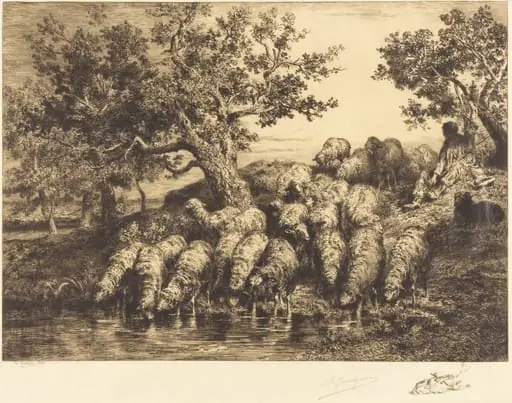
A herd of swine is a print by the Impressionist artist Charles Jacque. It dates from 1880 and is held in the collection of the Cleveland Museum of Art. Created in 1880 by Charles-Émile Jacque, this print portrays a group of swine in a rural setting.
About this work
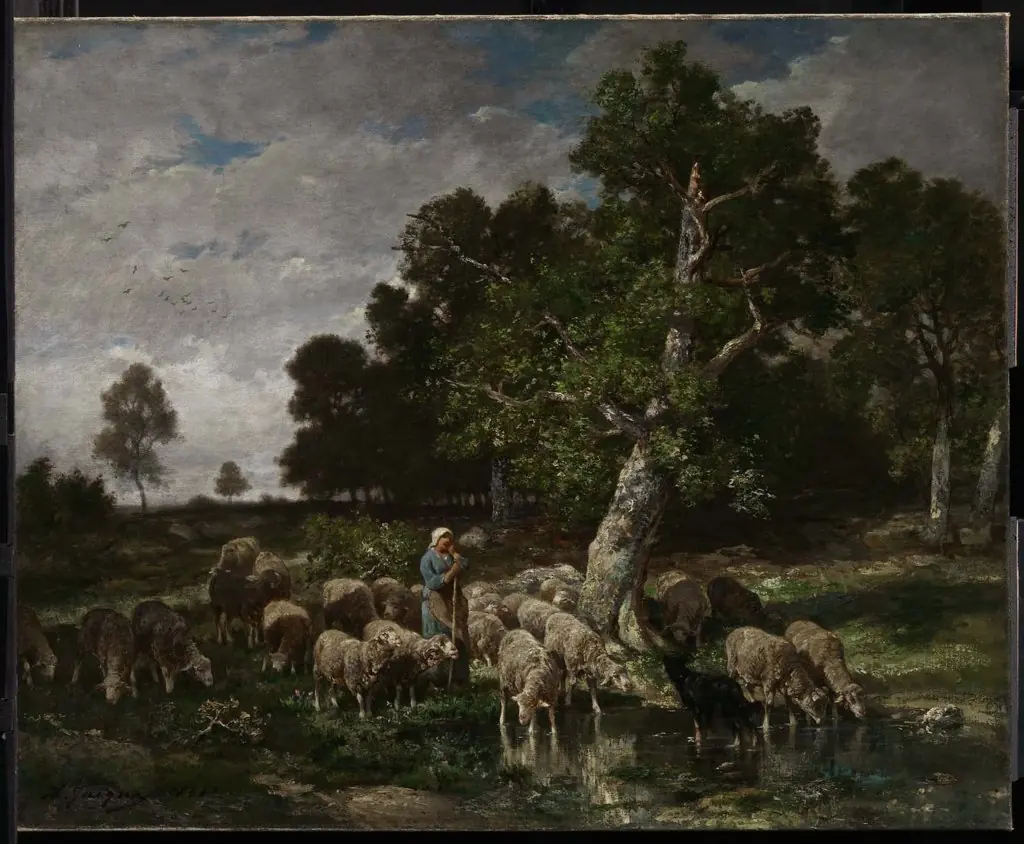
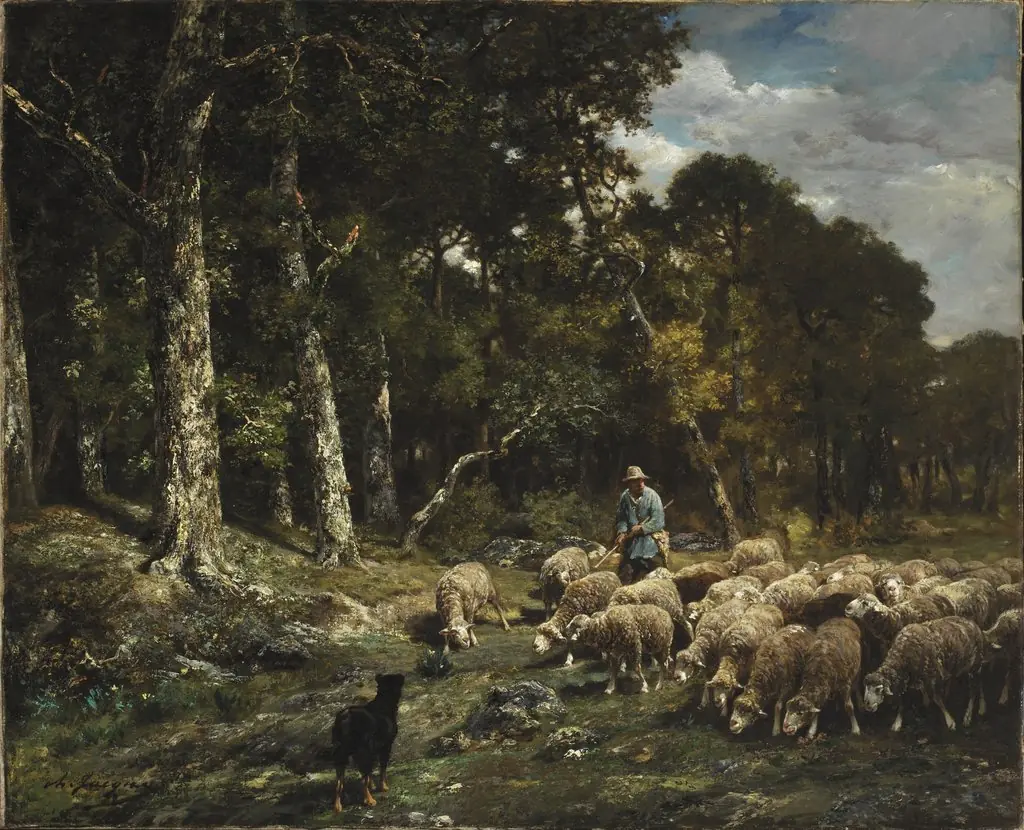
The overall atmosphere is one of tranquility, with the shepherd and his flock seemingly at peace in their natural surroundings.
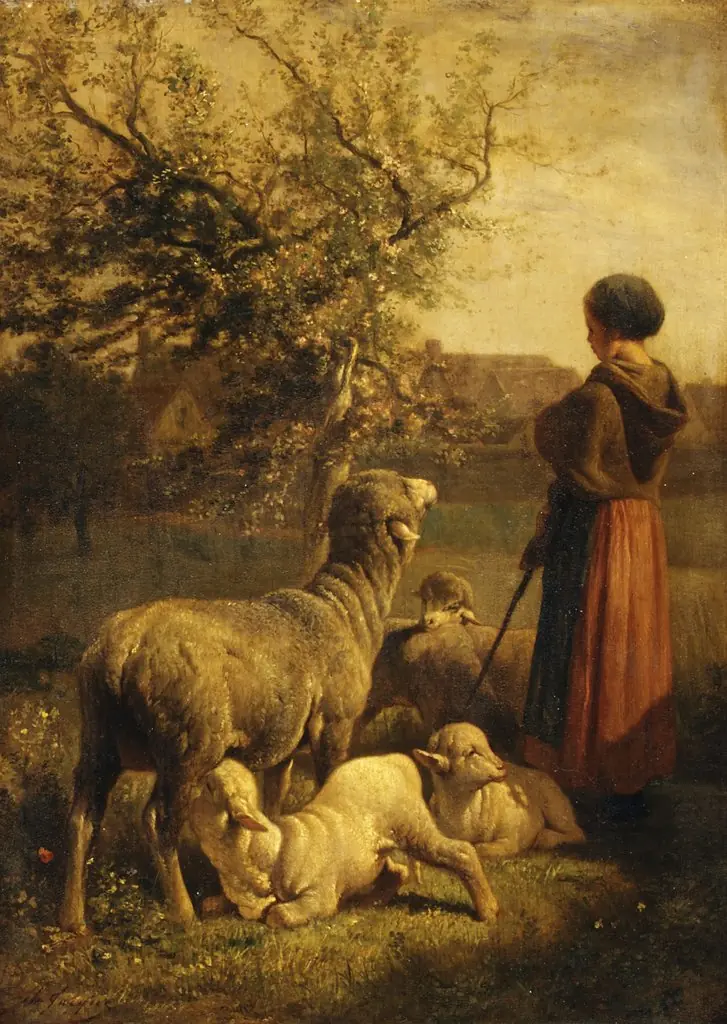
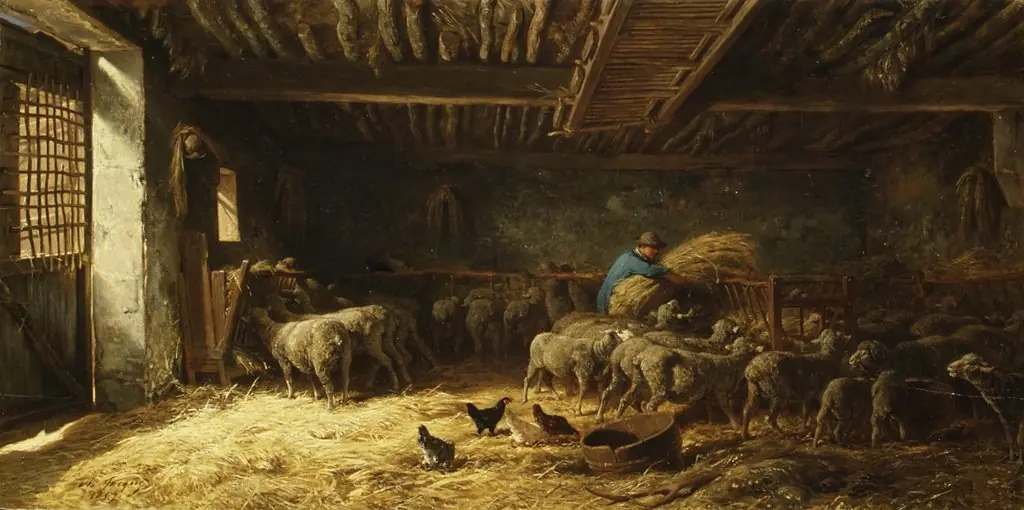
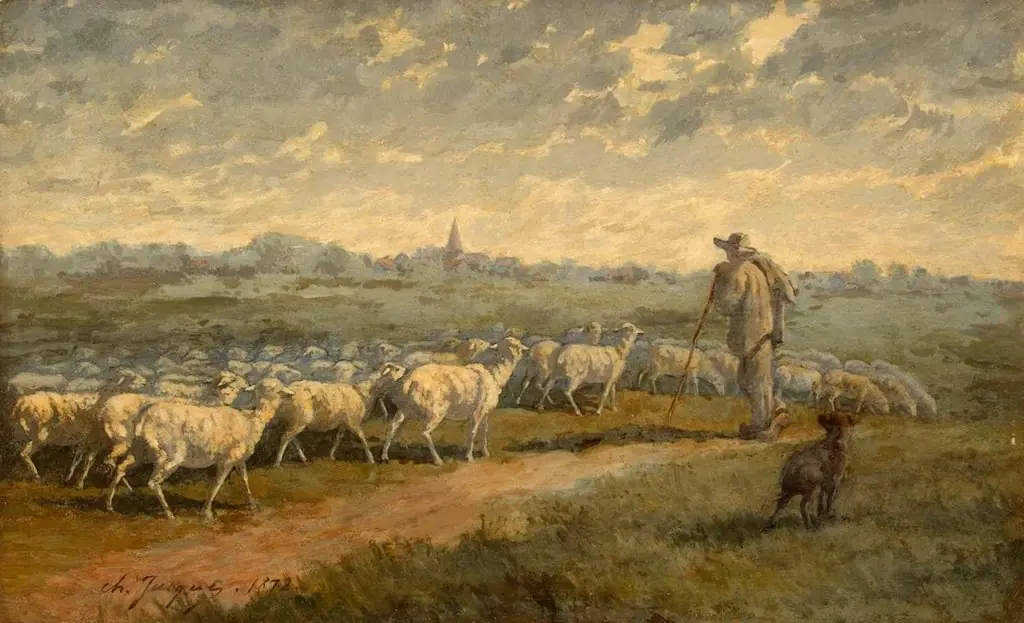
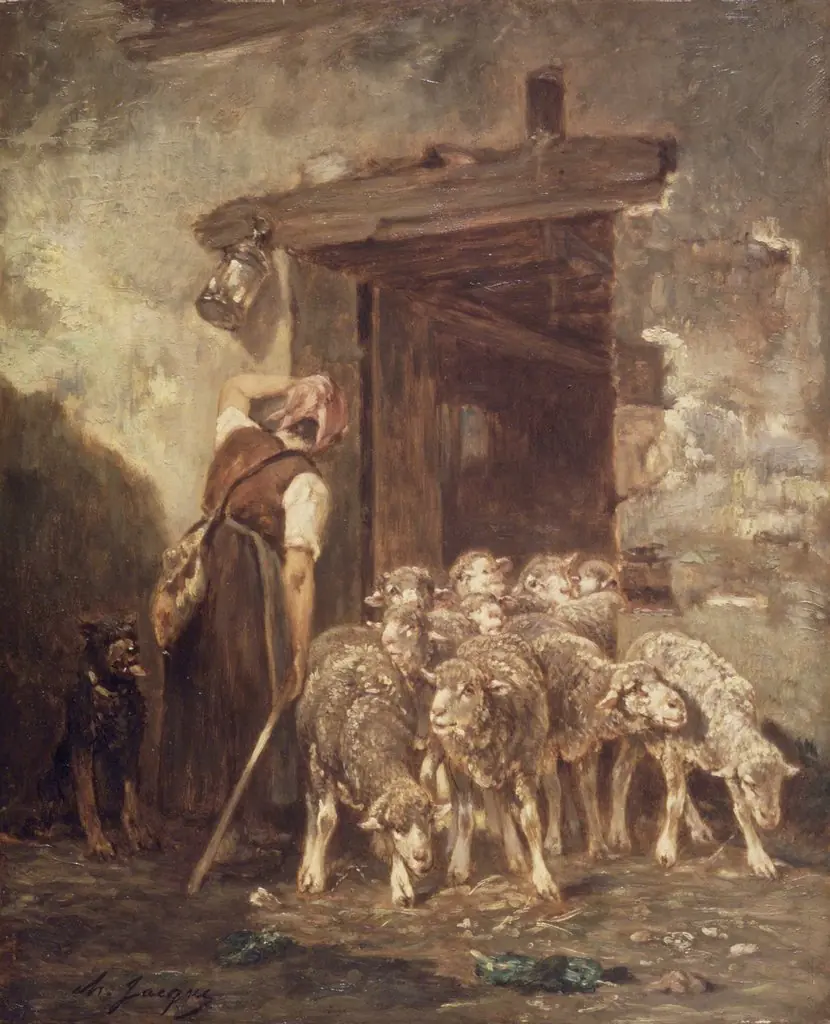
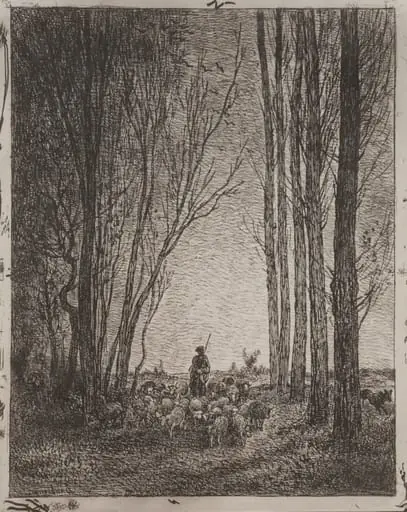
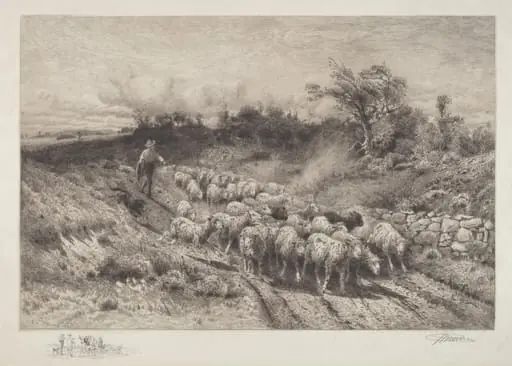
The image depicts a serene scene of a shepherd tending to his flock of sheep in a lush, grassy field. The shepherd, dressed in a hat and coat, stands amidst the sheep, holding a staff in his right hand. The sheep are scattered throughout the field, some grazing while others appear to be resting.
In the background, a few trees are visible, adding depth to the scene. The overall atmosphere is one of tranquility, with the shepherd and his flock seemingly at peace in their natural surroundings.
For more information on the artist who created this piece, look up Charles-Émile Jacque (French, 1813–1894).
Overview
Created in 1880 by Charles-Émile Jacque, this print portrays a group of swine in a rural setting. Though often linked to the Barbizon School for its focus on peasant life and landscape, the work diverges from typical pastoral imagery by centering on pigs rather than sheep or cattle. Jacque, who trained in engraving during his military service, used the medium to capture the quiet rhythms of agricultural labor with precision and restraint.
Subject & Meaning
The scene depicts a herd of swine moving through a grassy field under the watch of a shepherd, though the figure is minimal and unidealized. Unlike romanticized depictions of livestock, Jacque presents the animals as grounded, unglamorous participants in rural economy. The absence of dramatic tension or human emotion underscores a documentary approach, reflecting the dignity of everyday farm life without sentimentality.
Technique & Style
Jacque employed drypoint and etching to render texture with fine, deliberate lines—capturing the coarse fur of the pigs, the softness of grass, and the subtle contours of the landscape. The tonal range is restrained, favoring muted grays and blacks, which enhance the quiet realism of the scene. His technique prioritizes observational accuracy over theatrical effect, aligning with the Barbizon ethos of truth to nature.
History & Provenance
Jacque produced this print late in his career, after decades of working in printmaking and painting. He had served in the French Army for seven years, where he first developed his engraving skills. While the print’s early ownership is undocumented, it was likely circulated among collectors of French graphic art in the late 19th century, valued for its technical mastery and unembellished subject matter.
Context
In 1880s France, industrialization reshaped rural economies, and artists like Jacque turned to agricultural subjects as a form of cultural preservation. His focus on swine—often overlooked in art—reflected a broader interest in the working lives of peasants and the animals integral to their survival. This print stands apart from idealized rural scenes by emphasizing the mundane realities of farmsteads.
Legacy
Jacque’s prints, including this one, influenced later generations of printmakers who sought to elevate everyday subjects through precise draftsmanship. Though less celebrated than his contemporaries, his work contributed to the legitimacy of rural realism in graphic arts. The print remains a quiet testament to the overlooked labor and creatures sustaining rural communities in 19th-century France.
Own this work as a print
Artist & collection
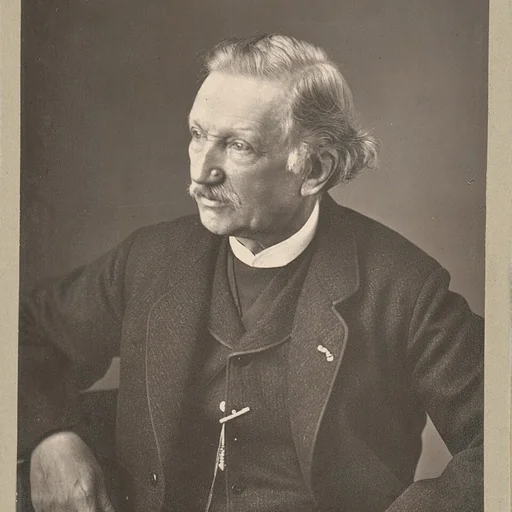
Artist
Charles-Émile Jacque (23 May 1813 – 7 May 1894) was a French painter of Pastoralism and engraver who was, with Jean-François Millet, part of the Barbizon School. He first learned to engrave maps when he spent seven years in the French Army.