Artwork
Paris med Tour St. Jacques og Notre Dame. Aftenstemning
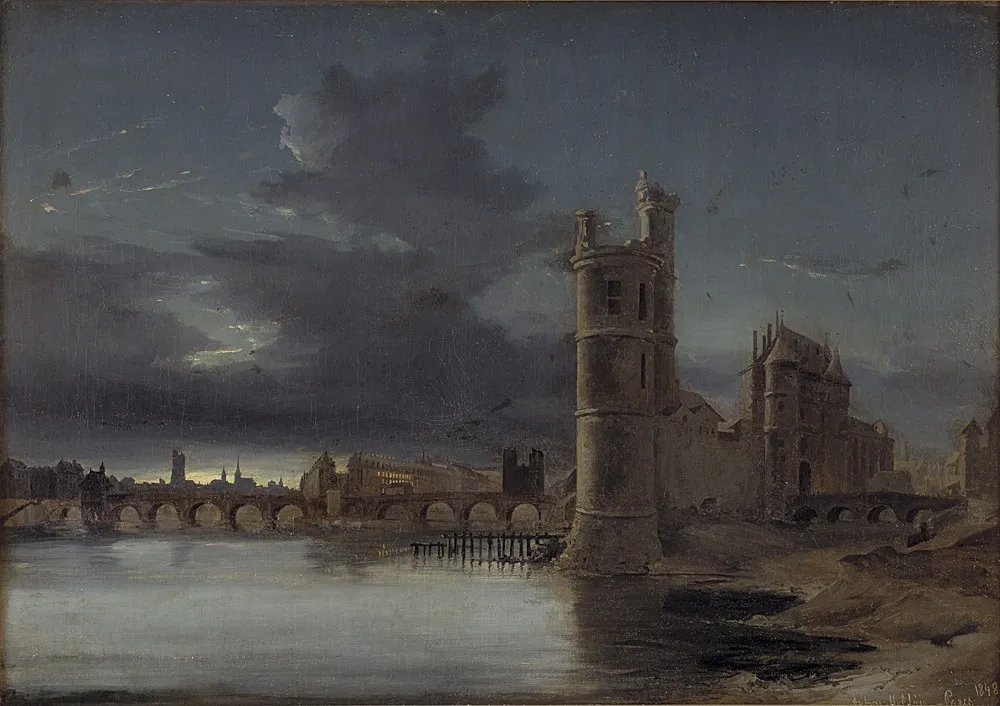
Paris med Tour St. Jacques og Notre Dame. Aftenstemning is an oil painting by the Realist artist Anton Melbye. It dates from 1848 and is held in the collection of the Statens Museum for Kunst.
About this work
Overview
The composition emphasizes the interplay of light and shadow under a dimming sky, conveying a sense of stillness and transition between day and night.
Anton Melbye’s 1848 oil painting captures a quiet evening in Paris, focusing on the silhouette of the Tour Saint-Jacques and the western facade of Notre-Dame Cathedral. Rendered in a realist style, the work reflects Melbye’s interest in atmospheric conditions and urban landscapes, diverging from his more familiar marine subjects. The composition emphasizes the interplay of light and shadow under a dimming sky, conveying a sense of stillness and transition between day and night.
Subject & Meaning
The painting centers on two enduring Parisian landmarks, framed by the Seine and a distant bridge. Rather than celebrating architectural grandeur, Melbye presents them as quiet witnesses to the passage of time. The absence of human figures and the muted tones suggest contemplation, evoking the solitude of urban life after dusk. The scene invites reflection on the permanence of monuments against the fleeting nature of evening light.
Technique & Style
Melbye employs loose, expressive brushwork to suggest the texture of stone, water, and cloud cover without detailed rendering. Chiaroscuro defines the forms, with faint glows from street lamps and windows contrasting against deep shadows. The river’s surface mirrors the city’s dim illumination, enhancing spatial depth. The sky, though dark, holds subtle starlight, achieved through delicate touches of pigment, reinforcing the painting’s hushed, nocturnal mood.
History & Provenance
Painted in 1848 during Melbye’s time in Paris, the work emerged from a period of artistic exchange between Danish and French painters. It entered the collection of Statens Museum for Kunst in Copenhagen, where it remains today. The painting reflects Melbye’s broader engagement with European urban scenes, following his travels and studies abroad, and stands as one of his few significant non-maritime works.
Context
In mid-19th century Europe, artists increasingly turned to everyday urban environments as subjects, moving beyond idealized landscapes. Melbye’s depiction aligns with this shift, capturing Paris not as a romanticized spectacle but as a lived, atmospheric space. His approach resonates with contemporaries like Corot, who also explored twilight effects, though Melbye’s focus remains distinctly Nordic in its restraint and tonal sensitivity.
Legacy
Though less known than his marine works, this painting illustrates Melbye’s versatility and his contribution to Scandinavian realism. It represents a quiet but significant moment in Danish art history, where artists engaged with continental subjects without abandoning their own perceptual sensibilities. The work continues to be studied for its nuanced handling of light and its understated emotional tone.
Artist & collection
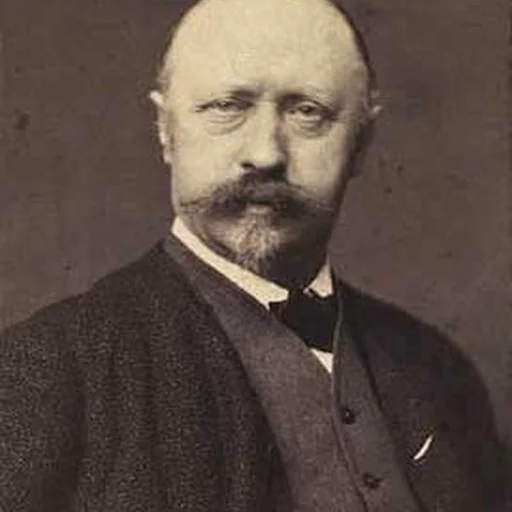
Artist
Daniel Herman Anton Melbye (13 February 1818 – 10 January 1875) was a Danish painter and photographer who specialised in marine art. He was the brother of fellow painters Vilhelm and Fritz Melbye.

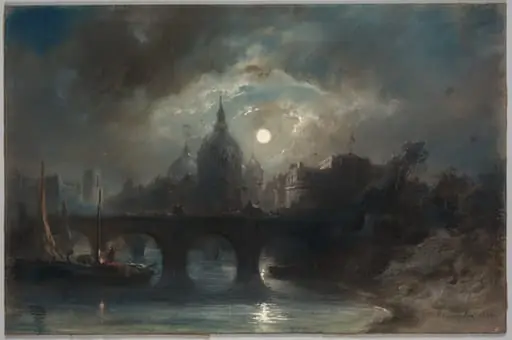 View of a City at Night
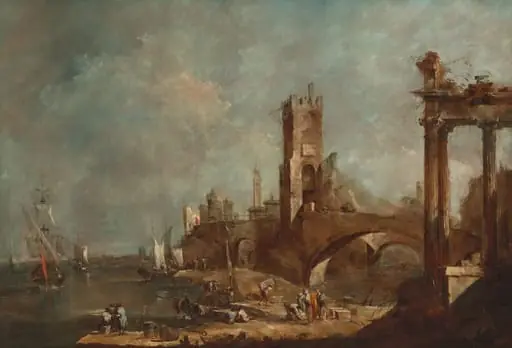 Capriccio of a Harbor
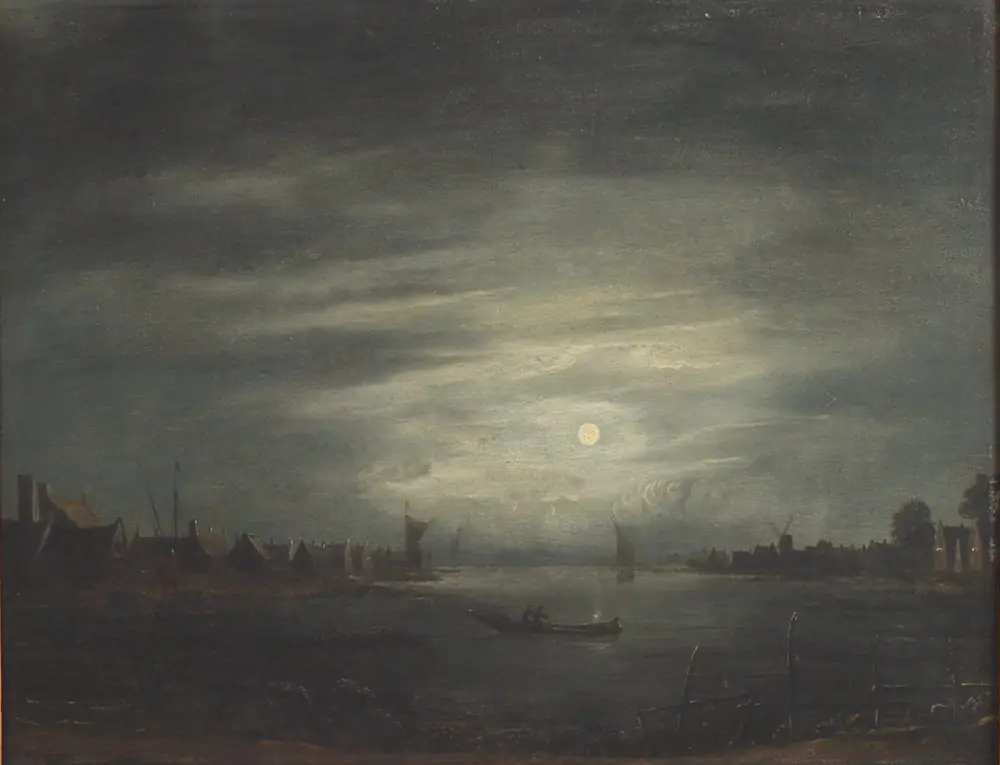 Moonlight
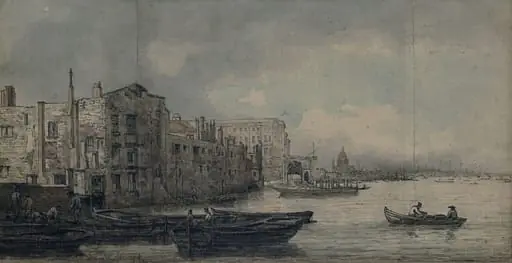 The Thames, showing Somerset House in the course of construction
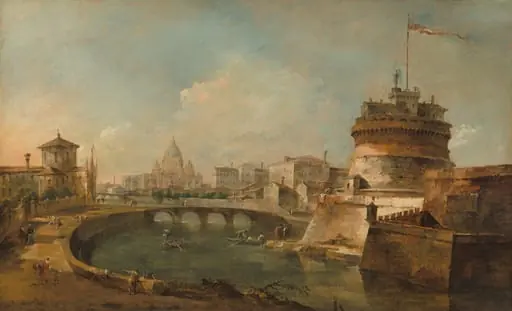 Fanciful View of the Castel Sant'Angelo, Rome
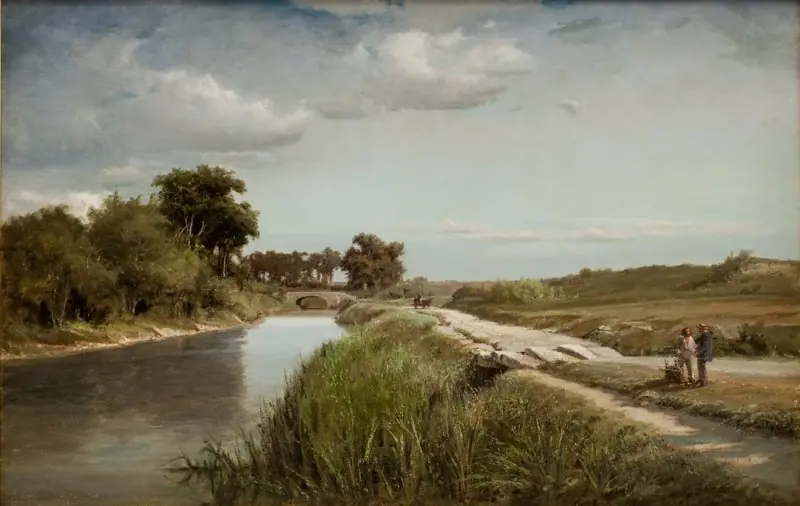
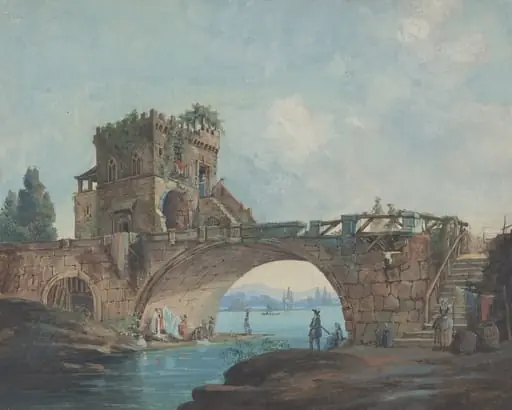 The Ponte Salario with Laundresses
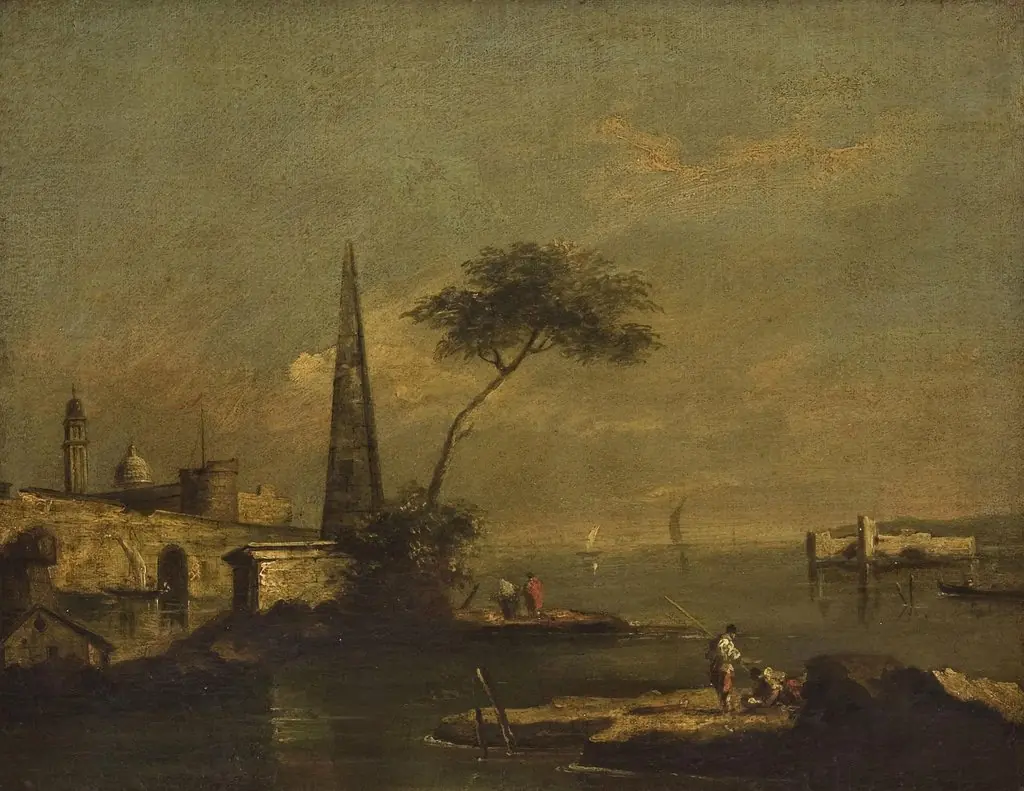 Capriccio with an Obelisk on a Lagoon
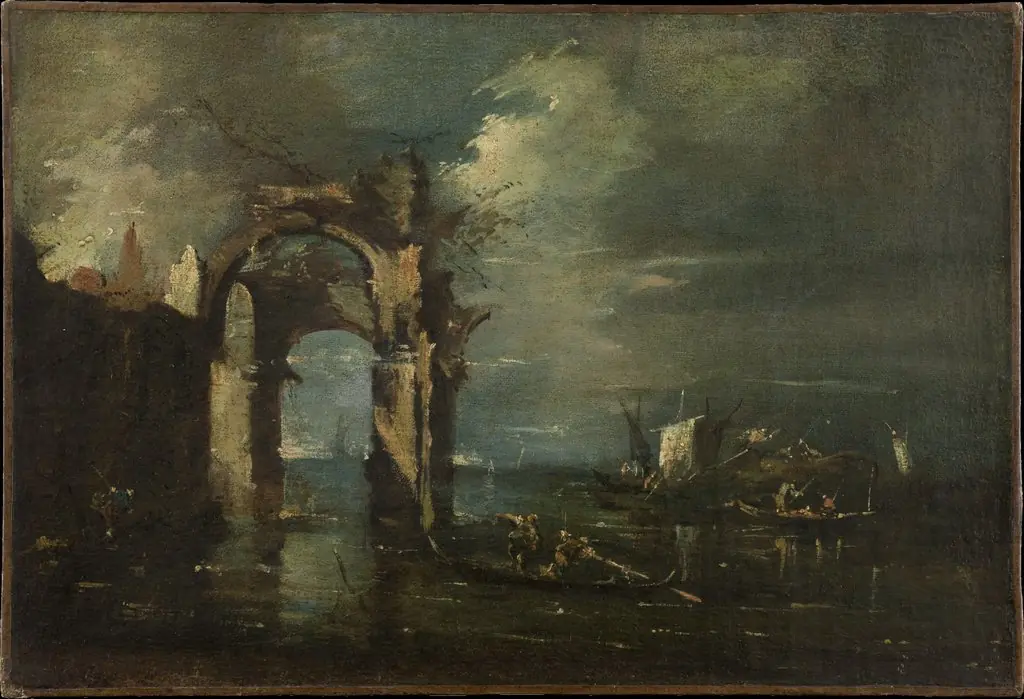 Lagoon Landscape
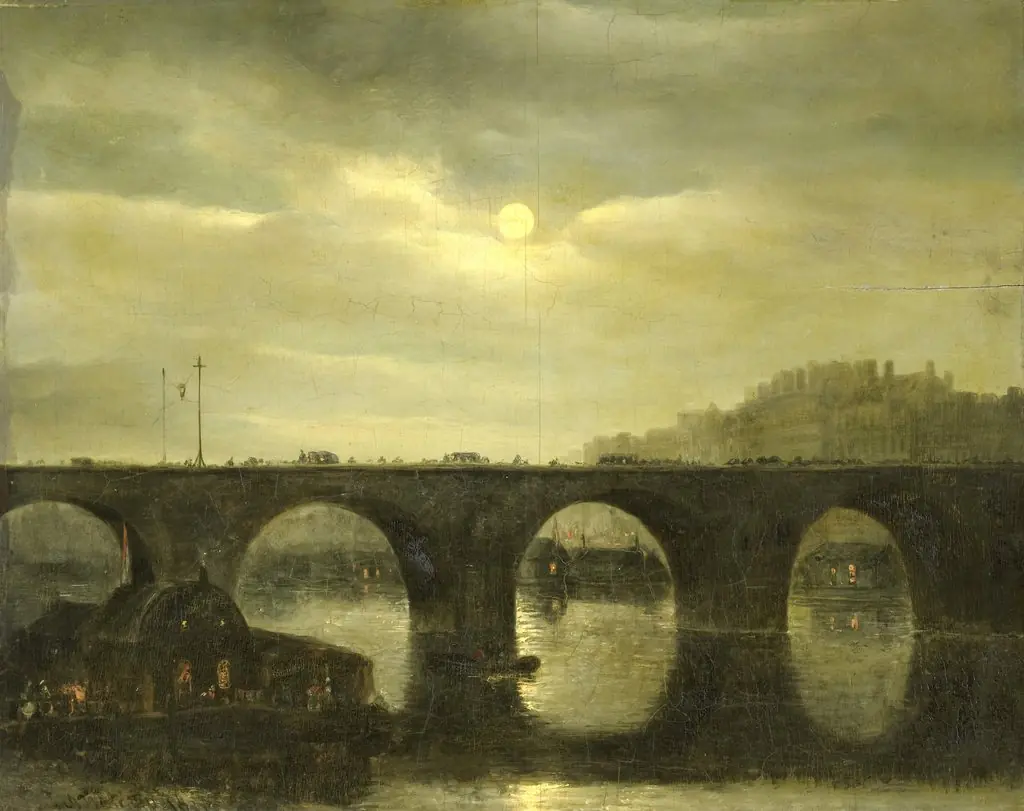 View of a Bridge of the Seine in Paris by Moonlight
 Dordrecht