Artwork
St John the Baptist in the Desert
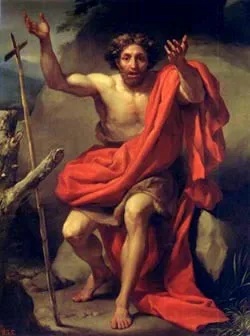
St John the Baptist in the Desert is an oil painting by the Neoclassicist artist Anton Raphael Mengs. It dates from 1774 and is held in the collection of the Hermitage Museum.
About this work
Overview
Anton Raphael Mengs’ oil painting St John the Baptist in the Desert dates from 1774 and is part of the State Hermitage Museum’s collection. The work presents a solitary figure in a stark landscape, rendered in the late‑Baroque language of dramatic lighting. Its modest dimensions and restrained palette focus attention on the central character rather than decorative surroundings.
Subject & Meaning
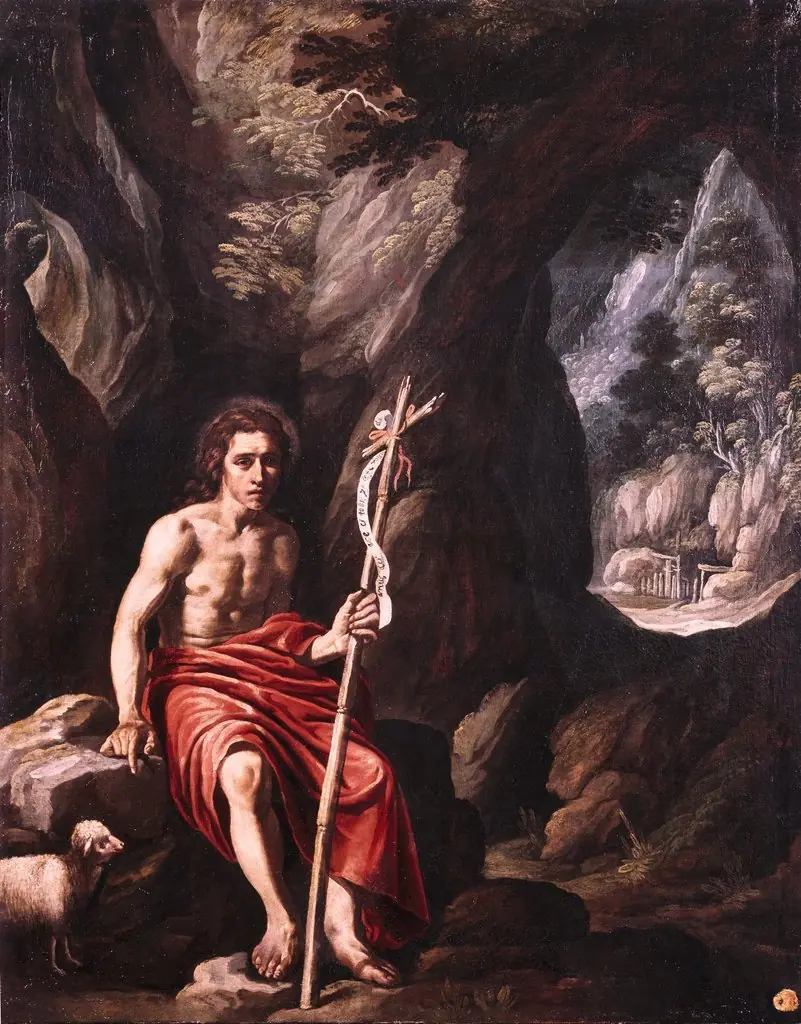
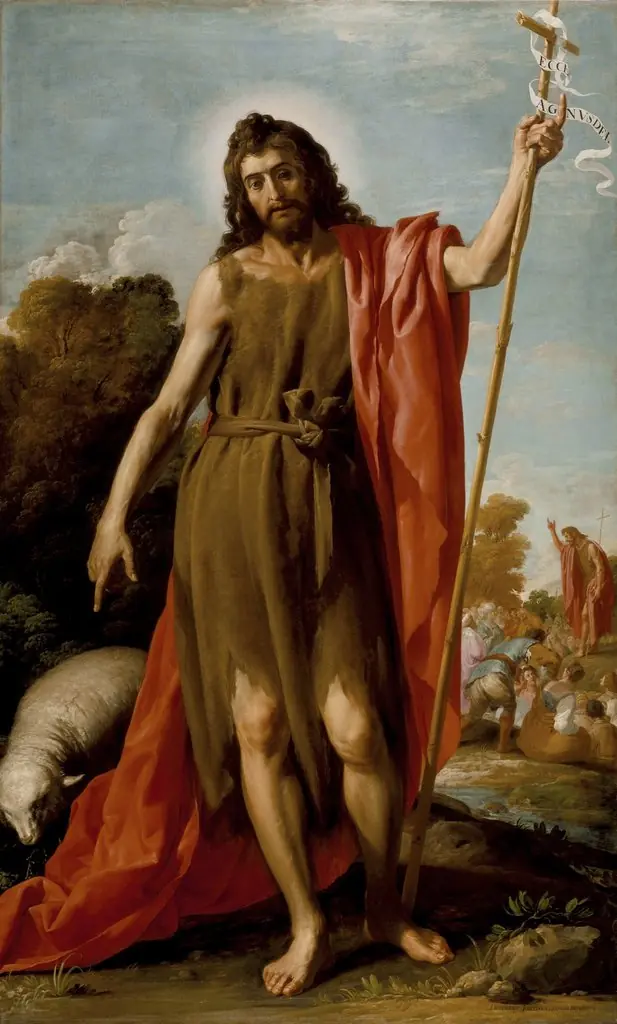
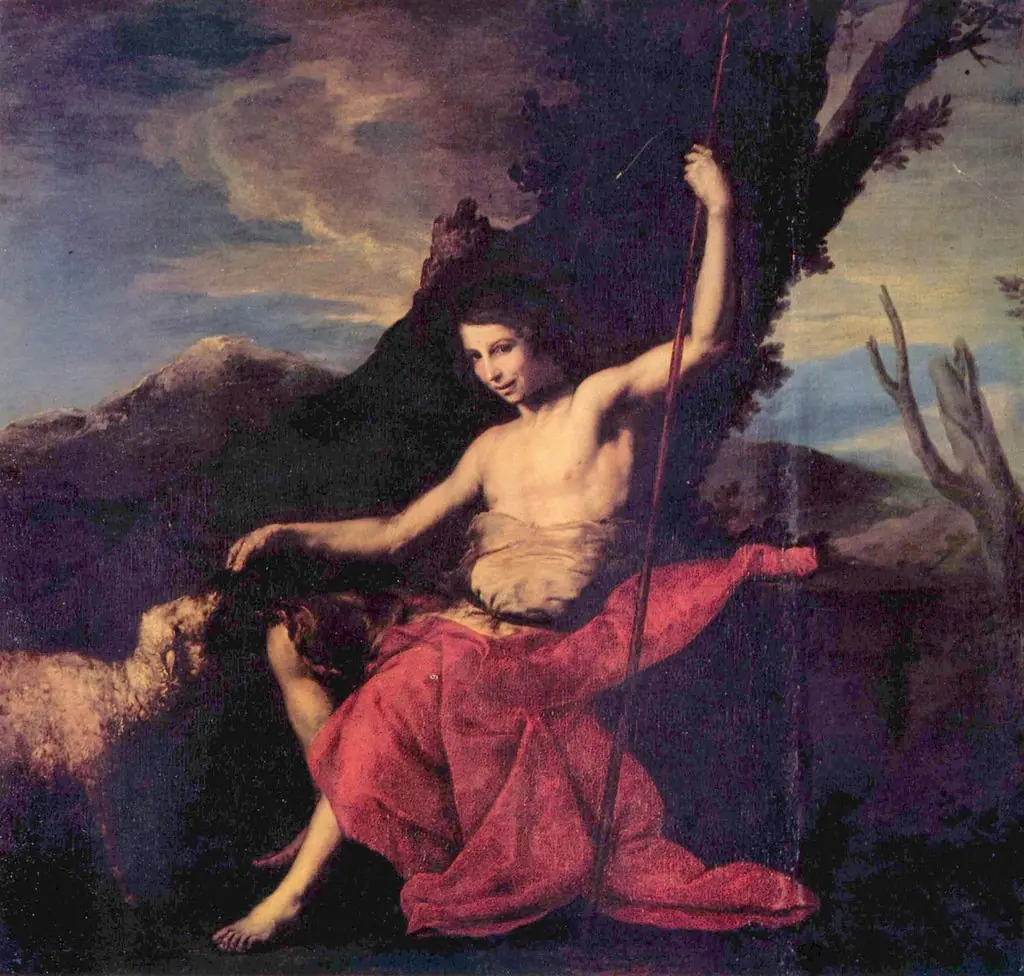
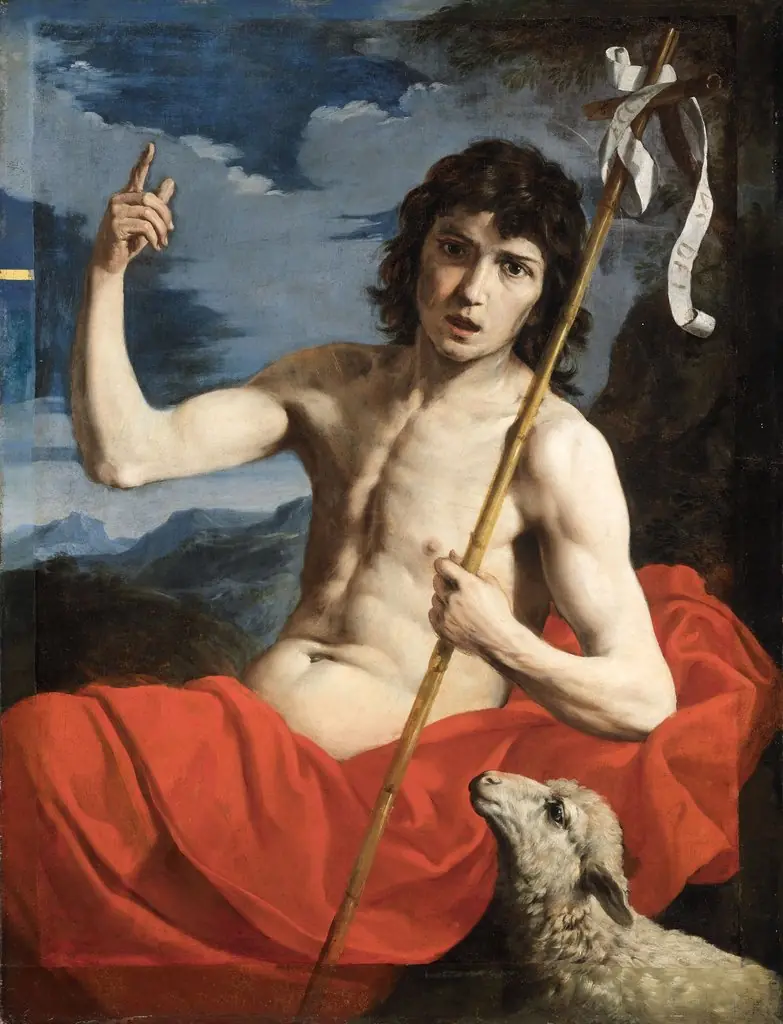
The canvas portrays John the Baptist clothed in a simple red garment, barefoot upon a craggy ground. He holds the edge of his robe with his left hand while his right arm is lifted, clutching a staff that hints at his prophetic role. His gaze and composed demeanor suggest a moment of meditation, reflecting the saint’s ascetic life in the wilderness.
Technique & Style
Mengs employs chiaroscuro to carve the figure from a dark, indeterminate backdrop, allowing light to illuminate the saint’s face and torso. The contrast between the luminous flesh tones and the shadowy terrain creates a sense of depth and spiritual focus. Brushwork is smooth and controlled, characteristic of Mengs’ neoclassical leanings, yet the dramatic lighting retains a Baroque sensibility.
History & Provenance
Completed in the mid‑1770s, the painting entered the Russian imperial collection during the reign of Catherine the Great, eventually becoming part of the State Hermitage Museum’s holdings. Its documented provenance traces a straightforward path from Mengs’ workshop to the Hermitage, where it has remained on public display for over two centuries.
Context
By situating the saint in a barren setting, Mengs aligns the figure’s inner contemplation with the external austerity of the desert.
Created toward the end of Mengs’ career, the work reflects his synthesis of Rococo elegance and emerging neoclassical ideals. The subject—John the Baptist in isolation—was a common motif for artists seeking to explore themes of prophecy, repentance, and the human relationship to the divine. By situating the saint in a barren setting, Mengs aligns the figure’s inner contemplation with the external austerity of the desert.
Artist & collection