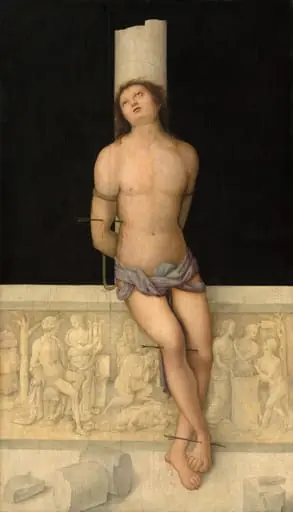
Artwork
St. Sebastian
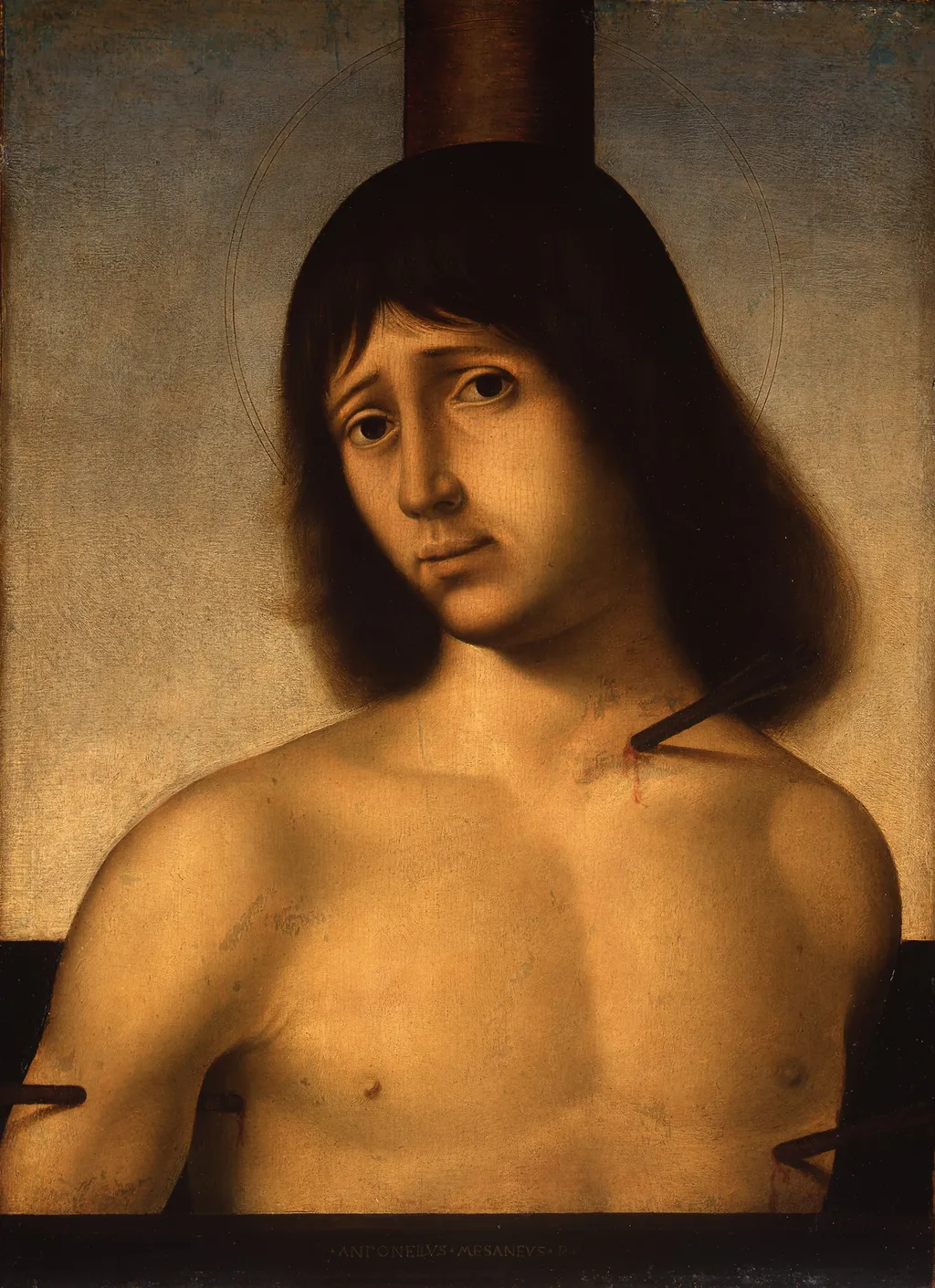
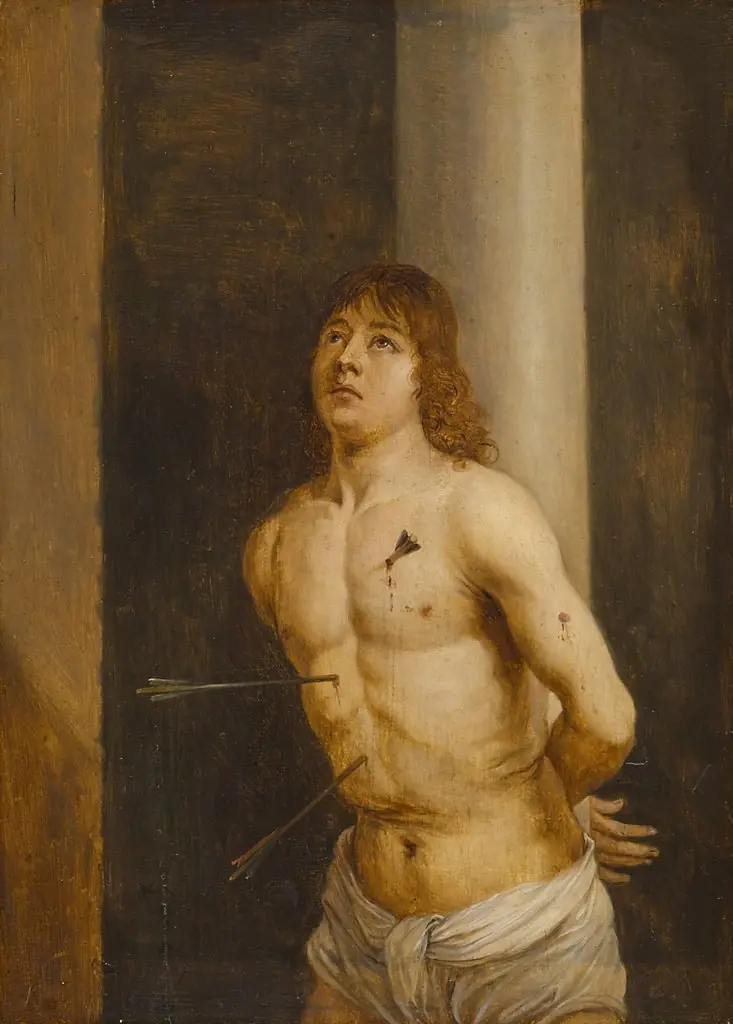
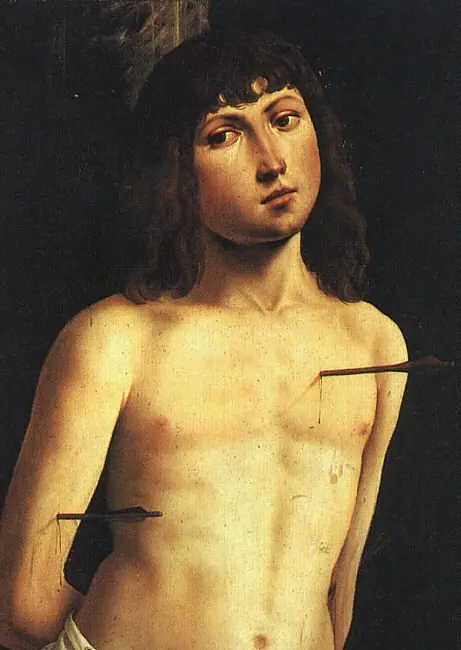
St. Sebastian is a paint painting by the Early Renaissance artist Antonello de Saliba. It dates from 1496 and is held in the collection of the Gemäldegalerie Berlin.
About this work
Overview
Created in 1496 by the Sicilian‑Calabrian painter Antonello de Saliba, this oil work portrays the martyr Saint Sebastian. The composition centers on a youthful, haloed figure, his torso exposed and marked by a few wounds, set against a muted, softly graded background. The painting exemplifies the early Renaissance focus on human anatomy and devotional narrative.
Subject & Meaning
The subject is Saint Sebastian, a Christian martyr traditionally shown tied to a post and pierced by arrows. In this rendition the saint is presented unclothed, his exposed chest and subtle injuries alluding to his suffering and steadfast faith. The halo signals his sanctity, while the restrained setting invites contemplation of his spiritual endurance.
Technique & Style
De Saliba employs chiaroscuro, using strong contrasts between illuminated flesh and deep shadows to model the figure’s volume. The gradual tonal shift in the background creates a sense of depth without distracting detail. The handling of light reflects early Renaissance interests in naturalism and the study of human form, while the overall palette remains subdued.
History & Provenance
The painting entered the collection of the Gemäldegalerie in Berlin, where it remains on display. Its provenance traces back to the artist’s workshop in Sicily, where de Saliba was active during the late 15th century, contributing to the diffusion of Renaissance aesthetics in southern Italy.
Own this work as a print
Artist & collection
Artist
Antonio de Saliba, or Antonello de Saliba or Resaliba, (c.1466-c.1535) was an Italian painter of the Renaissance, mainly active in Sicily and Calabria.