Artwork
Saint Sebastian
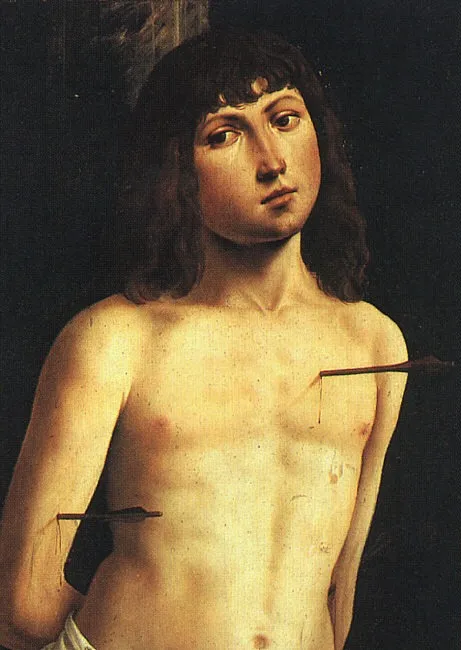
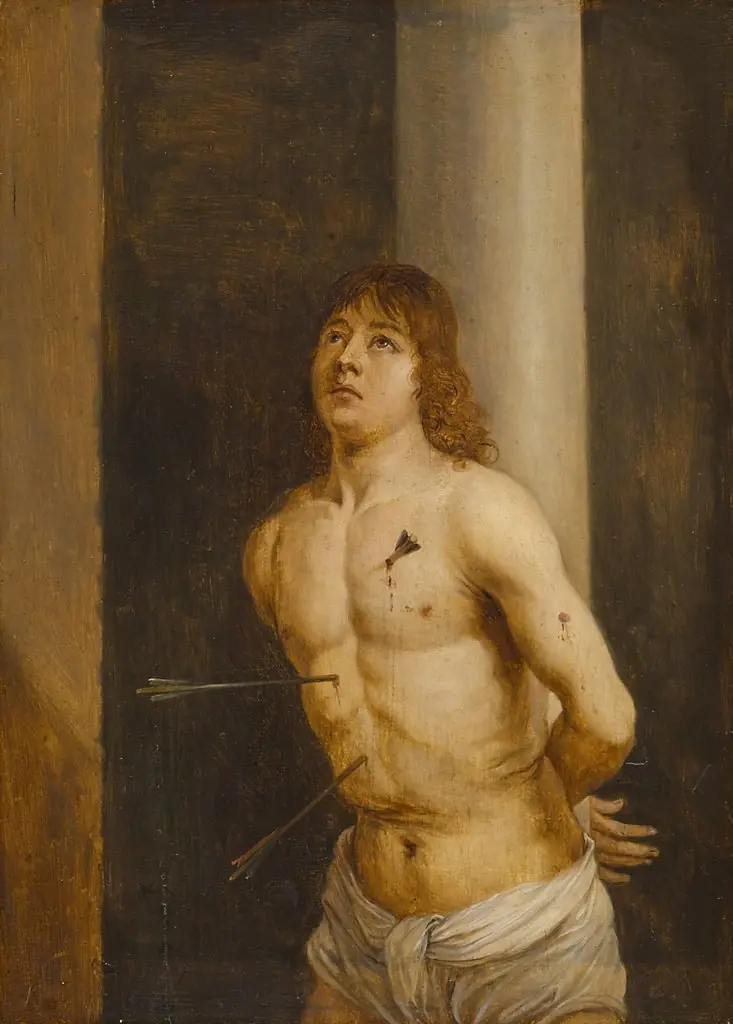
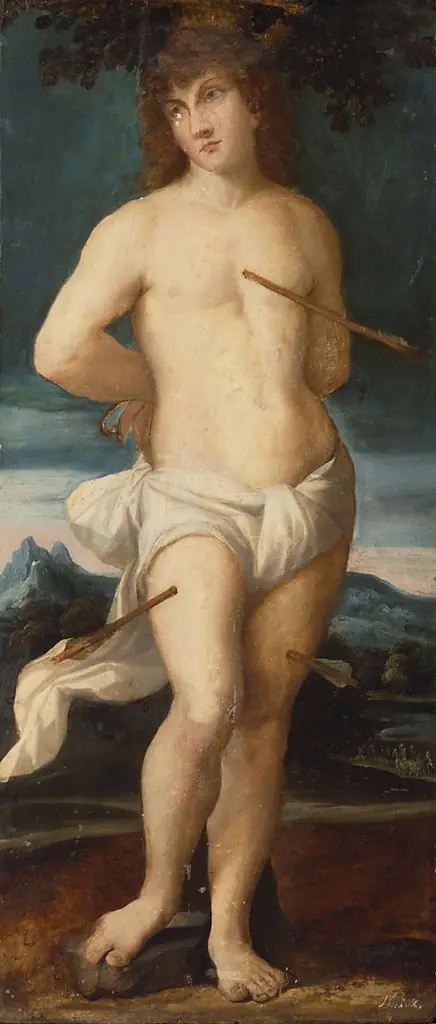
Saint Sebastian is a tempera painting by the Early Renaissance artist Lorenzo Costa. It dates from 1496 and is held in the collection of the Uffizi Gallery.
About this work
Overview
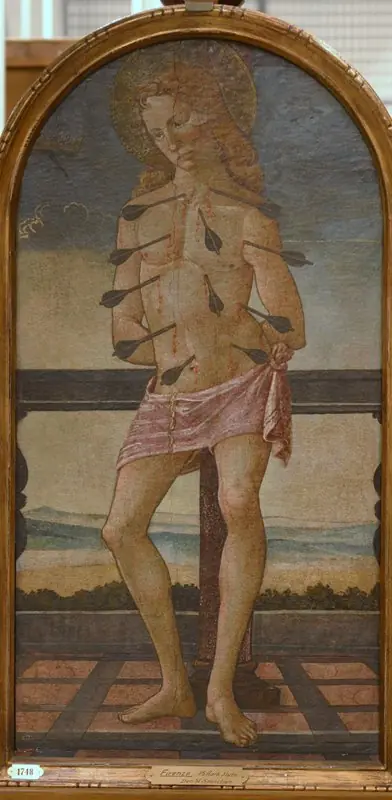
Painted in 1496 by Lorenzo Costa, this tempera-on-panel work portrays Saint Sebastian, a Christian martyr traditionally depicted pierced by arrows.
Painted in 1496 by Lorenzo Costa, this tempera-on-panel work portrays Saint Sebastian, a Christian martyr traditionally depicted pierced by arrows. The painting resides in the Uffizi Gallery in Florence, where it is recognized for its restrained emotional tone and meticulous surface treatment. The medium’s matte finish and fine layering contribute to the figure’s ethereal presence against a muted, shadowed backdrop.
Subject & Meaning
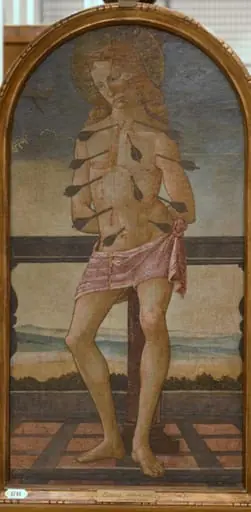
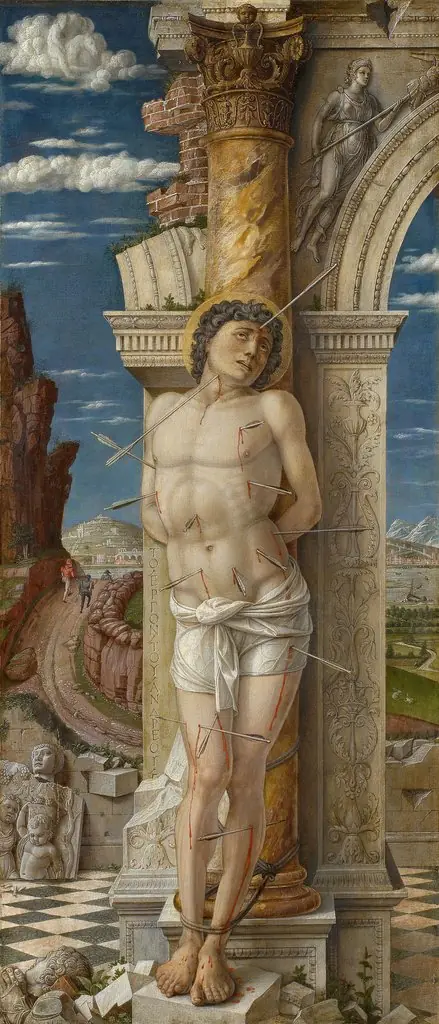
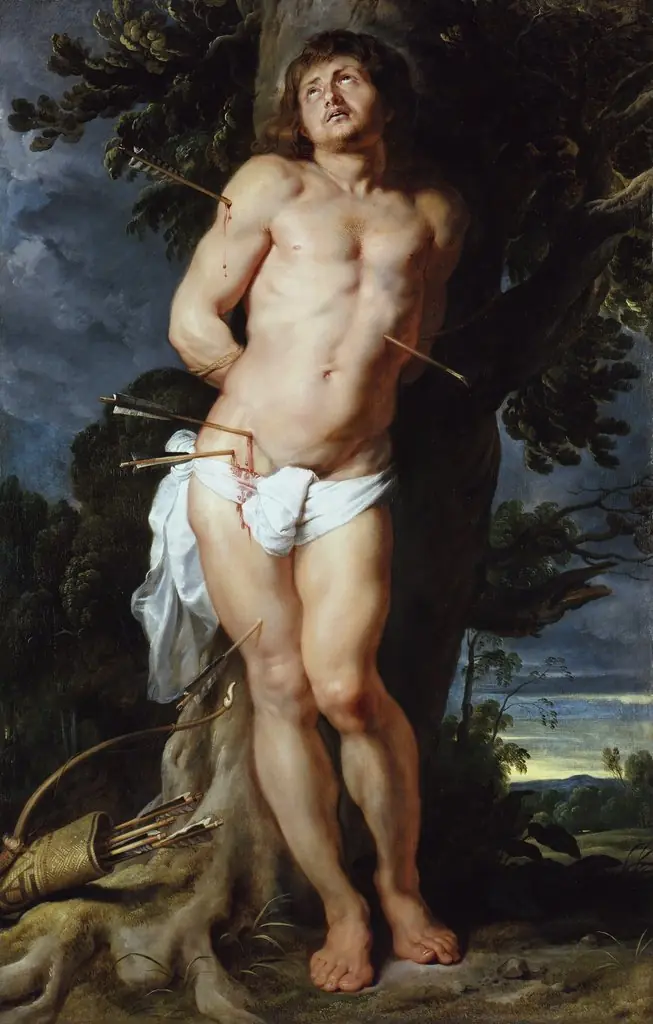
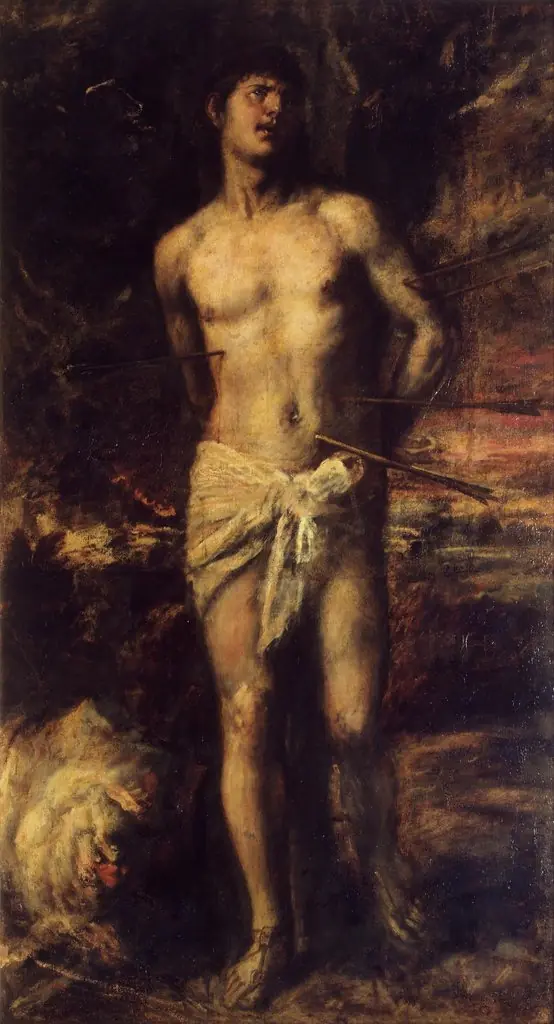
Saint Sebastian, shown nude except for a loincloth, bears multiple arrows embedded in his torso—a reference to his attempted execution under Roman orders. His serene expression and composed posture suggest spiritual resignation rather than suffering. The calmness contrasts with the violence of his wounds, emphasizing inner faith over physical agony, a common theme in late 15th-century devotional imagery.
Technique & Style
Costa employed tempera, a fast-drying medium requiring precise brushwork, to render the saint’s smooth, luminous skin and the subtle gradations of shadow. The background, though dark, holds a faint textural depth, likely achieved through layered glazes. The figure’s lean musculature is defined with delicate contours, avoiding dramatic chiaroscuro in favor of quiet, even lighting that enhances the meditative mood.
History & Provenance
Commissioned during Costa’s early career in Ferrara, the painting entered the Medici collection before being transferred to the Uffizi in the 18th century. Its survival in good condition reflects its continuous institutional care. No early documentation confirms its original placement, but its size and subject suggest it was intended for private devotion rather than public altarpiece use.
Context
Created during the transition from Early to High Renaissance, the painting reflects Ferrara’s artistic environment, where northern European attention to detail merged with Italian idealization. While contemporaries like Mantegna emphasized dramatic tension, Costa’s approach aligns with a more introspective, humanized piety, characteristic of courtly religious art in northern Italy at the close of the 15th century.
Legacy
Though not widely reproduced or celebrated in modern scholarship, the work exemplifies the quiet devotional style favored by minor Renaissance masters. Its preservation in the Uffizi ensures its role as a reference for studying tempera technique and the evolution of saintly portraiture beyond grander, more theatrical treatments of the same subject.
Artist & collection