Artwork
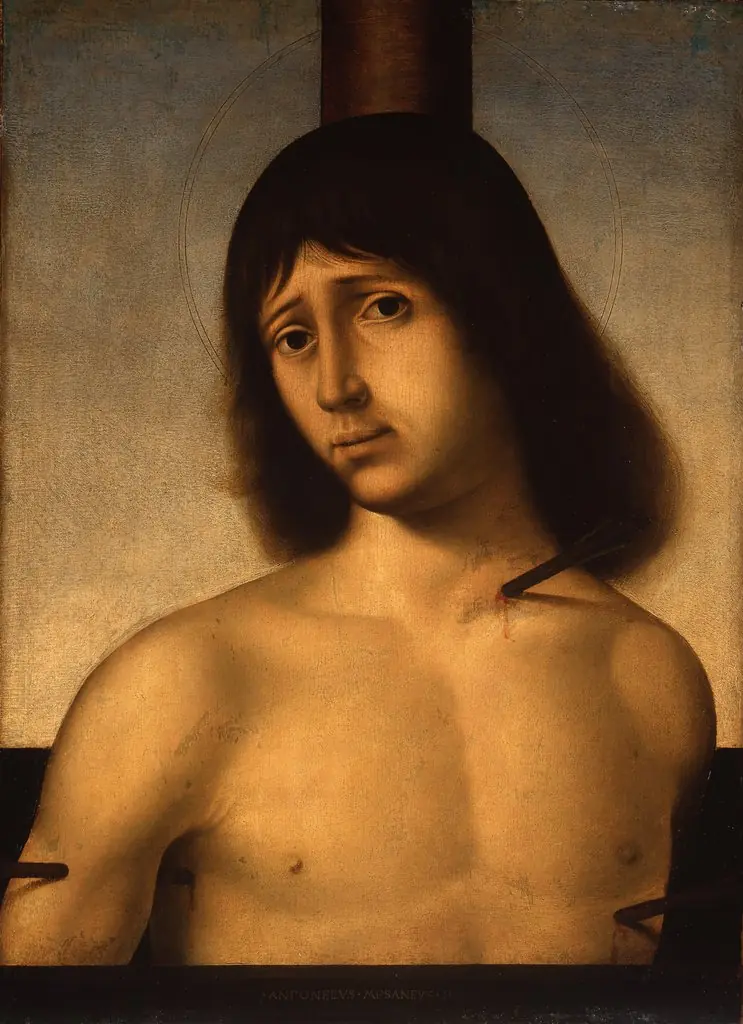
Christ at the Column
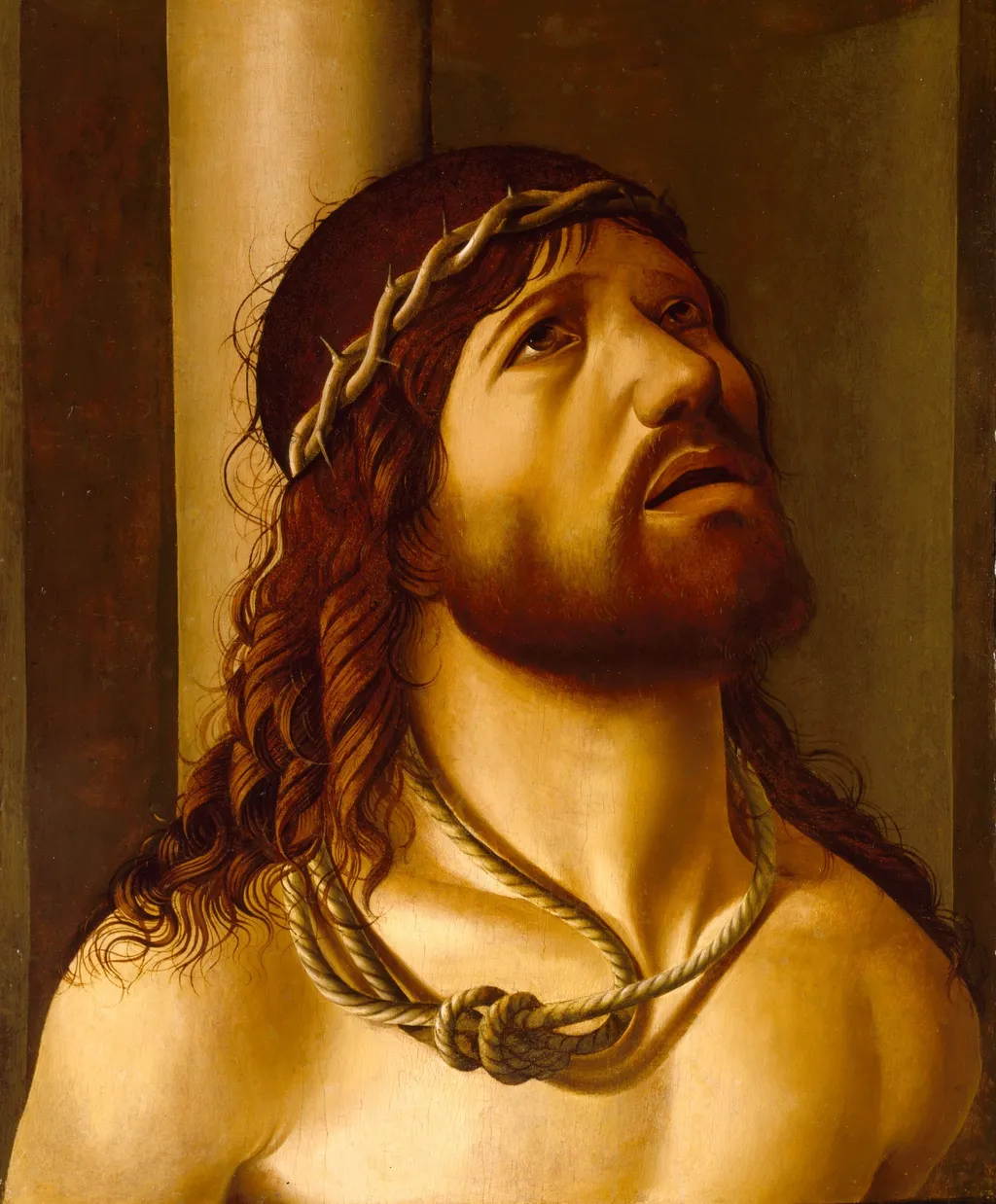
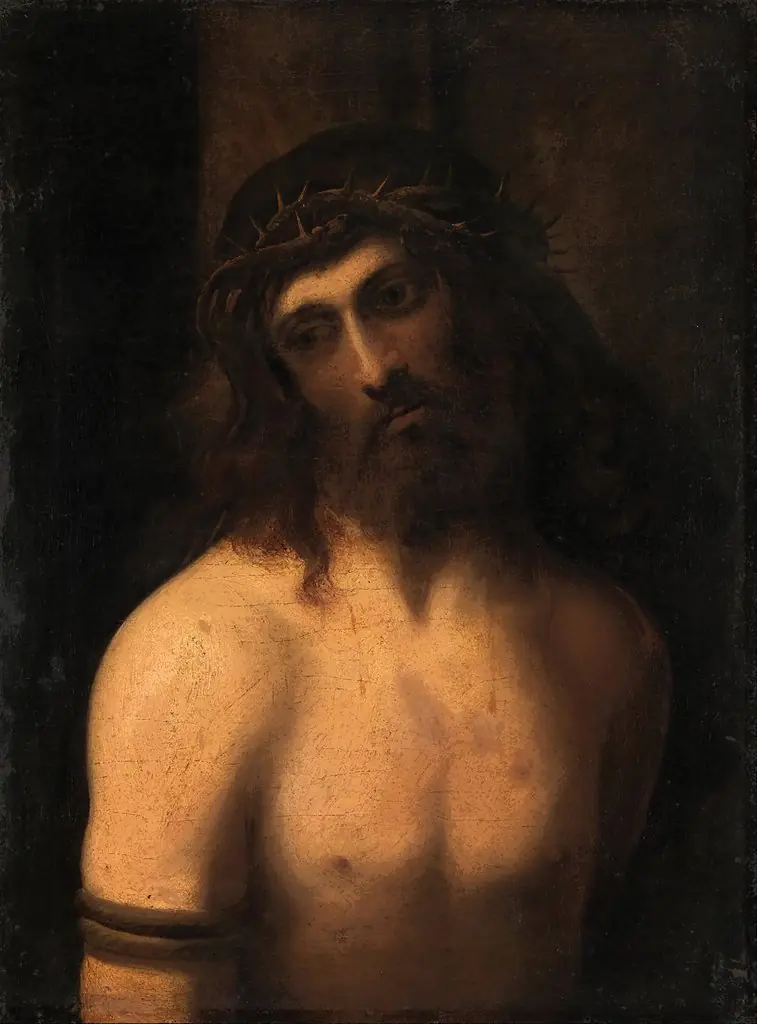
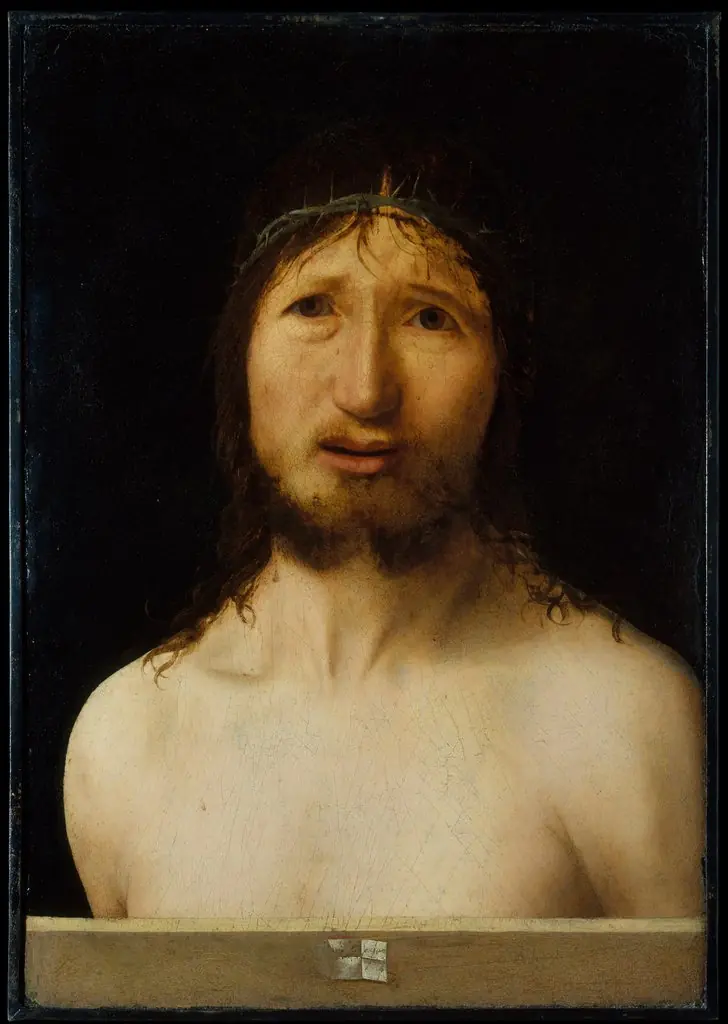
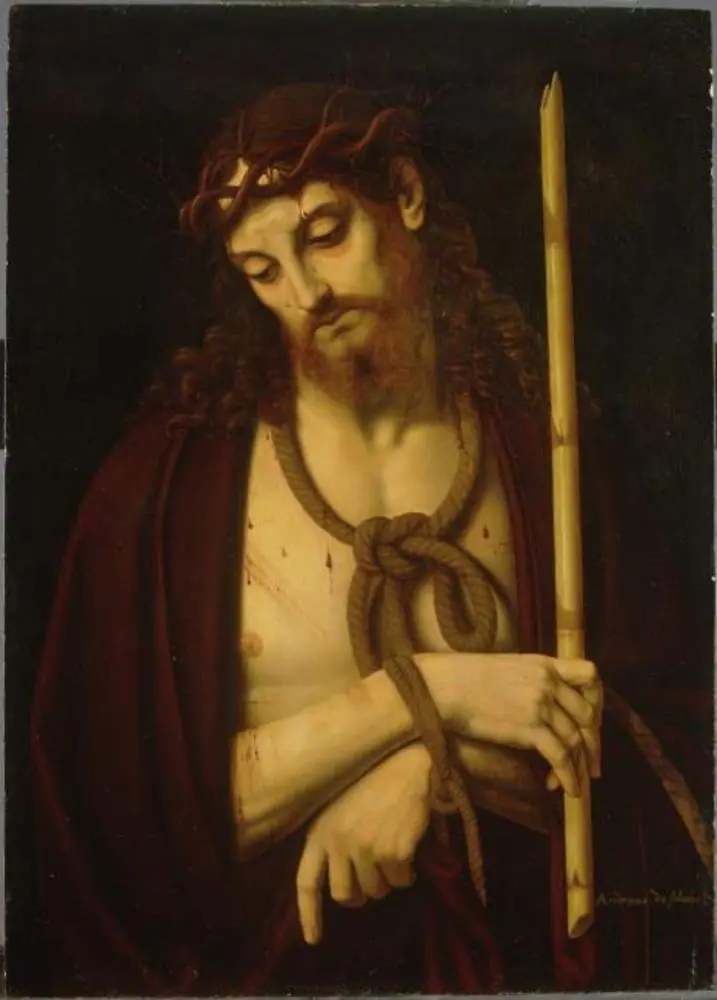
Christ at the Column is an unspecified painting by the Mannerist artist Antonello de Saliba. It dates from 1550 and is held in the collection of the Detroit Institute of Arts.
About this work
Overview
The painting’s small scale and concentrated composition suggest it was intended for private contemplation rather than public display.
Painted around 1550 by Antonello de Saliba, *Christ at the Column* is a devotional work from the Mannerist period, reflecting the religious intensity of mid-16th-century southern Italy. De Saliba, trained in Sicily and possibly influenced by Venetian techniques, focused on intimate, emotionally charged subjects. The painting’s small scale and concentrated composition suggest it was intended for private contemplation rather than public display.
Subject & Meaning
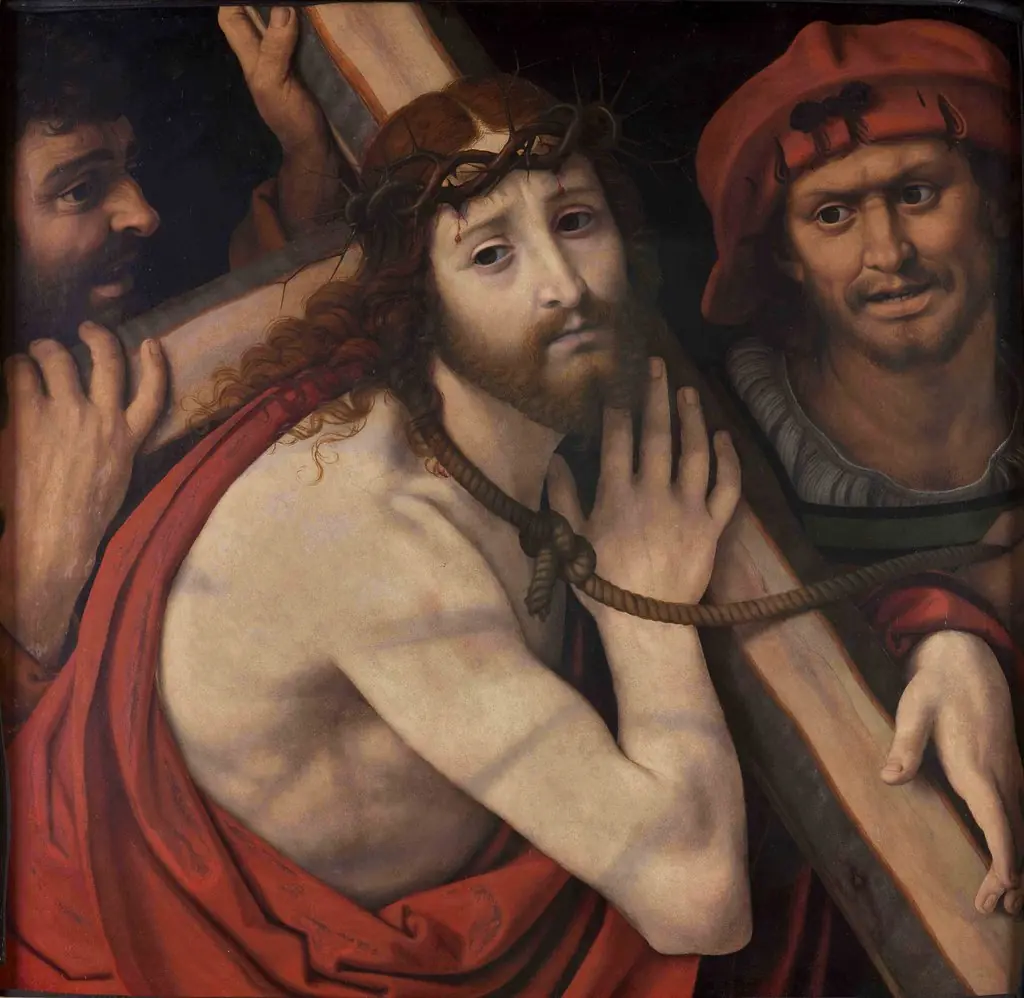
The painting portrays Christ immediately after his scourging, bound to a column, his head bowed in suffering. The crown of thorns, deeply embedded, and his closed eyes convey physical torment and resigned acceptance. This moment, drawn from the Passion narrative, was a common subject in Counter-Reformation art, meant to evoke empathy and spiritual reflection in viewers through the human vulnerability of Christ.
Technique & Style
De Saliba employs chiaroscuro to model Christ’s face with stark contrasts between light and shadow, isolating the figure against a dark, undefined background. The warm illumination highlights the texture of skin, beard, and thorns, enhancing tactile realism. The elongated proportions and subdued palette align with Mannerist tendencies, prioritizing emotional expression over naturalistic harmony, while retaining a quiet dignity in the figure’s stillness.
History & Provenance
Antonello de Saliba, son of a woodcarver and pupil of Jacobello da Messina, worked primarily in Sicily and Calabria, with possible exposure to Venetian painting. *Christ at the Column* entered the Detroit Institute of Arts’ collection in the 20th century, though its earlier ownership remains undocumented. Its survival reflects the persistence of regional devotional art amid broader stylistic shifts in Renaissance Italy.
Context
Created during the height of the Counter-Reformation, the painting responds to the Catholic Church’s emphasis on personal piety and the physical suffering of Christ. Regional workshops in southern Italy, less influenced by Roman or Florentine trends, maintained a focus on emotional immediacy. De Saliba’s work fits within this local tradition, blending northern European attention to detail with Italian devotional intensity.
Legacy
Though not widely known outside southern Italy, de Saliba’s *Christ at the Column* exemplifies the quiet power of provincial Mannerism. Its restrained composition and psychological depth offer insight into how religious imagery functioned in private settings during a time of doctrinal upheaval. The painting endures as a testament to the enduring appeal of Christ’s humanity in early modern devotional practice.
Own this work as a print
Artist & collection
Artist
Antonio de Saliba, or Antonello de Saliba or Resaliba, (c.1466-c.1535) was an Italian painter of the Renaissance, mainly active in Sicily and Calabria.