Artwork
Lamentation of Christ
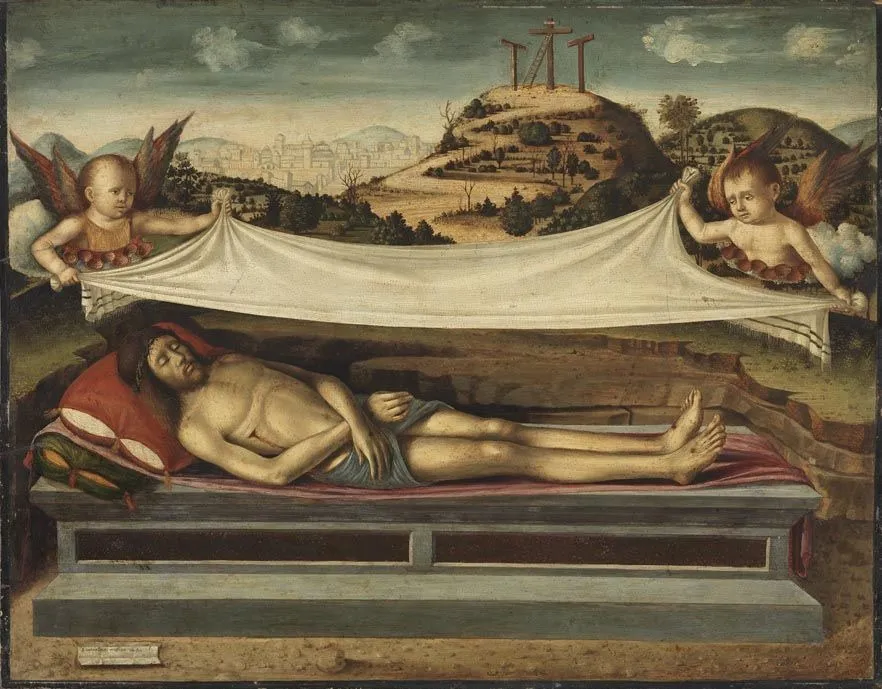
Lamentation of Christ is an unspecified painting by the Early Renaissance artist Antonello de Saliba. It dates from 1500 and is held in the collection of the Bavarian State Painting Collections.
About this work
Overview
Created circa 1500 by the Sicilian painter Antonello de Saliba, the Lamentation of Christ is an early Renaissance panel that presents the dead Christ laid upon a stone tomb. The composition centers on the figure wrapped in a red shroud, surrounded by subtle landscape elements and angelic figures, conveying a mood of restrained solemnity.
Subject & Meaning
The work portrays the traditional biblical moment of Christ’s lamentation after the crucifixion. Two cherubic angels support a white veil above the body, while the distant horizon shows a hill crowned with three crosses and an urban skyline, linking the immediate grief to the broader narrative of the Passion.
Technique & Style
De Saliba employs delicate modeling of flesh and drapery, using soft transitions of light to create a warm, intimate atmosphere. The rendering of the cherubs’ wings and the folds of the cloth demonstrates careful attention to texture, while the muted landscape recedes with atmospheric perspective, typical of early Renaissance spatial treatment.
History & Provenance
Born into a family of artisans—his father a woodcarver and his uncle the renowned Antonello da Messina—de Saliba trained with his cousin Jacobello before a period of activity in Venice. The painting entered the collection of the Alte Pinakothek in Munich, where it remains on public display.
Context
The Lamentation reflects the diffusion of Italian Renaissance ideals into southern Italy, where local workshops blended Venetian coloristic influences with the more restrained Sicilian tradition. De Saliba’s familial connections and his exposure to Venetian art contributed to the synthesis evident in this work.
Artist & collection
Artist
Antonio de Saliba, or Antonello de Saliba or Resaliba, (c.1466-c.1535) was an Italian painter of the Renaissance, mainly active in Sicily and Calabria.

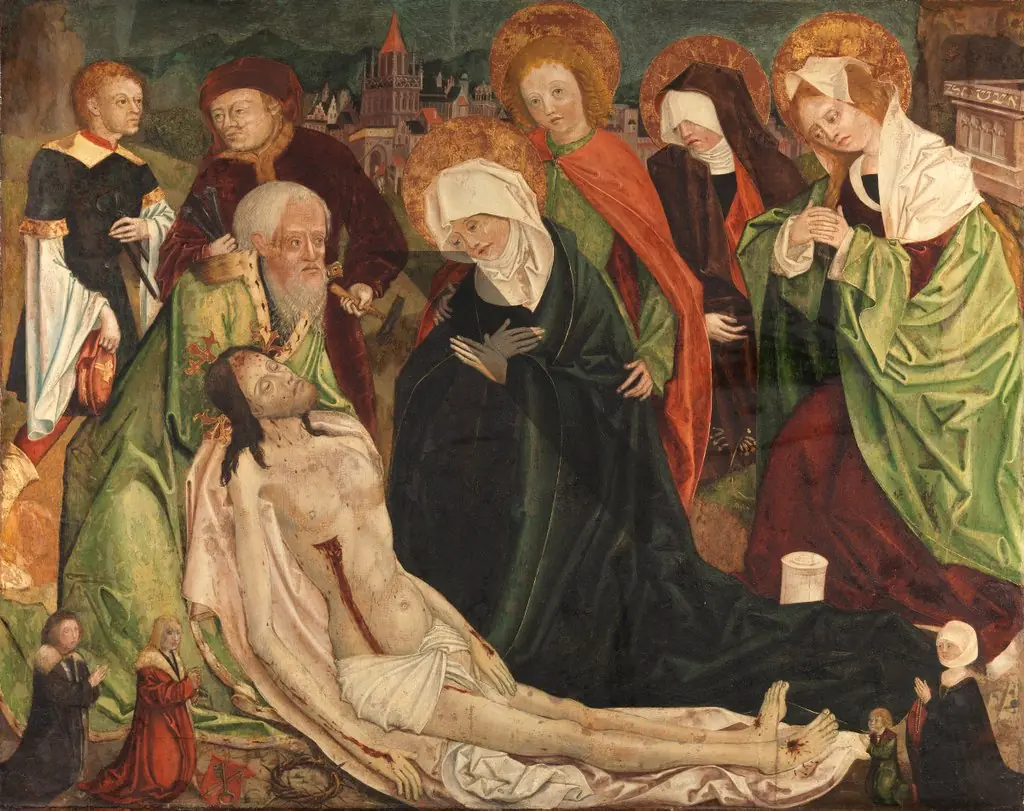 The Lamentation of Christ
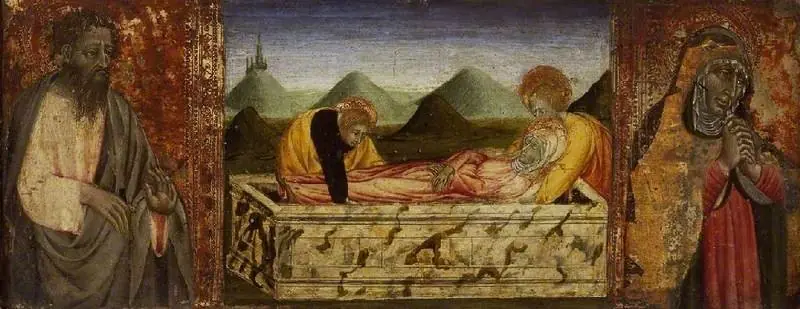 The Entombment of the Virgin with Saint Bartholomew (left) and a Female Saint (right)
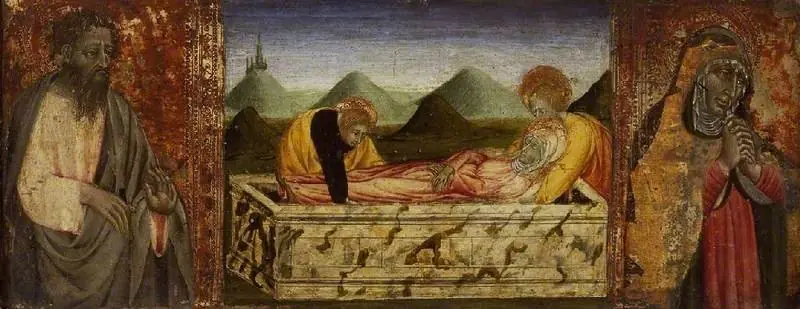 The Entombment of the Virgin; (left) St Bartholomew; (right) A female Saint
 Saint Lawrence, Saint Michael and the Dragon, the Dormitio Virginis and the Martyrdom of Saint Catherine
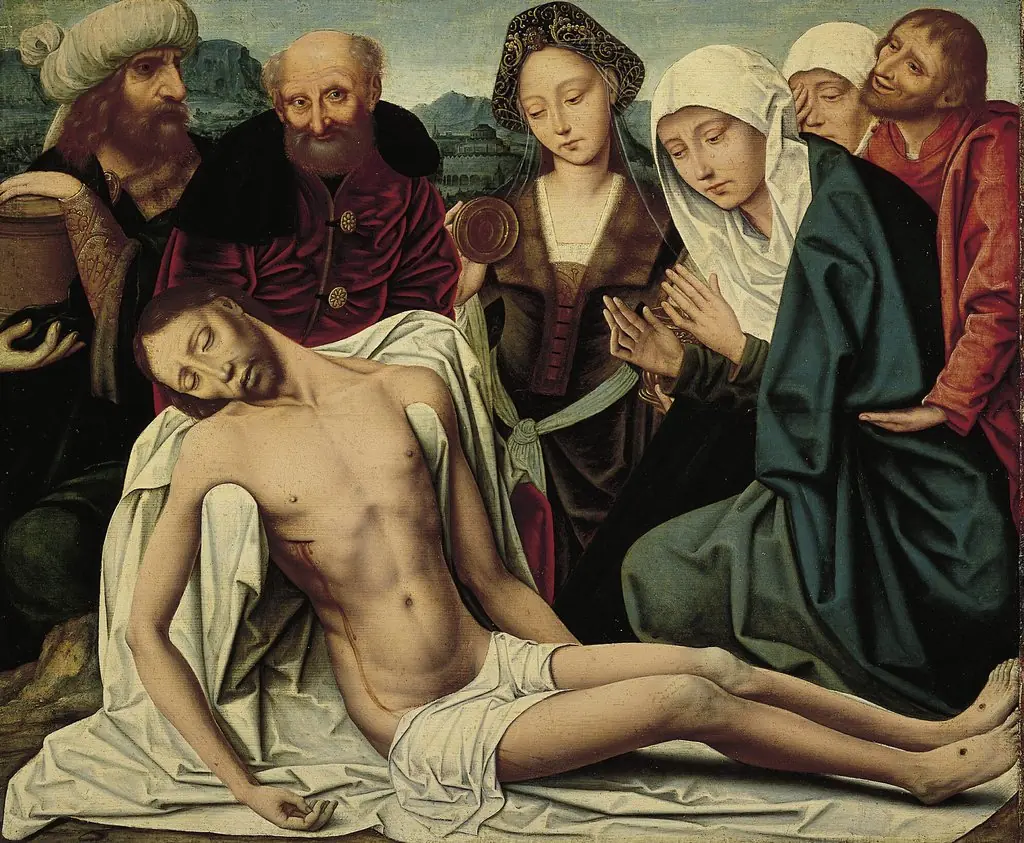 The Lamentation of Christ
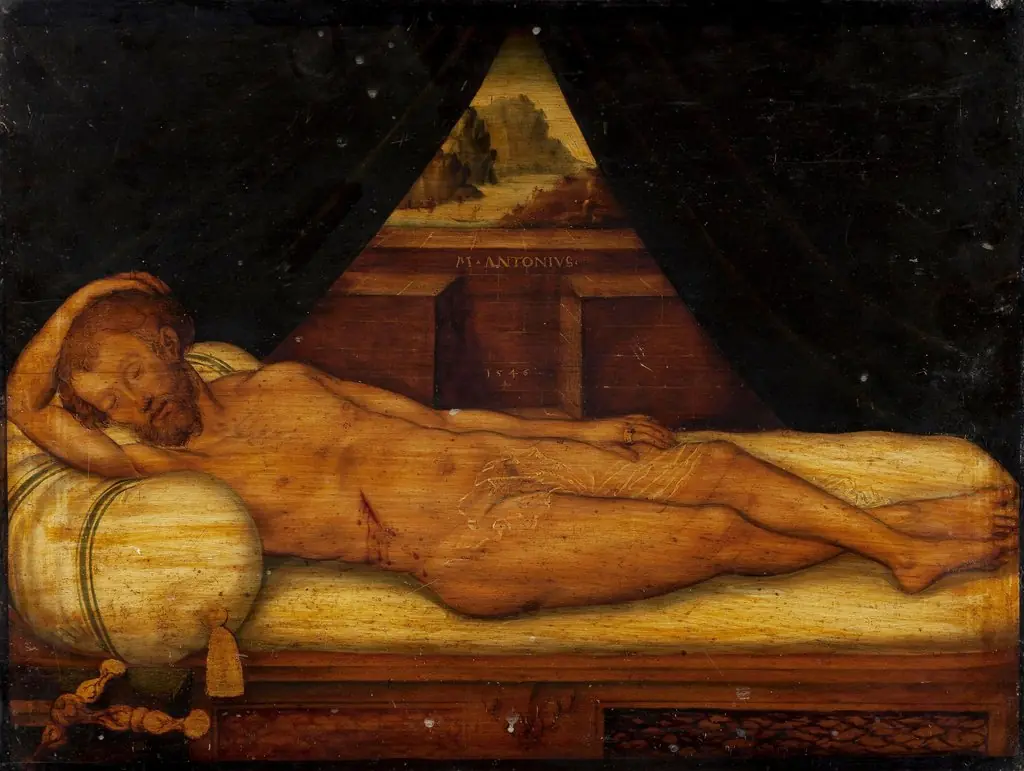 Mark Anthony
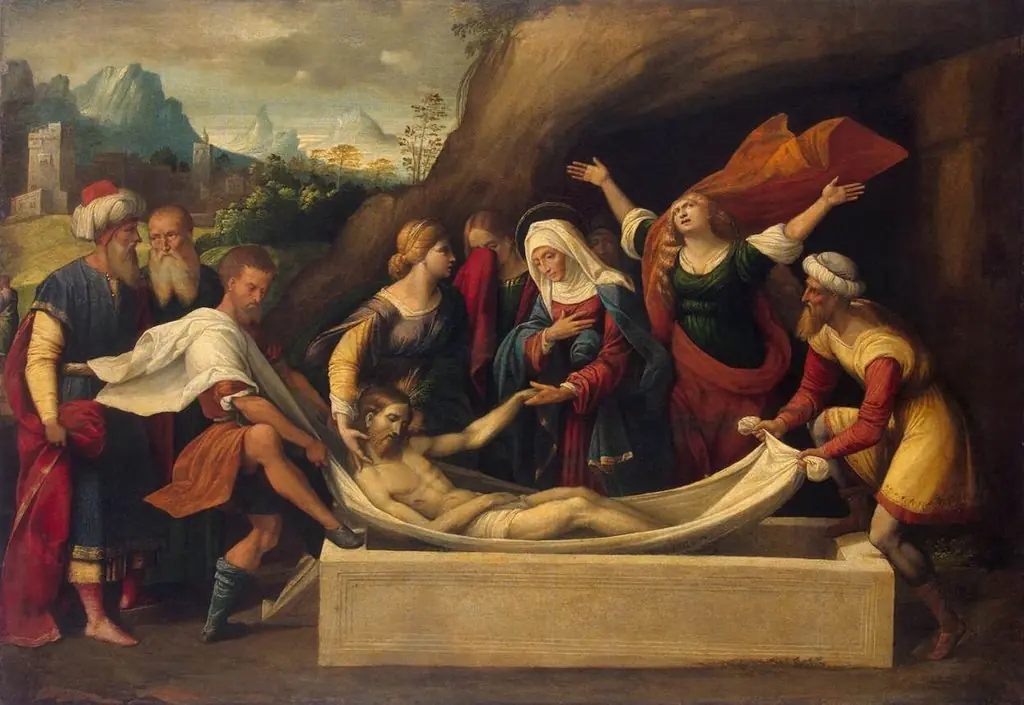 Entombment