Artwork
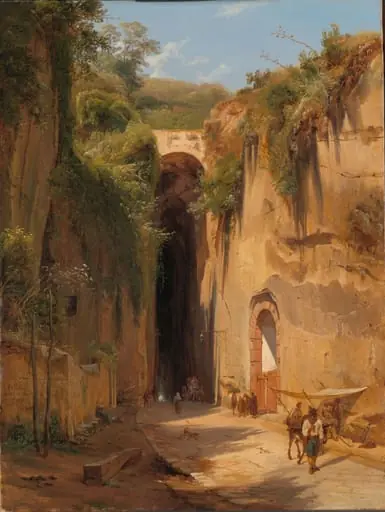
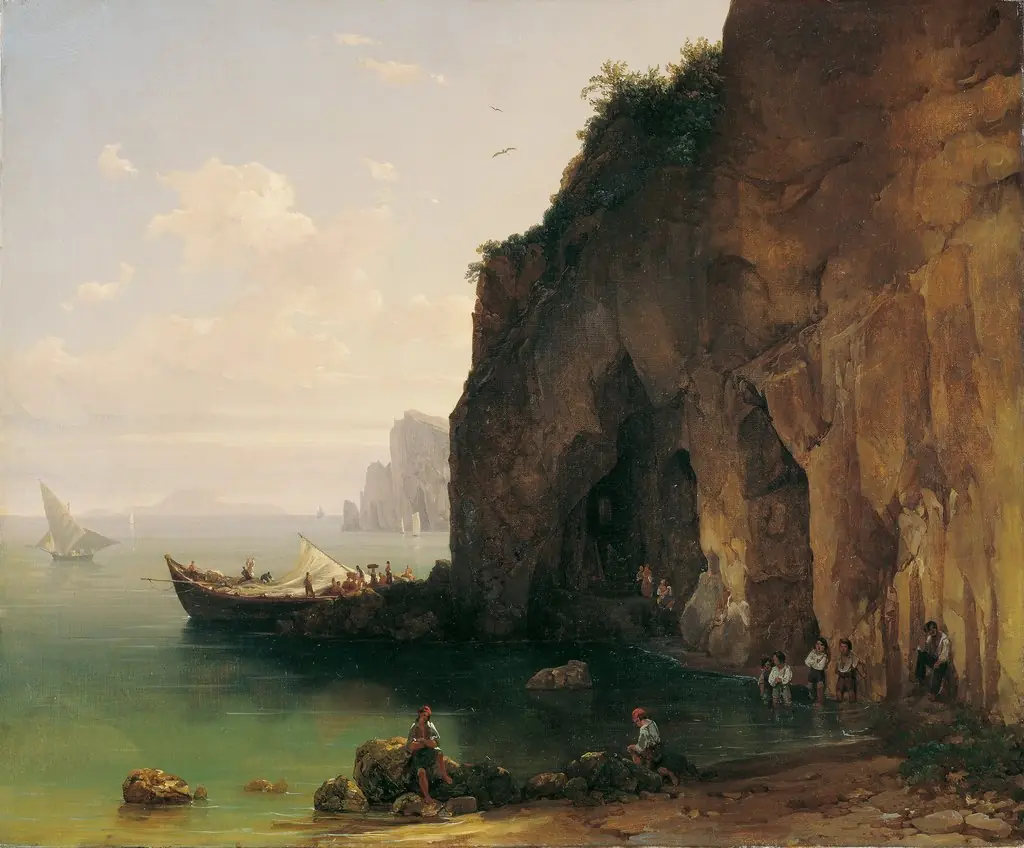
The Grotto of Posillipo at Naples
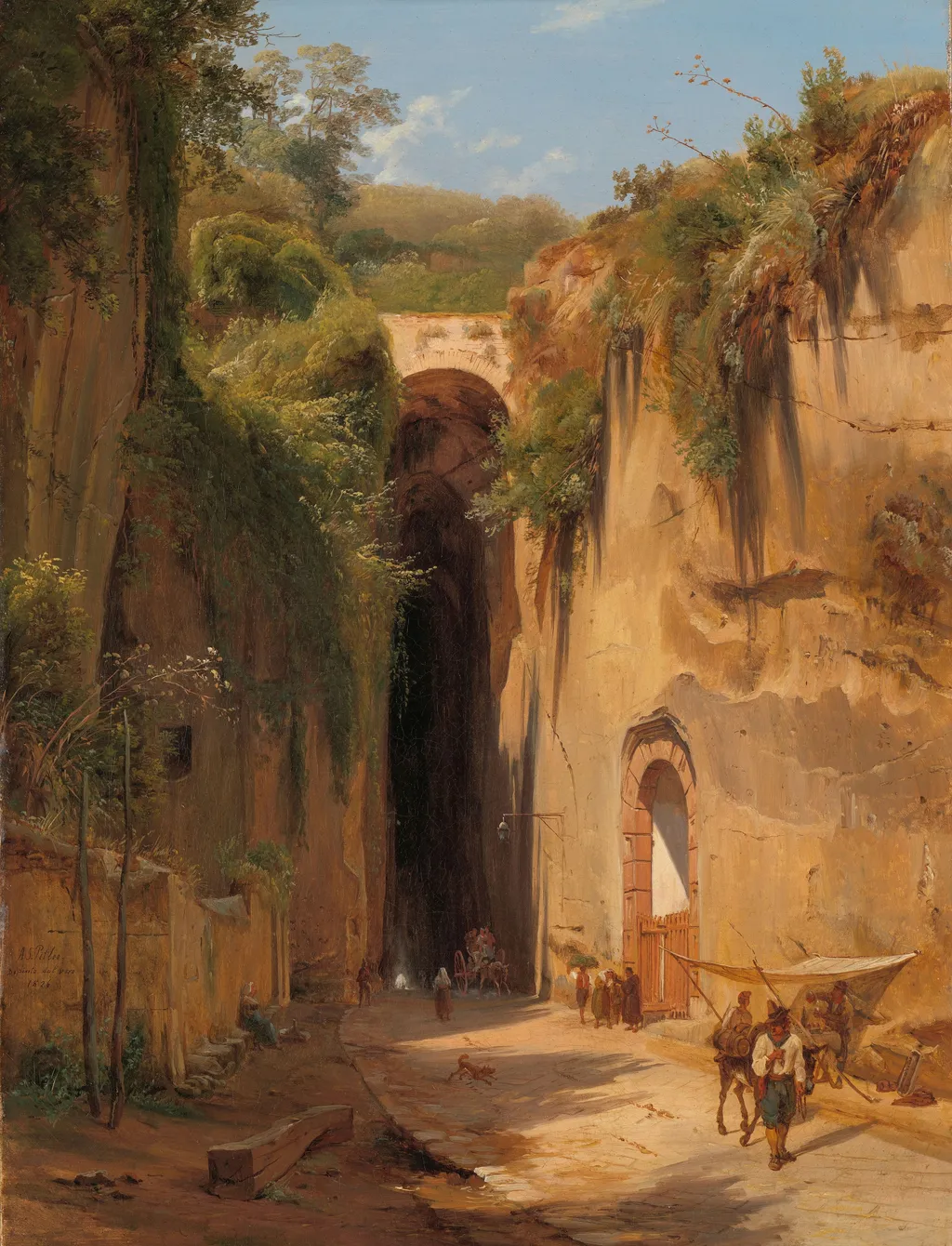
The Grotto of Posillipo at Naples is an oil painting by Antonie Sminck Pitloo. It dates from 1826 and is held in the collection of the Rijksmuseum.
About this work
Overview
The piece resides in the Rijksmuseum’s collection, reflecting Pitloo’s enduring engagement with Italian landscapes after his relocation.
Antonie Sminck Pitloo, a Dutch artist who settled in southern Italy, painted this oil work in 1826, capturing a quiet stretch of the Posillipo coast near Naples. The piece resides in the Rijksmuseum’s collection, reflecting Pitloo’s enduring engagement with Italian landscapes after his relocation. His choice of subject aligns with his broader focus on the natural and architectural rhythms of the region, rendered with close observation and a restrained palette.
Subject & Meaning
The scene depicts a narrow, shaded alley carved into the rocky coastline, where stone buildings with arched openings flank a cobbled path. Figures—some carrying baskets, others pausing in conversation—animate the space without dominating it. The composition suggests daily life unfolding in a secluded corner of the city, emphasizing quiet human presence amid geological form rather than grandeur or narrative drama.
Technique & Style
Pitloo employed visible, deliberate brushwork to convey texture in the stone walls, foliage, and wet cobblestones. The sky, lightly clouded and softly lit, balances the dense shadows of the grotto. Colors remain muted yet precise: ochres, greens, and grays unify the scene, while damp patches on the ground hint at recent rain. The handling avoids theatricality, favoring atmospheric realism over idealized composition.
History & Provenance
Painted during Pitloo’s years in Naples, the work entered the Rijksmuseum’s holdings through documented acquisition, likely following his death in 1837. His reputation as a landscape painter of southern Italy ensured his works were collected by Dutch institutions interested in foreign scenes rendered with local authenticity. The painting’s survival reflects its status as a representative example of 19th-century Dutch-Italian artistic exchange.
Context
In the 1820s, artists from northern Europe increasingly traveled to Italy to study light, topography, and classical ruins. Pitloo, among them, contributed to a growing genre of topographical landscapes that valued observation over imagination. Posillipo, a favored retreat for travelers and painters, offered a blend of rugged nature and vernacular architecture that appealed to those seeking authenticity beyond the Roman ruins.
Legacy
Pitloo’s work influenced later Italian landscape painters who sought to depict everyday environments with quiet precision. While not widely celebrated in his lifetime outside Italy, his paintings remain valuable records of regional life and terrain. The Grotto of Posillipo exemplifies how foreign artists helped document and preserve the visual character of southern Italy during a period of shifting cultural and political landscapes.
Own this work as a print
Artist & collection
Artist
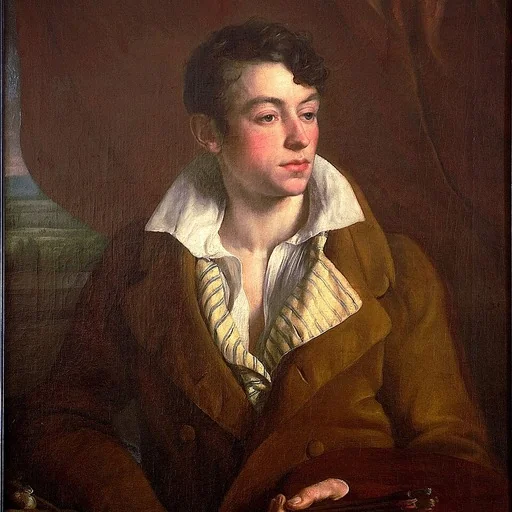
Antonie or Anton Sminck Pitloo (21 April or 8 May 1790 – 22 June 1837) was a Dutch painter.