Artwork
Views: A Woman Drawing Water under an Arch
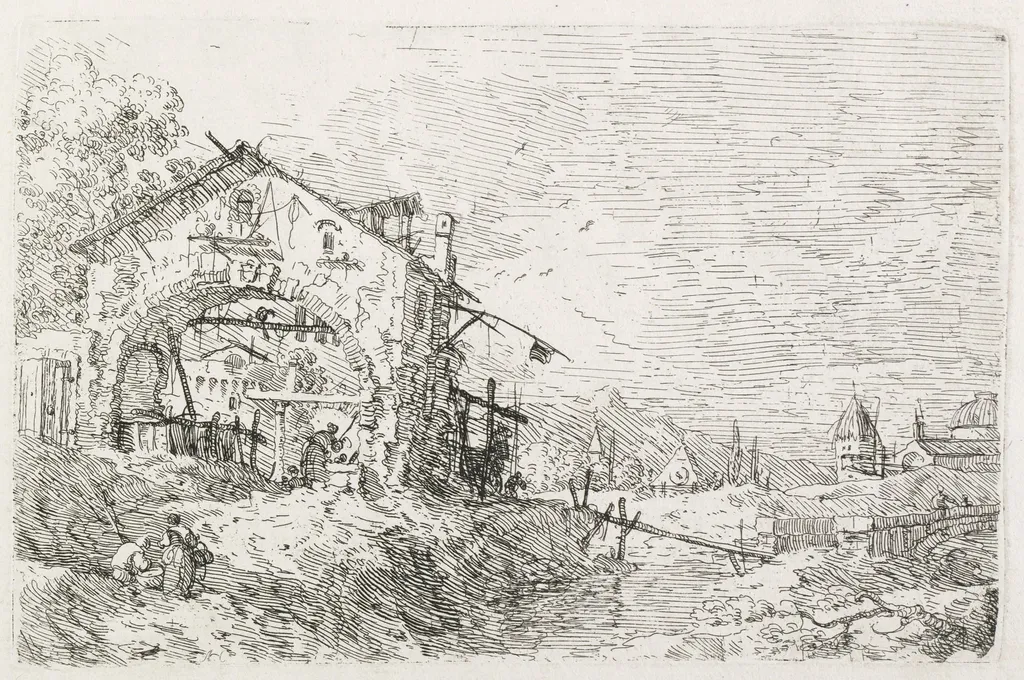
Views: A Woman Drawing Water under an Arch is a print by the Baroque artist Canaletto. It dates from 1740 and is held in the collection of the Cleveland Museum of Art.
About this work
Overview
Though best known for grand cityscapes, Canaletto here focuses on a single figure amid architectural and maritime activity.
Created in 1740, this print by Antonio Canaletto captures a quiet moment within a bustling Venetian harbor. Though best known for grand cityscapes, Canaletto here focuses on a single figure amid architectural and maritime activity. Executed with precision and economy, the work exemplifies his skill in translating urban life into delicate graphic form, blending observation with compositional control.
Subject & Meaning
A woman leans over a stone well, drawing water beneath a stone archway, her motion deliberate and grounded. Around her, the harbor thrums with activity—docked ships, stacked crates, and tangled ropes suggest daily labor. The scene lacks grandeur, instead honoring routine existence. Canaletto elevates the mundane, framing domestic labor as integral to the city’s rhythm, not merely decorative background.
Technique & Style
Rendered in ink or wash, the print uses swift, confident lines to suggest texture and movement. Water is indicated by fluid, undulating strokes; masts and rooftops are sketched with minimal but precise contours. Details like ropes and distant vessels are implied rather than fully rendered, relying on the viewer’s perception. This economy of line reflects Canaletto’s training in theatrical perspective and his ability to convey depth with restraint.
History & Provenance
The work resides in the Cleveland Museum of Art’s collection, acquired as part of a broader grouping of Canaletto’s graphic works. It likely originated as a preparatory study or independent print, possibly made for collectors interested in Venetian life beyond monumental paintings. Its survival reflects 18th-century demand for intimate, detailed views of Venice’s daily scenes.
Context
In mid-18th-century Venice, vedute—detailed urban views—gained popularity among travelers and patrons seeking authentic glimpses of the city. Canaletto’s prints, often made from drawings, served both as souvenirs and artistic records. This piece aligns with a broader trend of documenting everyday life in public spaces, contrasting with the idealized landscapes of earlier Baroque traditions.
Legacy
Though less celebrated than his oil paintings, this print illustrates Canaletto’s enduring influence on topographical drawing. His ability to fuse architectural accuracy with atmospheric suggestion shaped later generations of urban sketchers and printmakers. The work remains a quiet testament to the value of observing ordinary moments within the fabric of a historic city.
Artist & collection
Artist
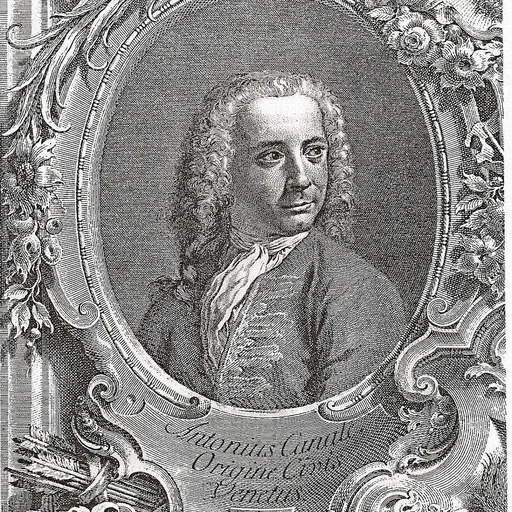
Giovanni Antonio Canal (18 October 1697 – 19 April 1768), commonly known as Canaletto (Italian: ), was an Italian painter from the Republic of Venice, considered an important member of the 18th-century Venetian school.

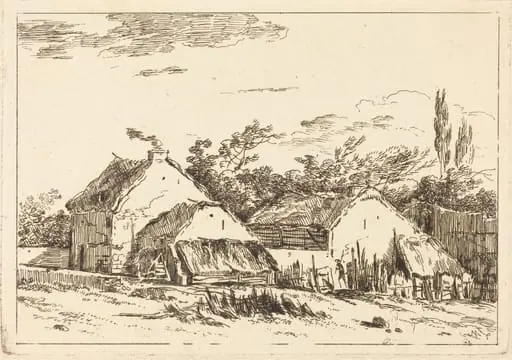 Two Barns
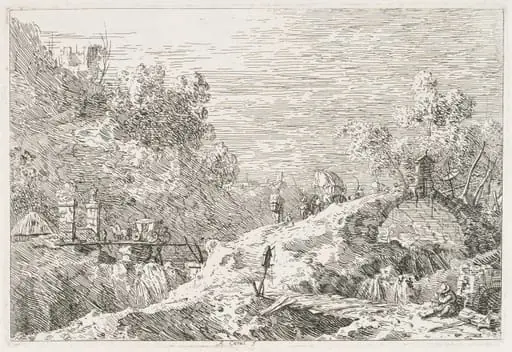 Views: Mountain Landscape with Five Bridges
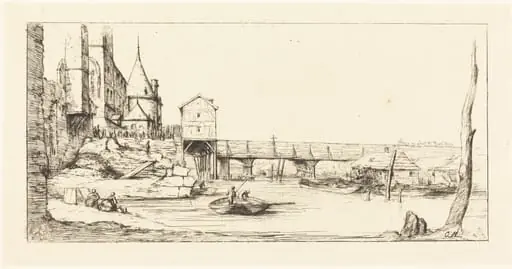 Passerelle du Pont-au-Change, Paris, après l'Incendie de 1621 (Footbridge Temporarily Replacing the Pont-au-Change, Paris, after the Fire of 1621)
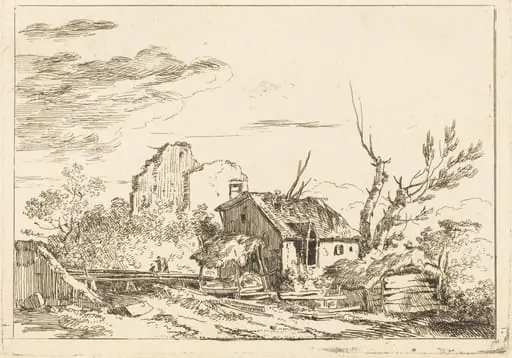 Hovel at the Bridge
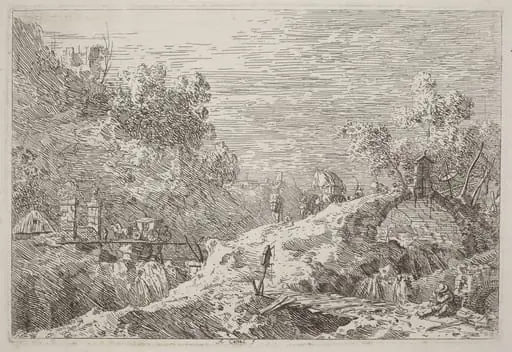 Mountain Landscape with Five Bridges
![Mountain Landscape with Five Bridges [lower right], by Canaletto](https://artifactworldgallery.com/img/canaletto--mountain-landscape-with-five-bridges-lower-right--69277fee18bd5080-w320.webp) Mountain Landscape with Five Bridges [lower right]
Mountain Landscape with Five Bridges [lower right]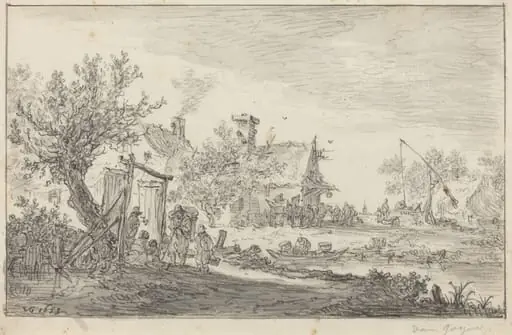 Wayside Inn
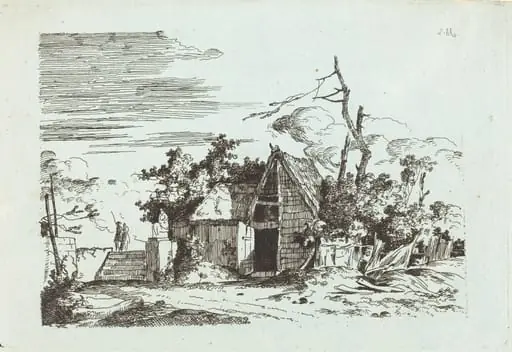 A Rustic Barn
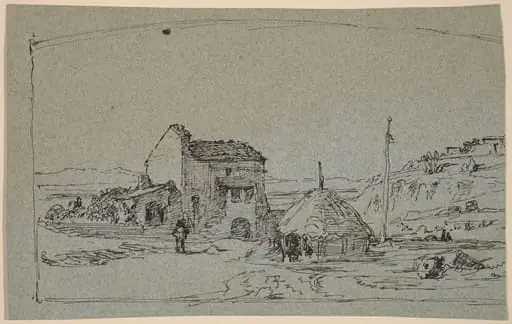 Tuscany