Artwork
Passerelle du Pont-au-Change, Paris, après l'Incendie de 1621 (Footbridge Temporarily Replacing the Pont-au-Change, Paris, after the Fire of 1621)
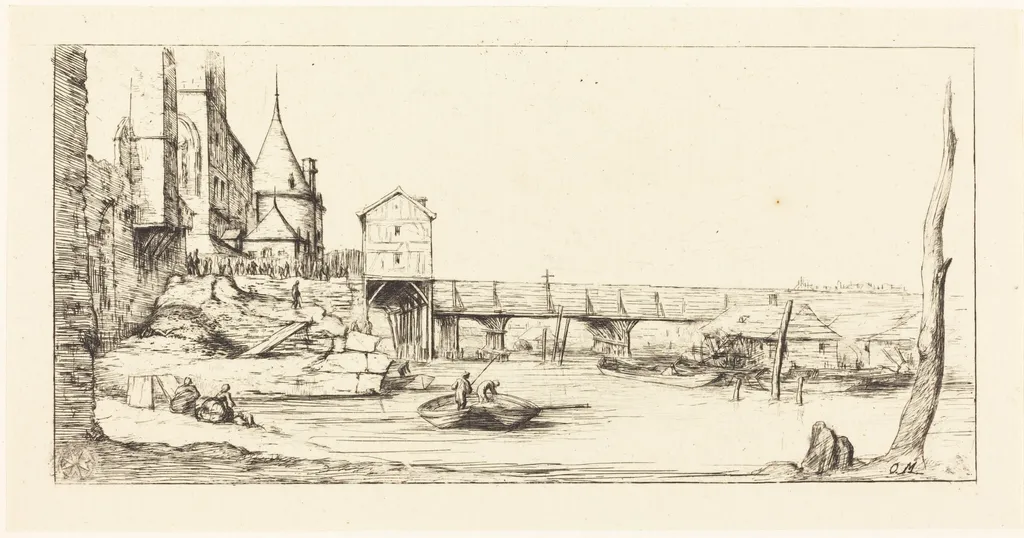
Passerelle du Pont-au-Change, Paris, après l'Incendie de 1621 (Footbridge Temporarily Replacing the Pont-au-Change, Paris, after the Fire of 1621) is an ink print by the Impressionist artist Charles Meryon. It dates from 1860 and is held in the collection of the National Gallery of Art.
About this work
Overview
Though Meryon lived centuries after the event, he reconstructed the scene with historical awareness, focusing on the quiet resilience of urban life.
Created in 1860 by Charles Meryon, this etching on wove paper with chine collé depicts a temporary footbridge erected after the 1621 destruction of the Pont-au-Change in Paris. Though Meryon lived centuries after the event, he reconstructed the scene with historical awareness, focusing on the quiet resilience of urban life. His choice of medium reflects his technical mastery and sensitivity to tone, shaped in part by his color blindness, which led him to concentrate on line and texture.
Subject & Meaning
The scene captures a modest riverside moment in post-fire Paris: a wooden footbridge spans the Seine, flanked by weathered buildings and a distant church tower. Figures move along the shore, row boats, or sit quietly by the water, suggesting daily routines resumed after disaster. Meryon avoids dramatic spectacle, instead emphasizing endurance and the unremarkable rhythm of recovery — a meditation on impermanence and adaptation in the city’s fabric.
Technique & Style
Meryon employed fine, precise etching lines to render architectural details and subtle atmospheric effects. The use of chine collé added delicate tonal variations to the paper, enhancing the softness of shadows and textures. His composition is tightly controlled, with a muted palette achieved through ink density rather than color. The result is a quiet, almost meditative realism — sharp in detail yet emotionally restrained, characteristic of his urban landscapes.
History & Provenance
Meryon produced this print during a period of intense focus on Parisian topography, drawing from historical records and his own observations. Though the fire of 1621 occurred long before his lifetime, he referenced archival sources to reconstruct the temporary infrastructure that followed. The work was likely part of a broader series documenting the city’s evolving infrastructure, reflecting his lifelong interest in how architecture bears the imprint of time and trauma.
Context
In mid-19th century Paris, rapid modernization and urban renewal were reshaping the city’s medieval core. Meryon’s prints, including this one, offered a counterpoint — a contemplative look at older, often overlooked structures and moments of repair. His focus on post-disaster reconstruction resonated with contemporary debates about preservation versus progress, positioning his work as both historical record and quiet critique of erasure.
Legacy
Meryon’s etchings, including this piece, established him as a defining voice in 19th-century French printmaking. His ability to infuse mundane urban scenes with psychological depth influenced later generations of artists and urban documentarians. Though his personal struggles are often noted, his legacy endures in the precision and emotional restraint of his depictions — quiet testaments to the resilience of place.
Artist & collection
Artist
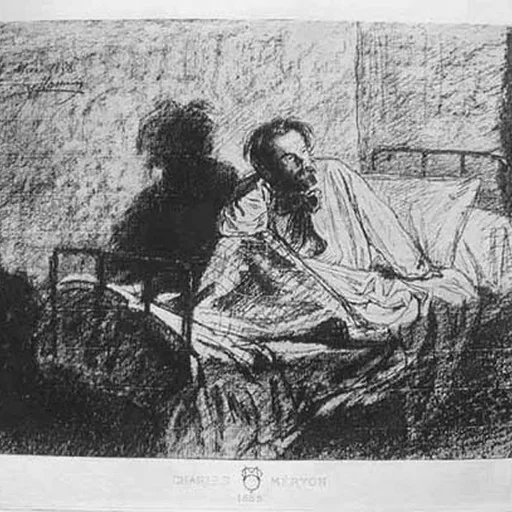
Charles Meryon (sometimes Méryon, 23 November 1821 – 14 February 1868) was a French artist who worked almost entirely in etching, as he had colour blindness.

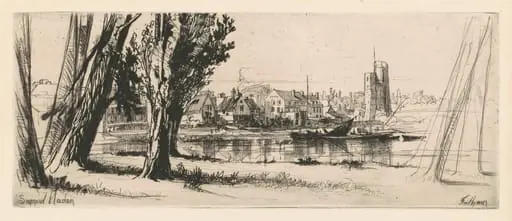 Fulham
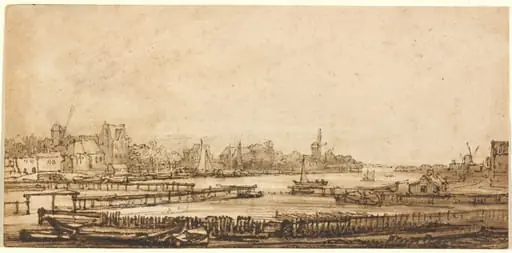 View over the Amstel from the Rampart
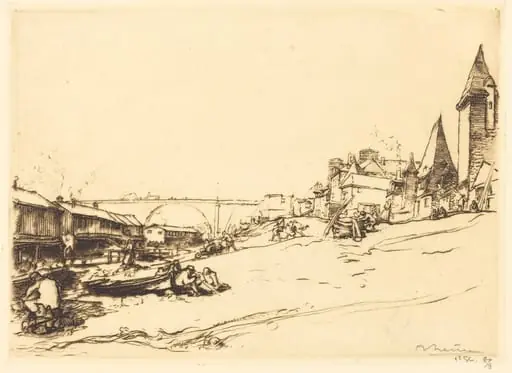 Angers - The House of the King of Poland (Angers - La maison du roi de Pologne)
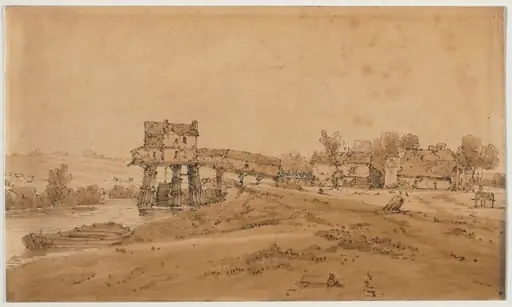 A Selection of Twenty of the Most Picturesque Views in Paris: The Watermill above the Bridge at Charenton
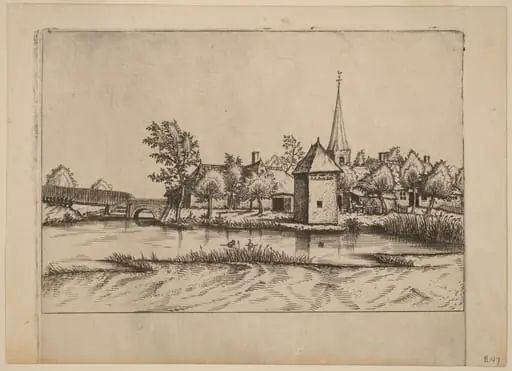 Country Village with Church and Bridge
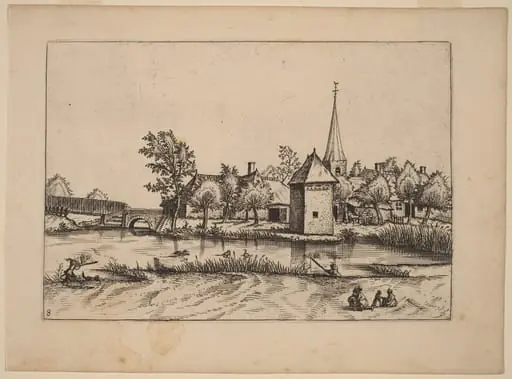 Country Village with Church and Bridge
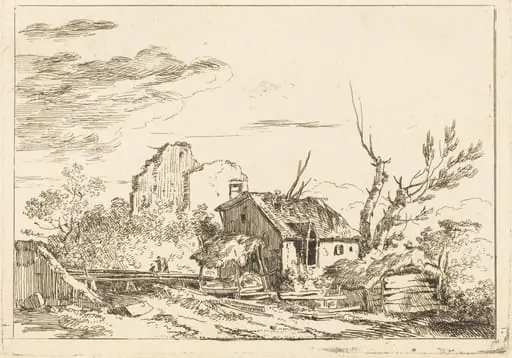 Hovel at the Bridge
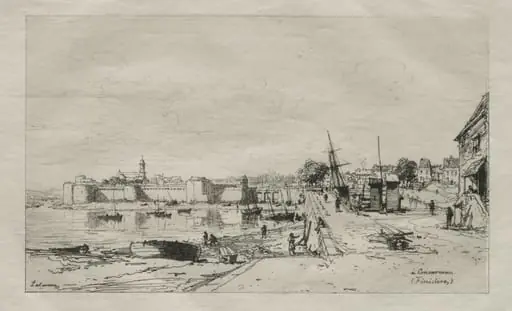 À Concarneau (Finistère)
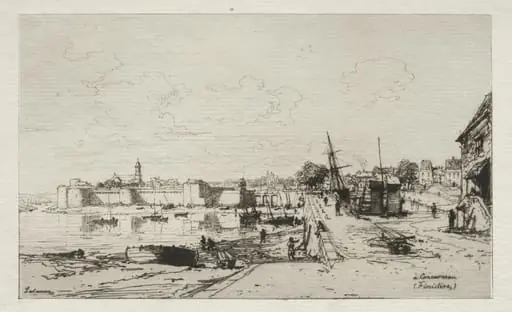 A Concarneau (Finistère)
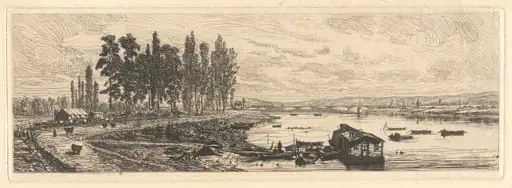 The Banks of the Seine at Bezons