Artwork
Holy Family with Saint Elizabeth
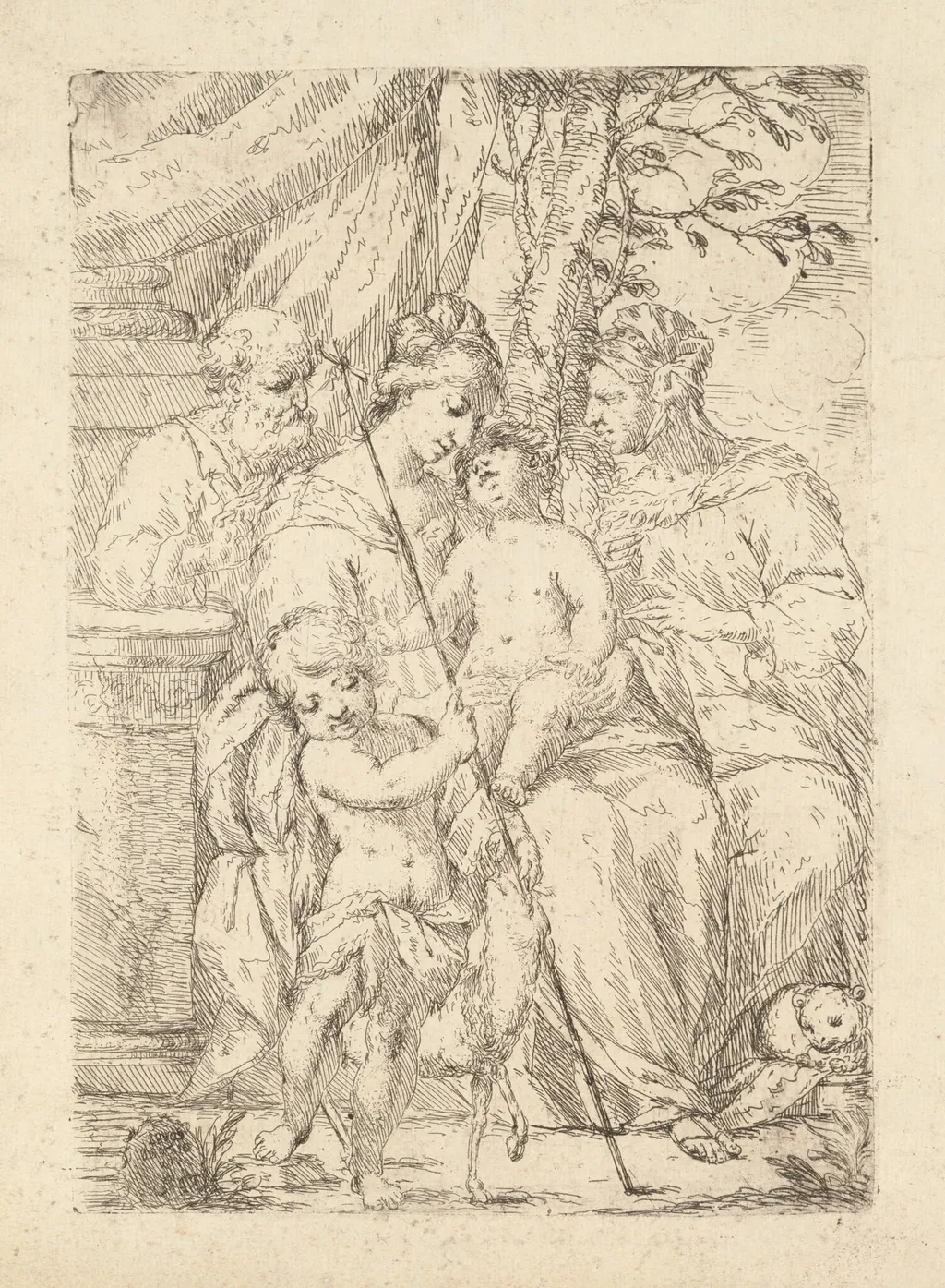
Holy Family with Saint Elizabeth is an ink print by the Baroque artist Giuseppe Diamantini. It dates from 1663 and is held in the collection of the National Gallery of Art.
About this work
Overview
Rendered on laid paper and later mounted onto a support, the work is part of the National Gallery of Art’s collection in Washington, D.
Giuseppe Diamantini created this etching in 1663, depicting a quiet domestic moment within a sacred narrative. Rendered on laid paper and later mounted onto a support, the work is part of the National Gallery of Art’s collection in Washington, D.C. Its intimate scale and delicate line work reflect the artist’s engagement with printmaking as a medium for devotional imagery, distinct from larger painted altarpieces of the period.
Subject & Meaning
The scene portrays the Holy Family—Mary with the infant Jesus—alongside Saint Elizabeth, who is often associated with the visitation narrative. A young child, likely John the Baptist, reaches toward the baby, suggesting a moment of recognition and kinship. The inclusion of a dog in the lower right corner introduces a subtle note of domesticity, grounding the sacred in everyday life without altering its spiritual resonance.
Technique & Style
Diamantini employed etching to incise fluid, irregular lines into a metal plate, allowing for a spontaneous, sketch-like quality. The resulting print retains the softness of drawn marks, with uneven textures and varying line weights that suggest movement and depth. The laid paper’s fibrous surface enhances the tactile, hand-made character of the image, reinforcing its intimate, almost private atmosphere.
History & Provenance
The print entered the National Gallery of Art’s collection through established acquisition channels, though its earlier ownership history remains undocumented. Its preservation on laid paper, with later mounting, indicates careful handling over centuries. As a relatively modest print, it likely circulated among collectors or religious households rather than public institutions during the 17th and 18th centuries.
Context
In mid-17th century Italy, etching was increasingly used for religious subjects beyond large-scale commissions. Diamantini, active in Venice and Rome, worked within a tradition that valued personal devotion and accessible imagery. This print reflects a trend toward smaller, intimate religious scenes suited for private contemplation, contrasting with the grandeur of Baroque altarpieces.
Legacy
Though not widely reproduced or studied, Diamantini’s etching exemplifies the quiet power of printmaking in conveying sacred narratives through understated means. Its survival and preservation highlight the role of prints in disseminating religious imagery beyond elite patronage, offering a glimpse into how faith was experienced in domestic settings during the Baroque era.
Artist & collection


 The Mystic Marriage of Saint Catherine
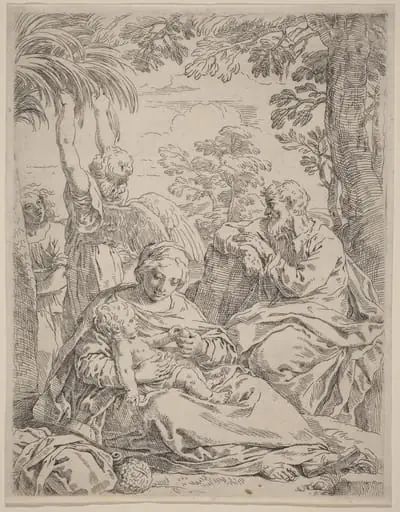 The Rest on the Flight into Egypt
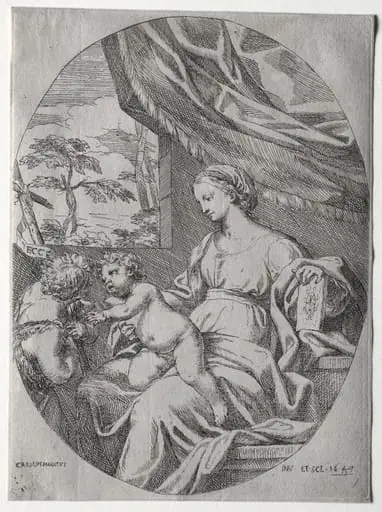 Virgin and Child with the Infant St. John
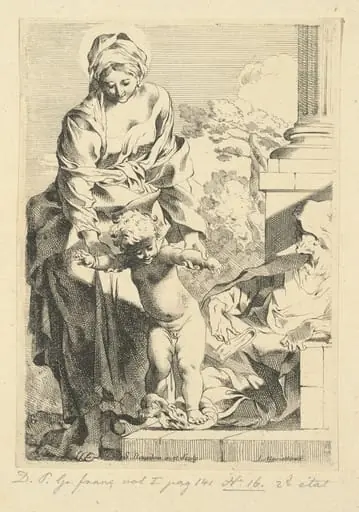 Virgin and Child Trampling Sin
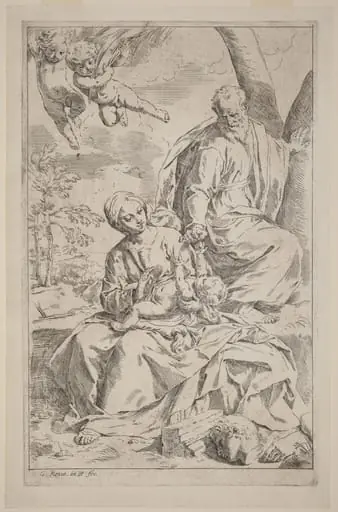 The Rest on the Flight into Egypt
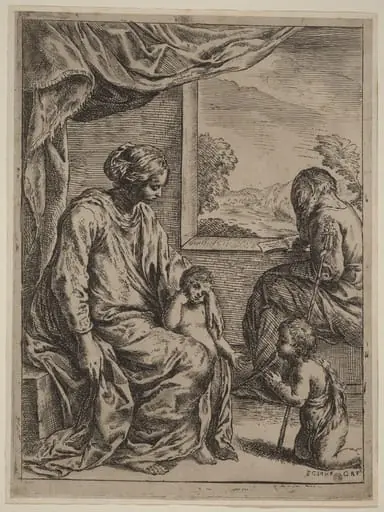 The Holy Family with Saint John the Baptist
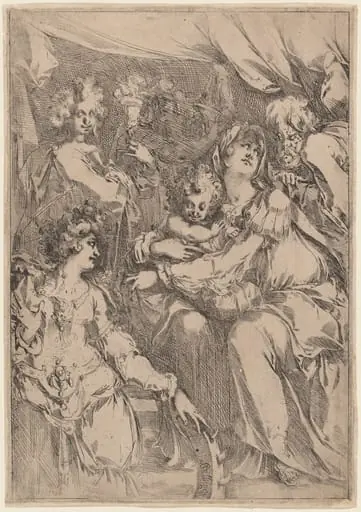 The Holy Family with Saint Catherine, Saint John the Evangelist, and an Angel
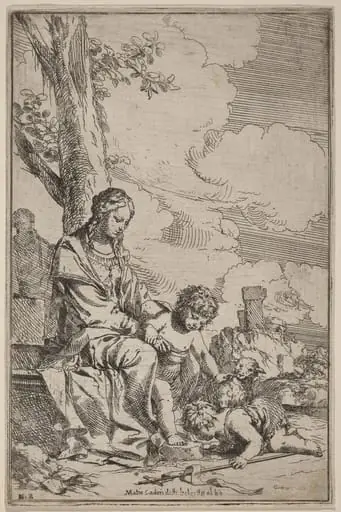 The Virgin and Child with Saint John the Baptist
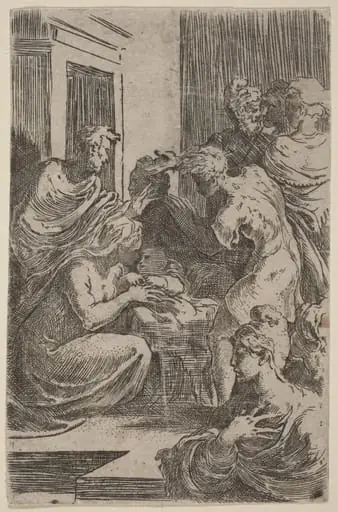 The Adoration of the Shepherds
 Holy Family with the Virgin Reading