Artwork
Saint Cecilia
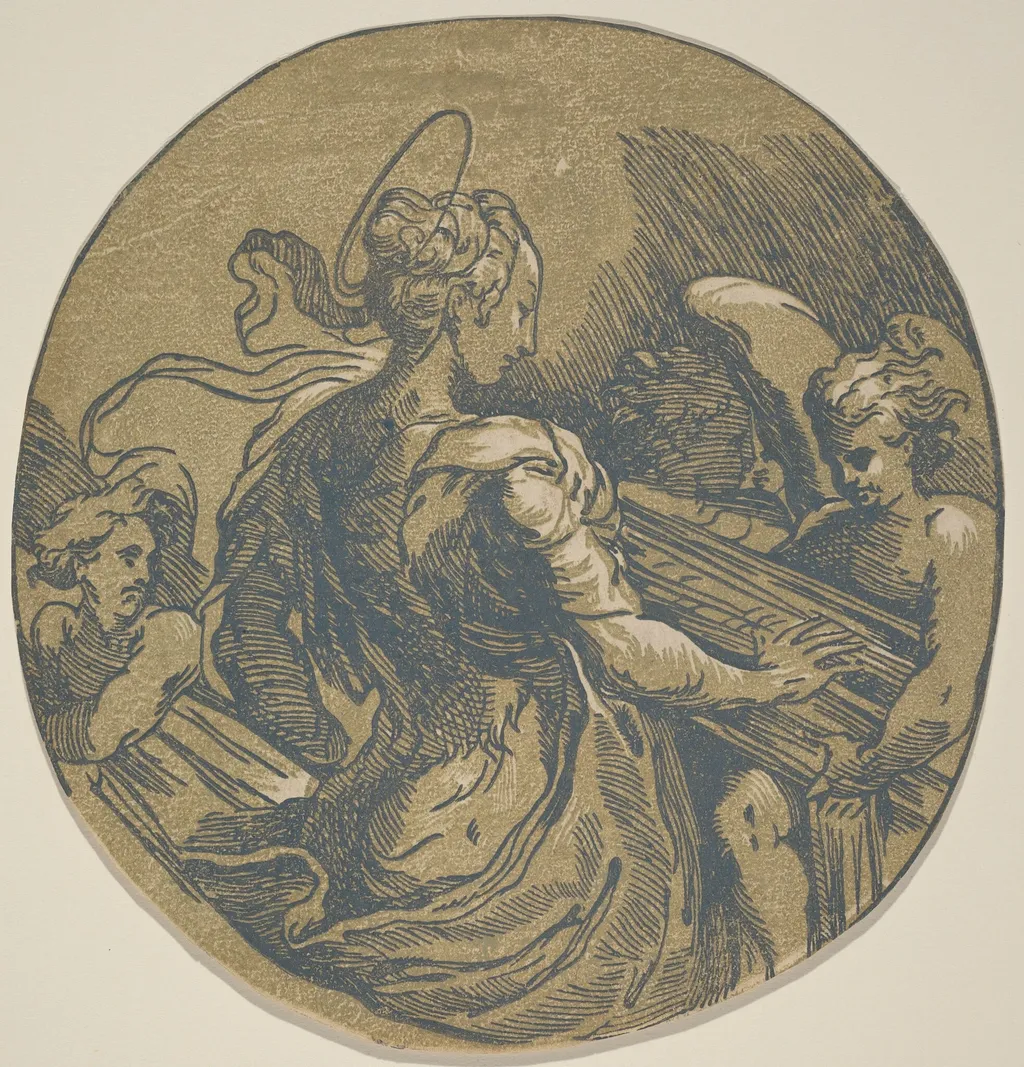
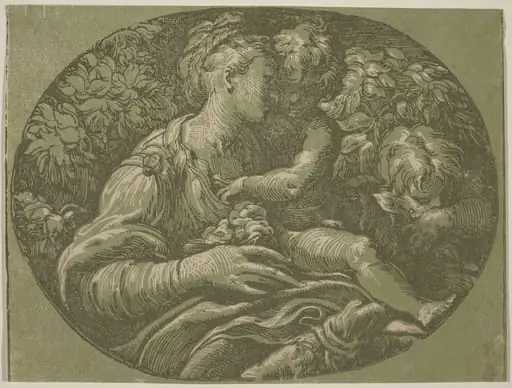
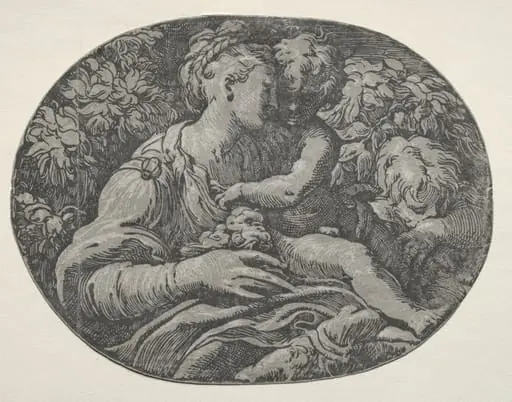
Saint Cecilia is an ink print by the Renaissance artist Antonio da Trento. It dates from 1501 and is held in the collection of the National Gallery of Art.
About this work
Overview
It exemplifies the Italian printmaker’s technical refinement in multi-block woodcutting, using three separate blocks to layer tone and form.
Antonio da Trento’s *Saint Cecilia* is a chiaroscuro woodcut created around 1530, not 1501 as sometimes misstated. It exemplifies the Italian printmaker’s technical refinement in multi-block woodcutting, using three separate blocks to layer tone and form. The work belongs to a small but significant body of religious prints produced during the early 16th century, when printmaking was evolving beyond mere reproduction into a medium for expressive depth.
Subject & Meaning
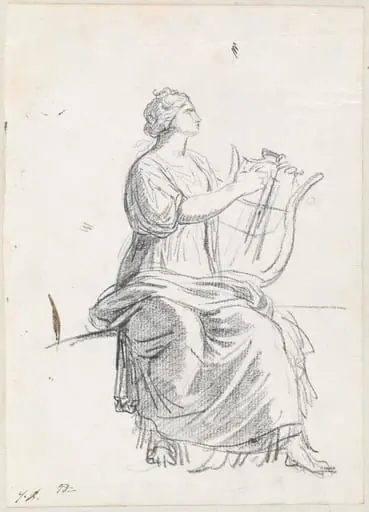
The print depicts Saint Cecilia, the patron saint of music, seated in quiet contemplation beside a musical instrument. Her composed demeanor and refined attire reflect her spiritual devotion and earthly dignity. The absence of dramatic action emphasizes inner sanctity rather than narrative spectacle. As a figure associated with divine song, her stillness invites reverence, aligning with devotional ideals of the period that valued quiet piety over theatricality.
Technique & Style
Da Trento employed three carved woodblocks: one for the fine outline, another for mid-tones, and a third for shadowed areas. This layered approach allowed subtle gradations of gray to model the figure’s form and fabric, enhancing three-dimensionality without color. The technique, pioneered by Ugo da Carpi and refined by da Trento, mimicked the tonal effects of drawn or painted studies, bridging printmaking with the aesthetics of High Renaissance draftsmanship.
History & Provenance
Born in Trento around 1508, da Trento trained under Ugo da Carpi and later worked in Bologna and possibly France, where he may have encountered the Fontainebleau style. His prints circulated among collectors and religious institutions in northern Italy and beyond. While few of his works survive in large numbers, *Saint Cecilia* is documented in several European collections, attesting to its early reception among connoisseurs of printed art.
Context
In the early 1500s, religious imagery in print form became increasingly accessible, meeting demand for private devotion. Chiaroscuro woodcuts offered a middle ground between inexpensive line prints and costly paintings. Da Trento’s work emerged amid a flourishing print culture in northern Italy, where artists sought to elevate the medium through technical innovation and alignment with contemporary painting styles, particularly those of Parmigianino.
Legacy
Da Trento’s prints, including *Saint Cecilia*, contributed to the legitimacy of chiaroscuro woodcut as a serious artistic form. Though his output was limited, his technical precision influenced later printmakers in Italy and France. His work remains a reference point in studies of Renaissance printmaking, illustrating how craft, devotion, and aesthetic ambition converged in a single sheet of paper.
Artist & collection

Artist
Antonio da Trento (1508–1550) was an Italian printmaker, born in Trento. He specialized in chiaroscuro woodcuts, especially of religious subjects. Da Trento probably first learned wood engraving from Ugo da Carpi. He…

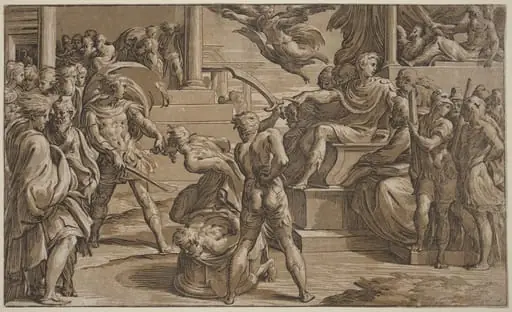
![The Martyrdom of Saints Peter and Paul [recto], by Antonio da Trento](https://artifactworldgallery.com/img/antonio-da-trento--the-martyrdom-of-saints-peter-and-paul-recto--a51e90060085a207-w320.webp)
![Tobias and the Angel [verso], by Hermann Weyer](https://artifactworldgallery.com/img/hermann-weyer--tobias-and-the-angel-verso--e00682edf3b74b17-w320.webp)