Artwork
Joseph’s Triumph in Egypt
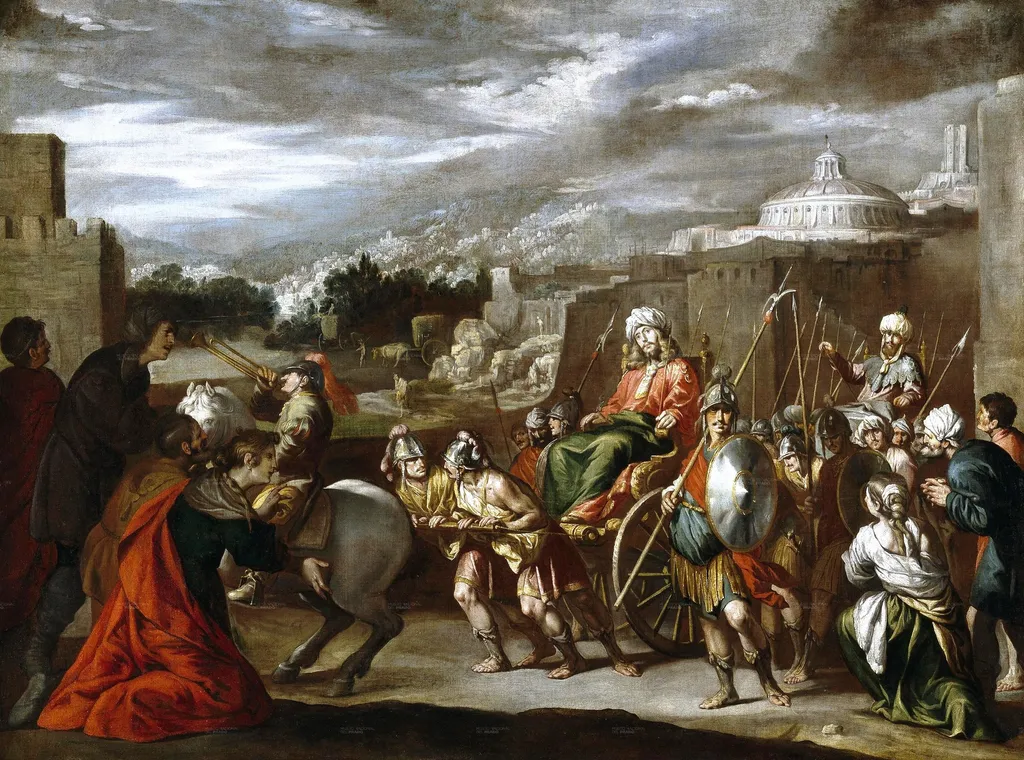
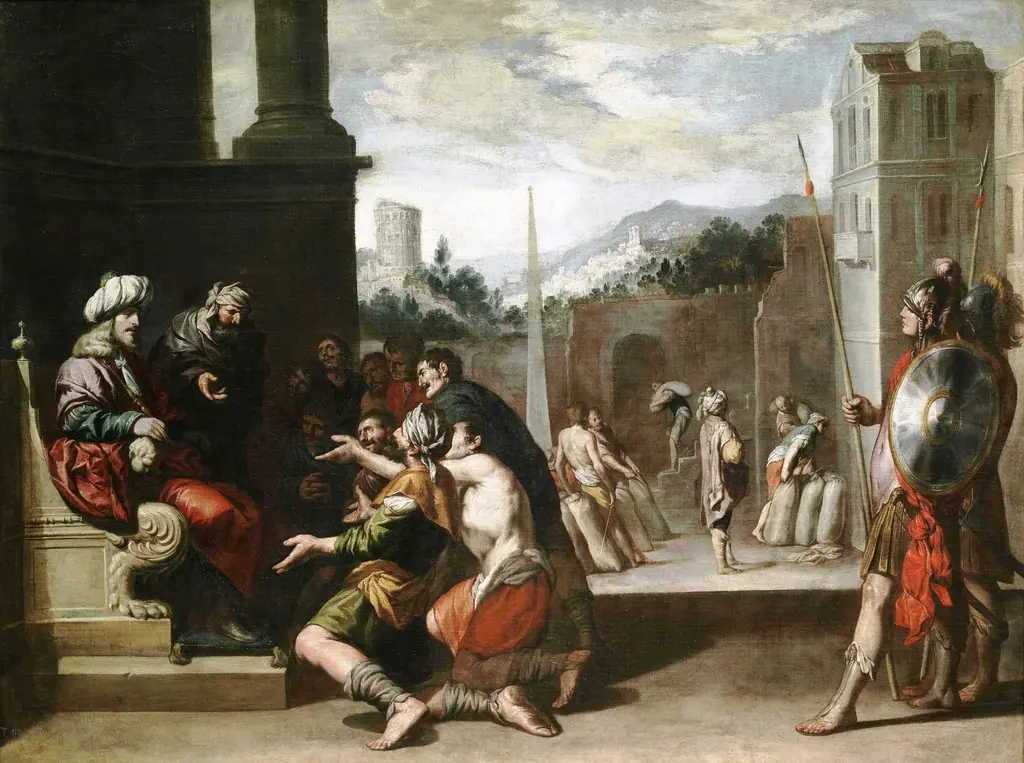
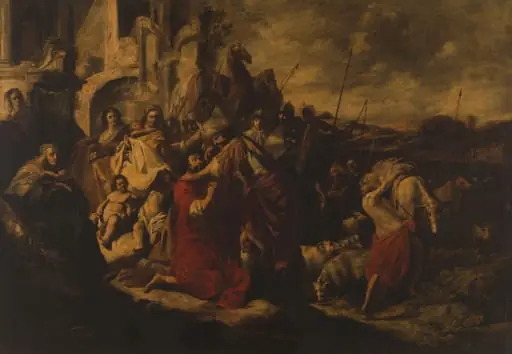
Joseph’s Triumph in Egypt is an oil painting by the Early Baroque Italian artist Antonio del Castillo y Saavedra. It dates from 1655 and is held in the collection of the Museo del Prado.
About this work
Overview
The composition is anchored by a central rider who lifts a curved natural trumpet, while a cannon is being advanced nearby.
Antonio del Castillo y Saavedra’s oil on canvas, dated 1655, portrays a bustling tableau titled Joseph’s Triumph in Egypt. The composition is anchored by a central rider who lifts a curved natural trumpet, while a cannon is being advanced nearby. To the left, a kneeling figure in red attends a woman in dark robes, surrounded by anxious onlookers. On the right, armored soldiers equipped with spears and shields form a defensive line, all set against a storm‑clouded skyline and a distant cityscape of domes and ruins.
Subject & Meaning
The scene captures a moment of heightened tension, likely referencing the biblical narrative of Joseph’s rise to power in Egypt. The juxtaposition of civilian figures with military personnel suggests a transition from vulnerability to authority, while the natural trumpet and cannon symbolize the proclamation of triumph and the readiness for conflict or celebration.
Technique & Style
Del Castillo employs a dynamic arrangement of figures, using chiaroscuro to emphasize the stormy atmosphere and the drama of the central action. The oil medium allows for rich, saturated colors—particularly the vivid red of the kneeling man—while the detailed rendering of armor and weaponry reflects the artist’s attention to texture and materiality.
History & Provenance
Created in the mid‑17th century, the painting entered the collection of the Museo del Prado, where it remains on display. Its acquisition history is documented through the museum’s records, confirming its attribution to del Castillo and its dating to 1655.
Context
The work belongs to the Spanish Baroque period, a time when religious subjects were often depicted with theatrical intensity. The inclusion of military elements alongside biblical figures reflects contemporary concerns about authority, order, and divine providence in a Spain marked by political and religious upheaval.
Own this work as a print
Artist & collection
Artist
Antonio del Castillo y Saavedra
Antonio del Castillo y Saavedra (1616–1668) was an artist, born in Córdoba.

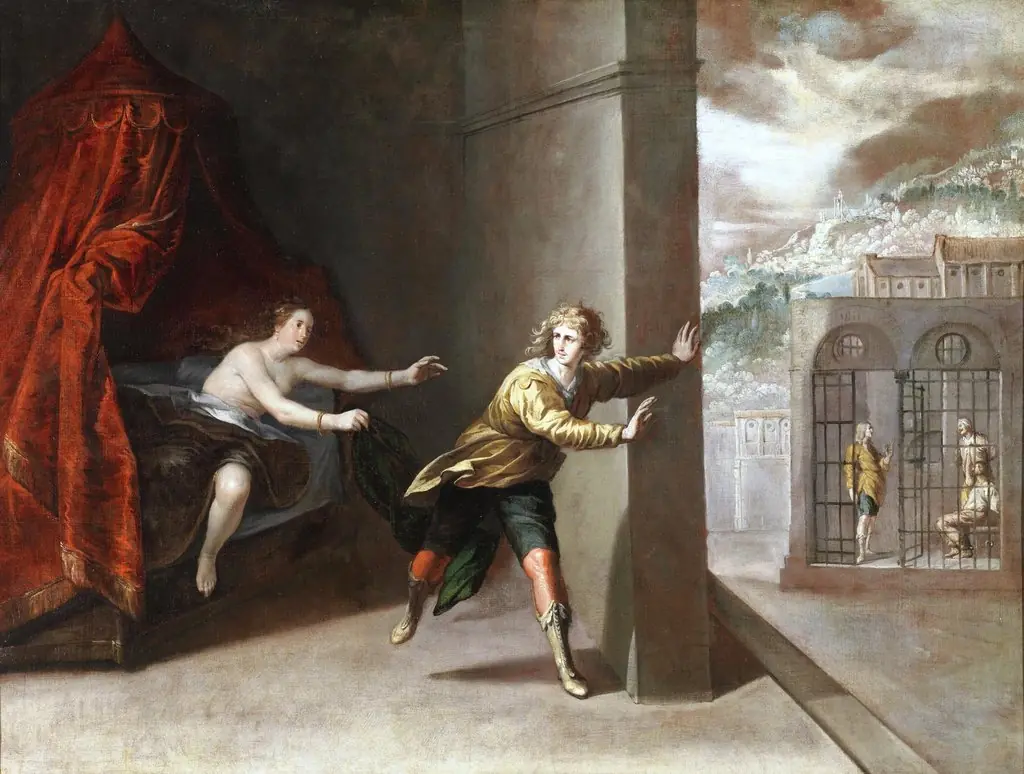
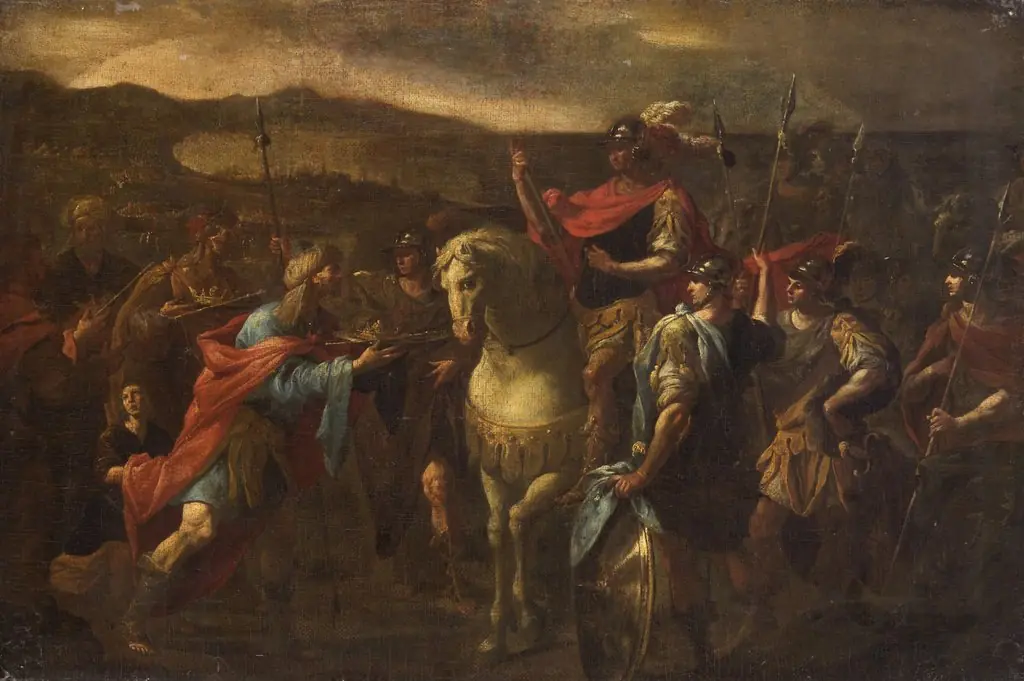 Indische Könige huldigen Alexander dem Großen
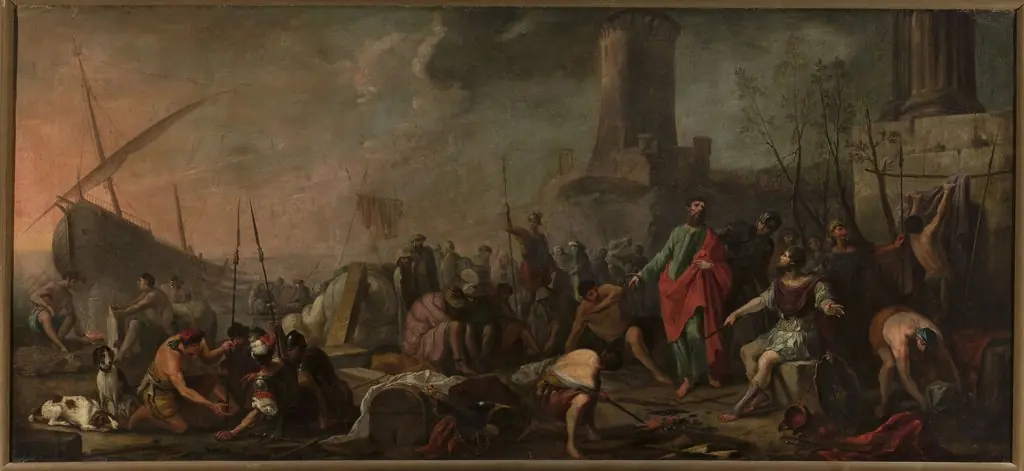 St. Paul on Malta
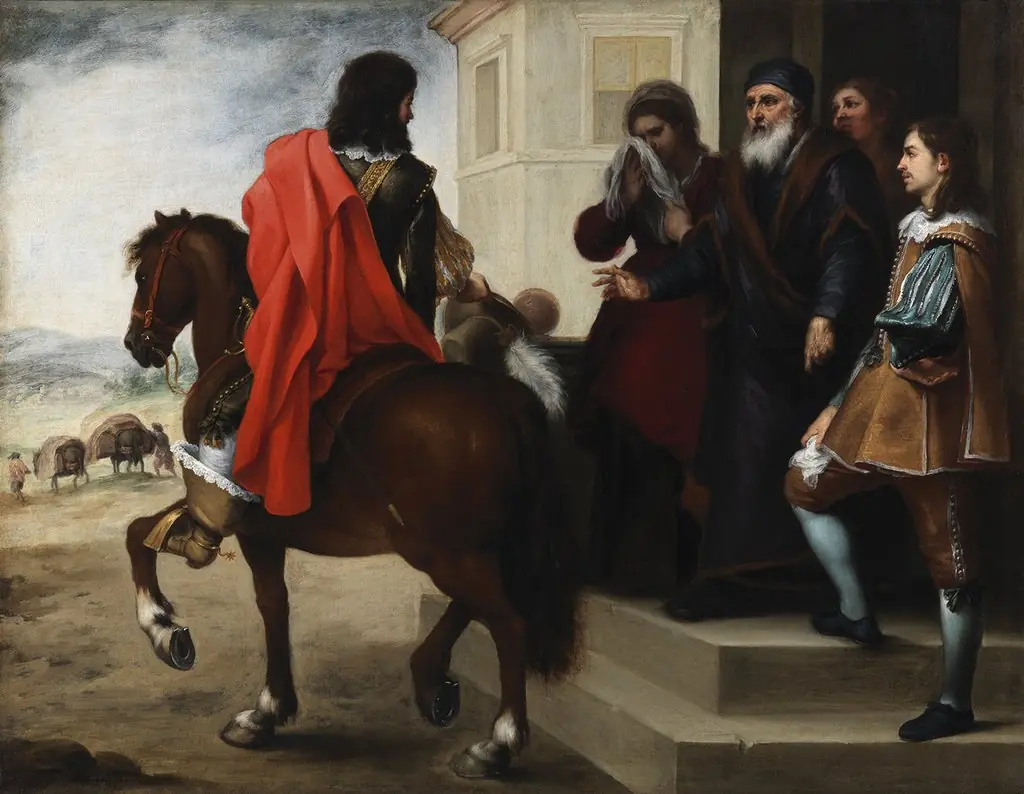 The Departure of the Prodigal Son
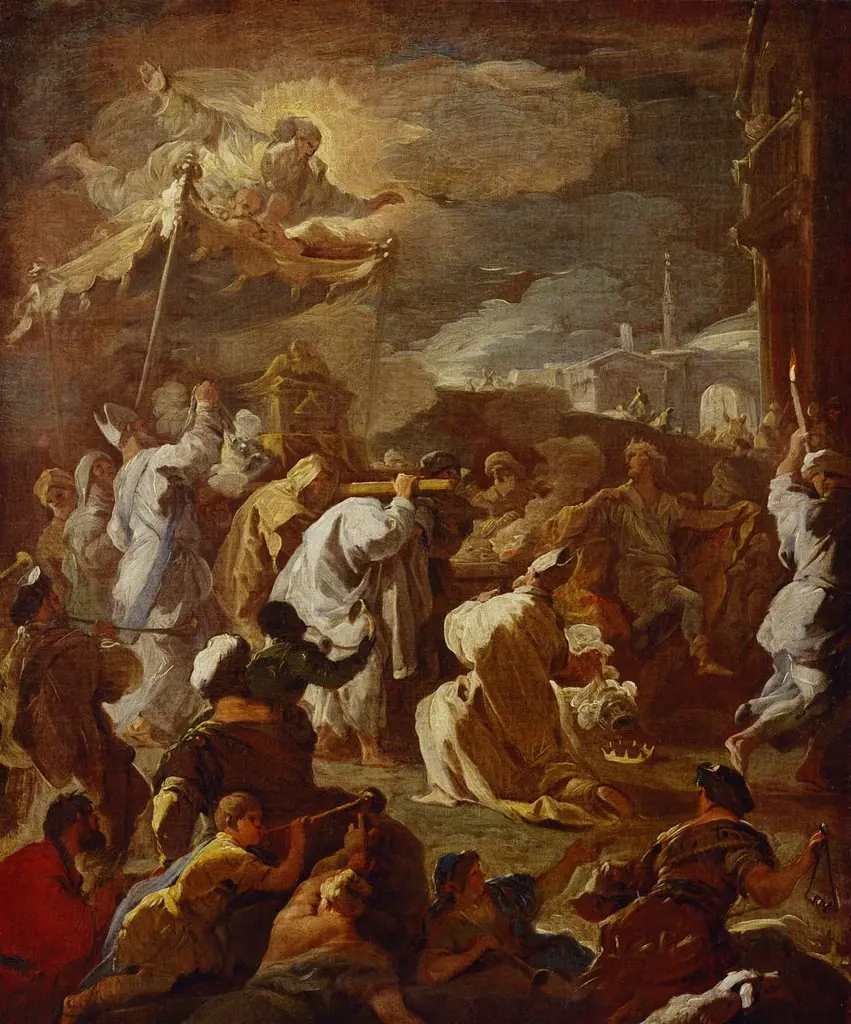 Transfer of the Ark of the Covenant by David
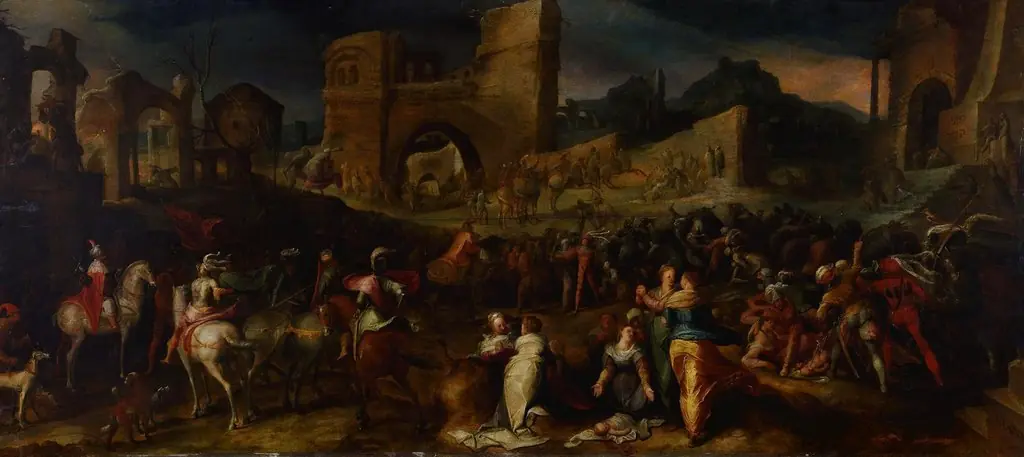 The Massacre of the Innocents
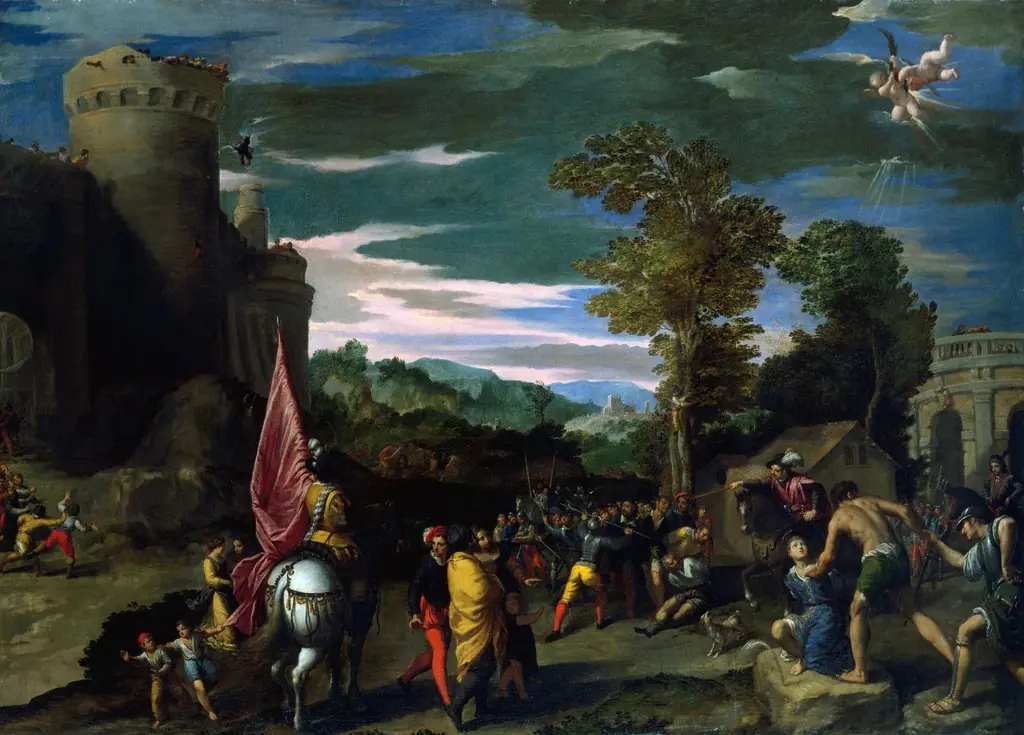 Martyrdom of Saint Venantius of Camerino
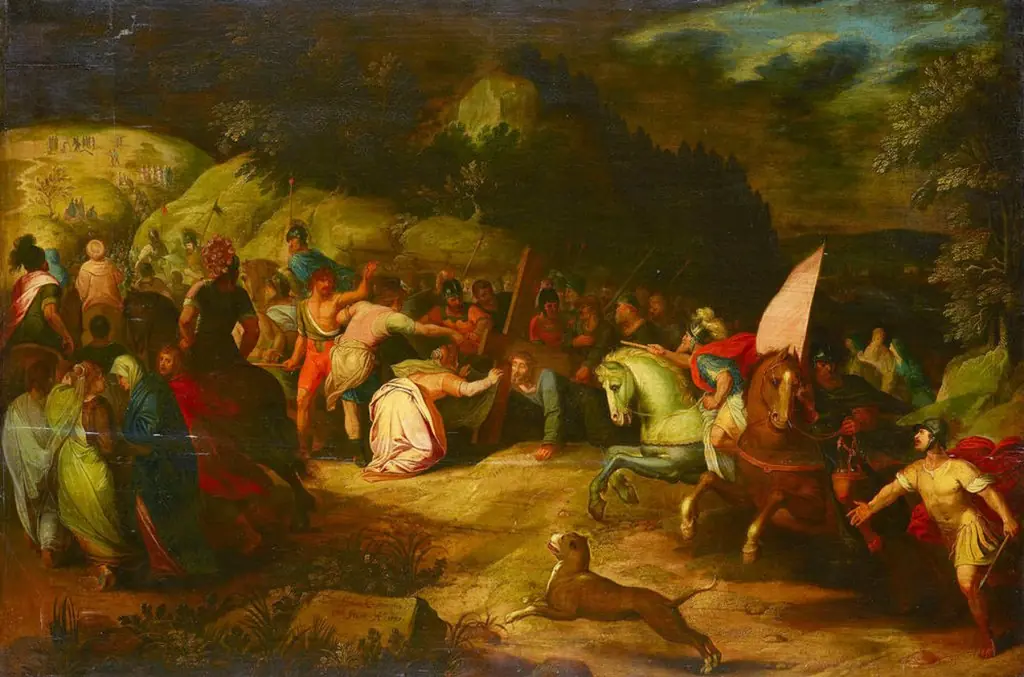 Christ collapsing under the cross on his way to Golgotha
 Adoration of the Magi
 The Meeting of Jacob and Esau