Artwork
A Model from Via Margutta
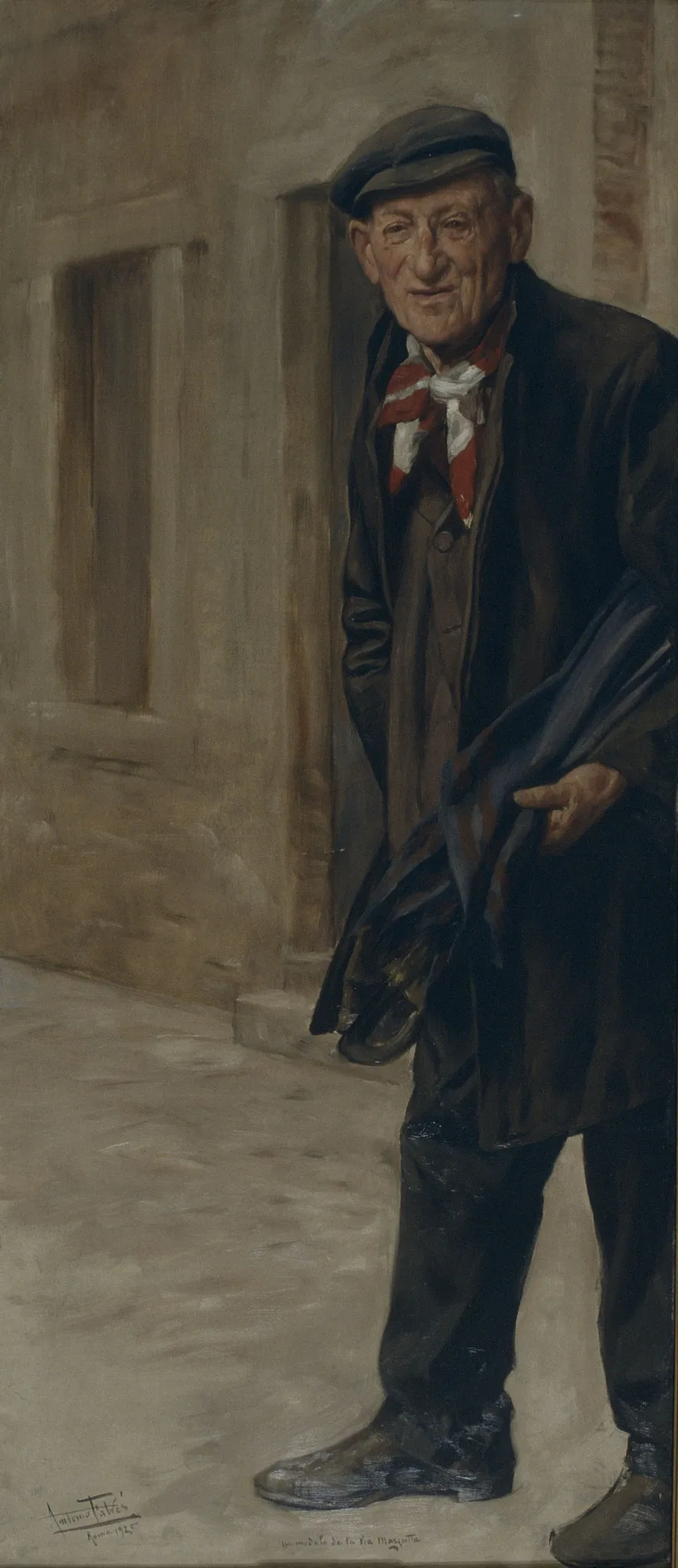
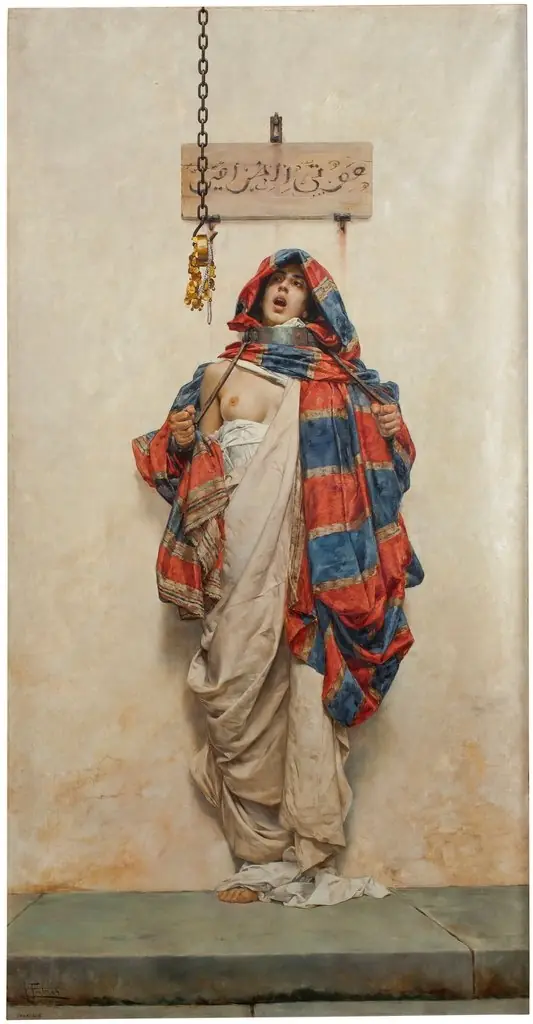
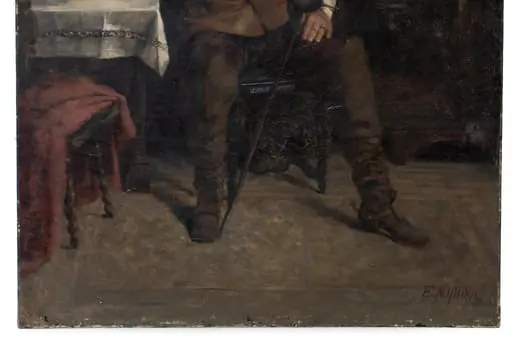
A Model from Via Margutta is an oil painting by the Orientalist artist Antonio Fabrés. It dates from 1925 and is held in the collection of the Museu Nacional d'Art de Catalunya.
About this work
Overview
The painting reflects his later shift toward intimate, observational portraiture, grounded in everyday life rather than historical fantasy.
Painted in 1925 by Catalan artist Antonio Fabrés, this oil portrait captures an elderly man standing before a modest urban structure. Though Fabrés is known for Orientalist subjects, this work departs from exoticized themes, focusing instead on a quiet, grounded figure from Rome’s Via Margutta. The painting reflects his later shift toward intimate, observational portraiture, grounded in everyday life rather than historical fantasy.
Subject & Meaning
The subject is an aging man, dressed in faded, practical clothing, holding a jacket as if pausing between tasks. His worn shoes, loose trousers, and weathered face suggest a life of labor and endurance. The setting—unadorned architecture and muted tones—emphasizes anonymity and dignity in ordinary existence. Rather than idealizing or exoticizing, Fabrés presents a solitary figure whose presence speaks through stillness and detail.
Technique & Style
Fabrés employs a restrained palette of earth tones and subdued contrasts, with the red-and-white scarf offering the only vivid accent. Brushwork is deliberate but not overly refined, capturing texture in fabric, skin, and stone without flourish. The composition centers the figure against a shallow architectural backdrop, drawing attention to his posture and expression. Light falls evenly, avoiding dramatic effect, reinforcing the painting’s quiet realism.
History & Provenance
The painting entered the collection of the Museu Nacional d'Art de Catalunya in the 20th century, likely through acquisition or donation following Fabrés’s death in 1938. It was painted during his later years in Rome, where he lived after decades of international travel. While less known than his earlier Orientalist works, this piece represents a personal turn toward observation over narrative, reflecting his evolving artistic priorities.
Context
In the 1920s, European art saw a decline in overt Orientalism and a rise in depictions of working-class life. Fabrés, long associated with exotic subjects, turned toward the people he encountered daily in Rome’s artist neighborhoods. Via Margutta, a street known for studios and modest residences, became a site of authentic observation. This painting aligns with broader trends toward social realism, even if it avoids overt political messaging.
Legacy
Though not widely exhibited outside Catalonia, the painting endures as a quiet testament to Fabrés’s capacity for empathy and restraint. It stands apart from his more flamboyant early works, revealing a mature artist attuned to the dignity of the unseen. Its preservation in a national collection affirms its value as a document of everyday life in early 20th-century Rome.
Artist & collection
Artist
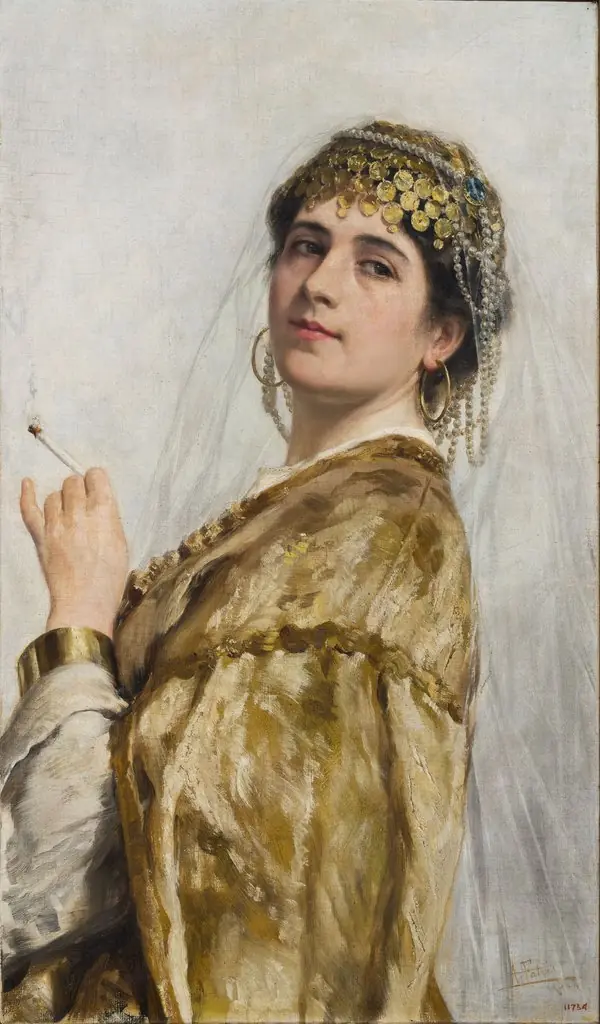
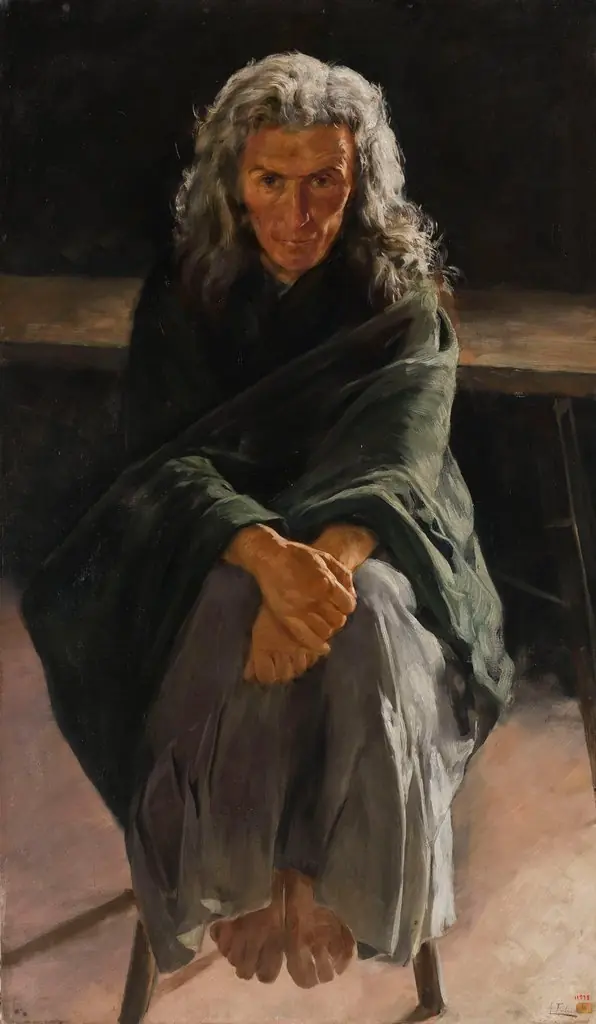
Antoni Maria Fabrés i Costa (Spanish: Antonio Maria Fabrés y Costa; 1854–1938), also known as Antoni Fabrés, was a Catalan sculptor and painter known especially for his depictions of Orientalist and period subjects.

 Un cavaler - Porthos
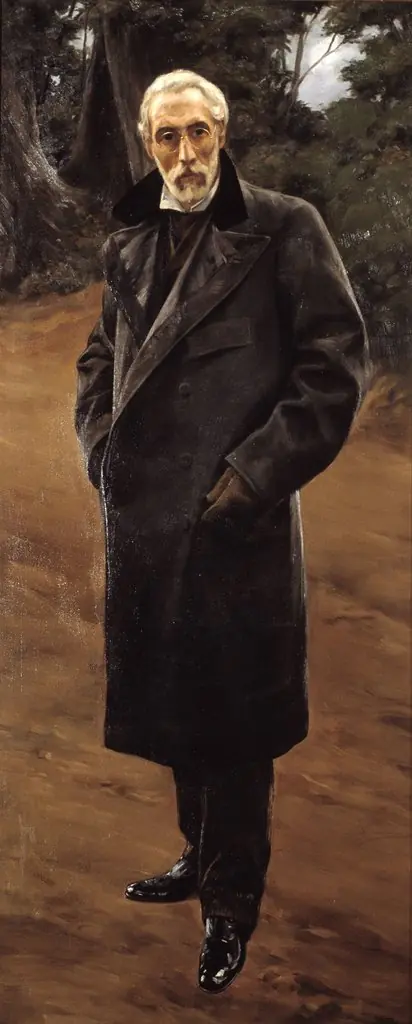 Self-portrait
 Portrait Study of a Man
 Alexander Arnold Hannay
 Arrangement in Grey and Green. Portrait of John James Cowan
 Autorretrato de cuerpo entero (María Roësset Mosquera)
 Ștrengarul
 Torvald Stang
 Edward Guthrie Kennedy
 Self-portrait.
 Dr van Hoorn
 Arrangement in Flesh Color and Brown: Portrait of Arthur Jerome Eddy