Artwork
Un necessitat
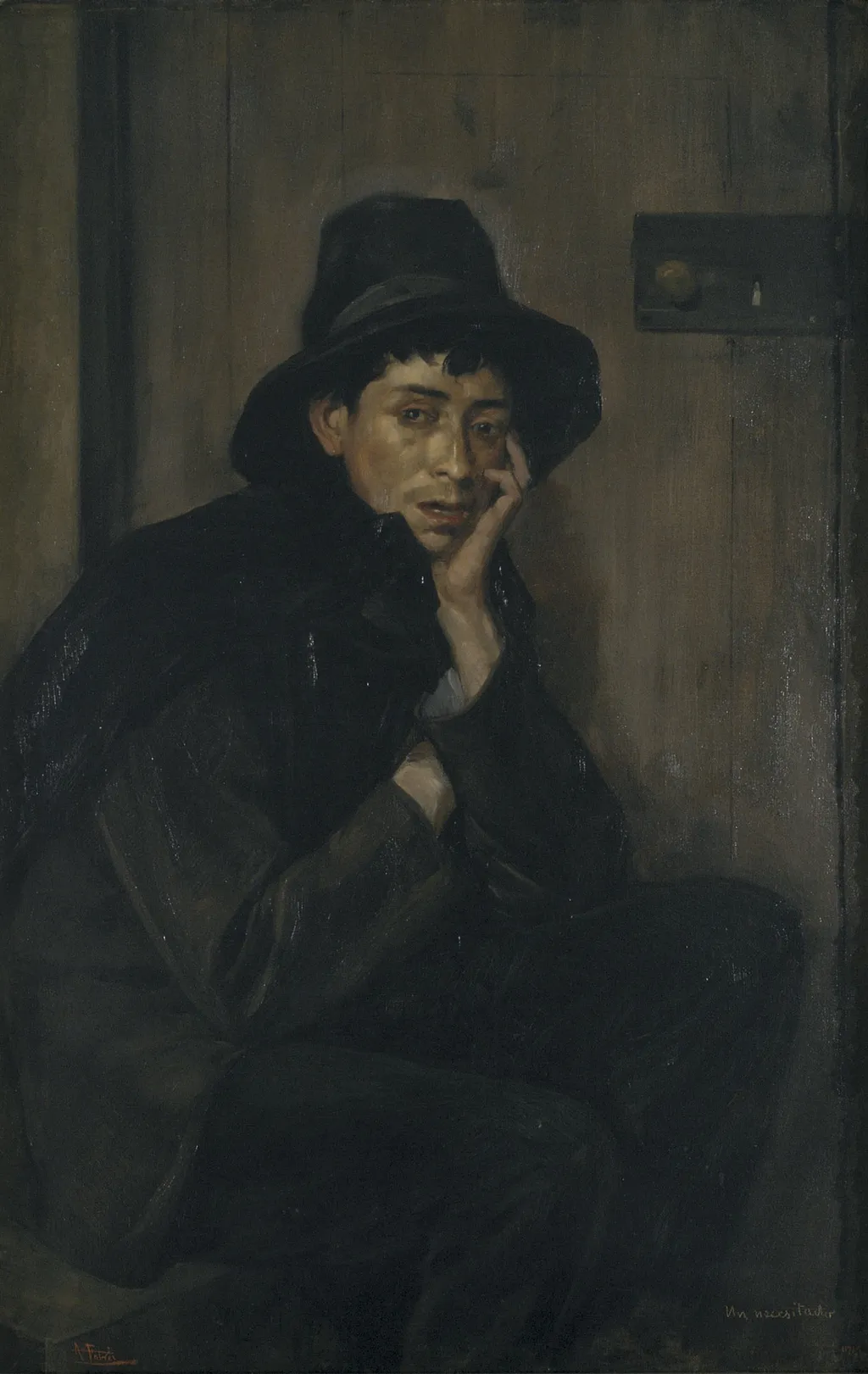
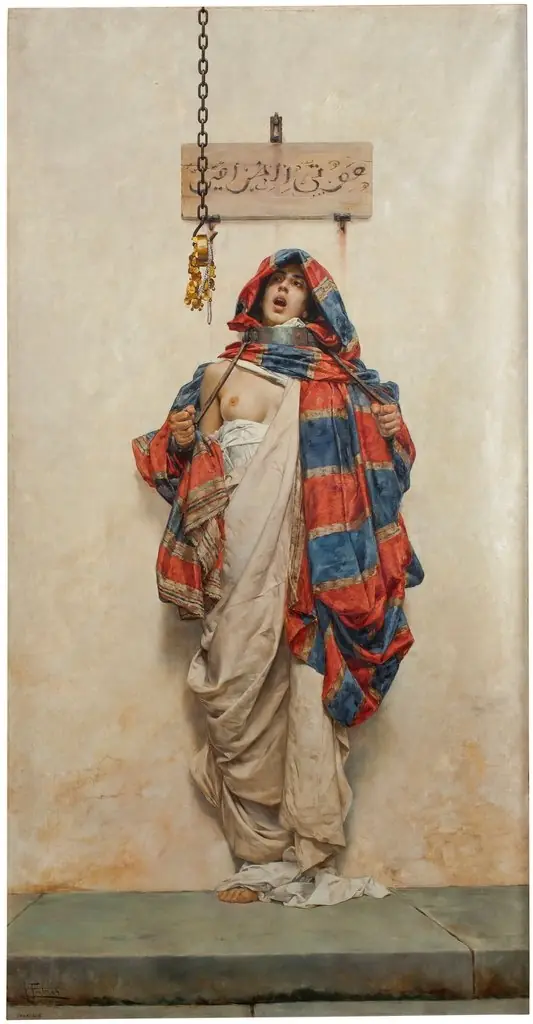
Un necessitat is an oil painting by the Art Nouveau artist Antonio Fabrés. It dates from 1911 and is held in the collection of the Museu Nacional d'Art de Catalunya.
About this work
Overview
Antonio Fabrés’s 1911 oil painting *Un necessitat* belongs to the later phase of his career and is catalogued in the Museu Nacional d'Art de Catalunya. Executed in a style linked to Art Nouveau, the work presents a solitary figure in a muted interior, rendered with a restrained palette and careful modeling of light.
Subject & Meaning
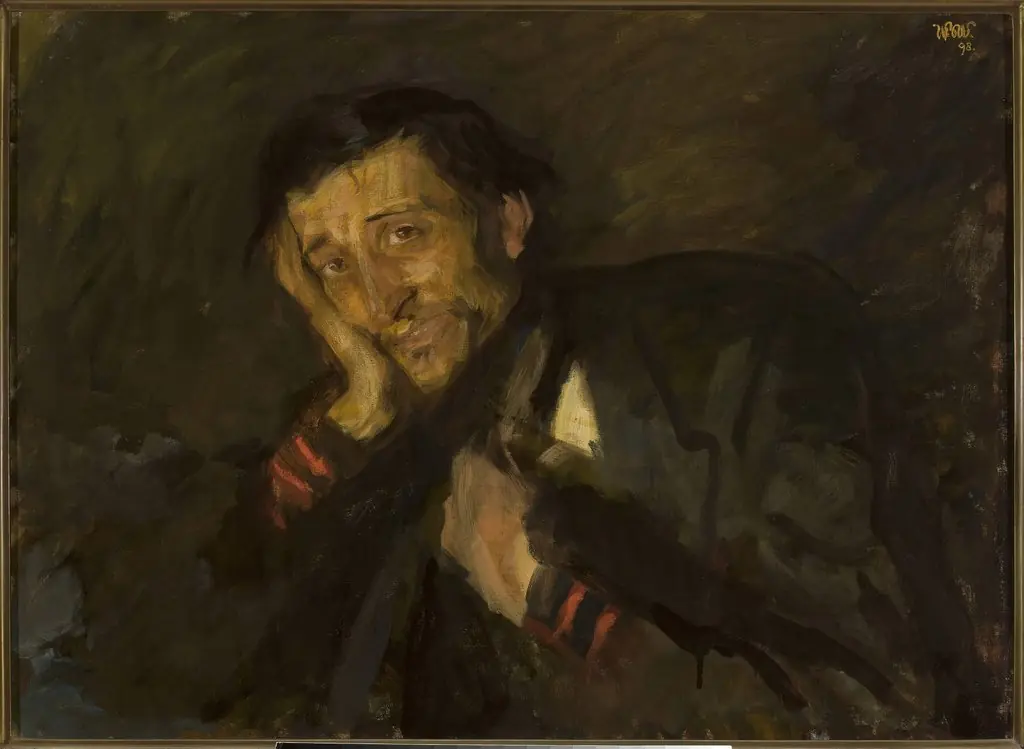
The canvas shows a young man seated before a wooden door, his dark hat and coat framing a thoughtful pose. He rests his right hand on his cheek, suggesting introspection. The sparse backdrop—a dark wall and a tiny keyhole—enhances the sense of isolation and quiet contemplation.
Technique & Style
Fabrés employs chiaroscuro to carve out volume, allowing the illuminated face and hand to emerge from the surrounding shadows. The handling of oil paint is smooth, with subtle gradations that give the figure a three‑dimensional presence while maintaining the decorative surface quality typical of Art Nouveau.
History & Provenance
Born in 1854, the Catalan artist worked as both sculptor and painter, often turning to Orientalist and historic subjects. *Un necessitat* was created toward the end of his productive years, before his death in 1938, and later entered the collection of the Museu Nacional d'Art de Catalunya, where it remains on display.
Context
During the early twentieth century, Catalan art was absorbing international currents, including the sinuous lines and ornamental motifs of Art Nouveau. Fabrés’s painting reflects this milieu while retaining his personal focus on psychological depth, aligning it with contemporary explorations of mood and interiority.
Own this work as a print
Artist & collection
Artist
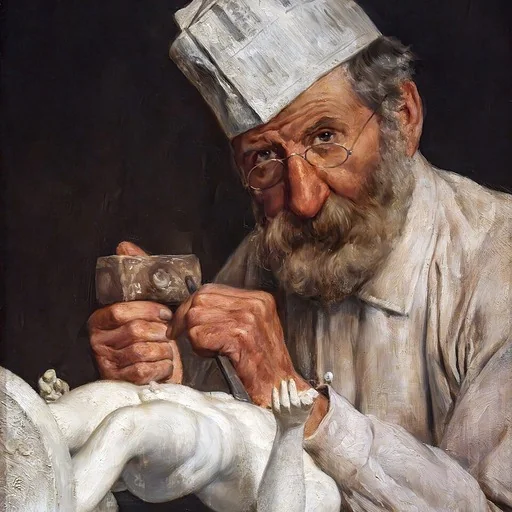
Antoni Maria Fabrés i Costa (Spanish: Antonio Maria Fabrés y Costa; 1854–1938), also known as Antoni Fabrés, was a Catalan sculptor and painter known especially for his depictions of Orientalist and period subjects.

 Consumptive
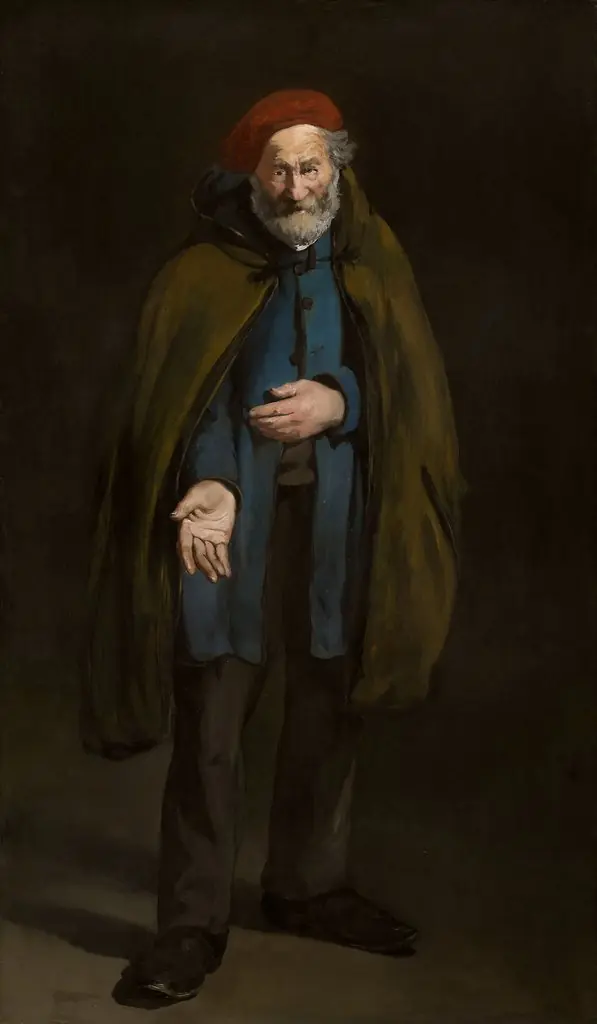 Beggar with a Duffle Coat (Philosopher)
 Arrangement in Grey and Green. Portrait of John James Cowan
 Melancholy
 Beggar with a Duffle Coat (Philosopher)
 Portret de miner
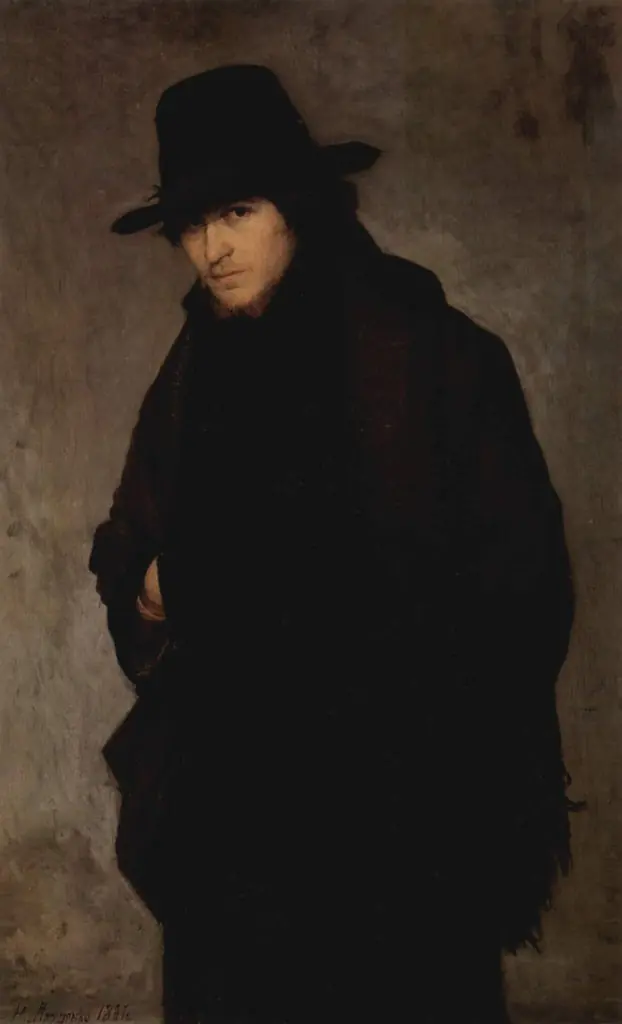 The Student
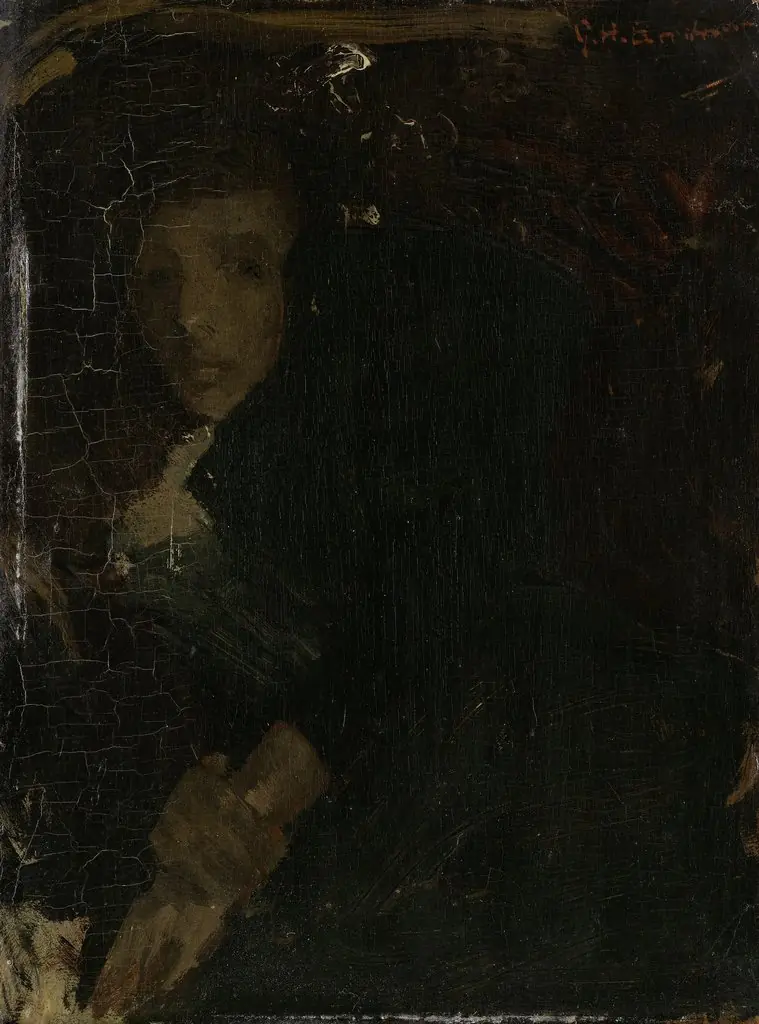 MCJ (Marie) Jordan (1866-1948), The Artist's Wife
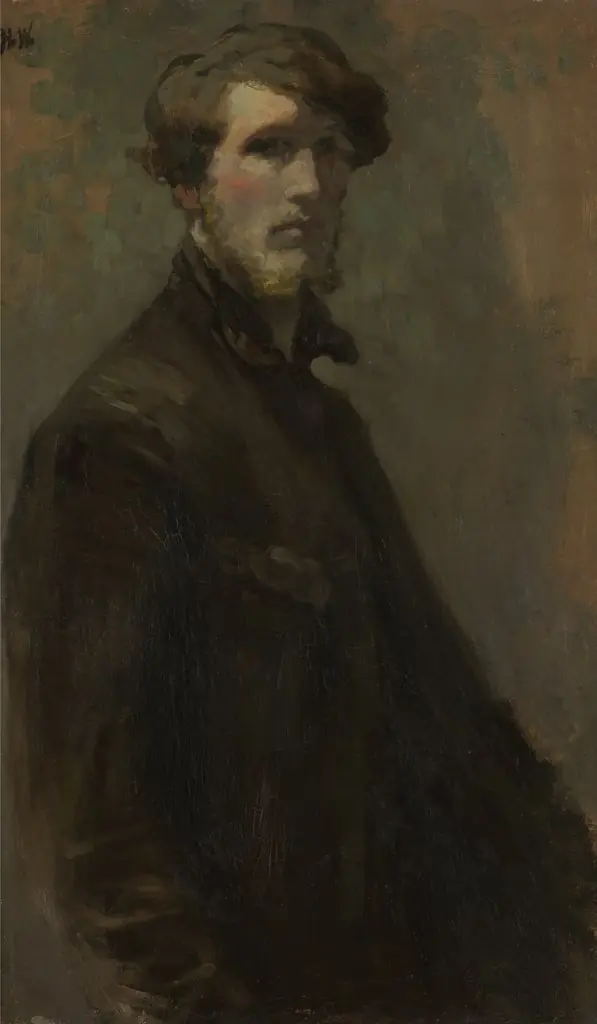 Self Portrait
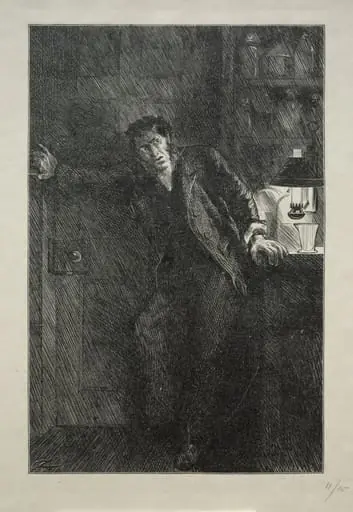 The Coat with the Fur Lining
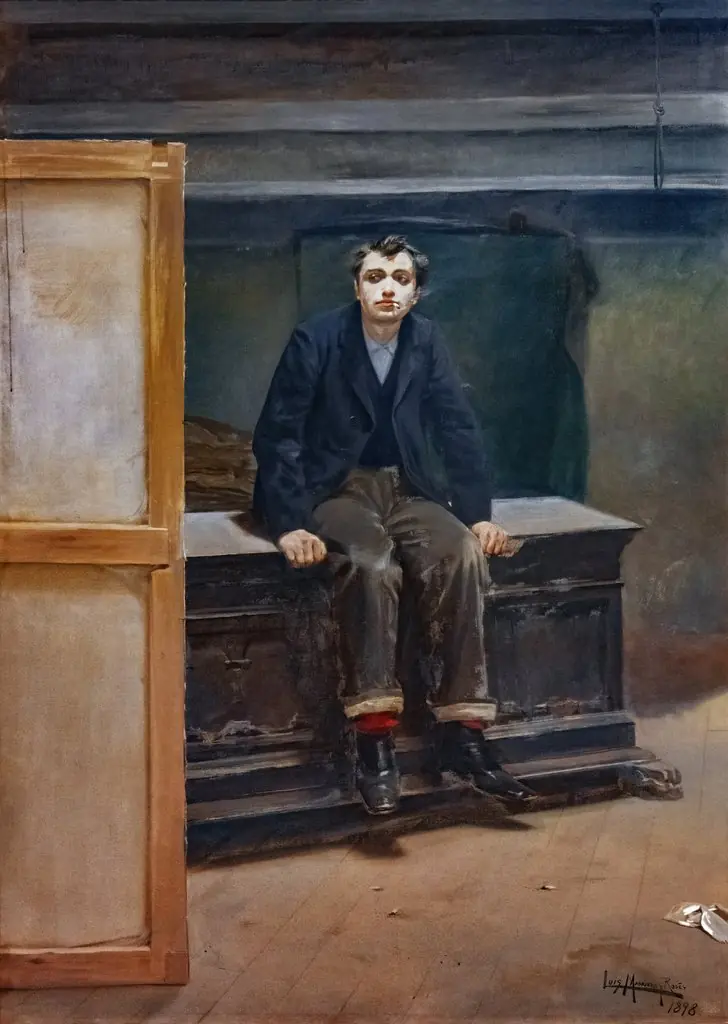 Ocell de golfa
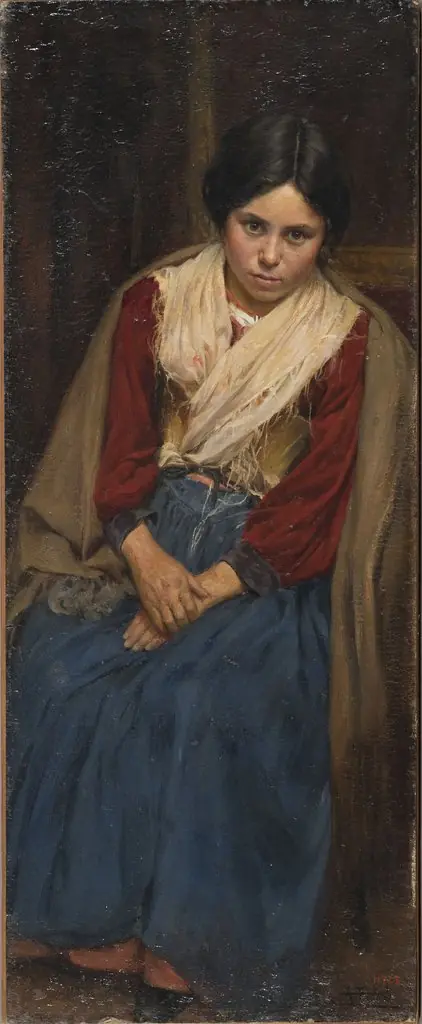 La Ciociaretta