Artwork
Beggar with a Duffle Coat (Philosopher)
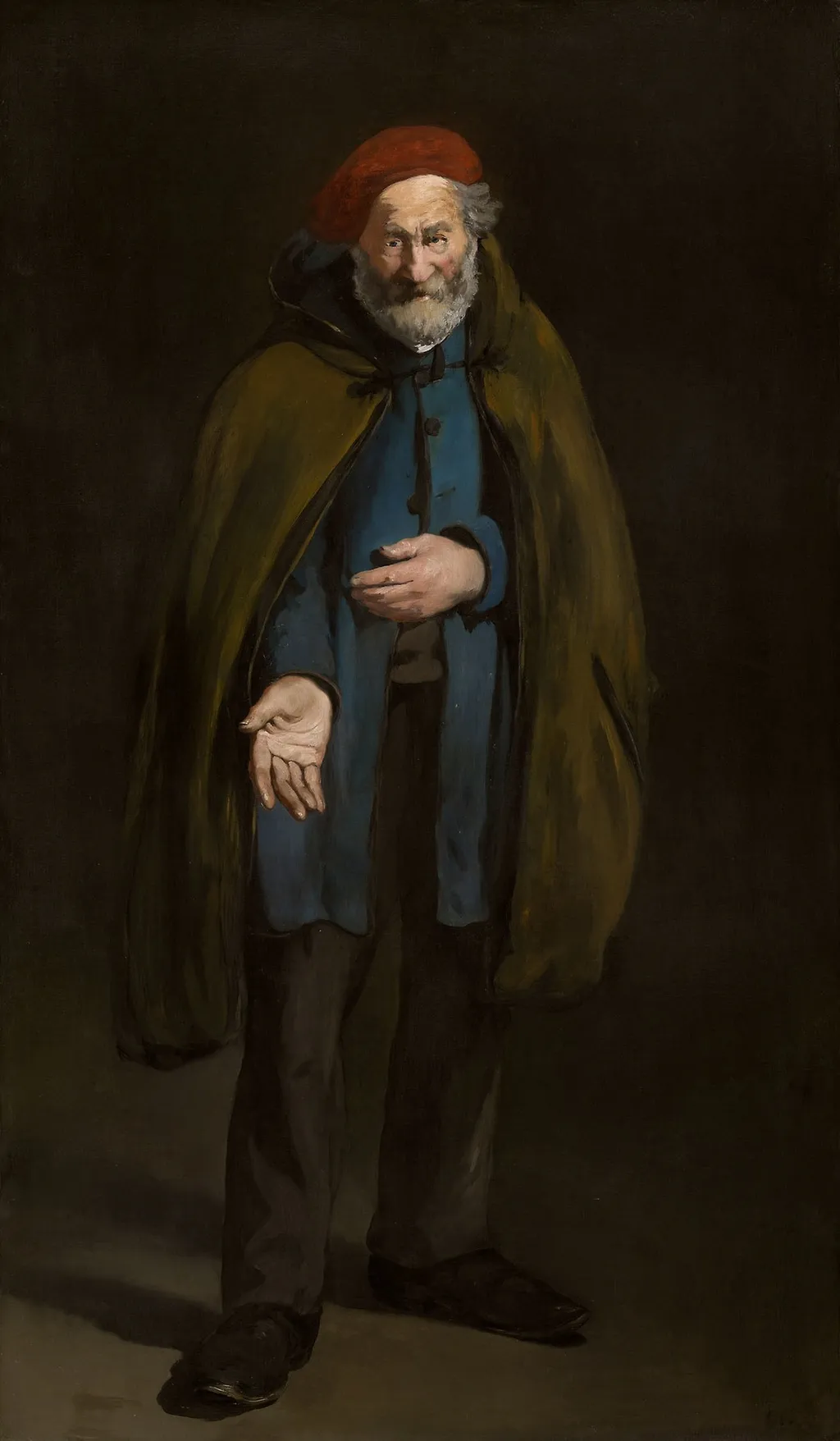
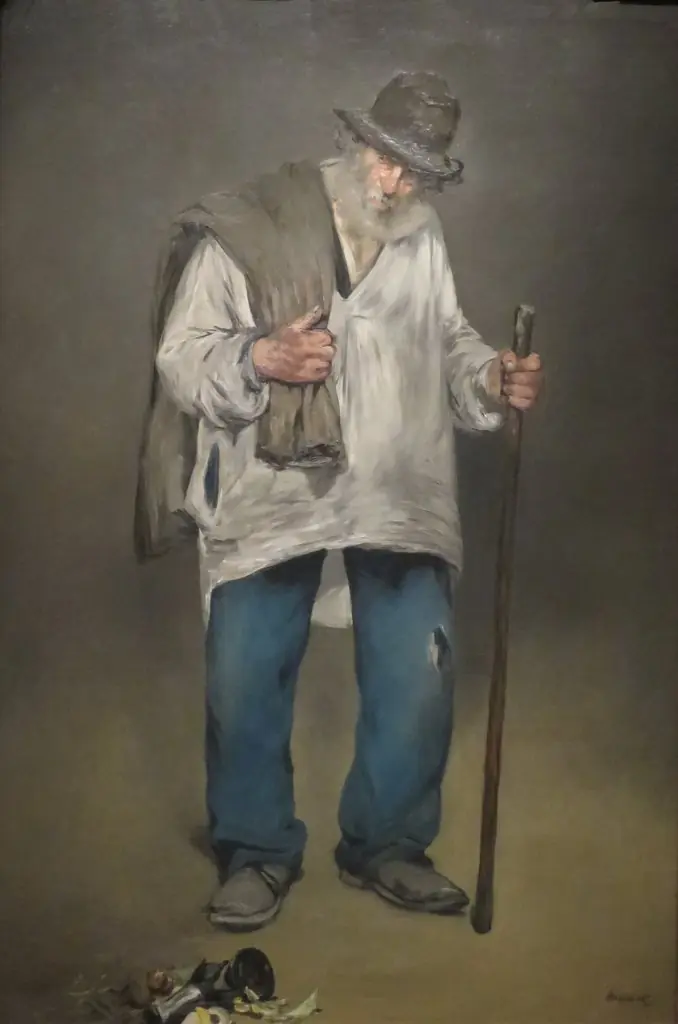
Beggar with a Duffle Coat (Philosopher) is an oil painting by the Realist artist Edouard Manet. It dates from 1864 and is held in the collection of the Art Institute of Chicago.
About this work
Overview
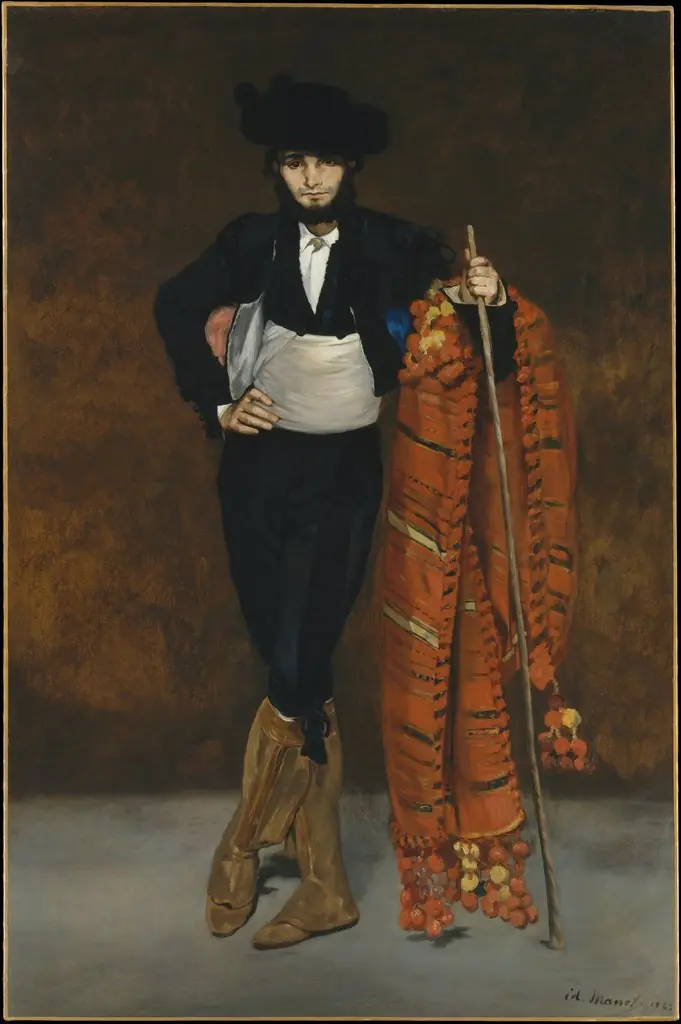
Painted in 1864 by Édouard Manet, this oil work depicts a solitary, elderly man in worn clothing, standing against a dark, undefined background.
Painted in 1864 by Édouard Manet, this oil work depicts a solitary, elderly man in worn clothing, standing against a dark, undefined background. The figure’s posture and expression convey quiet dignity rather than desperation. The painting’s somber tone and focused lighting reflect Manet’s interest in portraying everyday subjects with psychological depth, moving beyond traditional genre scenes of poverty.
Subject & Meaning
The figure, often interpreted as a philosopher or a displaced intellectual, is rendered without overt signs of乞讨. His raised right hand suggests a gesture of appeal, yet his downcast gaze and closed left hand imply introspection or restraint. Manet avoids sentimentality, presenting the man not as a stereotype but as an individual marked by time and circumstance, inviting contemplation rather than pity.
Technique & Style
Manet employs chiaroscuro to define the figure’s form, with strong lateral lighting carving out the contours of the coat, beard, and hat. Brushwork is direct and economical, avoiding fine detail in favor of broad, tonal shifts. The dark background isolates the subject, heightening the emotional weight of the composition. Color is muted—browns, blues, and reds—reinforcing the painting’s restrained, somber atmosphere.
History & Provenance
Completed in 1864, the painting entered the collection of the Art Institute of Chicago in the early 20th century. Its early history is not fully documented, but it was likely exhibited in Parisian salons during Manet’s lifetime. Unlike his more controversial works, this piece attracted little public attention at the time, remaining a quiet study in human presence rather than a public statement.
Context
In the mid-1860s, Manet was shifting from historical subjects toward contemporary life, often focusing on marginalized figures. This painting aligns with his broader interest in urban anonymity and the dignity of ordinary people. While contemporaries like Millet depicted peasants with pastoral idealism, Manet’s approach was more immediate, grounded in observation rather than moralizing.
Legacy
Though less celebrated than Manet’s major works, this painting exemplifies his evolving approach to portraiture and social observation. Its quiet intensity influenced later realist and modernist painters who sought to capture psychological depth without narrative embellishment. The work remains a subtle testament to Manet’s ability to elevate the unseen through composition and light.
Artist & collection

Artist
Édouard Manet didn’t have much time to make his mark—he died at 51—but he used every year.