Artwork
Beggar with a Duffle Coat (Philosopher)
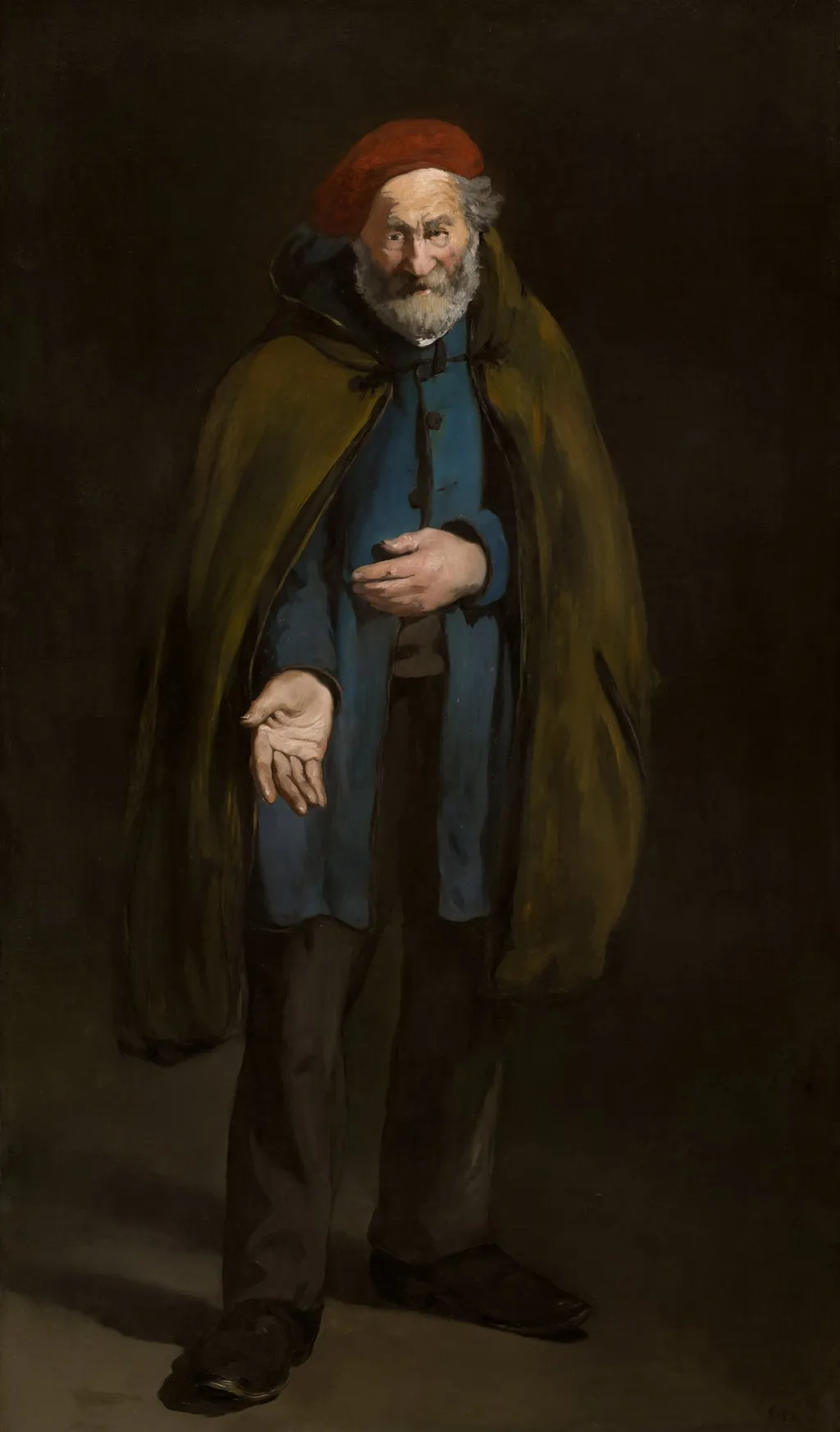
Beggar with a Duffle Coat (Philosopher) is an oil painting by the Impressionist artist Edouard Manet. It dates from 1866 and is held in the collection of the Art Institute of Chicago.
About this work
Overview
Beggar with a Duffle Coat (Philosopher) is an oil on canvas painting by Édouard Manet, created as one of a pair with Beggar with Oysters, both exhibited in 1872 under the collective title The Philosophers.
Subject & Meaning
The subject, not actively begging, exudes a sense of patient, possibly futile, waiting.
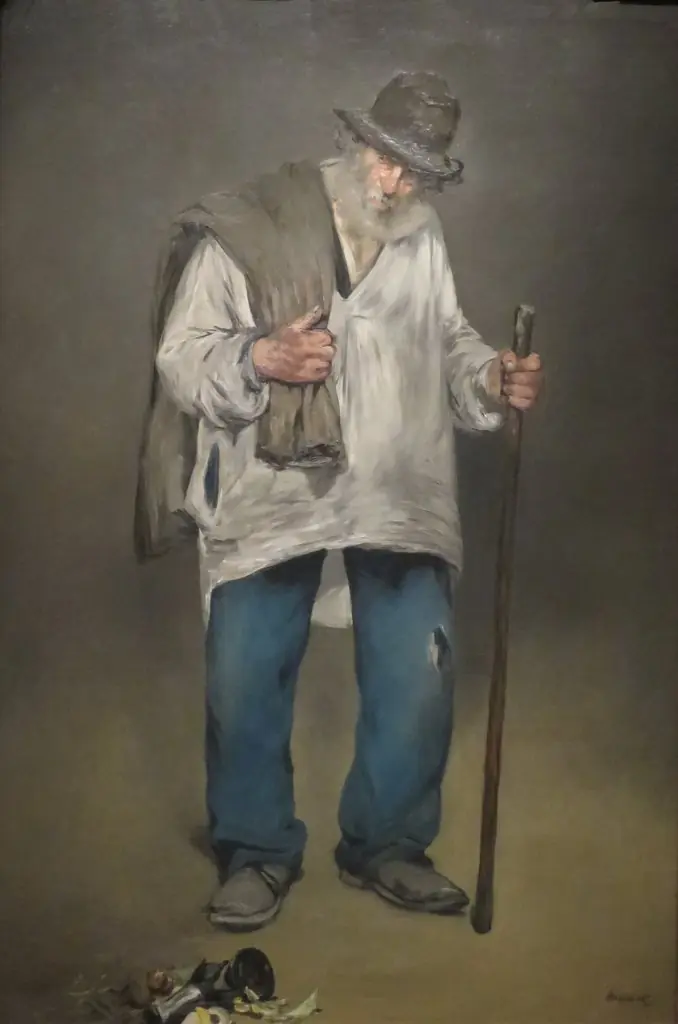
The painting depicts a man in a worn duffle coat, hands in pockets, set against a plain background with a partially shadowed face, conveying an air of quiet, enigmatic presence. The subject, not actively begging, exudes a sense of patient, possibly futile, waiting. Manet's portrayal captures the dignity of marginalized individuals, such as beggars and ragpickers, who were being displaced by Paris's rapid urban renewal during the time.
Technique & Style
Characterized by Manet's use of impasto, the painting features thick, textured brushstrokes that lend a sense of realism and solidity to the figure, emphasizing the subject's physical presence.
History & Provenance
Exhibited in 1872 alongside its companion piece and two other works (an absinthe drinker and a ragpicker) as The Philosophers, the painting reflects Manet's affinity for portraying outsiders, a theme possibly resonating with his own position as an outsider in French art circles despite his upper-class background.
Context
Created amidst Paris's 19th-century transformation, the work responds to the displacement of marginalized communities, such as beggars and ragpickers, from the city's rapidly modernizing landscape.
Own this work as a print
Artist & collection

Artist
Édouard Manet didn’t have much time to make his mark—he died at 51—but he used every year.