Artwork
Childhood of King Cyrus
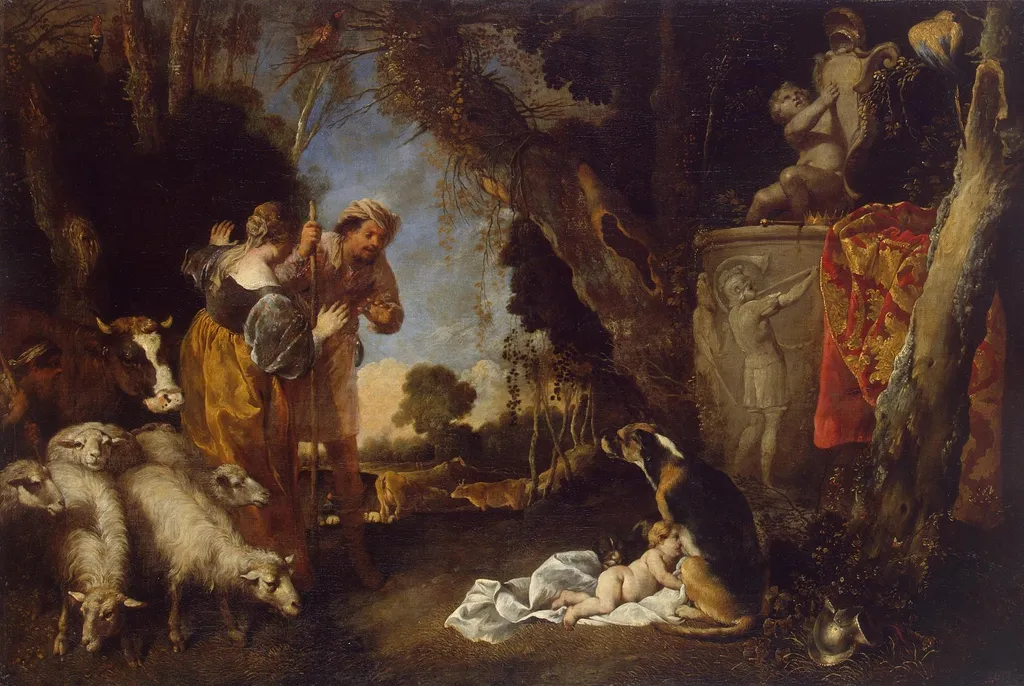
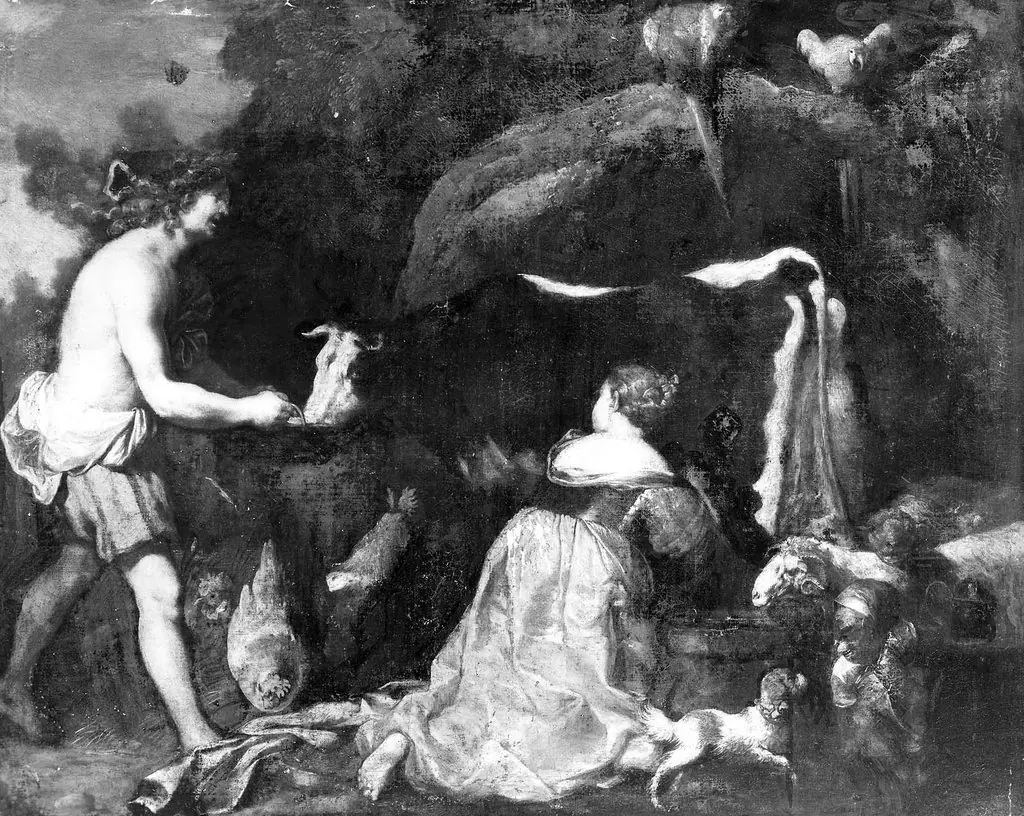
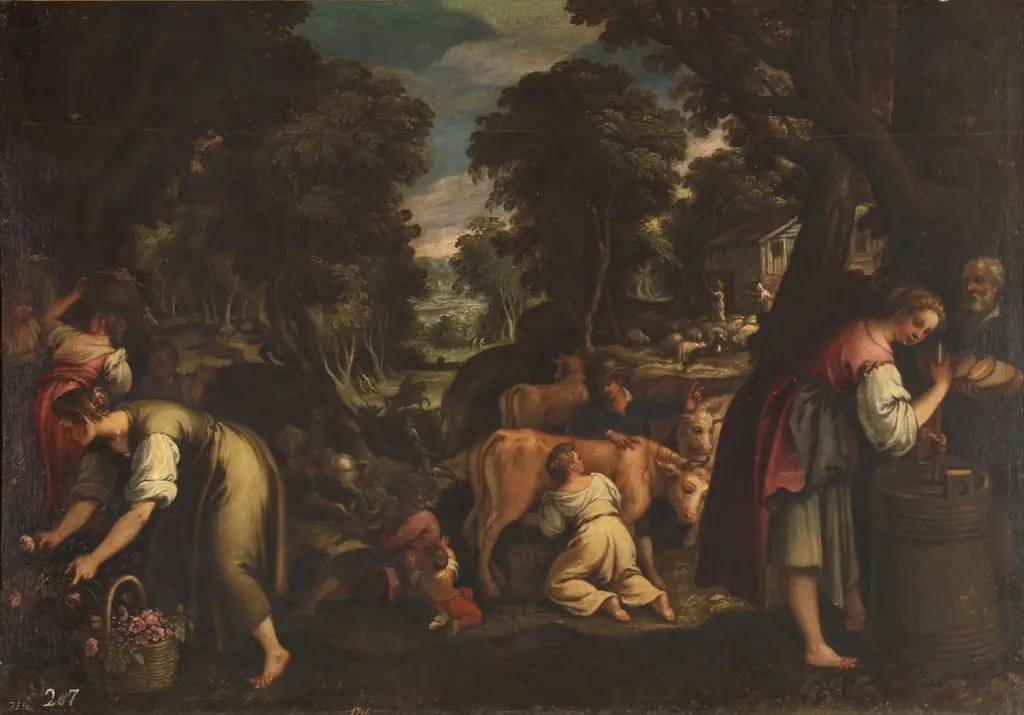
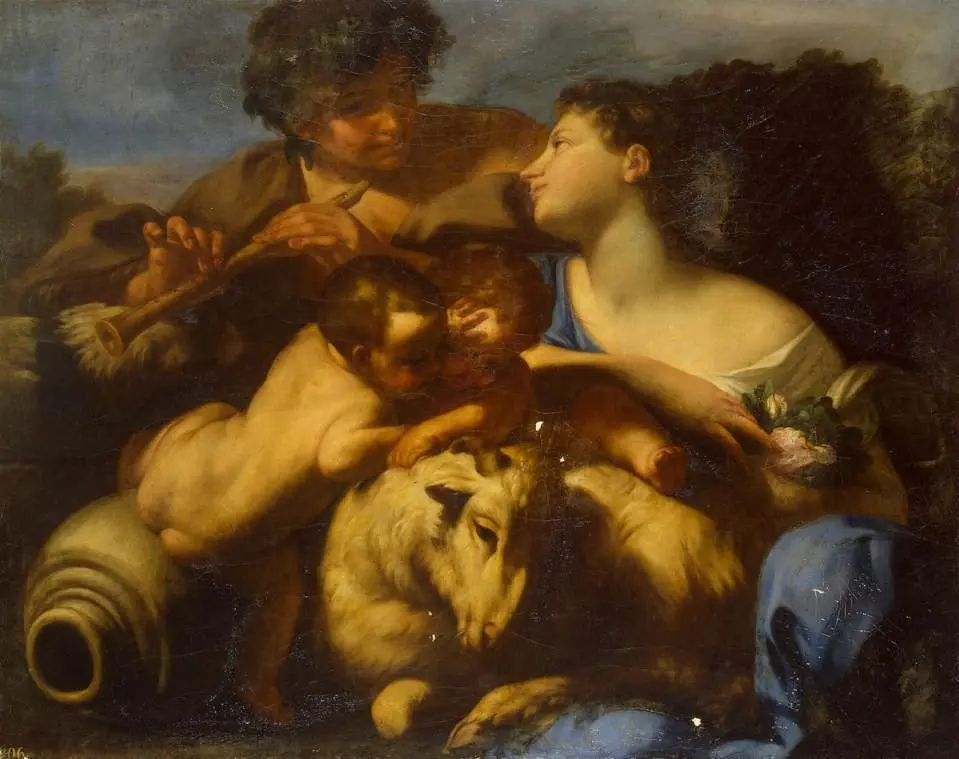
Childhood of King Cyrus is an oil painting by the Flemish Baroque painting artist Antonio Maria Vassallo. It dates from 1650 and is held in the collection of the Hermitage Museum.
About this work
Overview
Antonio Maria Vassallo, a mid‑17th‑century painter active in Genoa, executed the oil painting *Childhood of King Cyrus* around 1650. The work is part of the State Hermitage Museum’s collection and exemplifies the Flemish‑Baroque aesthetic that Vassallo absorbed through his training and local influences.
Subject & Meaning
The composition portrays a pastoral scene in a forest clearing where a man, staff in hand, gazes at an infant swaddled on a white cloth. A woman nearby tends a cow and a sheep, while a dog rests beside the child. The arrangement suggests a narrative of early protection and nurturing surrounding the future ruler.
Technique & Style
Vassallo employs warm tonalities and softened brushwork to convey intimacy, while the chiaroscuro modeling creates depth among the figures. Subtle impasto adds texture to the foliage and animal pelts, and the overall layout follows a gentle curve that unites the participants around the central infant.
History & Provenance
Trained initially under Flemish painter Vincenzo Malò—himself a disciple of David Teniers the Elder and Peter Rubens—Vassallo later absorbed stylistic cues from Genoese contemporaries such as Sinibaldo Scorza and Giovanni Benedetto Castiglione. The painting entered the State Hermitage Museum’s holdings, where it remains on display.
Own this work as a print
Artist & collection
Artist
Antonio Maria Vassallo (c. 1620–1664/1673) was an Italian painter of the Baroque period, active mainly in Genoa, and painting mythologic scenes and still lifes. His biography is poorly documented, and mainly depends on…