Artwork
The Rearing of Bacchus
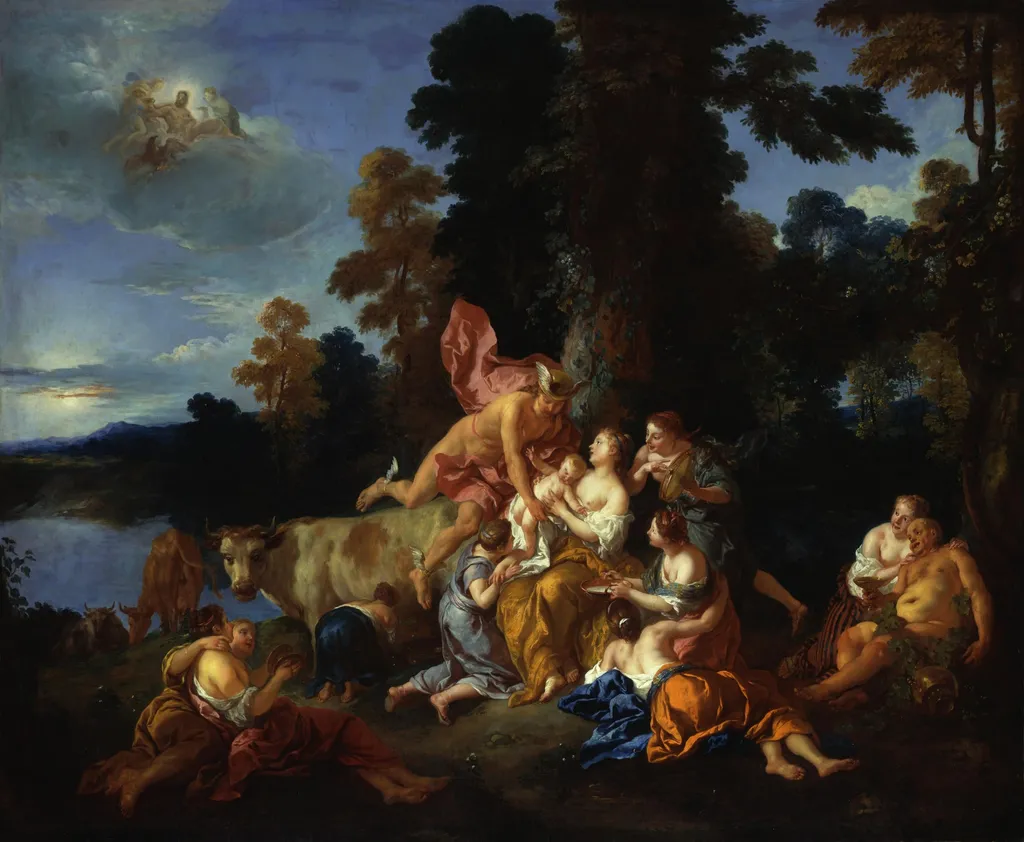
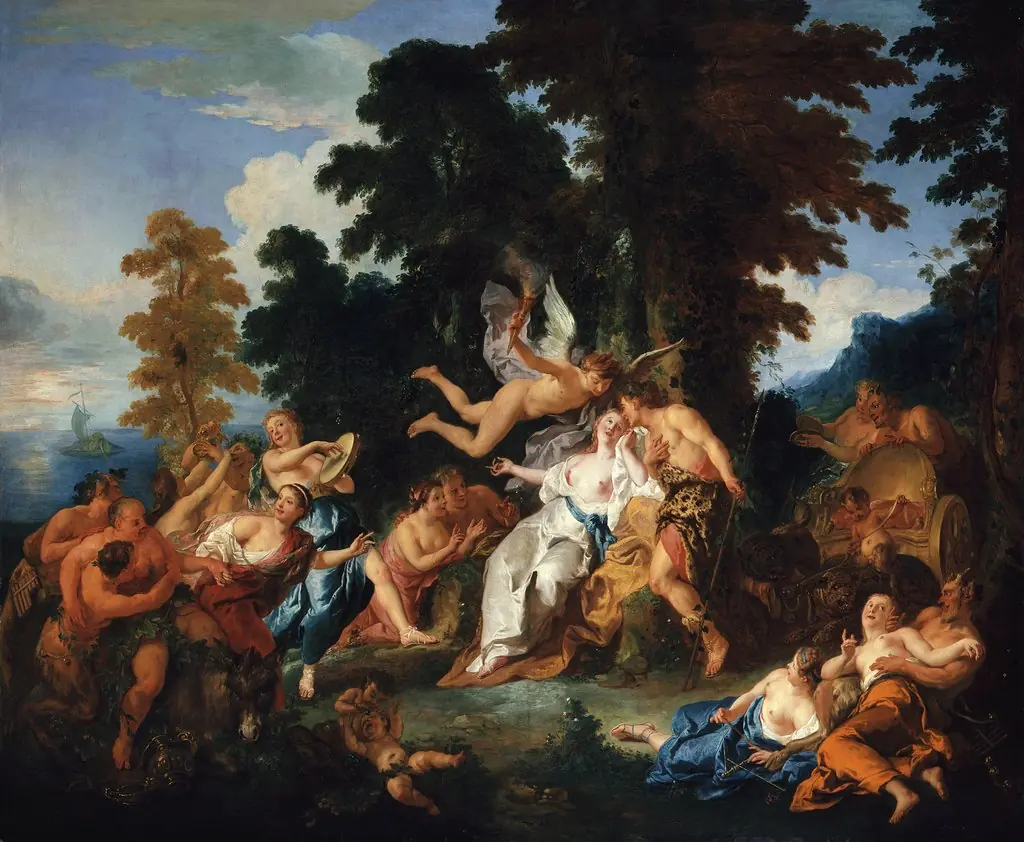
The Rearing of Bacchus is an oil painting by the Rococo painting artist Jean-François de Troy. It dates from 1717 and is held in the collection of the Bode Museum.
About this work
Overview
Painted in 1717 by Jean-François de Troy, *The Rearing of Bacchus* is an oil-on-canvas work depicting a mythological episode from classical antiquity.
Painted in 1717 by Jean-François de Troy, *The Rearing of Bacchus* is an oil-on-canvas work depicting a mythological episode from classical antiquity. It belongs to the French Rococo tradition, characterized by its lightness and narrative vitality. The painting is held in the Gemäldegalerie, Berlin, and reflects de Troy’s early career focus on mythological and genre scenes before his later role as director of the French Academy in Rome.
Subject & Meaning
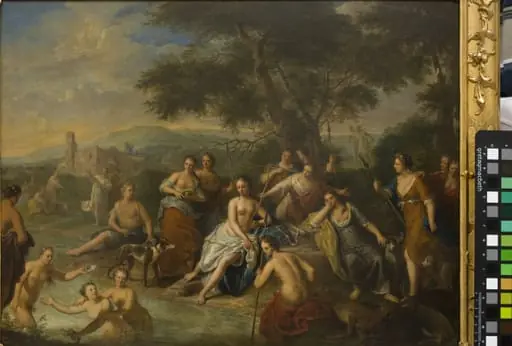
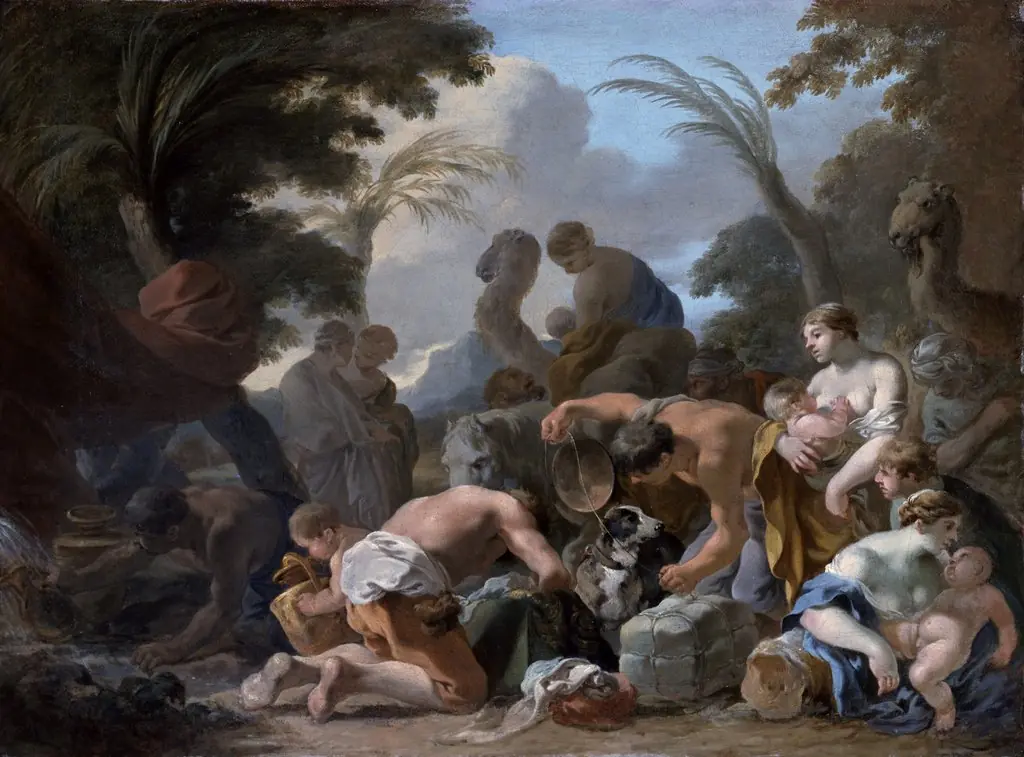
The scene illustrates the infancy of Bacchus, the Roman god of wine, hidden from Hera’s wrath and raised by nymphs in a secluded landscape. Figures surround the infant, including a woman nursing him and others tending to his care. The man leaping over a cow alludes to the wild, ecstatic rituals associated with Bacchus’s later worship, foreshadowing his divine nature through symbolic motion and revelry.
Technique & Style
De Troy employs soft, luminous brushwork and a pastel palette to convey a sense of gentle movement and airborne energy. The composition is diagonally dynamic, guiding the eye from the central child to the leaping figure and across the tranquil landscape. Colorful drapery contrasts with the natural setting, enhancing the theatricality typical of Rococo storytelling without overt grandeur.
History & Provenance
Commissioned during de Troy’s formative years, the painting predates his tenure in Rome and reflects his training under French academic traditions. It entered the Berlin collection in the 19th century, likely through royal or aristocratic acquisitions. Its survival intact offers insight into early 18th-century French mythological painting before the rise of more austere Neoclassical tastes.
Context
Created during the Regency period in France, the work aligns with a cultural shift toward intimate, playful interpretations of antiquity. Unlike grand Baroque narratives, this scene emphasizes domesticated divinity and natural harmony, resonating with aristocratic tastes for refined, emotionally accessible mythology. Similar themes appear in contemporary tapestry designs, which de Troy also produced.
Legacy
Though less known today than his later portraits or tapestry designs, *The Rearing of Bacchus* exemplifies de Troy’s skill in blending narrative clarity with decorative charm. It stands as a representative example of how French Rococo artists reimagined classical subjects for private, pleasure-oriented collections, influencing the genre’s evolution before the turn toward Neoclassicism.
Own this work as a print
Artist & collection

Artist
Jean-François de Troy (27 January 1679, Paris – 26 January 1752, Rome) was a French Rococo easel and fresco painter, draughtsman and tapestry designer.