Artwork
Don Quijote en el carro saliendo de la venta
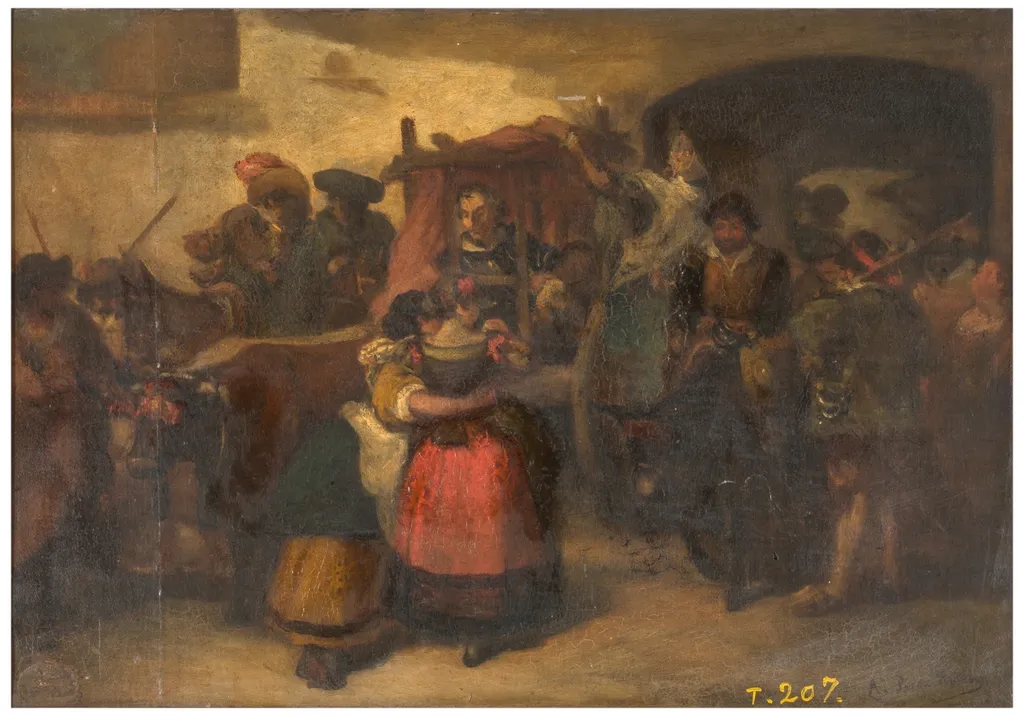
Don Quijote en el carro saliendo de la venta is an oil painting by the Realist artist Antonio Pérez Rubio. It dates from 1866 and is held in the collection of the Museo del Prado.
About this work
Overview
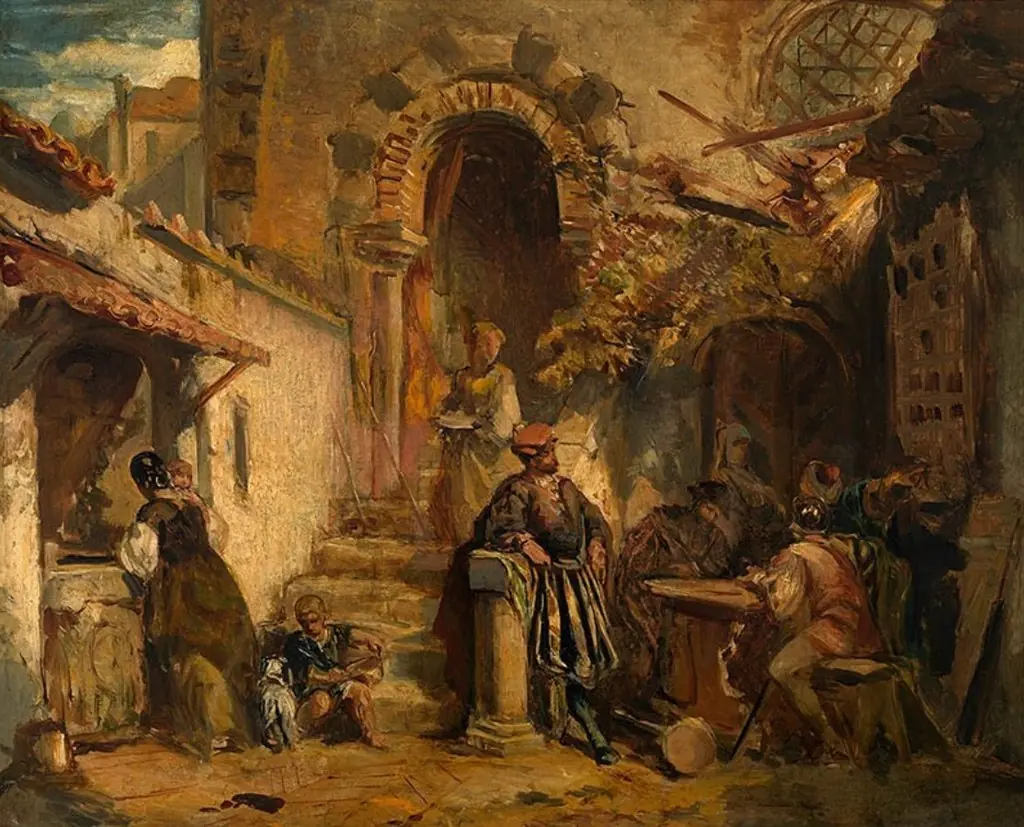
The background suggests a vaulted, dimly lit space, typical of Spanish inns of the era, rendered with muted earth tones punctuated by selective bright hues.
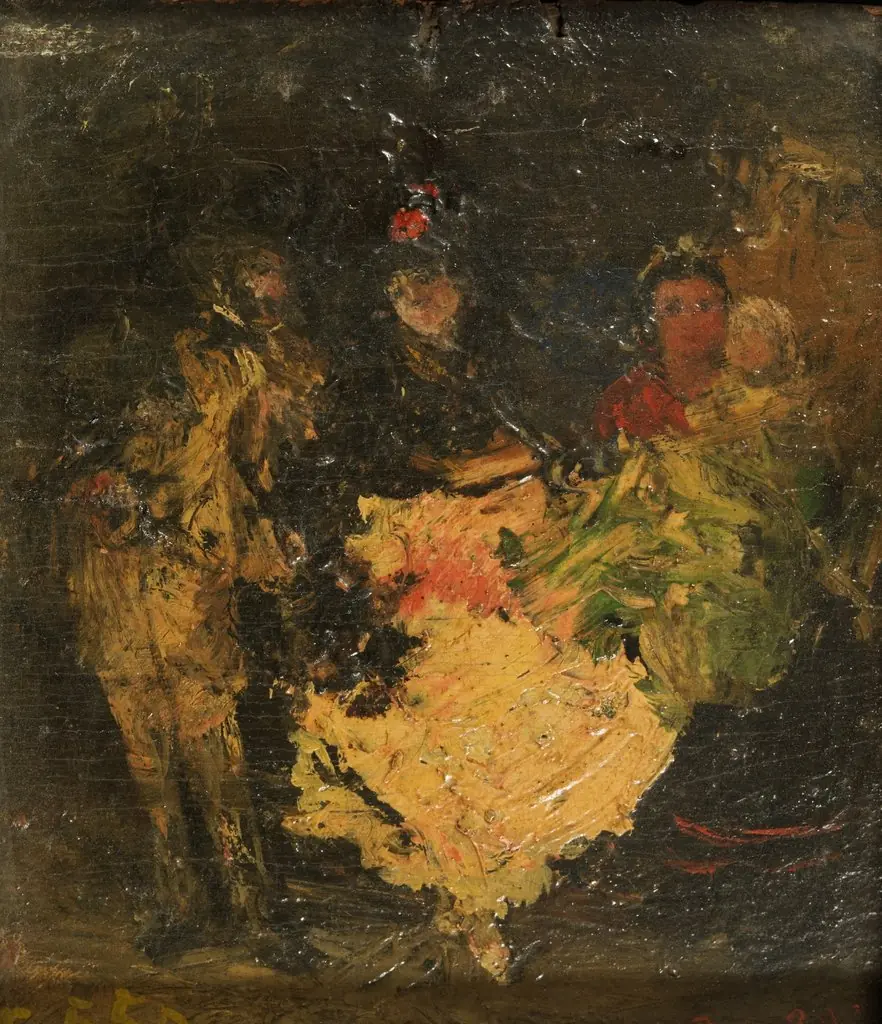
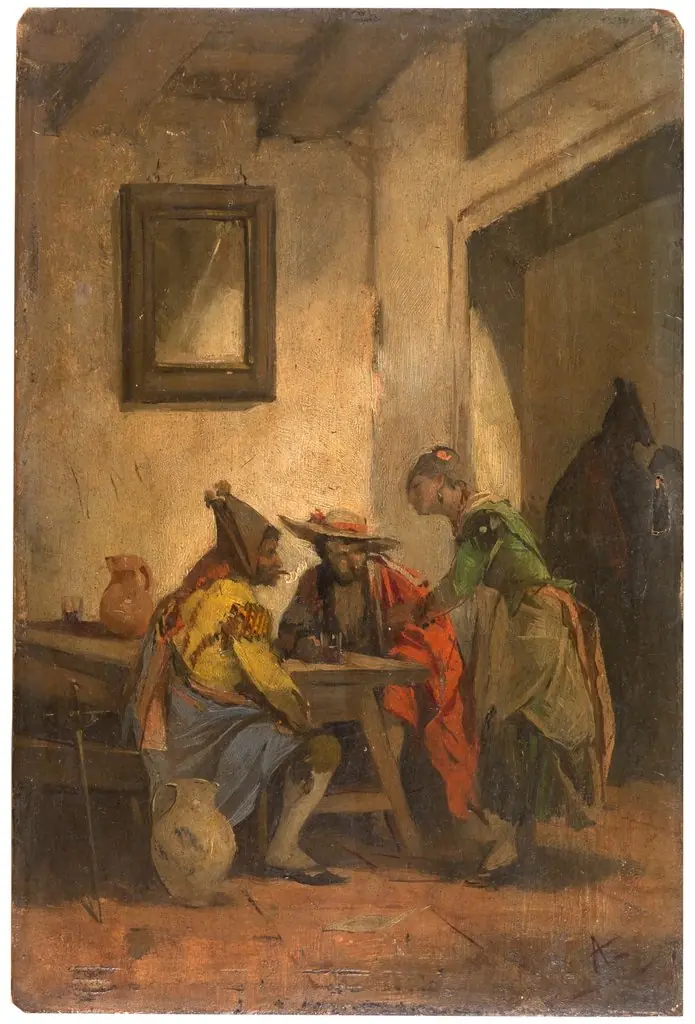
Painted in 1866 by Antonio Pérez Rubio, this oil work depicts a moment from Cervantes’s Don Quixote, set in an inn’s interior. The scene captures a bustling, informal gathering with multiple figures engaged in quiet interaction. The composition centers on two women in vividly colored garments, surrounded by men in period attire. The background suggests a vaulted, dimly lit space, typical of Spanish inns of the era, rendered with muted earth tones punctuated by selective bright hues.
Subject & Meaning
The painting illustrates a scene from Don Quixote’s travels, likely the moment when the knight and his squire depart from an inn after a chaotic encounter. The embrace between the two women may reflect the innkeeper’s wife and a traveler, capturing a fleeting human connection amid the knight’s delusions. The work does not idealize the moment but instead presents it as a grounded, almost mundane episode within the larger narrative of chivalric folly and human warmth.
Technique & Style
Pérez Rubio employs a naturalistic approach with soft modeling and restrained chiaroscuro to define forms. The figures are rendered with careful attention to costume and gesture, though the background remains loosely painted, enhancing the sense of spatial ambiguity. Color is used strategically: the women’s red and yellow garments draw the eye, while the surrounding figures and architecture are rendered in ochres, browns, and grays, reinforcing the domestic, unheroic tone of the scene.
History & Provenance
The painting entered the collection of the Museo del Prado in the late 19th century, likely acquired through state purchase or donation. It was produced during a period when Spanish artists were revisiting literary themes from the Golden Age, seeking to ground national identity in historical narrative. Its presence in the Prado reflects institutional interest in 19th-century Spanish genre painting, even when it did not conform to academic grandeur.
Context
In mid-19th century Spain, there was a revival of interest in Cervantes as a cultural symbol. Artists like Pérez Rubio turned to Don Quixote not for epic heroism but for its human comedy and social observation. This painting aligns with a broader trend of genre scenes drawn from literature, favoring intimate, everyday moments over monumental history painting, and resonating with contemporary audiences seeking relatable narratives.
Legacy
Though not widely exhibited today, the work remains a quiet example of how 19th-century Spanish painters engaged with literary tradition through intimate realism. It contributes to a lesser-known strand of Spanish art that prioritized narrative nuance over spectacle. Its preservation in the Prado ensures its role as a reference point for studies of literary illustration and regional genre painting in the period.
Own this work as a print
Artist & collection